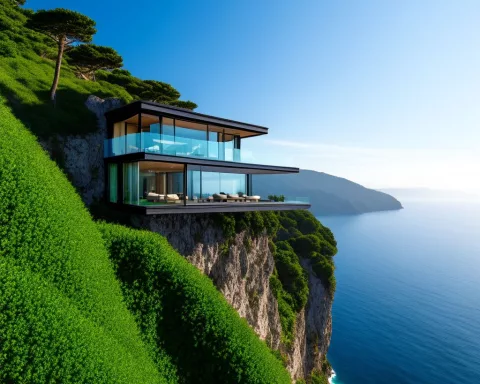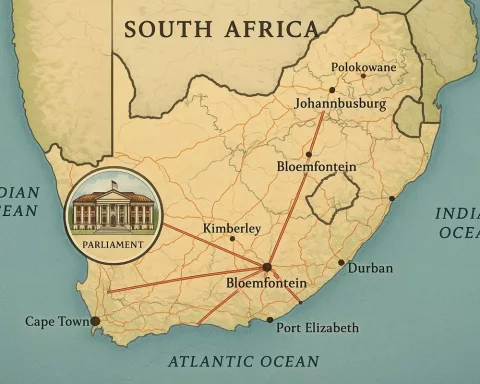
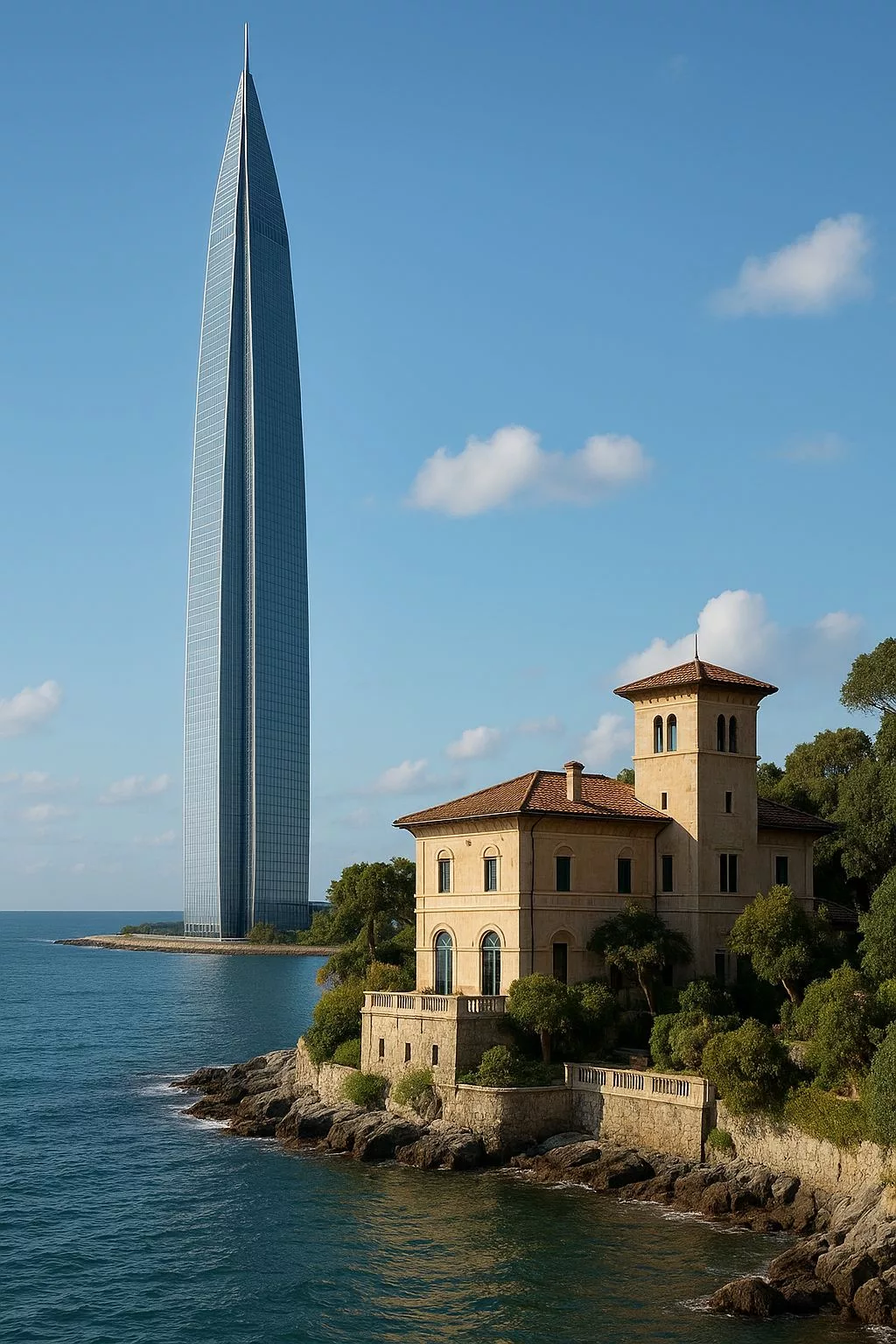
Cape Town’s fancy houses are selling like hotcakes! Rich people can work from anywhere now, so they’re moving to beautiful Cape Town. Foreigners love the good exchange rate, making homes a steal for them. There’s also not much empty land left, and the city has better water and power. This makes Cape Town a super popular place for luxury living, with prices going way up!
What factors are driving the surge in Cape Town’s luxury property market?
Cape Town’s luxury property market is booming due to the rise of remote work allowing high-net-worth individuals to relocate, the favorable exchange rate for foreign buyers, and the scarcity of vacant land. Additionally, significant investments in local infrastructure, such as water security and reliable power, further attract affluent buyers seeking stability and premium amenities.
From Postcards to Pay-Dirt: The R11.3 Billion Surge
Cape Town’s ribbon of white sand and the amphitheatre of suburbs beneath Table Mountain have always traded at a premium, yet the latest 12-month tally still feels like a misprint: verified deeds pushed R11.3 billion through the courts, up from R8.9 billion the year before. That 26 % leap was squeezed out of only 2 100-odd title deeds, a density of value per transaction that leaves Monaco and Miami squinting in the rear-view mirror.
The chemistry behind the explosion is simple, say agents who have sold through three boom-bust cycles: the laptop-class rich can now live anywhere, the rand still smiles at foreign paycheques, and vacant mountain-side plots have become unicorns. Listings spend six weeks on the market instead of thirteen, and sealed envelopes stuffed with rival offers are now the boring norm for anything north of R10 million.
Zoom in on the ultra-prime layer – homes that change hands above R20 million – and the numbers border on surreal. One hundred and sixteen such properties swapped owners inside a year, sixteen of them for more than R50 million each. That thin slice alone contributed R4.2 billion, a 61 % jump on the previous cycle. Two Clifton villas traded for nine-figure prices, one quietly to a Geneva family office that already owns shoreline sanctuaries in Mallorca and Como. Seeff’s local team inked thirty of these mega-deals, their in-house private-client desk fluent in Zurich tax-speak and Zug trust law.
Clifton’s New R100 m Neighbourhood and the Rise of Vertical Living
Until 2024, only one Clifton residence had ever cracked the R100 million ceiling. In the past four months the suburb produced two more, both eclipsing that mark inside 120 days. The crown jewel: a four-tier, 1 550 sqm concrete-and-glass stack terraced above Fourth Beach, which closed at R135 million. The purchaser, a British fintech founder, has budgeted another R25 million to excavate a cinema and wellness level – permits already signed off because the structure is anchored inside Table Mountain National Park earth, a nine-month environmental-appeal marathon.
Freestanding palaces may dominate cocktail chatter, yet sectional-title stock accounts for three quarters of all deeds in the broader Atlantic Seaboard / City Bowl corridor. Price per square metre has detonated: The Aurum on Bantry Bay’s Victoria Road clocked R169 713/sqm for a 390 sqm duplex that traded at R66 million; the Waterfront’s Penrith block hit R160 615/sqm; even Mouille Point’s 1970s-vintage Breakers managed R145 299/sqm. Architects blame two forces: the City’s 2022 zoning recalibration that lets towers climb sixty storeys, instantly pumping “air-space” value into existing schemes, and the brutal cost of new luxury construction – R65 000/sqm for a vanilla finish – making anything turnkey feel like a steal.
Inside the V&A’s R18 Million Average and the City Bowl’s Tech Make-Over
The V&A Waterfront Precinct – barely 1 800 homes all-told – now posts an average sale price above R18 million. Ten deals crested R20 million, seven of them brokered by Seeff. Top billing went to a 750 sqm penthouse in the Silo District with a 120-degree harbour vista: R58 million to a Hong Kong shipping dynasty. Residents are buying what amounts to a five-star hotel HOA – 24-hour concierge, private ferry shuttles to the international yacht basin, and an annual security spend that rivals a minor embassy. Monthly levies exceed R18 000, yet resales have compounded at 9 % a year since 2015, handily beating local inflation and the JSE.
Cross the saddle into the City Bowl and the soundtrack switches from gulls to gigabytes. The CBD now hosts seventeen co-working brands and three Amazon Web Service data hubs, luring diaspora developers who crave Atlantic views without sacrificing fibre speed. Heritage suburbs – Gardens, Higgovale, Oranjezicht – have morphed into hybrid compounds where parlours double as boardrooms. The record verified sale, a R63 million Victorian in Higgovale, was snapped up by a Boston AI start-up that will keep the façade while gutting interiors for podcast studios and server racks. Neighbours fretted over traffic until a heritage clause capped commercial guests at six at a time, preserving the residential soul.
Oranjezicht’s R46 million deal tells the same tale: the purchaser, a Dutch renewable-energy platform, will use the villa as an “innovation retreat,” a structure that slips through the corporate-ownership loophole without triggering municipal business-rates surcharges. Attorneys predict more such arrangements as SARS tightens personal-tax residency rules and corporates hunt for hard-asset hedges.
Foreign Cash, Currency Arbitrage and the Vanishing Bond
Foreign fingerprints covered R2.8 billion of the total turnover – exactly a quarter of the pie and the highest proportion in ten years. Germans still dominate head-count, followed by Brits, Swedes and Austrians, but the fastest-growing cohort is Sandton residents relocating to the coast. They are drawn by a stable metro, water you can drink straight from the tap (thanks to R1.8 billion of desalination and groundwater infrastructure installed after the 2018 drought), and a necklace of private schools – German, French, British – within a six-kilometre radius.
Exchange-rate maths still matters. A euro buyer who locked in forward contracts at R20.40 in January paid 12 % less in hard-currency terms than the rand ticket, neatly offsetting any local capital-gains sting. With ECB rates falling and SA government yields stuck above 9 %, the carry trade is alive and kicking.
Below R5 million, 68 % of purchasers still saddle themselves with bonds; above R10 million, only 11 % bother with bank finance. In the super-prime lane pure cash rules, yet family-office leverage is mutating. Some clients borrow 40 % against Lombard facilities in Zurich at 2.1 %, then redeploy the cash in Cape Town, harvesting a 700-basis-point arbitrage. Others take 50 % loans from SA banks but collateralise the debt with offshore insurance wrappers, a structure that hops over exchange-control hurdles.
Municipal stats show a 34 % plunge in building-plan approvals since 2022, the hangover from the 2018 drought, 2020 Covid shutdown and a 2021 materials-price spike. The only meaningful pipeline is the Waterfront’s R10 billion Harbour Arch mixed-use cluster, yet its 480 upscale apartments will not register as transfers before 2026. Meanwhile, 38 % of Atlantic Seaboard erfs are already maxed out on coverage and height, choking off fresh supply. Agents joke that the only way to mint “new” stock is to persuade widows in their eighties to emigrate – pitches that now include discreetly arranged Italian golden-visas and relocation concierge services.
Short-stay letting reinvented itself after the City slapped on a 90-day cap in 2022; the long-let luxury niche has since boomed. A R25 million three-bed in Fresnaye now leases unfurnished for R85 000 a month, a 4.1 % gross yield that trumps equivalent penthouses in Sandton or Parisian arrondissements. Corporate tenants – film studios, embassies, oil-trading desks – sign 24-month leases with 10 % annual escalations, giving owners yield certainty while they wait for the next capital pop.
Load-shedding is folklore inside the Atlantic Seaboard micro-grid: sixty-two sectional-title schemes have installed 1 MWh-plus Tesla Megapack or Huawei FusionSolar rigs, granting Stage-4 immunity and trimming insurance premiums by 30 %. Fibre redundancy is triple-routed – subsea cables to Melkbos, overland to Teraco, plus a microwave back-up to the Waterfront. Water arrives via dual channels: municipal feed plus private boreholes feeding a 1.2-million-litre reservoir tunneled beneath Signal Hill, enough for 55 days of Stage-6 restrictions. Buyers stepping off flights from London or Los Angeles barely register the national infrastructure crisis – and they price the neighbourhood accordingly.
Not everyone applauds the vertical gold-rush. Activist body Save Our Seaboard has appealed four new tower schemes, warning that 60-storey glass walls will toss afternoon shadows across Clifton’s tidal pools. Heritage Western Cape counters that upward density beats lateral sprawl, yet has capped future approvals at 120 m above sea level – roughly 35 storeys. Legal trench warfare looms: one developer has already dangled a R30 million public funicular to the beach in exchange for an extra 15 m, a swap that could become the template for “social-impact height bonuses.”
Agents are quietly tracking fourteen off-market mandates north of R70 million, three of them in Llandudno – a suburb that has historically shunned the R100 million club but now, with borehole-water licences locked in and a private access road green-lit, is being spoken of in the same breath as Clifton circa 2019. Whether those closings land before the New Year will hinge on everything from Fed rate cuts to the outcome of the U.S. election, yet the asking letters already in circulation hint that R11.3 billion may, in hindsight, look less like a finish line and more like a starter pistol.
What factors are driving the surge in Cape Town’s luxury property market?
Cape Town’s luxury property market is booming due to several key factors. The rise of remote work has enabled high-net-worth individuals to relocate to desirable locations. A favorable exchange rate makes properties more affordable for foreign buyers, who are a significant segment of the market. There is also a scarcity of vacant land, particularly in prime locations, which drives up property values. Additionally, substantial investments in local infrastructure, such as improved water security and reliable power supply, contribute to the city’s appeal for affluent buyers seeking stability and premium amenities.
How much has the Cape Town luxury property market grown in the last year?
In the last 12 months, the verified deeds in Cape Town’s luxury property market surged to R11.3 billion, a 26% increase from R8.9 billion the previous year. This impressive growth was achieved with only around 2,100 title deeds, indicating a high value per transaction. The ultra-prime segment (homes above R20 million) saw an even more dramatic increase, contributing R4.2 billion, a 61% jump from the previous cycle.
What is driving the high price per square meter in areas like the Atlantic Seaboard?
The high price per square meter in areas like the Atlantic Seaboard is primarily due to two factors. Firstly, the City’s 2022 zoning recalibration now permits taller buildings, allowing towers to climb up to sixty storeys. This change significantly increases the ‘air-space’ value of existing developments. Secondly, the brutal cost of new luxury construction, estimated at R65,000 per square meter for even a basic finish, makes turnkey properties appear more attractive and drives up overall prices.
How are international buyers influencing the market, and what attracts them to Cape Town?
Foreign buyers accounted for R2.8 billion of the total turnover, representing a quarter of the market and the highest proportion in a decade. They are attracted by the stable metropolitan environment, reliable infrastructure (such as tap water quality due to significant investments post-2018 drought, and stable power supply within the Atlantic Seaboard micro-grid), and a range of international private schools. The favorable exchange rate also plays a crucial role, allowing foreign buyers to acquire properties at a lower hard-currency cost, effectively offsetting potential local capital-gains taxes.
What are the trends in financing luxury property purchases in Cape Town?
For properties below R5 million, 68% of purchasers still rely on bonds. However, for properties above R10 million, only 11% use bank finance, with pure cash transactions dominating the super-prime lane. Interestingly, family offices are employing sophisticated leverage strategies, such as borrowing against Lombard facilities in Zurich at low interest rates (around 2.1%) to then invest in Cape Town, benefiting from a significant interest rate arbitrage. Others use offshore insurance wrappers to collateralize loans from South African banks, navigating exchange control regulations.
How is the scarcity of new luxury property supply impacting the market?
The supply of new luxury properties is severely constrained. Municipal stats show a 34% drop in building-plan approvals since 2022, a lingering effect of the 2018 drought, 2020 Covid shutdown, and 2021 material price spikes. Furthermore, 38% of Atlantic Seaboard erven (plots) are already at maximum coverage and height limits, effectively choking off new development. This limited supply, coupled with high demand, contributes significantly to the upward pressure on prices for existing luxury homes.