Cape Town’s Biodiversity Spatial Plan 2025 is a bold new guide to help the city grow while protecting nature. It maps out important natural areas, covering over 55,000 hectares, and helps people understand where plants and animals need space to thrive. By sharing clear information and involving communities, the plan balances building homes and jobs with saving Cape Town’s unique wildlife. This approach makes Cape Town a shining example of how cities can live in harmony with nature.
What is the Cape Town Biodiversity Spatial Plan 2025?
The Cape Town Biodiversity Spatial Plan 2025 is a pioneering urban nature management blueprint that integrates ecological priorities into city development. It maps biodiversity areas, guides sustainable growth, protects over 55,000 hectares of natural habitat, and fosters community stewardship to balance conservation with urban needs.
Pioneering Urban Nature Management
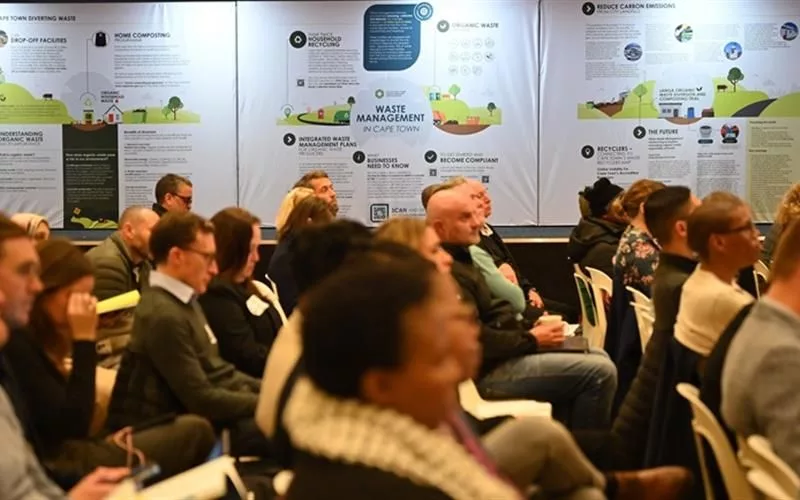
On a chilly July morning in 2025, the council chambers of Cape Town buzzed with anticipation. City officials, environmental advocates, and planners convened for a vote with lasting significance: the formal adoption of the Cape Town Biodiversity Spatial Plan (CTBSP) 2025. This policy did more than add another document to a shelf – it redefined the city’s relationship with its extraordinary natural heritage.
Cape Town stands as a trailblazer, being the first municipality in South Africa to develop and implement an official spatial plan for biodiversity. Unlike traditional zoning or planning schemes, this innovative blueprint weaves ecological considerations directly into the city’s framework for growth and development. The area’s extraordinary topography – mountains meeting ocean, wetlands bordering neighborhoods, and fragments of ancient ecosystems – demands a nuanced approach to conservation that also accommodates a bustling urban population.
The city’s unique natural wealth – marked by the famed Cape Floral Kingdom and the iconic Table Mountain – faces constant challenges from expansion and infrastructure projects. By integrating the latest scientific research, local knowledge, and established best practices, the CTBSP 2025 aims not just to preserve nature, but to equip Cape Town to thrive as a modern metropolis in harmony with its natural environment.
Mapping Nature’s Priorities
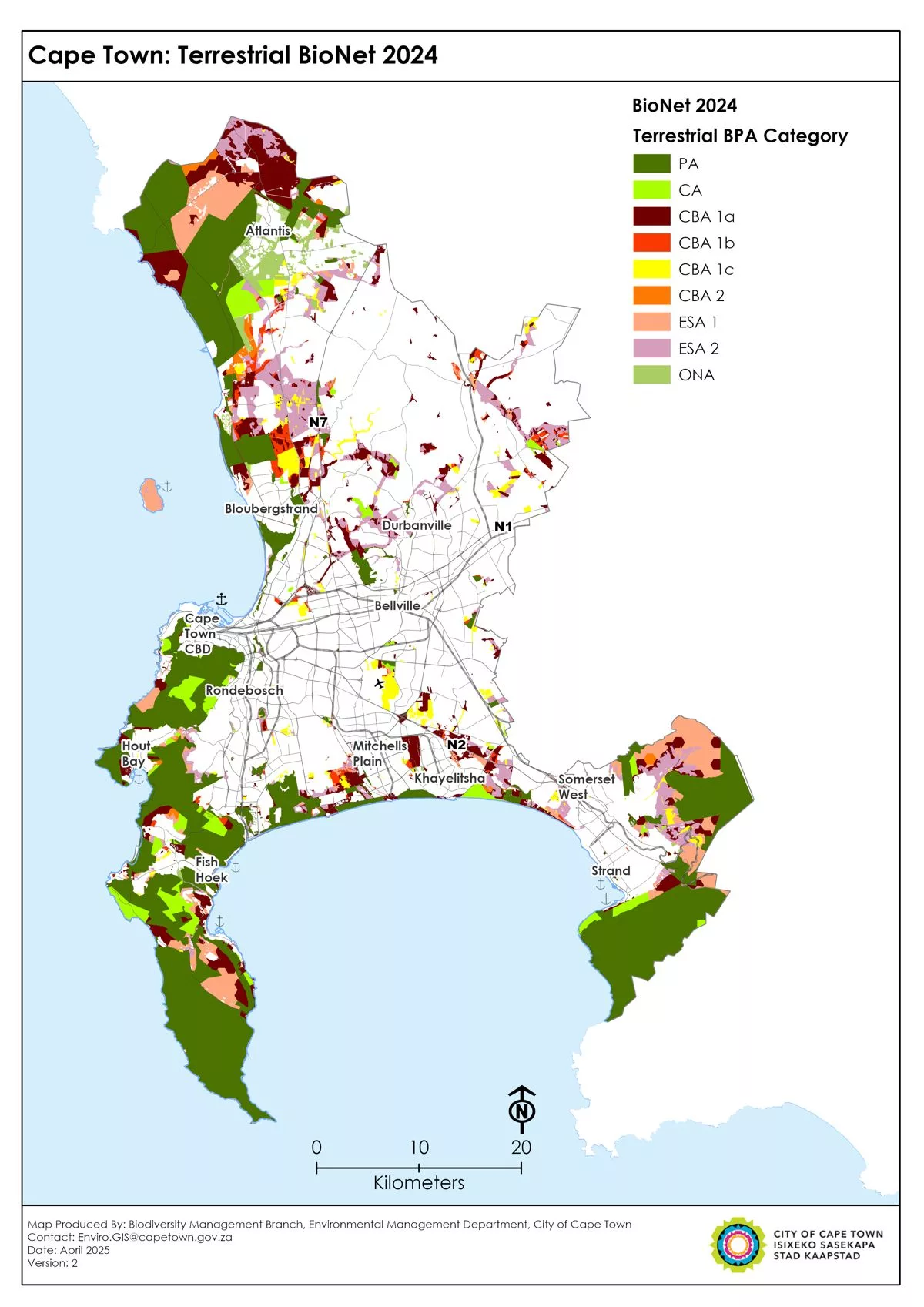
Central to the new policy is the Cape Town BioNet 2024 map, a high-resolution guide that categorizes every hectare of the city according to its ecological value and function. This mapping effort departs from generic green space planning. Instead, it carefully distinguishes between different types of conservation and support areas, ensuring that planners, developers, and residents alike recognize the city’s living assets.
The BioNet classifies land into several distinct categories:
- Protected Areas anchor the city’s conservation efforts, covering landmarks such as Table Mountain National Park.
- Conservation Areas buffer and extend these core regions, often running alongside developed districts, providing habitat and connectivity for wildlife.
- Critical Biodiversity Areas receive further breakdown according to their condition. Some remain pristine, acting as essential refuges for rare species; others, though impacted, retain strategic importance for restoring ecological links.
- Ecological Support Areas include both natural corridors and more altered landscapes, which still play key roles in processes such as water purification and pollinator movement.
- Other Natural Areas, while not individually essential for conservation targets, offer opportunities for future restoration or act as ecological buffers.
By design, the BioNet map serves as both a planning tool and a call to action, allowing anyone – be it a city planner or a curious resident – to understand how every parcel of land fits into Cape Town’s broader ecological tapestry.
Guiding Development with Science
The Cape Town Biodiversity Spatial Plan does not function as an inflexible rulebook. Instead, it provides critical guidance, rooted in the Western Cape Biodiversity Act of 2021 and aligned with the newest international standards for urban conservation. The plan’s architects crafted its language for clarity and inclusiveness, referring to its main map as the “Biodiversity Priority Areas Map” to ensure that its aims are accessible to diverse audiences.
While the CTBSP does not automatically prescribe what may or may not be built, it arms decision-makers with the best available information on biodiversity priorities. This transparency helps to streamline complex debates over land use, guiding informed decisions that consider both ecological protection and the city’s needs for jobs, housing, and infrastructure.
By embedding the latest research and a framework of clear priorities, Cape Town seeks not only to reduce conflicts over conservation versus development, but also to foster a sense of shared purpose. The plan encourages collaboration between government, private landowners, and communities, recognizing that durable conservation outcomes depend on broad-based partnerships.
A Rich Tapestry of Protected Land
Cape Town’s commitment to conservation is tangible on the ground. The city’s protected areas now stretch over 55,697 hectares, representing nearly a quarter of the total metropolitan area. Of this, the city manages more than 20,000 hectares directly, spread over 22 official nature reserves and 16 additional sites established through biodiversity agreements with private landowners.
The rest of the conservation estate includes the serpentine expanse of Table Mountain National Park, a UNESCO World Heritage treasure that winds through urban and natural landscapes alike. Numerous privately stewarded sites, some maintained by families for generations, add another important layer of protection. These spaces support a dazzling array of life – from the storied proteas and ericas of the fynbos, to rare insects and threatened mammals found nowhere else on earth.
Cape Town’s biological riches are not simply a point of civic pride. As the heart of the Cape Floristic Region, the city hosts more than 9,000 plant species, with two-thirds found only here. This makes Cape Town a global hotspot of plant diversity. The city’s blend of mountains, rivers, and coastline creates a mosaic of habitats, underpinning its claim as the world’s most biodiverse city.
Urban Biodiversity in a Changing World
Cape Town’s approach reflects a growing international awareness that biodiversity can – and must – flourish even in densely populated urban areas. As cities worldwide expand, pressures on remaining wild places intensify. The CTBSP’s embrace of landscape ecology principles, such as maintaining ecological corridors and linking fragmented habitats, sets a model for other cities in the global south and beyond.
Open access to ecological information forms a cornerstone of Cape Town’s strategy. Through platforms like the CityMap Viewer and the CCT Open Data Portal, residents and decision-makers can explore detailed biodiversity data, layered over street maps and satellite imagery. This openness fosters transparency and community engagement, empowering citizens to become stewards of their own local environments.
The policy also encourages land restoration, supporting efforts to rehabilitate degraded areas and reconnect vital ecological networks. Volunteer groups and neighborhood associations play an active role, working to clear invasive species, replant indigenous vegetation, and monitor local wildlife. These grassroots efforts, guided by the CTBSP’s priorities, ensure that conservation remains a living, evolving endeavor.
People, Places, and Policy
The relationship between Cape Town’s people and its wild spaces has always been dynamic. Along the Liesbeek and Black Rivers, community groups spend weekends removing alien vegetation and reestablishing native plants. Children learn to identify frogs and dragonflies, connecting with a natural heritage that belongs to all Capetonians. These hands-on projects not only restore ecosystems, but also nurture a sense of ownership and pride.
Complex conversations about land use continue in neighborhoods like Philippi, where the need for housing and economic opportunity intersects with the imperative to protect critical biodiversity areas. The CTBSP provides a shared language for these debates, helping diverse stakeholders find common ground and negotiate solutions that balance social and environmental priorities.
Artists and cultural leaders draw constant inspiration from the city’s extraordinary flora and fauna. Natural motifs appear in murals, sculptures, and textiles throughout Cape Town, turning the city’s biodiversity into a source of creative energy as well as ecological value. The maintenance of wild and green spaces sustains not only nature, but also the city’s artistic spirit.
A Roadmap for Global Cities
With the adoption of the Cape Town Biodiversity Spatial Plan 2025, the city cements its status as a leader in urban nature management. Its experience offers a template for other metropolitan areas grappling with the challenge of integrating conservation and development. Cape Town demonstrates that cities can embrace growth without sacrificing the wild beauty that makes them unique.
By protecting its rich mosaic of habitats, fostering data-driven decision-making, and engaging communities in stewardship, Cape Town signals a hopeful path through the challenges of the Anthropocene. The city’s biodiversity plan stands as both a shield for nature and a beacon for cities everywhere striving to balance progress with preservation.
What is the Cape Town Biodiversity Spatial Plan 2025?
The Cape Town Biodiversity Spatial Plan 2025 (CTBSP) is an innovative urban nature management blueprint designed to integrate ecological priorities into the city’s development framework. It identifies and protects over 55,000 hectares of natural habitat, maps critical biodiversity areas, and guides sustainable growth while fostering community stewardship. The plan aims to balance urban expansion with the preservation of Cape Town’s unique wildlife and ecosystems.
How does the CTBSP map and classify Cape Town’s natural areas?
The plan uses the Cape Town BioNet 2024 map, a detailed ecological mapping tool that categorizes the city’s land according to its biodiversity value and function. The land is classified into:
- Protected Areas: Core conservation zones like Table Mountain National Park.
- Conservation Areas: Buffer zones providing habitat connectivity.
- Critical Biodiversity Areas: Pristine or restorable habitats crucial for species survival.
- Ecological Support Areas: Natural corridors and altered landscapes supporting ecological processes.
- Other Natural Areas: Lands offering future restoration or buffering potential.
This classification helps planners, developers, and residents understand and protect the city’s living ecological assets.
In what ways does the CTBSP influence urban development and land use decisions?
While the CTBSP is not a strict regulatory document, it provides essential guidance aligned with the Western Cape Biodiversity Act of 2021. It supplies decision-makers with up-to-date scientific data on biodiversity priorities, promoting informed debates and transparent choices about land use. By balancing ecological protection with the city’s needs for housing, infrastructure, and jobs, it encourages collaborative and sustainable development.
How much land does Cape Town currently protect under this plan?
Cape Town protects approximately 55,697 hectares, nearly a quarter of the metropolitan area. The city manages over 20,000 hectares directly through 22 official nature reserves and 16 biodiversity agreements with private landowners. Protected areas include the UNESCO World Heritage-listed Table Mountain National Park and numerous private reserves that safeguard the region’s rich biodiversity.
Why is Cape Town considered a global biodiversity hotspot?
Cape Town is located within the Cape Floristic Region, one of the world’s richest floral kingdoms. The city hosts over 9,000 plant species, with two-thirds found nowhere else on Earth. Its unique combination of mountains, rivers, wetlands, and coastline creates diverse habitats supporting rare and endemic species, making it the world’s most biodiverse city and a critical area for global conservation efforts.
How does the CTBSP engage communities and promote biodiversity awareness?
The CTBSP emphasizes open access to biodiversity data via tools like the CityMap Viewer and CCT Open Data Portal, fostering transparency and public involvement. It encourages community-based projects such as invasive species removal, habitat restoration, and wildlife monitoring. Educational programs and cultural initiatives also connect residents, especially youth, with Cape Town’s natural heritage, building a shared sense of stewardship and pride in the city’s biodiversity.