Cape Town is transforming its city centre with a bold social housing plan that offers affordable homes close to jobs, schools, and transport. The ‘Fruit & Veg’ site will become a lively neighborhood where people from all backgrounds can live, work, and connect. This project helps heal old wounds from apartheid by bringing communities together in vibrant, mixed-use spaces filled with homes, shops, and cafés. With smart city support and faster approvals, Cape Town aims to build a future where everyone belongs right at the heart of the city.
What is Cape Town’s social housing plan for urban renewal?
Cape Town’s social housing plan focuses on creating inclusive, mixed-use developments in the city centre, such as the ‘Fruit & Veg’ site. It offers affordable homes, access to jobs, schools, and transit, promotes social integration, and addresses apartheid-era spatial inequality through innovative policies and streamlined approvals.
Reimagining Urban Space: A Vision Unveiled
One crisp August morning in 2025, Cape Town’s city centre buzzed with excitement. Mayor Geordin Hill-Lewis, surrounded by city officials and community representatives, stood before a crowd at a site long known to locals as ‘Fruit & Veg’. The city had just announced a transformative plan: this once-busy, 3,300 square meter parcel, wedged between Kent and Bloemhof Streets, would become the flagship for a new era of social housing, urban renewal, and inclusive growth.
For decades, Cape Town’s cityscape has reflected the deep divides of its past. The legacy of apartheid urban planning forced working-class families to the city’s edges, far from the opportunities, infrastructure, and amenities of central Cape Town. District Six, a neighborhood not far from the ‘Fruit & Veg’ site, still bears the scars of forced removals that uprooted generations. The current project proposes a new chapter, one where the city centre becomes a place for all Capetonians, regardless of background or income.
Global cities have faced similar challenges and turned to housing policy to promote social healing. After the fall of the Berlin Wall, Berlin reinvented neighborhoods in the former border zone. Barcelona’s post-dictatorship transformation reconnected its urban fabric, inviting all citizens into the heart of the city. Cape Town now steps onto the world stage with plans to answer a pressing question: can urban design and housing reform truly foster inclusion and change the trajectory of a city’s future?
The Power of Place: Building Opportunity and Access
The ‘Fruit & Veg’ site, once part of the city’s vibrant commercial scene, occupies a strategic location – close to Cape Town’s bustling core, schools, universities, and major transport routes. Residents here will enjoy immediate access to public transit, education, and jobs, stepping out their doors into the city’s daily life. This stands in stark contrast to the remote, disconnected townships that defined the apartheid era, offering future residents not just homes but the chance to participate fully in urban society.
Mayor Hill-Lewis called the site “an address that can change people’s lives,” signaling a profound shift in policy thinking. Housing, in this vision, is more than a roof overhead; it acts as a springboard to economic and social opportunity. The city wants to replace the isolation of the past with a model that brings people closer to work, culture, and one another.
This concept takes cues from successful urban models worldwide. In cities like Paris and New York, dense, mixed-use neighborhoods have long provided a foundation for vibrant, inclusive communities. By integrating homes, shops, and social spaces, Cape Town’s project aims to revive this urban tradition – fostering safety, diversity, and economic vitality in the heart of the city.
Mixed-Use Urbanism: A Blueprint for Integration
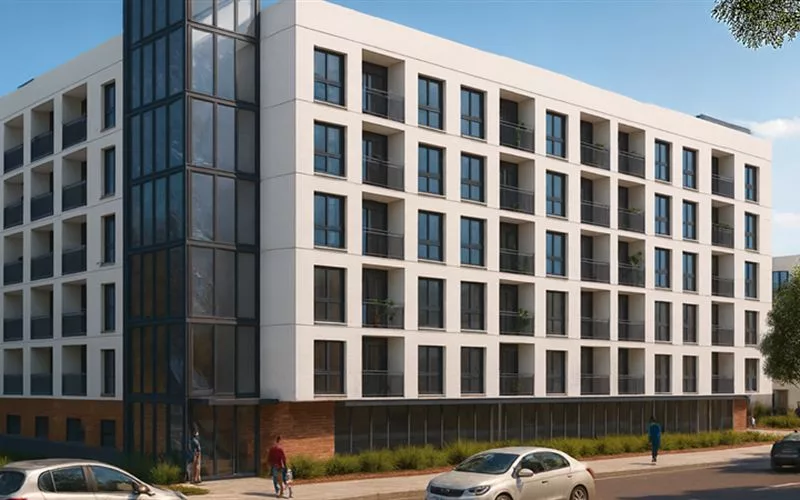
The new development will deliver 237 social housing units – an increase from the initial plan for 180 – alongside a total of 375 homes and 435 square meters of commercial space. The YG Group, which leads the project’s design and planning, has maximized density and utility without sacrificing quality of life. Future residents will encounter more than just residential blocks: shops, cafés, and service outlets will create an active streetscape, echoing the lively, interconnected neighborhoods championed by urban thinkers like Jane Jacobs.
Mixed-use projects have a storied history in successful cities. Parisian boulevards and the streets of Greenwich Village once thrived on the interplay of living, working, and shopping in the same area. Cape Town’s new direction deliberately draws on this tradition, choosing variety and vibrancy over monotony and exclusion. The project serves as a model for other South African cities grappling with the legacy of spatial inequality.
This approach requires more than clever design. Hill-Lewis’s administration has introduced financial incentives – discounted city land, reduced property taxes, and subsidized utility rates – to make social housing feasible in premium locations. These tools mirror strategies employed in cities like Vienna, where public land and innovative funding have made social housing a pillar of urban life.
Policy Shift and Legislative Momentum
The city’s leadership claims to have released more land for social and affordable housing during this term than in the previous decade combined. With an affordable housing pipeline of 12,000 units spanning neighborhoods such as Woodstock, Salt River, and Maitland – and thousands earmarked for the inner city – Cape Town sends a clear message: integration, not segregation, will define the next chapter of its urban development.
Accelerating this transformation requires cutting through traditional bureaucratic red tape. City officials have revamped the legislative framework, streamlining the approval process for new developments. This overhaul has made it more practical for developers to bring social housing projects to life. Anyone who has navigated South Africa’s urban planning processes knows how significant these changes are.
Councillor Carl Pophaim, the city’s Mayco Member for Human Settlements, explains that the goal is to energize the social housing sector and fast-track delivery. The municipality has launched direct support for small-scale developers, including a township development fund and standardized plan templates that lower barriers to entry. This hands-on approach, influenced by incremental urbanism seen in Latin American cities, allows local entrepreneurs and builders to play a critical role in shaping Cape Town’s future.
Social Housing for the Urban Middle: Bridging Gaps
Cape Town’s social housing initiative targets a wide range of incomes, reaching households earning anywhere from R1,850 up to R32,000 per month. This spectrum includes essential workers – teachers, nurses, municipal staff, and young professionals – who often find themselves ineligible for public housing subsidies but unable to afford private rentals in the city centre.
Consider the story of a teacher who can now live near her school, or a city worker who can finally cut their daily commute dramatically. These are more than numbers on a housing application; they represent new possibilities, dignity, and the unlocking of human potential. Cities such as Singapore and the Netherlands have already demonstrated the benefits of mixed-income communities, where diversity fosters resilience and mutual understanding.
The ‘Fruit & Veg’ project embodies this ethos. By attracting a blend of incomes and backgrounds, the new housing development promises to cultivate a strong, cohesive community – one that reflects Cape Town’s diversity and defies the exclusion of the past.
Navigating National Policy and Local Reality
Despite Cape Town’s energetic local initiatives, national policy and funding continue to shape what is possible. Councillor Pophaim points out that the national housing subsidy system often limits municipal ambitions, slowing the rollout of urgently needed projects. While recent years have seen more municipal schemes enter the funding pipeline of the Social Housing Regulatory Authority, city leaders argue that national grant allocations still fall short of what is necessary to tackle the scale of the challenge.
Pophaim advocates for more robust, “pro-poor” grant funding, echoing a debate heard in cities worldwide: how can local governments gain the resources and flexibility they need to deliver for their residents? The question remains especially acute in South Africa, where rapid urbanization and historical backlogs place huge demands on city budgets.
Healing Wounds, Honoring Memory: The Symbolism of Place
Constructing social housing near District Six carries profound symbolism. Older families recall the heartbreak of forced removals, when apartheid bulldozers destroyed not just buildings but an entire way of life. For younger generations, the return of public housing to this area signals an act of restitution – a small but meaningful step toward reclaiming land lost to exclusion.
Cape Town’s public spaces and street art reflect this ongoing dialogue with history. Murals on the walls of District Six tell stories of longing, resilience, and the enduring quest for home. The new development will not erase the city’s painful past but seeks to add hope and opportunity, building a new narrative atop old foundations.
Looking Outward: Lessons from Global Cities
Cape Town’s experiment fits into a larger, international movement to rethink the social contract through urban housing. In Vienna, over 60% of residents benefit from subsidized or social housing – a model born from the city’s progressive “Red Vienna” period. In São Paulo, housing cooperatives have transformed derelict buildings into thriving communities. Each city’s approach holds lessons, but Cape Town’s journey remains distinctly shaped by its unique history, challenging geography, and the aspirations of its citizens.
Strolling through the streets near the ‘Fruit & Veg’ development, one sees the city’s diversity on full display: students crowding bus stops, workers rushing to offices, families browsing market stalls. Soon, the faces in these spaces may shift to reflect a broader spectrum of Cape Town’s people, united by new opportunities in the city’s heart. The commitment to social housing, driven by policy innovation and a spirit of inclusion, points toward a future where address and opportunity depend less on background – and more on shared belonging.
Cape Town’s social housing vision does more than offer shelter; it reimagines what urban living can mean. With bold leadership, creative policy tools, and respect for the city’s complex past, Cape Town is charting a path toward a city centre that finally welcomes all. The next generation may find that their place in the city no longer hinges on the luck of their birth but on the promise of a city determined to heal, integrate, and thrive together.
What is the main goal of Cape Town’s social housing plan?
Cape Town’s social housing plan aims to create affordable, inclusive, and mixed-use neighborhoods in the city centre. By offering homes close to jobs, schools, and transport, it seeks to promote social integration, economic opportunity, and heal spatial inequalities caused by apartheid-era urban planning. The plan focuses on developing vibrant communities where residents from diverse backgrounds can live, work, and connect.
What makes the ‘Fruit & Veg’ site important in this initiative?
The ‘Fruit & Veg’ site is a flagship project located in a strategic area between Kent and Bloemhof Streets. It transforms a 3,300 square meter parcel once known for commercial activity into a lively neighborhood featuring 237 social housing units (part of 375 total homes), alongside shops and cafés. Its location near transit, schools, and jobs offers residents immediate access to city life, reversing the isolation typical of apartheid-era housing and serving as a symbolic step toward urban inclusion.
How does mixed-use urbanism contribute to the project’s success?
Mixed-use urbanism integrates residential, commercial, and social spaces within the same neighborhood, fostering vibrant, safe, and economically active communities. Cape Town’s project follows global examples like Paris and New York by combining homes with shops, cafés, and services. This approach encourages street-level activity and social interaction, creating a dynamic environment that supports diversity and inclusion, rather than segregated or monotonous urban landscapes.
Who benefits from Cape Town’s social housing, and what income groups are targeted?
The initiative primarily serves households with monthly incomes ranging from R1,850 to R32,000. This includes essential workers such as teachers, nurses, municipal employees, and young professionals who often cannot access traditional public housing subsidies but struggle to afford private rentals in central Cape Town. By providing affordable housing options in the city centre, the plan reduces commuting times and improves quality of life for a broad middle-income spectrum.
What policy changes support the rapid development of social housing in Cape Town?
Cape Town has revamped its legislative framework to streamline approvals for social housing projects, cutting through bureaucratic delays that previously slowed development. The city offers financial incentives like discounted land, reduced property taxes, and subsidized utilities, making projects feasible in prime locations. Additionally, support programs for small-scale developers and standardized planning templates encourage local entrepreneurship and incremental urbanism, accelerating housing delivery.
How does this social housing plan address Cape Town’s historical and social challenges?
The plan confronts the legacy of apartheid, which displaced working-class communities to the city’s periphery, by reintegrating diverse populations into the city centre. Building social housing near District Six – a neighborhood historically marked by forced removals – carries symbolic weight in healing historical wounds. Through inclusive urban design, diverse communities, and respectful public spaces, the initiative nurtures social cohesion, honors memory, and offers a hopeful narrative for Cape Town’s future.