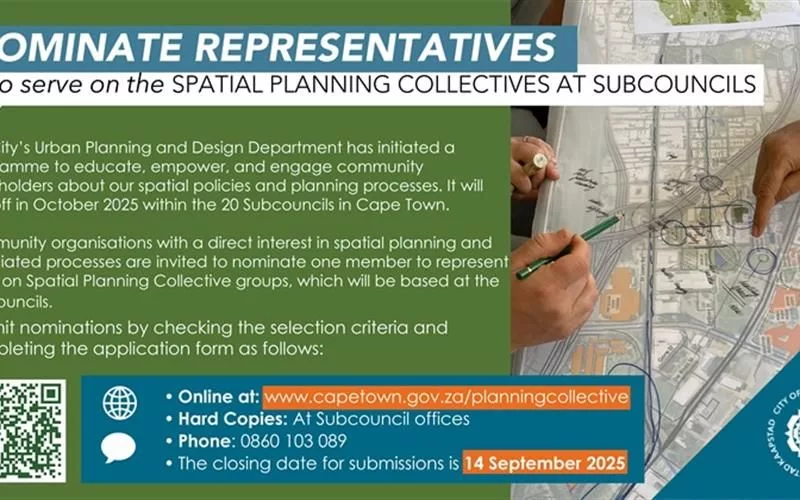
Cape Town is inviting its residents to help plan the future of their neighborhoods through new community groups called Spatial Planning Collectives. These groups bring together everyday people and city experts to work as partners, learning about urban planning and sharing local knowledge. This fresh approach means that residents can directly shape things like parks, housing, and transport in their own areas. By involving everyone, from all walks of life, Cape Town hopes to build stronger, greener, and fairer neighborhoods where people feel truly connected to their city’s growth.
What is Cape Town’s new participatory urban planning initiative?
Cape Town’s Spatial Planning Collectives invite residents to actively shape urban development through community-nominated representatives. This initiative fosters inclusive decision-making by combining local knowledge with expert planning, promoting sustainable, resilient neighborhoods across all 20 Subcouncils through training and collaboration.
A New Era of Participatory Urban Governance
As winter approaches in 2025, Cape Town steps into an exciting chapter of civic engagement, extending a bold invitation to its people. The city asks residents, community groups, and local organizations to nominate representatives for the innovative Spatial Planning Collectives that will soon operate within each of Cape Town’s 20 Subcouncils. With this move, civic leaders align Cape Town with a global movement toward shared urban decision-making – a spirit captured in the participatory budgeting of Porto Alegre and Barcelona’s neighborhood assemblies.
Urban planning, while often regarded as highly technical, impacts every resident’s daily existence. As you stroll beneath Newlands’ green canopies or navigate the vibrant heart of Khayelitsha, you feel the influence of planning choices in the placement of parks, the flow of traffic, the rise of new housing, and the distribution of business opportunities. Cape Town’s latest initiative acknowledges this reality, striving to bridge the divide between specialist knowledge and lived experience.
Deputy Mayor Eddie Andrews, who oversees Spatial Planning and Environment, has spoken openly about the hurdles residents face when navigating the city’s planning processes. He notes that urban policy often feels mysterious and impenetrable, creating a rift between policymakers and the people affected by their decisions. With the new Spatial Planning Collectives, Cape Town seeks to change this dynamic – inviting people not only to witness, but to shape the evolution of their city.
Building Collaboration: From Policy to Everyday Impact
The Urban Planning and Design Department now embarks on a mission that blends education with genuine partnership. Each Subcouncil will soon host its own Collective – spaces where officials and everyday citizens come together, not as adversaries, but as partners. The city aims to create ongoing conversations, mutual understanding, and a shared sense of responsibility for Cape Town’s development.
Recognizing that meaningful participation requires both knowledge and confidence, the city will equip nominated representatives with robust training. This program offers more than introductions to abstract planning concepts – it provides hands-on experience with the systems and challenges that shape Cape Town. Participants delve into the Municipal Spatial Development Framework, along with the more detailed District and Local frameworks, gaining insight into environmental planning, affordable housing, climate adaptation, public transit, land use, and economic development.
Cape Town draws inspiration from historical models such as the Bauhaus, which blurred the boundaries between creators and users, and from urban thinkers who championed community-led input, such as Jane Jacobs in New York. The city’s Collectives aspire to empower residents to move beyond criticism, embracing active roles as contributors to the urban landscape. By hearing many voices, the city becomes a richer mosaic, reflecting the full spectrum of its diverse population.
The hunger for such involvement has surfaced repeatedly in public forums. In Mitchells Plain, an elderly resident recently recounted how a library closure – decided without neighborhood input – upended the daily routines of local children. In Woodstock, community members debated the future of mixed-use zoning, with some expressing concern about gentrification and others eager for new opportunities. These stories underscore that planning involves navigating real-life trade-offs and that genuine engagement fosters community trust.
Laying the Foundations for Inclusive Participation
The city’s invitation to participate in the Collectives comes with both promise and responsibility. Community organizations must now identify individuals who truly represent their neighborhoods’ interests – people who not only care deeply but are ready to commit time and energy. Nominations can be submitted online or physically at Subcouncil offices, making the process accessible to everyone. While the selection criteria ensure that all of Cape Town’s social and economic diversity is represented, the process remains straightforward and welcoming.
Once chosen, Collective members embark on a comprehensive training journey. This phase echoes the educational workshops that shaped post-war European urban renewal and the grassroots activism that fueled neighborhood advocacy in North America. Cape Town’s leadership recognizes that an open invitation alone cannot guarantee meaningful input; residents must have the skills and knowledge to engage thoughtfully and creatively. As representatives gain experience and confidence, they become powerful advocates for their communities, co-authoring the city’s next chapter.
This shift in approach marks a significant departure from the centralized, top-down planning of the twentieth century. Unlike the rigid blueprints of Le Corbusier or the state-led urban projects of the Soviet era, Cape Town’s method values on-the-ground wisdom. Local knowledge – whether it comes from a street’s unique history or a resident’s daily experience – serves as a crucial counterweight to formal analysis.
The Collectives foster not only new ways of making policy, but also a deeper sense of connection and ownership. When residents participate in shaping their surroundings, they transform from passive recipients of decisions to active caretakers of place. Each neighborhood – from Bo-Kaap’s historic alleys to Table View’s windswept avenues – faces its own mix of challenges and opportunities. By engaging directly with residents, the city adapts planning to each community’s unique context.
Forging Resilience and Reconciliation Through Urban Planning
Resilience has emerged as a guiding theme in the new training, reflecting Cape Town’s acute awareness of climate threats. The city’s recent struggles with drought, fire, and powerful winds have underscored the need for forward-thinking planning. Collective members will learn how to champion green spaces, promote sustainable transport, and seek solutions tailored to their neighborhoods’ vulnerabilities.
This initiative arrives at a time when cities worldwide are reevaluating the relationship between local government and the people it serves. The COVID-19 pandemic exposed the limitations of centralized planning and highlighted the value of local agency and adaptability. Through the Spatial Planning Collectives, Cape Town provides a model for restoring trust, fostering partnership, and building adaptable urban futures.
The process also blends technological innovation with respect for tradition. By accepting nominations both online and in person, the city ensures that all residents – regardless of internet access – can participate. City planners have committed to bridging the digital gap, ensuring true inclusivity and engagement across the social spectrum.
Urban planning, much like art, requires a balance of vision and practicality. The most effective plans harmonize structure with creativity, discipline with imagination. Cape Town’s approach invites citizens to become both critics and creators, drawing on the city’s long tradition of community activism.
The impact of planning reaches far beyond physical infrastructure – it shapes social relationships and addresses the enduring legacy of apartheid-era spatial divisions. Efforts to heal past injustices continue, and the work of the Collectives carries both the hope of transformation and the responsibility of reconciliation.
In the coming months, Cape Town’s neighborhoods will shape the city’s future in ways both visible and subtle. As nominations roll in and training begins, the new Spatial Planning Collectives will change not only how decisions are made, but who makes them. While the city’s streets may look unchanged at first glance, a new civic energy is taking root – one that gives every resident a stake in Cape Town’s unfolding story. The era of participatory planning has arrived, and its tools now belong to all who call the city home.
What are Spatial Planning Collectives in Cape Town?
Spatial Planning Collectives are new community groups formed within each of Cape Town’s 20 Subcouncils that bring residents and city experts together as partners in urban planning. These collectives enable everyday people – nominated by their communities – to learn about planning processes and actively contribute to decisions affecting parks, housing, transport, and other neighborhood developments. The goal is to create stronger, greener, and fairer neighborhoods through inclusive, collaborative governance.
How can residents get involved in the Spatial Planning Collectives?
Residents can participate by nominating themselves or others through community organizations, either online or in person at their respective Subcouncil offices. The nomination process is designed to be accessible and inclusive, ensuring social and economic diversity among representatives. Once selected, members receive comprehensive training to equip them with the knowledge and skills needed for meaningful involvement in urban planning discussions and decisions.
What kind of training do Collective members receive?
The city provides robust, hands-on training covering the Municipal Spatial Development Framework and related district and local plans. Topics include environmental planning, climate adaptation, affordable housing, public transit, land use, and economic development. This education empowers representatives to confidently engage with technical planning concepts and serve as effective advocates for their communities.
Why is Cape Town shifting to a participatory urban planning model?
Traditional urban planning has often been top-down and inaccessible, leaving residents feeling disconnected from decisions that shape their daily lives. Cape Town’s participatory approach addresses this by bridging the gap between expert knowledge and local lived experience. It promotes transparency, community trust, and shared responsibility, drawing inspiration from global examples like Porto Alegre’s participatory budgeting and Barcelona’s neighborhood assemblies.
How does the initiative address Cape Town’s unique challenges?
The Spatial Planning Collectives focus on resilience and reconciliation, responding to climate threats such as drought and fire by promoting green spaces and sustainable transport. The approach also tackles historical spatial inequalities rooted in apartheid-era policies by empowering diverse neighborhoods to influence planning in ways that reflect their specific contexts. This fosters social cohesion and supports long-term, equitable urban development.
What impact can residents expect from participating in these Collectives?
By joining a Spatial Planning Collective, residents become active caretakers of their neighborhoods rather than passive observers. Their input will help shape visible urban changes – like park improvements, housing projects, and transit routes – as well as subtle social outcomes, such as increased community trust and ownership. Ultimately, this shared governance model aims to make Cape Town a more inclusive, adaptable, and vibrant city for all its inhabitants.