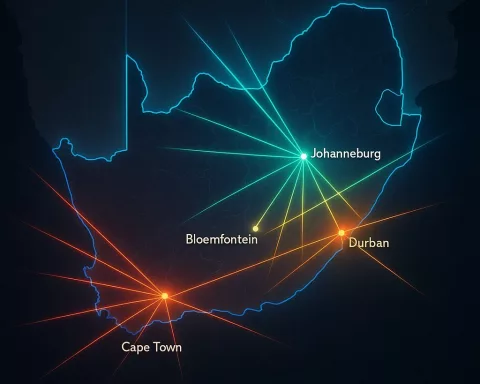

Cape Town is on an exciting journey to improve how people move around the city with the MyCiTi bus service. By March 2025, this service will connect neighborhoods like Khayelitsha and Mitchells Plain to important areas like Wynberg and Claremont, making travel easier for everyone. The project not only speeds up commutes but also helps build stronger community ties. As new roads and bus lanes are created, the city’s commitment to a better, more connected future shines bright, promising a smoother ride for all.
What is the MyCiTi bus service and how is it transforming urban mobility in Cape Town?
The MyCiTi bus service is a key initiative in Cape Town aimed at enhancing urban mobility. Set to expand by March 2025, it will connect Khayelitsha and Mitchells Plain with economic hubs like Wynberg and Claremont, improving accessibility, reducing congestion, and fostering community engagement.
Dawn of a New Era
As dawn breaks over Cape Town, the city pulses with a vibrant energy, fueled by an unyielding drive toward progress. Among the key initiatives shaping this transformation is the ambitious expansion of the MyCiTi bus service, aimed at revolutionizing urban mobility in the metro-south east. March 2025 will mark a pivotal moment for Khayelitsha as the city sets its sights on a new phase of development, ushering in a transformative chapter for the community.
MyCiTi represents Cape Town’s modern dedication to enhancing connectivity and accessibility. Functioning as a vital link between diverse neighborhoods, it not only fosters economic growth but also strengthens social ties. The forthcoming phase plans to integrate Khayelitsha and Mitchells Plain with Wynberg and Claremont’s economic centers, heralding an era of effortless commuting for countless residents.
Planning and execution for the rollout demand precision and attention to detail. The focus will be on significant upgrades to infrastructure, including the enhancement of roads and intersections along Govan Mbeki Road and Japhta K Masemola Road. These routes are central veins within the city’s transport network and will undergo a comprehensive transformation. The project stretches from the R300 bridge in the west to just beyond the Mew Way intersection, covering a promising yet demanding expanse.
Threads of Transformation
Urban development narratives often intertwine with stories of change and resilience. As Cape Town’s ground gives way to new structures, echoes of artistic and historical movements resonate. Just as Impressionists in late 19th-century France captured ephemeral moments through light and color, this project seeks to enhance the fleeting moments of everyday travel, transforming each trip into an experience rather than a mere necessity.
To maintain an informed and engaged community, the city plans several public information days. These sessions, organized at strategic venues, offer residents insights into the project’s breadth and timeline. Lobelia Community Hall will kick off the series on February 24, with subsequent gatherings at Zola Secondary School, Solomon Tshuku Hall, and the OR Tambo Indoor Sports Centre. These meetings underscore the city’s commitment to transparency and community participation.
The initiative thrives on collaboration and collective progress. “We invite residents to join the MyCiTi project team,” declared Councillor Rob Quintas, Mayoral Committee Member for Urban Mobility. His invitation fosters unity, encouraging residents to embrace upcoming changes and actively engage in dialogues shaping their community’s future.
A Broader Narrative of Change
Urban mobility projects go beyond mere engineering feats; they narrate a profound story of evolution and adaptation. The MyCiTi project embodies the Bauhaus principle of the early 20th century, merging form and function to elevate the urban environment. It aims to craft spaces that are not only efficient but also rich in aesthetic and social value.
This initiative aligns with global urban planning trends, where cities endeavor to alleviate congestion, reduce environmental impact, and democratize access to essential services. The MyCiTi expansion transcends local boundaries, acting as a microcosm of worldwide aspirations for sustainable, inclusive urban settings.
As construction nears, Khayelitsha stands on the verge of transformation. The palpable anticipation reflects the dynamic energy of a community poised for change. This development promises to redefine daily life, converting a once-daunting commute into a seamless, dependable journey.
Weaving the Future
In Cape Town’s evolving landscape, the MyCiTi project’s threads are intricately woven with foresight and intent. Each bus lane, road enhancement, and intersection upgrade signifies a commitment to advancement, a move forward in the dance between modernity and tradition.
Here, at Khayelitsha’s core, the present converges with the future. The city’s pledge to urban mobility reflects a dedication to honoring its history while courageously embracing its potential. As MyCiTi buses prepare to traverse the newly constructed lanes, they carry within them the hopes, dreams, and ambitions of a community ready for a brighter, more interconnected future.
FAQ – Cape Town’s Journey Toward Enhanced Urban Mobility
What is the MyCiTi bus service and how is it transforming urban mobility in Cape Town?
The MyCiTi bus service is an initiative aimed at enhancing urban mobility in Cape Town. By March 2025, it will connect neighborhoods like Khayelitsha and Mitchells Plain with key areas such as Wynberg and Claremont. This service is designed to improve accessibility, reduce congestion, and foster community engagement, ultimately providing a smoother commuting experience for residents.
How will the MyCiTi expansion impact the Khayelitsha and Mitchells Plain communities?
The expansion of the MyCiTi bus service is set to significantly benefit the Khayelitsha and Mitchells Plain communities by connecting them to economic hubs and reducing travel times. This enhanced connectivity will help foster economic growth and strengthen social ties, making everyday commuting more efficient and enjoyable for residents.
What infrastructure upgrades are planned as part of the MyCiTi project?
The MyCiTi expansion includes significant infrastructure upgrades, particularly along Govan Mbeki Road and Japhta K Masemola Road. These upgrades will enhance roads and intersections, transforming crucial transport routes within the city’s network, and ensuring a more reliable public transport system.
How can members of the community get involved in the MyCiTi project?
The city encourages community participation through public information days where residents can learn about the project and share their thoughts. These sessions will occur at various venues, starting with Lobelia Community Hall on February 24, and are designed to foster transparency and active engagement in the community’s future.
What are the key goals of the MyCiTi expansion project?
The MyCiTi expansion aims to alleviate congestion, improve accessibility to essential services, and promote sustainable urban mobility. It seeks to enhance the urban environment by merging efficient transport with aesthetic and social values, ensuring that the project aligns with global urban planning trends.
When is the expected completion date for the MyCiTi expansion?
The MyCiTi bus service is expected to be fully operational by March 2025. This timeline marks a pivotal moment for the communities of Khayelitsha and Mitchells Plain, as they will gain improved access to vital economic centers in Cape Town, leading to enhanced quality of life for many residents.