Cape Town’s migrant shelters at Wingfield and Paint City began as quick help during Covid-19 but turned into long-lasting homes for many migrants and refugees. The city tries to balance kindness, the law, and pressure from local communities while offering some people help to restart their lives elsewhere. Inside the camps, life is full of both hope and struggle, with art, small businesses, and friendships shining through tough conditions. But tensions rise as overcrowding and conflicts grow, and the city now faces hard choices about eviction and rights. This situation shows how Cape Town wrestles with its history and its future as a home to many who seek safety and belonging.
What is the situation of migrant shelters in Cape Town and how is the city addressing it?
Cape Town’s migrant shelters at Wingfield and Paint City started as emergency relief during Covid-19 but became long-term settlements. The city balances humanitarian aid, legal eviction processes, and community tensions while offering reintegration support, amid challenges of overcrowding, conflict, and rights protection.
From Emergency Relief to Urban Crisis
When Cape Town entered the strictest phases of Covid-19 lockdown in early 2020, the city’s streets emptied overnight. Businesses shuttered, church bells fell silent, and the city’s famous markets turned ghostly. For hundreds of foreign nationals – refugees, asylum seekers, and migrants – the sudden stillness meant both safety from the virus and exposure to new dangers: xenophobic violence, hunger, and the threat of displacement.
In response to these dangers, municipal authorities, national government departments, and international agencies sprang into action. They moved those who’d been camping in central public spaces – like Greenmarket Square and the Central Methodist Church – into temporary shelters at Wingfield and Paint City. These sites, usually reserved for logistical or administrative functions, became emergency safe havens. For a brief moment, the shelters offered an answer to urgent humanitarian needs and a reprieve from the tension simmering across Cape Town’s neighborhoods.
Yet, as weeks turned to years, Wingfield and Paint City stopped being temporary. The initial promise of dignified, short-term care began to erode. The city, juggling its public obligations and limited resources, struggled to find a sustainable path forward. The shelters, once symbols of swift humanitarian response, slowly transformed into flashpoints in a growing urban crisis.
Offers for Reintegration and Stubborn Realities
As Cape Town adjusted to the pandemic’s long-term effects, officials and humanitarian agencies worked to provide lasting solutions for the shelter residents. The Department of Home Affairs, in collaboration with non-profits and international partners like the United Nations High Commissioner for Refugees, rolled out a host of options. Some residents qualified for voluntary repatriation to their countries of origin. Others could apply for assistance with local reintegration, including help finding new jobs, housing, and access to basic services.
Hundreds of migrants accepted these offers, motivated by the desire to escape years of limbo and regain a sense of control over their futures. Some found new homes in the city’s sprawling suburbs. Others returned to family in Zimbabwe, Malawi, or other countries, receiving financial and logistical support for their journeys. For these individuals, the transition away from the temporary shelters marked both an end and a new beginning – a chance to rebuild after the upheavals of pandemic and displacement.
But not everyone was willing to leave. About 360 residents, including many families, refused all offers except one: relocation to Europe, Canada, or another developed nation. Their refusal underscored deep fears about returning home – whether because of political instability, lack of opportunity, or memories of violence. For these holdouts, Cape Town’s shelters became both sanctuary and prison. They remained, year after year, even as conditions worsened and the city’s patience wore thin.
Tensions within the shelters mounted. Factions formed, some cooperating with authorities, others resisting. Disputes over resources, leadership, and direction erupted, at times spilling into violence. The city and its partners found themselves in a bind – unable to force departures, but unwilling to allow indefinite occupation of public land.
Life Inside: Community, Conflict, and Creativity
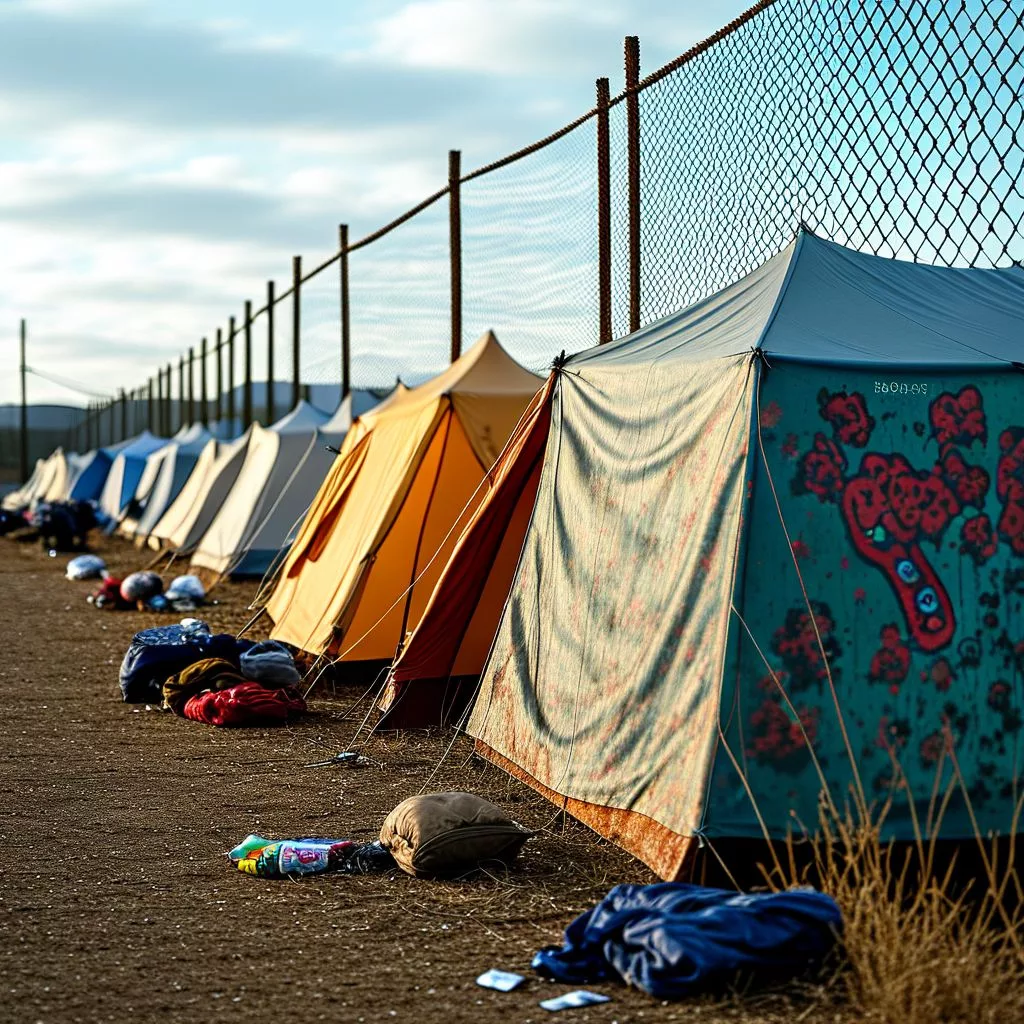
A walk through Paint City or Wingfield reveals a world suspended between resilience and despair. Makeshift cafes serve coffee and snacks, echoing the open-air markets of Kinshasa or Harare. Children dart between tents, improvising games on dusty patches of ground. Women barter for soap or flour, sustaining small networks of mutual aid.
Yet these glimpses of community coexist with a heavy atmosphere of frustration. Residents complain of overcrowding, poor sanitation, and a lack of privacy. Some have managed to carve out small businesses – shoe repairs, hairstyling, or tailoring – to support their families, using whatever tools and skills they brought with them. Others, unable to find work or education for their children, struggle with boredom and anxiety.
Art and culture offer outlets for hope. Murals adorn shelter walls, painted by residents who once studied art in Kinshasa or played drums at festivals in Bulawayo. In the evenings, songs drift through the tents, blending Congolese rumba, Shona mbira, and Cape jazz into a new soundscape. These creative acts echo the survival strategies of migrants in other cities – Johannesburg’s downtown, Nairobi’s Eastleigh, or Paris’ outer suburbs – where art becomes both a bridge and a lifeline.
But conflict also simmers. Factional disputes, sometimes rooted in national or religious identities, flare up. Residents allege police harassment and theft; neighbors complain of increased crime, rubbish, and blocked streets. Each complaint deepens mistrust, making compromise harder to achieve.
The city’s officials, meanwhile, face growing pressure from surrounding communities. Residents of Kensington, for instance, have filed complaints about traffic congestion, illegal dumping, and safety concerns. Local politicians warn of deteriorating relations, while businesses threaten to relocate. For Cape Town, the shelters have become not just a humanitarian issue, but a test of urban governance and social cohesion.
Law, Rights, and the Search for Solutions
In August 2025, after multiple failed negotiations and mounting public pressure, the Western Cape High Court stepped in. The court granted the City of Cape Town and relevant national departments the authority to serve eviction notices at both Wingfield and Paint City. Crucially, the ruling required that notices be delivered to each resident in person and explained in their own languages – a nod to the dignity and agency of those affected.
This decision reflected both compassion and constraint. The court recognized the years-long effort to provide alternatives and the reality that international law does not require “third country resettlement” for migrants who do not qualify as refugees. Lawyers and human rights advocates watched closely, aware of South Africa’s painful history with forced removals – from District Six to the inner city and far beyond.
The city emphasized that eviction would be a last resort, only after all reasonable options had been exhausted. Officials cited international conventions and South Africa’s own constitution, which guarantee basic rights while also allowing for the use of public land for broader community benefit. They framed the shelters’ continued occupation as undignified for all – residents, neighbors, and the city itself.
Yet, questions linger. How to balance the rights of vulnerable migrants with the needs and expectations of established communities? How to enforce the law without repeating the mistakes of the past? For international observers, from the UN to Amnesty International, Cape Town’s drama offers both warning and lesson – a case study in the challenges of urban migration in the 21st century.
Urban Memory and the Art of Belonging
Cape Town’s struggle with its migrant shelters taps into a much deeper story. The city has always been a crossroads – a port of arrival, a place of refuge, a site of contestation. From the arrival of Dutch settlers in the 17th century, to the forced removals of apartheid, to the waves of African and Asian migration after 1994, each era has left its imprint on Cape Town’s streets and psyche.
This history lives on in the city’s art and architecture. Muralists in Salt River and Woodstock paint stories of exile and homecoming. Musicians blend local rhythms with the sounds of new arrivals, creating genres that speak to shared resilience. Even the contested shelters reflect this layered reality: spaces at once of exclusion and belonging, struggle and hope.
The residents of Wingfield and Paint City, like those before them, seek not just survival but meaning – a place to work, to worship, to raise children, to dream. Their presence challenges Cape Town to reckon with its own ideals, its memories, and its future. The outcome, still uncertain, will shape the city’s character for years to come.
In the end, Cape Town’s response to the crisis at Wingfield and Paint City will stand as a testament – not just to its laws and policies, but to its capacity for empathy, creativity, and reinvention. The city’s story, like the murals on its walls, is still being painted.
FAQ: Cape Town’s Migrant Shelters – Law, Humanity, and Urban Challenges
1. What are the Cape Town migrant shelters at Wingfield and Paint City, and how did they come about?
The migrant shelters at Wingfield and Paint City were initially established in early 2020 during the strict Covid-19 lockdowns as emergency relief spaces to protect migrants, refugees, and asylum seekers from xenophobic violence, hunger, and displacement. Originally intended as temporary safe havens, these sites quickly became long-term settlements as the pandemic’s impact extended and durable solutions remained elusive.
2. How is the City of Cape Town managing the complex challenges of these shelters?
Cape Town is attempting a delicate balance between humanitarian aid, enforcement of legal eviction processes, and addressing local community pressures. The city collaborates with national government departments, NGOs, and international agencies to provide reintegration support – helping some migrants return home or resettle locally – while facing overcrowding, rising conflicts, and the need to uphold both residents’ rights and broader public interests.
3. What options are available to shelter residents for reintegration or relocation?
Residents have been offered several options including voluntary repatriation to their countries of origin, local reintegration assistance such as job placement and access to housing, and in some cases, support to move abroad. Hundreds have accepted these options, but approximately 360 residents have declined all except relocation to developed countries like Europe or Canada, citing fears of returning to unstable or unsafe home countries.
4. What is life like inside the migrant shelters despite the difficult conditions?
Life inside Wingfield and Paint City shelters reflects resilience amid adversity. Residents run small businesses like shoe repairs and hairstyling, children play amid the tents, and cultural expression thrives through murals and music blending Congolese, Shona, and Cape jazz traditions. However, overcrowding, poor sanitation, resource disputes, factional conflicts, and anxiety over an uncertain future also contribute to a challenging daily reality.
5. What legal actions have been taken regarding the future of the shelters?
In August 2025, the Western Cape High Court authorized the City of Cape Town and national authorities to issue eviction notices to residents at both shelters, with the requirement that notices be delivered in person and explained in residents’ languages. This ruling reflects a balance between respecting human dignity and upholding laws governing public land use. Authorities emphasize eviction as a last resort after exhausting all alternatives.
6. How does the migrant shelter situation reflect broader themes in Cape Town’s history and urban identity?
The shelters encapsulate Cape Town’s historical role as a crossroads of migration, refuge, and social contestation – from colonial settlement and apartheid forced removals to post-1994 migration waves. The ongoing shelter crisis challenges the city to reconcile its ideals of inclusion, the memory of past injustices, and the practical realities of urban governance. It also highlights migration’s cultural contributions, as seen in local art and music, shaping Cape Town’s evolving identity.
If you want to learn more about Cape Town’s migrant shelters, their history, and ongoing developments, many local NGOs and international organizations provide detailed reports and assistance programs.