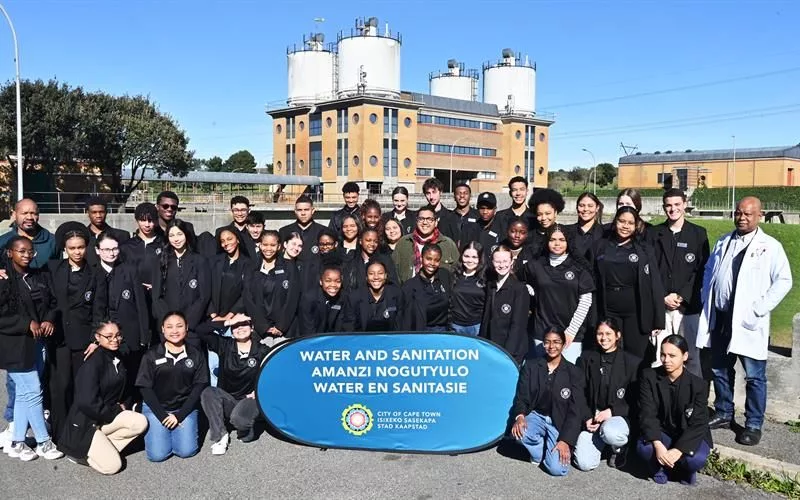
Cape Town is preparing its youth to tackle big water challenges through the Junior City Council program, where students get hands-on learning at water treatment plants. They explore how water is cleaned, recycled, and turned from seawater into fresh water, gaining valuable knowledge about sustainability. Guided by city leaders, these young learners discover how innovation and teamwork help protect the city’s water supply for the future. Inspired and empowered, they leave ready to make a difference in their communities and beyond.
How is Cape Town preparing its next generation to manage urban water challenges?
Cape Town educates youth through the Junior City Council program, offering hands-on experiences at water treatment plants. Students learn about water treatment, recycling, desalination, and sustainability, empowering them with knowledge and civic responsibility to support the city’s innovative 2030 Water Resilience Strategy.
A Morning of Anticipation and Civic Purpose
On a cool August morning in 2025, a group of keen teenagers gathered at the entrance of the Faure Water Treatment Plant, their excitement growing with each passing minute. These students represented Cape Town’s Junior City Council (JCC), a carefully selected body of high schoolers with a shared curiosity about how cities work and a desire to make a difference. Their visit promised rare access to the inner workings of the city’s water infrastructure – a realm normally hidden from public view.
The JCC, a deliberately non-partisan initiative, invites Grade 10 and 11 learners to experience the practical side of municipal governance. Rooted in the age-old principles of civic humanism, the programme echoes the spirit of Renaissance Florence, where responsible citizenship among youth was seen as essential for a flourishing society. Today’s version aims to kindle both a sense of civic duty and individual empowerment, nurturing future leaders who feel personally invested in Cape Town’s wellbeing.
Councillor Zahid Badroodien, who oversees Water and Sanitation for the city, welcomed the young council with genuine enthusiasm. His passion for sustainable solutions was matched by his expertise, making him the ideal guide for the day. He not only led the students through the physical spaces of the Faure plant but also shed light on the strategic thinking behind Cape Town’s water management, setting the stage for a meaningful exploration.
The Journey of Water: From Reservoirs to Tap
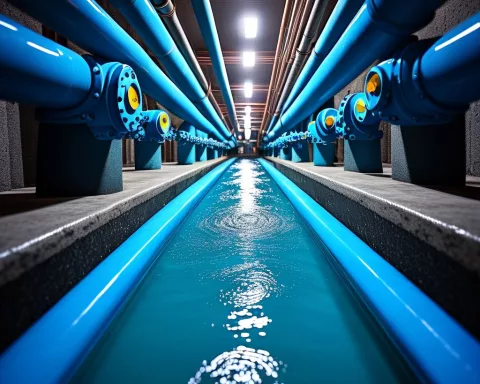
The tour commenced with an exploration of the plant’s vast and meticulously engineered systems. The students followed the route water takes as it flows from the mountain reservoirs, through an intricate network of pipelines, and into state-of-the-art treatment chambers. Each stage revealed new layers of complexity, from initial filtration to remove solid debris, through a sequence of chemical and biological treatments designed to eliminate contaminants and pathogens. By the end of this journey, ordinary water had become a vital resource, ready for consumption by hundreds of thousands of city residents.
The Faure plant stands as a symbol of both technological achievement and environmental necessity. Its sleek structures of concrete and steel serve not only as a testament to modern engineering but also as a frontline defense against the city’s most pressing natural threat: water scarcity. The facility plays a pivotal role in the New Water Programme, a comprehensive initiative developed in response to the traumatic drought of 2017-2018 – a period when the spectre of “Day Zero” forced Cape Town to radically rethink its dependence on rainfall and river systems.
Inside one of the plant’s sunlit conference rooms, Councillor Badroodien introduced the 2030 Water Resilience Strategy. He explained how this forward-looking plan prepares the city to handle the dual challenges of climate change and rapid population growth. Just as the Green Revolution transformed global agriculture and the energy crises of the 1970s spurred innovation, Cape Town’s water strategy calls for diversification – ensuring that the city never again faces such severe vulnerability.
Building Resilience: Innovation at the Core
At the heart of Cape Town’s water resilience plan lies the New Water Programme, a bold integration of scientific advances, policy development, and community involvement. The programme rests on four main pillars: recycling water, desalination, tapping into underground aquifers, and controlling invasive plant species that threaten local ecosystems. Each element supports the larger mission of sustainability, equipping Cape Town to adapt to an unpredictable environment.
Water reuse, the central focus of the Faure New Water Scheme, illustrates how cities can turn necessity into opportunity. As urban populations expand and weather patterns grow more erratic, recycling wastewater becomes not just an option but a crucial resource. The scheme will transfer treated effluent from the upgraded Zandvliet Wastewater Treatment Works – located about twelve kilometers from Faure – to the treatment plant. There, the water will undergo a sophisticated purification process, utilizing technologies like ultra-filtration, reverse osmosis, and advanced oxidation. These multiple barriers strip away contaminants, resulting in water quality that matches – if not exceeds – natural sources.
Once purified, this water will blend with dam water and pass through a final round of treatment before entering the municipal supply. This cycle, both practical and symbolic, speaks to humanity’s long-held fascination with renewal and the promise of technological progress. The Faure New Water Scheme aims to deliver between 70 and 100 million litres of drinkable water every day, making it a cornerstone of Cape Town’s plan to meet the demands of the future.
The wider New Water Programme draws lessons from cities worldwide. Desalination – transforming seawater into fresh water – has become commonplace in places like Tel Aviv and Perth, and Cape Town is rapidly expanding its own capacity in this area. Extracting groundwater from deep aquifers reflects practices that date back to ancient civilizations, while the ongoing removal of invasive alien plants protects local water resources from silent depletion.
Youth in Action: Shaping the Future of Urban Water
Throughout the visit, the members of the JCC posed insightful and sometimes challenging questions. One student, recalling the harsh water restrictions of 2018, asked how the public would accept recycled water as a regular part of their lives. Officials recognized that overcoming the “yuck factor” remains a challenge, but pointed to successes in cities like Singapore and Orange County, California, where education and transparent communication helped change public attitudes.
Another student wondered about the career paths available in the water sector. Councillor Badroodien encouraged the group to explore fields such as hydrology, chemical engineering, and data science – areas at the cutting edge of environmental management and innovation. The conversation underscored the growing importance of interdisciplinary expertise in securing the city’s future.
The interaction between technological solutions and community buy-in emerged as a persistent theme. The students reflected on their own responsibilities, considering how their newfound knowledge could inspire changes in their schools, homes, and neighborhoods. The day’s exchanges echoed the participatory spirit of ancient Athens and the grassroots movements that have driven progress throughout history.
As the afternoon drew to a close and the group prepared to leave, Table Mountain’s silhouette glowed against the fading sky. The city’s future, uncertain but full of promise, seemed to invite these young citizens to play an active role in its unfolding story. They left the Faure plant not just with technical knowledge, but with a deeper appreciation for the innovation, adaptability, and everyday acts of stewardship that keep a city thriving.
Lessons for the World: Cape Town’s Water Story and Beyond
Cape Town’s ongoing quest for water security takes place amidst global challenges of climate change and urbanization. The city’s approach – combining ancient wisdom with cutting-edge scientific solutions – offers a blueprint for other metropolises wrestling with finite resources and growing populations.
At the center of this transformation stand the young leaders of the JCC. Their curiosity, commitment, and willingness to engage with complex issues suggest a bright future – not just for Cape Town, but for cities everywhere striving to balance progress with sustainability. As these students carry their experiences back to their schools and communities, they spread a message of hope: that innovation, civic engagement, and responsible stewardship can ensure the lifeblood of any city continues to flow, even in the face of daunting odds.
What is the Junior City Council program in Cape Town and how does it help youth learn about urban water?
The Junior City Council (JCC) is a program that invites Grade 10 and 11 students to gain hands-on experience with Cape Town’s water infrastructure. Participants visit water treatment plants like the Faure facility to learn about processes such as water filtration, recycling, desalination, and sustainability. Guided by city leaders, the program fosters civic responsibility and empowers youth to understand and contribute to the city’s water resilience efforts.
How does Cape Town’s water treatment process work from source to tap?
Water in Cape Town travels from mountain reservoirs through a network of pipelines to treatment plants like Faure. It undergoes multiple stages including filtration to remove debris, chemical and biological treatments to eliminate contaminants and pathogens, and advanced purification techniques. This ensures that the water supplied to residents is safe, clean, and meets stringent quality standards.
What are the main components of Cape Town’s 2030 Water Resilience Strategy?
The 2030 Water Resilience Strategy centers on diversifying water sources and increasing sustainability. Its four main pillars are:
– Recycling wastewater through advanced purification
– Expanding desalination to convert seawater into fresh water
– Extracting groundwater from underground aquifers
– Removing invasive alien plants that consume excessive water
Together, these initiatives prepare Cape Town to face climate change and population growth challenges.
How does the Faure New Water Scheme contribute to Cape Town’s water security?
The Faure New Water Scheme is a flagship project within the New Water Programme. It treats wastewater from the Zandvliet Wastewater Treatment Works using ultra-filtration, reverse osmosis, and advanced oxidation, producing between 70 and 100 million litres of potable water daily. This recycled water is then blended with dam water and treated further, significantly boosting the city’s supply and reducing reliance on rainfall.
What role do innovation and community engagement play in managing Cape Town’s water challenges?
Innovation drives the scientific and technological advances in water treatment and resource management, enabling Cape Town to develop resilient infrastructure. Community engagement is equally vital – public education and transparent communication help overcome perceptions like the “yuck factor” associated with recycled water. The collaboration between experts, officials, and citizens ensures sustainable water use and fosters a shared sense of stewardship.
How can young people pursue careers related to water management and sustainability?
Cape Town’s water sector offers diverse career opportunities in fields such as hydrology, chemical engineering, environmental science, and data science. These interdisciplinary areas are crucial for developing and implementing sustainable water solutions. Programs like the Junior City Council inspire youth to explore these paths, emphasizing the importance of innovation, civic responsibility, and environmental leadership in securing the city’s future.