The French schooner, “Ville de Bordeaux,” sails into Cape Town not as a typical ship but as a vibrant, floating recycling factory. It transforms plastic trash into valuable items like building bricks and new plastic. More than just recycling, the ship becomes a buzzing center of learning, business, and innovation, hosting workshops and a venture-capital lounge. This amazing vessel aims to empower local communities and spark a circular economy, all working towards one big dream: making plastic waste disappear forever. It’s a bold mission to turn ocean pollution into a treasure chest of new possibilities, proving that yesterday’s trash can build tomorrow’s world.
How does the French schooner “Ville de Bordeaux” aim to combat plastic waste in Cape Town?
The “Ville de Bordeaux” transforms into a recycling hub, converting plastic waste into usable materials like interlocking bricks and re-polymerized plastic. It also hosts workshops, a venture-capital lounge, and an expo, empowering local communities and fostering circular economy initiatives to make plastic trash extinct.
1. The Ship That Wants to Disappear
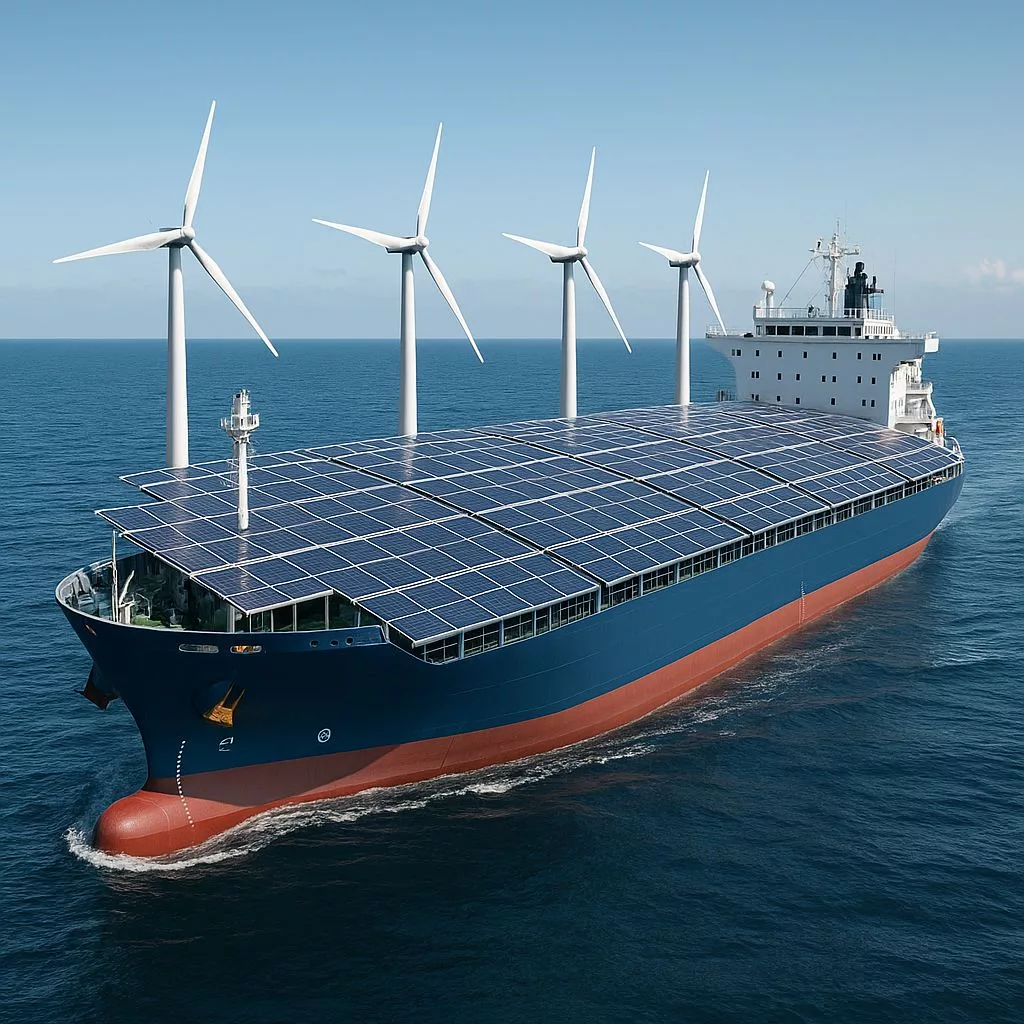
Between 8 and 22 December 2025, Cape Town’s Duncan Dock will host a visitor that looks more like a steampunk mirage than a research platform. The 38-metre Ville de Bordeaux, matte-black hull striped with copper, will shut off its engines for fourteen days and plug itself into the city as a living, breathing recycling organism: part campus, part cinema, part venture-capital lounge, part materials lab. Every winch, hatch and bulkhead has been repurposed so that the schooner becomes a pop-up node in a worldwide web whose end goal is to erase the word “waste” from the dictionary.
The expedition’s blueprint germinated in 2016 when French-Swiss navigator Simon Bernard – once an officer on container megaships – overlaid global ocean-current models with river-outflow data. He discovered that five rivers, all in Asia and Africa, cough out sixty percent of the plastic that ends up in the sea. Rather than paint another slogan on a banner, Bernard convinced France’s ecology ministry, the Schneider Electric Foundation and 3 200 crowd-investors to finance a vessel designed to retire after ten years, its job done when 30 port cities can recycle without outside help. Cape Town is the twenty-second stop on that countdown list.
What ties itself to the quay is therefore not a protest float but a 130-tonne toolkit. Two 7 kW hydro-turbines and 32 m² of solar skin provide power; six 40-foot containers blossom into an on-board factory. One lab converts 250 kg of PET bottles daily into bis(2-hydroxyethyl) terephthalate monomer that can be re-polymerised on the spot. Another extruder fuses low-value LDPE and PP into 40 × 20 cm interlocking bricks – no cement required – used in Lomé to erect three schoolrooms from 1.8 t of beach scrap. A third crate is a metal-working gym where anyone with a 220 V welder can reproduce the Precious-Plastic arsenal: shredders, injection moulders, sheet presses.
2. Walking Through the Pop-Up City of Yesterday’s Packaging
From the dockside, the promenade between Orion Cargo Shed and Nelson Mandela Gateway becomes the Nomadic Expo, a 1 200 m² district assembled entirely from modular panels fabricated on earlier legs. Visitors step through an iridescent arch extruded in Benin, tread on boards made from Ghanaian irrigation pipe, and sit on benches injection-moulded from Moroccan fishing nets. Each component carries an NFC tag; one tap reveals the exact GPS spot where the trash was scooped, the name of the waste-picker who supplied it, and how many kilograms of CO₂ were kept underground by skipping virgin resin.
Inside, the story spirals clockwise. The “Geological” zone displays a 1.2-tonne core extracted in 2023 from Mumbai’s Mithi River, sliced like marble. Under UV light the layers glow – 1980s leaded green, 1990s neon orange, 2000s baby pink – four decades of colour trends fossilised in polymer. “Biological” holds refrigerated 3-D printed coral skeletons whose pores are seeded with algae-based PHA pellets. Pilot tests off Martinique show 40 % more polyp settlement than on ceramic substrates, promising reefs that dissolve into lactic acid instead of micro-shards.
“Economical” is an MBA in 25 minutes. Eight everyday objects – Coke bottle, flip-flop, sachet, fishing crate, face shield – ride a circular conveyor while touch-screens let visitors tweak wages for pickers, plant staff and truckers. An algorithm spits out real-time unit cost and carbon score, proving when informal networks beat city-run schemes. Expedition economist Aissa Djelloul calls it “elasticity therapy for bureaucrats tempted to sign decade-long landfill deals.”
3. Morning Shred, Afternoon Pitch, Midnight Movies
At 08:00 sharp the gangway lowers for “Ship-to-Shore” tours, capacity 30, each guest tagged with an RFID token. Chief engineer Marie Lefèvre starts in the engine room, revealing a 6 kW microwave pyrolyser that turns film plastic into naphtha fed straight to the generator. “We’re not carbon-neutral,” she says, “carbon-negative: every kilo we crack displaces 0.8 L of fossil diesel and prevents landfill methane.” On the aft deck the “Ocean Plastic Oracle” – a robotic arm with near-infrared eyes – grades 1 200 pieces per hour across 27 resin classes, achieving 97 % accuracy after training on 1.3 million crowd-sourced images. Scrap drops into colour-coded holds, later converted into 3-D printer filament sold to local schools.
Afternoons shift to acceleration mode. Twenty-four teams – eight South African, eight SADC, eight global wildcards – lock into the 48-hour OnBoard Laboratory. They arrive with 500 g of local waste and leave with a validated business plan, a priced bill of materials in rand, and a letter of intent from SPAR Western Cape or the Ports Authority guaranteeing six-month pilot uptake. Day-one homework: shred, wash, pelletise and mould 50 saleable items whose shelf price beats collection cost by 30 %. Day two: finance coaches from the International Finance Corporation layer concessional loans, impact bonds and pick-up-fee guarantees. A Dakar women’s coop that turns fish-box polystyrene into salon combs closed a €125 k convertible note six weeks after graduation.
When the sun drops, a 12-metre container folds open into a 60-seat micro-cinema. The crew premieres “Second Life,” a 14-minute documentary filmed from the viewpoint of a Johannesburg yogurt cup that slides into a drain, is eaten and excreted by a carp, fragments into microbeads and finally lodges in a mussel harvested by a subsistence fisherman. After the credits the deck becomes a “Fishbowl” talking circle: engineers, harbour pilots, reformed waste-pickers and city councillors sit inner-ring; the audience outer-ring; anyone can tap a shoulder and swap in. The protocol, borrowed from indigenous consensus circles, has already birthed plastic roundtables in Accra, Cartagena and Da Nang.
4. Side Deals, Night Lights and the Plastic Pension
Invisible to most visitors, a dawn economy thrives. At 05:30 waste-pickers from the Paarden Eiland dunes eat breakfast on board and run their plastic through shredders, doubling their income by selling clean flake to Woodstock maker-spaces. Mitchells Plain’s 20 000 informal collectors, organised through WasteAid, feed real-time price and volume data to the ship’s dashboard, turning tacit street knowledge into tradable intel.
Schools don’t visit the ship; the ship visits them. Flat-pack “treasure chests” holding 50 kg of rainbow shred, four manual presses and a comic-style lesson land in Grade-7 classrooms. Pupils have 30 days to solve a genuine school headache – broken doorstops, leaking plant pots – after which winning designs are melted into a single “legacy totem” bolted to the schooner’s superstructure, a growing fossil record of child ingenuity. Cape Town’s first contribution: a modular crutch tip whose tread can be snapped off and replaced, already ordered by Médecins Sans Frontières field hospitals.
Big business is equally entangled. Shoprite-Checkers diverts 12 t of private-label flex-film from 54 stores to test enzymatic depolymerisation at 70 °C, low enough to run on the generator’s waste heat. Success would unlock food-grade closed-loop packaging for 3 000 stores across 11 countries. Old Mutual backs a “Plastic Pension”: pickers earn blockchain-stamped micro-contributions per kilogram, redeemable at 60 as an annuity indexed to resin prices. Actuaries say a 25-year-old collecting 35 kg a week could cash out R 470 k – trash as retirement fund.
When the farewell horn sounds at 23:59 on 22 December, the Ville de Bordeaux will leave behind more than memories. A 2 500 m² warehouse at Pier 2 becomes a permanent Circular Economy Living Lab, kitted with a container extrusion line paid for by the city’s R 30 m Green Economy Fund and a repair café staffed by newly trained artisans. UCT engineers will track polymer decay in the Benguela Current for five years, filling a data void that has hampered South-East Atlantic policy. And somewhere in the dusk, a grey filament of shredded bottle caps will drift down the harbour light beam, joining 14 million tonnes already on the seabed – tomorrow’s raw material waiting for the next port, the next promise that the curve can still be bent.
[{“question”: “What is the \”Ville de Bordeaux\” and what is its mission?”, “answer”: “The \”Ville de Bordeaux\” is a French schooner that has been transformed into a floating recycling factory and innovation hub. Its mission is to combat plastic waste by converting it into valuable items, empowering local communities through workshops and business initiatives, and ultimately aiming to make plastic waste disappear forever by fostering a circular economy.”}, {“question”: “When and where will the \”Ville de Bordeaux\” be in Cape Town?”, “answer”: “The \”Ville de Bordeaux\” will dock at Cape Town’s Duncan Dock between December 8 and December 22, 2025. During this two-week period, it will operate as a living, breathing recycling organism and a center for various activities.”}, {“question”: “What kind of plastic waste can the ship process and what does it create?”, “answer”: “The ship can process various types of plastic waste. For instance, one lab converts 250 kg of PET bottles daily into a monomer that can be re-polymerized. Another extruder fuses low-value LDPE and PP into interlocking bricks. It also has a microwave pyrolyser that turns film plastic into naphtha, and an \”Ocean Plastic Oracle\” that grades plastic for 3D printer filament. The ship carries a \”Precious-Plastic arsenal\” for creating shredders, injection moulders, and sheet presses.”}, {“question”: “How does the \”Ville de Bordeaux\” engage and empower local communities?”, “answer”: “The schooner engages communities through various means. It hosts workshops, a venture-capital lounge, and an expo (the Nomadic Expo) made from recycled materials. It runs \”Ship-to-Shore\” tours, an OnBoard Laboratory for developing business plans from local waste, and a \”Fishbowl\” talking circle for community dialogue. It also collaborates with waste-pickers, schools (through flat-pack ‘treasure chests’ for problem-solving), and informal collectors, even supporting a ‘Plastic Pension’ scheme.”}, {“question”: “What is the ‘Nomadic Expo’ and what can visitors learn there?”, “answer”: “The Nomadic Expo is a 1,200 m² district assembled entirely from modular panels fabricated on earlier legs of the expedition, all from recycled plastics. Visitors can learn about the origins of the recycled materials (via NFC tags), see \”Geological\” displays of plastic sediment cores, explore \”Biological\” zones with algae-based PHA pellets on 3D-printed coral skeletons, and engage in an \”Economical\” exhibit that simulates the costs and benefits of circular economy models.”}, {“question”: “What happens after the \”Ville de Bordeaux\” leaves Cape Town?”, “answer”: “After its departure, the \”Ville de Bordeaux\” will leave behind a lasting legacy. A 2,500 m² warehouse at Pier 2 will become a permanent Circular Economy Living Lab, equipped with a container extrusion line and a repair café. UCT engineers will monitor polymer decay in the Benguela Current, contributing valuable data to research. The initiatives and collaborations started during its stay are intended to continue fostering a circular economy in the region.”}]