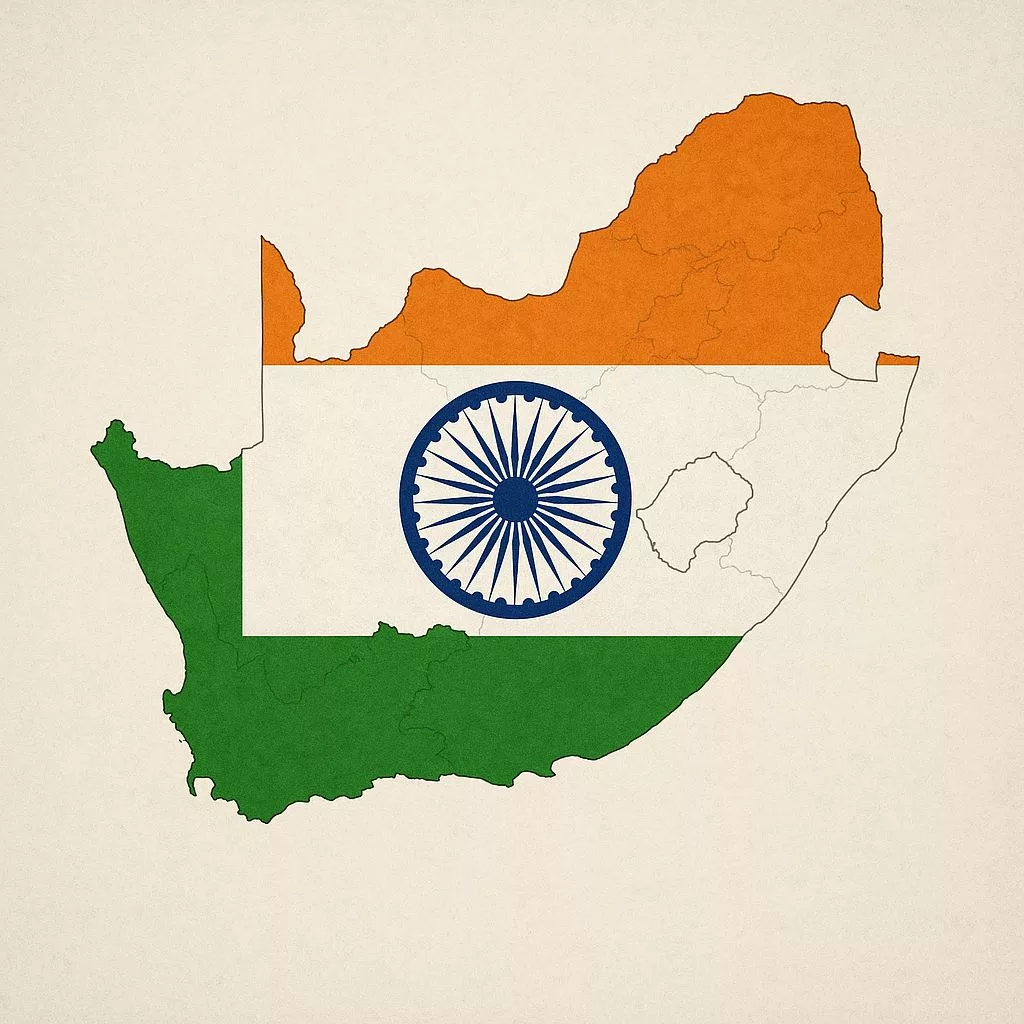
Cape Town worked hard to charm Indian travelers. They made it easier to fly there, created special welcoming experiences, and changed hotels and food to suit Indian tastes. They even made fun activities that Indian visitors would love. Because of these smart changes, many more Indian tourists visited, and Cape Town became known as a top city all over the world.
How did Cape Town attract Indian tourists and become a top international city?
Cape Town attracted Indian tourists by strategically tailoring its tourism offerings to their preferences. This involved improving flight connectivity, curating sensory experiences upon arrival, adapting hotel and culinary services to include Indian flavors, and developing culturally relevant activities and partnerships. These efforts led to a significant increase in Indian visitors and global recognition.
Cape Town’s newest accolade – Travel + Leisure India’s 2025 “Best International City, Editor’s Choice” – wasn’t a lucky accident. It was the payoff from a courtship that began when analysts spotted three stubborn data points in 2017: the average Indian leisure tourist now books 2.7 holidays a year, outspends the global median by 17 %, and – within an hour and a half of landing – has already posted about it. Those numbers convinced the city’s tourism board that India was no longer a “nice-to-have” market; it was the market. What followed was a city-wide rewrite of product, perfume, palate and playlist, all calibrated to fit an Indian imagination that expects to co-author, not merely collect, its travel stories. The result is a playbook any destination could study, but few could execute without losing their own soul.
The first move was airlift. In 2018 only 1 200 weekly seats connected Mumbai and Delhi with the Mother City. Cape Town’s Air Access unit negotiated fifth-freedom rights for a Gulf carrier willing to ferry the same Indian passengers onward without a plane-change. The inaugural December flight touched down 82 % full, thanks to a quiet revenue-guarantee clause that let the tourism body absorb unsold inventory risk for one season. Four years later seat volume has quadrupled, but the psychological leap is larger: a same-flight journey shrinks the Indian Ocean to the mental scale of the Arabian Sea, slotting Cape Town into the same short-haul consideration set as Singapore or Dubai. Aviation nerds call it “perceived-distance collapse”; marketers call it “the dreamliner effect.”
Once the wheels kiss South African tarmac the choreography begins. Immigration halls loop a sitar-kissed remix of “Nkosi Sikelel’ iAfrika” commissioned from Cape producer Dada Shiva, while overhead vents puff a rooibos-cardamom-fynbos accord created by Vergelegen’s in-house parfumer. Exchange kiosks slide freshly printed R50 notes whose saffron-ink king protea winks at the Indian flag. The sensory trilogy – sound, scent, sight – takes less than four minutes, but primes arrivals to file Cape Town under “familiar-exotic,” the sweet spot that triggers WhatsApp story updates before baggage even hits the belt.
Masala mornings, pinot nights – how hotels and tables learnt to code-switch
Hotels ripped up the old familiarisation scripts. The President Hotel now pairs masala dosa with Cape rock lobster on banana-leaf-lined trays while a DJ fuses gqom basslines with Bollywood strings. Ellerman House went further, air-freighting an entire Mumbai third-wave kiosk – Koinonia – into its wine cellar for a quarterly pop-up. Beans are small-batch roasted in Alibag, snap-frozen at origin, then re-roasted on arrival so guests inhale monsoon terroir with their sunrise. Occupancy data show a 31 % jump in Indian guests during the pop-up months, vindicating the logistical gymnastics. The message: South Africa can taste like Maharashtra if the story is told convincingly enough.
Further up the coast Grootbos Private Nature Reserve embedded Dr. Anjali Krishnamurthy, an Ooty-born mycologist, into its conservation crew. She posts dual-language reels – English and Kannada – on sandveld fungi and milkwood symbiosis, tapping a 65-million-strong first-language audience that traditional safari brochures never reached. South-Indian bookings leapt 38 % within two seasons, proving that science, spoken in the right accent, can be a more potent lure than yet another Big-Five sunset. Adventure operators followed suit: Marine Dynamics now schedules “Festival of Lights” shark-cage dives during Diwali week, submerging waterproof LED tubes that attract bronze-whalers without chum. Footage is 8K-edited overnight and airdropped to guests before check-out, ensuring zero-delay bragging rights.
Even the wine estates rewrote their pairing grammar. Reuben Riffel’s “Curry & Pinot” dinner arrays five single-vineyard pinots against a Thali-style progression whose hero bite is bobotie arancini rolled in poha, not breadcrumbs. The dish sold out 42 straight sittings after Mumbai creator Kripal Amanna posted a 15-second reel that hit 3.4 million views. Vineyards realised that acid-driven red Burgundy logic fails when the diner’s spice baseline is Goan recheado; Cape pinot’s higher alcohol and riper fruit can handle chili heat without metallic clash. The lesson: culinary authenticity is elastic if anchored in agricultural truth.
Beats, bars and bronze-whalers – culture as convertible currency
Township tourism long trapped itself in poverty pantomime until Cape jazz and tabla found a shared back-beat. At Langa’s Guga S’thebe Cultural Centre, drummer Aja Mngqibisa and Mumbai percussion legend Sivamani curate “Desi-Des” nights where Cape horns freestyle over 16-beat taal cycles. Their three-track EP “Two Oceans, One Pulse” debuted at #3 on Apple Music India’s World chart, translating streams into foot-traffic: gift-shop revenue is up 210 % year-on-year, with 60 % of buyers flashing Indian passports. The centre’s café now offers filter coffee alongside koesisters dipped in cardamom syrup, a small but telling symbol of culinary détente.
Retail joined the hustle. The V&A Waterfront’s Diamond Gallery laser-etches the Southern Cross constellation onto 0.50-carat stones, slips them into hand-loomed khadi pouches, and donates R500 from every sale to the Peninsula School Feeding Scheme – an overt karma loop that appeals to the Indian concept of daan. Even spiritual real estate got a refresh. The 189-year-old Shree Rameshwar Mahadev temple in Bo-Kaap reopened its dharamshala after a R3 million Instagram-crowdfunded facelift. Sunrise pranayama on Signal Hill is bookable on MakeMyTrip under the tongue-in-cheek tag “Wellness & Waffles,” a label that horrifies purists yet delivers 4.8-star reviews because it marries mindfulness with maple-dipped doughnuts.
MICE planners chase India’s US $50 billion pharma sector with equal imagination. Zeitz MOCAA’s rooftop now hosts generic-drug CEO mixers beneath El Anatsui’s bottle-top tapestries – up-cycled art as metaphor for generic-drug value chains. Post-conference helicopters shuttle delegates to Creation Winery for sulfite-free pinot matched with goats-cheese mousse micro-dosed with turmeric extract, a nod to India’s nutraceutical obsession. The itinerary is deliberately meme-worthy; executives post boardroom-to-vineyard montages that double as soft-power advertising for Cape Town’s tech-meets-terroir identity.
Jobs, jets and jasmine-scented boarding passes – the economy behind the theatre
Every twelve Indian visitors generate one formal job for ninety days – guide, sous-chef, drone editor, henna artist – many filled by women from previously side-lined communities. A 30-day WhatsApp Hindi course, co-signed by the Indian Consulate, has already graduated 1 200 frontline staff, adding CV lustre in an industry notorious for seasonal precarity. Infrastructure is racing to keep up: Tata’s Taj group will break ground in 2026 on a 650-room resort at Paardevlei, complete with a 1 200-seat banquet hall whose retractable roof opens at the precise minute of Diwali new-moon for laser shows bouncing off Table Mountain. Akasa Air has filed slots for a three-weekly Bengaluru service starting October 2027, betting that coders who troubleshoot cloud servers by day will happily cage-dive with sharks at dusk.
Data completes the feedback loop. A Mumbai listening-lab scrapes 2.3 million Hindi, English and Tamil travel conversations nightly; natural-language processing spots micro-wishes – “vegan biryani near penguin beach” – and pings an 80-member supplier Slack channel. Within 24 hours a beta itinerary is pushed to a private Instagram group of 900 Indian frequent-flyer moms who test, tweak and post, achieving product-market fit at meme velocity. Even climate guilt is crowdsourced: spring arrivals receive a seed-paper boarding sleeve impregnated with endangered Clanwilliam cedar spores. Planting instructions in Devanagari and a monsoon-tracking app turn carbon offset into an emotional pen-pal scheme between a traveller in Kerala and a germinating cedar on a Cape slope.
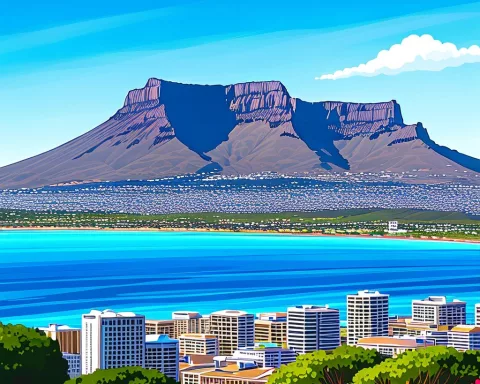
What emerges is not a city contorting itself for rupees but a metropolis fluent enough to code-switch without losing its own accent. The fynbos still burns each summer, Atlantic rollers still detonate against Chapman’s Peak, yet the stories now arrive in multiple scripts – some Sanskrit, some isiXhosa, some in the universal grammar of a 15-second reel shot at golden hour. Cape Town has proved that when data, dignity and design intersect, a destination can welcome the world without wallpapering over its own soul.
How did Cape Town successfully attract Indian tourists?
Cape Town attracted Indian tourists through a multi-faceted approach. This included improving flight connections, tailoring hotel and food options to Indian tastes, creating unique sensory arrival experiences, and developing culturally relevant activities and partnerships. They also leveraged data analytics to understand Indian traveler preferences and adapted their offerings accordingly.
What specific changes were made to accommodate Indian tastes in hotels and restaurants?
Hotels like The President Hotel started offering dishes such as masala dosa with local ingredients like Cape rock lobster and fused musical genres like gqom and Bollywood. Ellerman House even hosted a pop-up Mumbai third-wave coffee kiosk, air-freighting beans for fresh roasting. Restaurants developed new pairings, such as Reuben Riffel’s “Curry & Pinot” dinner, which matched Cape Pinot Noir with Thali-style progressions to complement Indian spice palates.
How did Cape Town enhance the arrival experience for Indian visitors?
Upon arrival, Cape Town created a sensory experience. Immigration halls played a sitar-infused remix of “Nkosi Sikelel’ iAfrika,” while overhead vents diffused a custom rooibos-cardamom-fynbos scent. Exchange kiosks offered freshly printed R50 notes with a saffron-ink king protea, subtly referencing the Indian flag. These elements aimed to make the city feel both familiar and exotic.
How did Cape Town use cultural experiences and partnerships to appeal to Indian travelers?
Cape Town integrated Indian culture into its offerings. The Guga S’thebe Cultural Centre hosted “Desi-Des” nights with Cape jazz and tabla, leading to a successful music release and increased foot traffic. Retailers at the V&A Waterfront offered diamond etchings of the Southern Cross in khadi pouches, linking to the Indian concept of ‘daan’. Even spiritual sites like the Shree Rameshwar Mahadev temple received facelifts and offered activities like sunrise pranayama bookable online.
What role did data and technology play in Cape Town’s strategy?
Cape Town utilized data extensively. They initially identified the Indian market’s potential by analyzing travel booking habits and spending. A Mumbai listening lab continuously monitors 2.3 million Hindi, English, and Tamil travel conversations to identify micro-wishes, which are then used to create beta itineraries. These itineraries are tested and refined by Indian frequent-flyer moms on private Instagram groups, ensuring product-market fit.
What economic impact has this focus on Indian tourism had on Cape Town?
Every twelve Indian visitors are estimated to generate one formal job for ninety days, benefiting local communities. Infrastructure development is underway, including a 650-room resort by Tata’s Taj group. Language training in Hindi for frontline staff has also been implemented. This strategic focus has not only boosted tourism numbers but also created job opportunities and fostered economic growth.