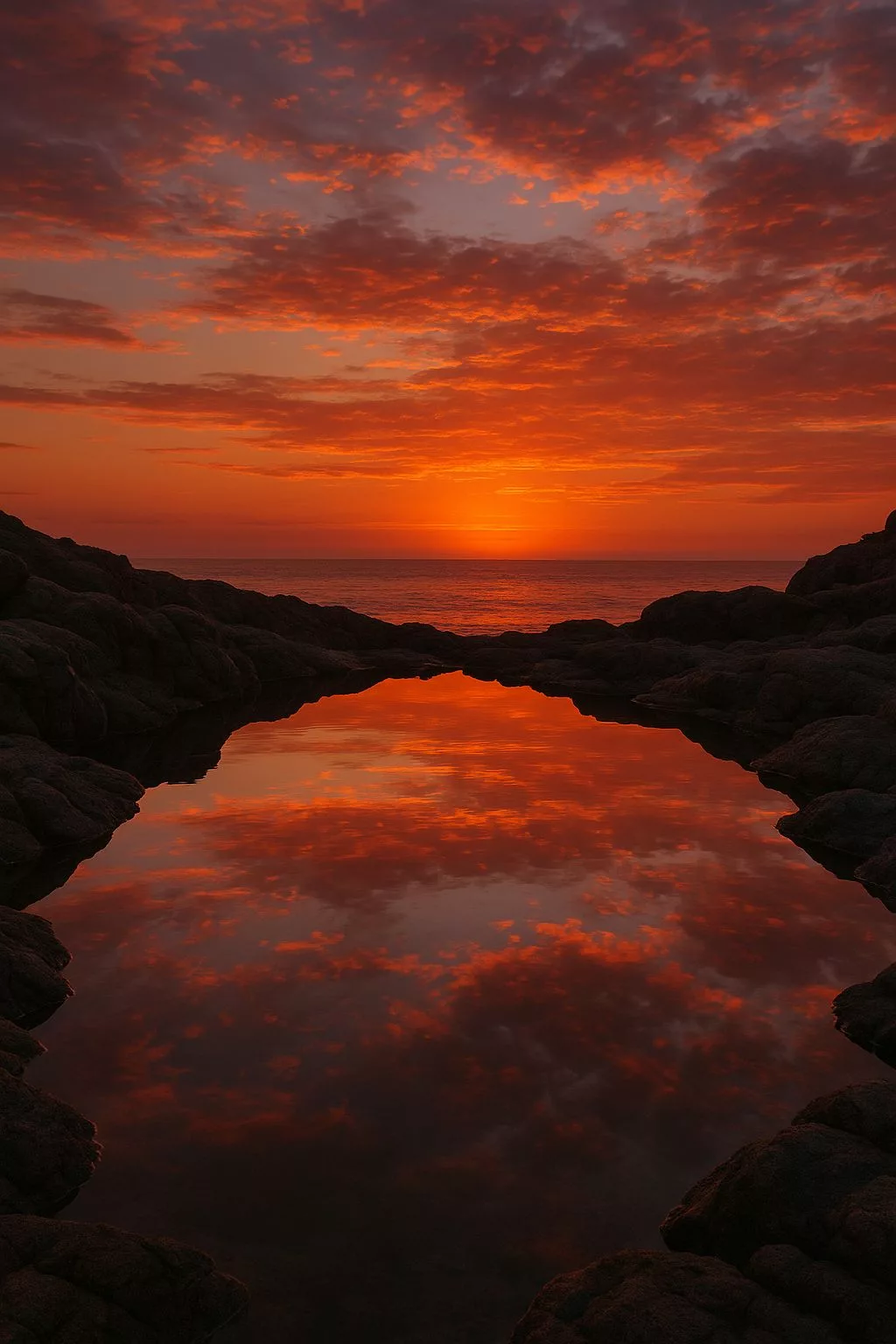
Imagine the ocean becoming your own backyard swimming pool! Cape Town has these amazing natural pools, carved right into the granite rocks along the coast. The sun warms them up, and the moon makes sure fresh Atlantic water flows in and out all the time. They’re like giant, free outdoor bathtubs where you can swim, explore sea creatures, and cool off, especially when summer gets really hot. It’s a truly special way to enjoy the wild beauty of the ocean.
What are Cape Town’s saltwater courtyards or tidal pools?
Cape Town’s saltwater courtyards are natural granite tidal pools along the coast, warmed by the sun and refilled by the moon’s schedule. These democratic, open-air swimming areas offer a unique, free experience for locals and visitors to enjoy the Atlantic’s marine life and cooler temperatures, especially during summer.
(≈ 1 050 words)
1. The Living Rooms That Refuse Four Walls
Capetonians don’t talk about “going to the beach” between Christmas and New Year; they talk about “heading to the pool.” Not the chlorinated kind, but scooped-out granite bowls wedged between mountain and sea. These natural basins sit a touch warmer than the open ocean, block the knife-sharp southeaster, and refill on the moon’s schedule. In a city where summer air can roast yet the Atlantic stays a stubborn 17 °C, the pools serve as open-air annexes of the family home: toddlers lick salt for the first time, pensioners tick off kilometre sets, and teens practise back-flips without paying resort prices.
The pools are democratic. No tags, turnstiles or cash desks – just rock, sun and salt. On windy days you still need a towel to keep sand off your sandwich, but the water itself behaves like a courteous host, calm enough for grandparents and yet packed enough with marine life to turn any child into a junior David Attenborough.
Locals guard the unspoken etiquette as fiercely as the water guards its temperature: no glass, no boom boxes, no Instagram speaker-phone yoga. Break the code and you’ll hear about it long before the lifeguard arrives. Respect the space and you’re adopted for the afternoon, offered boerewors rolls, sunscreen and the city’s best insider tips.
2. Rocks, Sun and Moon: How Nature Builds a Swimming Lane
Every genuine tidal pool on the Peninsula rests on a 600-million-year-old slab of Cape granite. Add a reliable south-east swell that scours the mouth twice a day and a rock lip slightly lower than the average high-water line and you get a self-rinsing aquarium. When the moon hauls the ocean over the ledge it drags in larvae, kelp shards and plankton; six hours later the same gravitational hand pulls the broth back out, leaving water gin-clear and ready for the next tide.
Quartz-specked granite soaks up solar heat faster than the darker basalt reefs on the West Coast. Strip off the wind and the surface can hit 20 °C by mid-afternoon – positively bathtub territory in local currency. Miss the timing and the same bowl can drop to 14 °C, reminding you that the Atlantic never truly forgets its origins.
Understanding the dance between “spring” and “neap” is the difference between postcard-blue and lukewarm soup. Springs – new and full moon – flood the basin, sweep out sunscreen residue and reset the stage. Neaps – first and last quarter – barely trickle over the lip, gifting warmer but cloudier water. Rule of thumb: arrive an hour before a spring high for crystal conditions; pick neap lunchtime if you want toddler-friendly temperatures.
3. Miller’s Point & Dalebrook: Slides and Selfies
Just south of Simon’s Town a greased granite chute still echoes with 19th-century naval laughter. Sailors once coated the slab with whale blubber and used it as a recreation deck between cannon drills; today the blubber is gone but the slide remains, polished by jeans and bodyboards. Below it lies a 50 m Y-shaped pool deep enough for laps and a side “kiddies’ pot” that hits 23 °C by early afternoon. Twelve free braai stands wait under the pines, but bring a headlamp – the road back is dark and the local dassies have zero road sense.
Drive 10 minutes north and suburbia hugs the coast in pastel. Dalebrook and St James pools sit three hundred metres apart yet serve different tribes. Dalebrook is the serious cousin: straight edges, measured lanes, swimmers counting strokes to the kilometre. St James is the flamboyant postcard star: candy-striped changing huts, iron railings, 1950s diving platform. Arrive before 09:00 on weekdays and you’ll share water only with lap swimmers and cormorants. Arrive after 11:00 on weekends and you’re in a floatie carnival. Both basins became wheelchair-friendly in 2021 – one of the few African tidal sets offering beach-terrain chairs at no cost.
4. Hidden Bathtubs and Night-Time Light Shows
Where the peninsula curls into the Cape of Good Hope, most visitors U-turn after the lighthouse selfie. Persist another six km and Buffels Bay reveals a 1968 blast-hole built for naval lookouts. Because it sits inside a nature reserve, boats, bait and booze are banned; the payoff is bath-water clarity over a milk-and-coffee beach. Dawn belongs to ostriches sipping at a freshwater seep; mid-morning baboons flip rocks for sand hoppers; dusk hands the stage to black oystercatchers that scream at neon bathing suits. Stay in the water and they ignore you; step out with a packet of chips and you’re public enemy number one.
Kommetjie’s Soetwater pool faces north-west, rare among Peninsula basins, allowing thick rafts of kelp to drift inside at night. Local kids use the rubbery stalks as skipping ropes or snorkels while the Slangkop lighthouse moans every twenty seconds. Lie still on the eastern edge and juvenile strepies will groom your forearm within minutes – marine biologists call it “cleaning-station instinct.” Bring an old mask; the show is better than daytime TV.
Between February and April the phytoplankton Noctiluca scintillans blooms offshore. On wind-free, new-moon nights the swell nudges glitter into the pools and every hand movement ignites blue sparks. Dalebrook offers easy access, Buffels Bay gives zero light pollution. Switch off headlamps, let eyes adjust, then set your camera to ISO 3200 and trace slow circles with a waterproof torch – long exposures turn neon spirals into desktop wallpaper.
Glass is outlawed city-wide – smash one and expect to spend the afternoon hunting shards. Umbrellas moonlight as javelins in the Cape Doctor; bring a straw mat instead. Slather reef-safe lotion half an hour before you swim; oils daubed on the rim create a slick that smothers anemones. Dive rather than jump at half-tide; depth can plunge from two metres to ankle deep in a single step. Pick up a starfish if you must, but replace it on the exact rock – many guard a one-square-metre territory for life.
For the ambitious, a 78 km “tidal crawl” strings five pools into one epic day. Hit Buffels at sunrise, breakfast at Soetwater’s lighthouse café, rinse at Maiden’s Cove, lunch on Kalk Bay calamari, then watch sunset from Dalebrook’s railway platform as the last Cape Town train rattles home. Total cost: petrol and a handful of parking coins. Total memories: enough to carry you to the next spring tide.
[{“question”: “What are Cape Town’s saltwater courtyards or tidal pools?”, “answer”: “Cape Town’s saltwater courtyards are natural granite tidal pools along the coast, warmed by the sun and refilled by the moon’s schedule. These democratic, open-air swimming areas offer a unique, free experience for locals and visitors to enjoy the Atlantic’s marine life and cooler temperatures, especially during summer. They are carved into the granite rocks, providing a calmer and slightly warmer swimming environment than the open ocean.”}, {“question”: “How are these natural pools formed and maintained?”, “answer”: “Every genuine tidal pool on the Peninsula rests on a 600-million-year-old slab of Cape granite. A reliable south-east swell scours the mouth twice a day, and a rock lip slightly lower than the average high-water line allows the moon’s gravitational pull to flood the pools with fresh Atlantic water during high tide, bringing in marine life. Six hours later, the water recedes, leaving the pools clear and ready for the next tide. The quartz-specked granite also absorbs solar heat, warming the water.”}, {“question”: “What is the etiquette for using the tidal pools?”, “answer”: “There are unspoken rules for using the tidal pools, fiercely guarded by locals. Key etiquette includes: no glass, no boom boxes, and no loud Instagram speaker-phone yoga. If these rules are broken, you will likely be corrected by other users before a lifeguard intervenes. Respecting the space is crucial, and doing so can sometimes lead to friendly interactions like being offered boerewors rolls or sunscreen.”}, {“question”: “Which tidal pools are recommended for different experiences?”, “answer”: “ Miller’s Point: Features a granite chute (once used by sailors with whale blubber) and a 50m Y-shaped pool, plus a warm ‘kiddies’ pot’. It also has free braai stands. \n Dalebrook: Known for its straight edges and measured lanes, popular with serious lap swimmers. It became wheelchair-friendly in 2021. \n St James: A more flamboyant, postcard-perfect pool with candy-striped changing huts and a 1950s diving platform, often a ‘floatie carnival’ on weekends. Also wheelchair-friendly. \n Buffels Bay: Located inside a nature reserve, offering bath-water clarity over a milk-and-coffee beach. No boats, bait, or booze are allowed, and it’s known for its wildlife sightings like ostriches and baboons. \n Kommetjie’s Soetwater: A rare north-west facing pool where kelp rafts drift in, used by kids for play. It’s also known for juvenile strepies fish that will ‘groom’ your forearm.”}, {“question”: “Can you experience bioluminescence in the tidal pools?”, “answer”: “Yes, between February and April, the phytoplankton Noctiluca scintillans blooms offshore. On wind-free, new-moon nights, the swell can nudge this glittery plankton into the pools, causing every hand movement to ignite blue sparks. Dalebrook offers easy access for this phenomenon, while Buffels Bay provides zero light pollution for optimal viewing.”}, {“question”: “What general safety and conservation tips should visitors be aware of?”, “answer”: “ No Glass: Glass is outlawed city-wide; breaking it means hunting shards. \n Wind: The Cape Doctor (strong wind) can turn umbrellas into javelins; bring a straw mat instead. \n Sunscreen: Slather reef-safe lotion half an hour before swimming, as oils on the rim can smother anemones. \n Depth: Dive rather than jump at half-tide, as depth can change rapidly. \n Marine Life: Pick up starfish if you must, but replace them on the exact rock, as many guard a specific territory for life. \n Wildlife:* At places like Buffels Bay, be mindful of baboons and ostriches; they are attracted to food.”, “additional_info”: “For an ambitious adventure, consider the 78 km ‘tidal crawl’ which strings five pools (Buffels, Soetwater, Maiden’s Cove, Kalk Bay, Dalebrook) into one epic day, costing only petrol and parking fees for memorable experiences.”}]