Cape Town has a cool secret! A micro-grant program helps local people fix water problems in their neighborhoods. Groups can get money, from a little to a lot, to clean rivers, stop trash from blocking pipes, or make water cleaner. They have to finish their projects quickly and show how they made things better. This awesome program is turning everyday folks into water heroes, making Cape Town’s water healthier for everyone!
What is Cape Town’s micro-grant program for urban water care?
Cape Town’s micro-grant program, accessible via wcedp.co.za, offers R10,000 to R250,000 for local groups to “fix something wet” related to urban water care. Projects must be completed, paid, and photographed between February and June 2026, focusing on measurable improvements like reducing trash, fewer pipe blockages, or lower E. coli levels.
1. The Portal That Turns Neighbours into River Stewards
Blink and you’ll miss it: a no-frills website – wcedp.co.za – has become the quietest ATM in South Africa. While Parliament debates billion-rand dams, this page is about to release a second tide of bite-sized cheques that top out at the price of a glitzy sedan. From 10 to 19 December 2025, any sports club, church, crèche, artist crew or co-op can request between R10 000 and R250 000 to “fix something wet” between February and June 2026. The deal is brutal and brilliant: whatever you promise must be finished, paid and photographed before the municipal ledger slams shut on 30 June.
The City isn’t hunting for another glossy strategy. It wants stench gone, colour shifted, kids convinced that chip packets don’t belong in porcelain bowls. Engineers perched in towers rarely see the mop-water that triggers repeat sewer geysers, or the fish-gut hose that turns a Main Road gutter into a sushi conveyor. Those irritations are now worth hard cash – provided you can prove a measurable difference before the first winter storm.
Three catchment ribbons have been shaded priority on an internal map: Salt–Elsies–Black in the urban heart; Kuils–Eerste sprawling across the Flats; Hout Bay–Disa–Palmiet clawing the Atlantic slope. Score extra points if your idea breathes inside these zones, yet any corner of the metro qualifies if you can tally less trash, fewer wipes in pipes, or a dip in E. coli. Cement, pumps and pipes are banned shopping-list items; gloves, gumboots, puppet shows, boerewors rolls, compost tumblers, rap battles and paint are welcome.
2. Round-One Scoreboard: R4.2 m, 23 Gangs of Heroes, 23 Tonnes of Trash
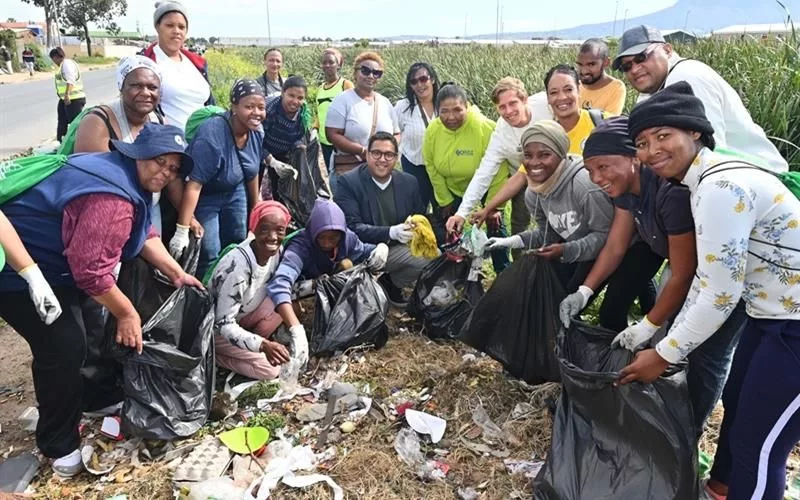
March 2025 saw the first cash splash: R4.2 million split 23 ways, averaging R182 000. A Strandfontein neighbourhood spent the tiniest slice – R12 000 – on a single Saturday that yanked 1.8 tonnes of junk from the Zak River canal. The biggest cheque – R248 000 – hired twelve “Litterboom river wardens” to stalk a 2 km Black River slice, snagging 23 tonnes of plastics and nappies before they reached Table Bay.
Between those poles, waste-pickers transformed sewer-choking fat globs into eco-bricks; a high-school choir dropped an isiXhosa pop track listing what must never vanish down the U-bend; Girl Guides stitched a 50 m floating wetland from cool-drink bottles to pre-clean canal water entering Zandvlei; and a neighbourhood watch aimed motion-cameras at a dumping hotspot, chopping incidents from 14 to 2 per month.
Scientists followed with flow-weighted samples. Seven sites were probed upstream and down; four posted a clear E. coli drop, two stayed flat, and the Soet River surged 40 % during a holiday week when clean-ups paused – proof that relaxation equals re-pollution in under seven days. A phone survey of 800 homes logged a 17 % jump in citizens who “feel personally responsible for river health,” the first statistically significant climb since 2019.
3. How to Build a Bullet-Proof Half-Year Plan
Download the 12-page canvas and you’ll swear it’s a social-behaviour syllabus, not a quantity-survey sheet. First, confess your problem in 250 words. Second, pick the human habit you intend to wreck: litter down grates, wipes in toilets, oil down sinks, burst-pipe silence, apathy at meetings, zero weekend river picnics. Third, sketch a people-first route: name the exact folk whose finger-tips must change, prove your messenger carries street cred, and swear off vanilla Facebook slogans.
Money comes colour-coded. Dark green (max 15 %) buys hard hats, gloves, masks. Light green (25 %) prints posters, data, loud-hailers. Orange (30 %) hires kombis, skips, boerewors. Blue (30 %) pays casual labour or stipends. Breach a ceiling and your form hits the shredder – lesson learnt when first-rounders tried to blow everything on T-shirts. Professional audits are prepaid by the City, so “I lost the receipt” is not a valid excuse.
Schools now rate as super-multipliers. One campus can ping 1 000 homes if each pupil ferries a “sewer-saver” pledge card plus a fridge magnet that screams “No fats, no wipes, no fuss.” Bulk SMS nudges flow to parents harvested from class WhatsApp groups. Pilot streets in Langa and Manenberg saw sewer-call-outs tumble 28 % after Grade-6 kids completed a three-week module. Pitch a plan that marries curriculum-aligned water lessons to yellow-fish stencils on every storm-drain between the gate and the taxi rank and you’ll leap to the top of the pile.
4. From Dodgy Dump to City By-Law: The Whispered Expansion
Stand-by services wait to prevent hiccups: 20 kombis, a printer that births 500 A3 posters overnight, a tri-lingual drama trio, a licensed tip-scales operator. Grantees click, providers invoice the City direct; cash-flow panic is surgically removed. Volunteers sprain an ankle? They’re automatically wrapped inside the municipal insurance blanket.
Data collection is toddler-simple: a prepaid 2 GB SIM, a $90 Android, a KoBo form that begs for volunteer count, bags hauled, kilos recycled, weirdest find, and a 30-second selfie video. Uploads feed an open dashboard that auditors, journalists and sceptical residents can stalk in real time. Round-one numbers already show Saturdays attract 2.3 times more bodies than weekday afternoons, and boerewors rolls drive adult turnout up 60 % while adding only 9 % to cost – intelligence now baked into second-round guidance.
Word has reached Bogotá, Nairobi and Jakarta. Their envoys like the sweet spot: too small for tender-board torture, too large for street credibility, and monitored by an independent NGO that lets the City sprint through its financial-year targets. If Cape Town’s council adopts the looming “Water Commons Ordinance,” community custodianship of rivers, vleis and aquifers will slide into by-law, unlocking Green Climate Fund loot. For now, the ask stays modest – tell them what you can mend, verse by verse, drain by drain, before the June clouds burst and the rivers roar once more.
[{“question”: “What is Cape Town’s micro-grant program for urban water care?”, “answer”: “Cape Town’s micro-grant program is an initiative designed to empower local community groups to address urban water problems in their neighborhoods. It offers grants ranging from R10,000 to R250,000 for projects focused on improving water quality, reducing pollution, and preventing blockages in waterways. The program emphasizes quick project completion and measurable outcomes.”}, {“question”: “How can local groups apply for these micro-grants?”, “answer”: “Local groups, including sports clubs, churches, crèches, artist crews, or co-ops, can apply for the micro-grants through the website wcedp.co.za. Applications for the second round will be open from December 10 to December 19, 2025. Applicants need to submit a plan detailing the problem they intend to fix, the human habit they aim to change, and a people-first approach to their solution.”}, {“question”: “What kind of projects are eligible for funding?”, “answer”: “Eligible projects focus on ‘fixing something wet’ related to urban water care. This includes cleaning rivers, stopping trash from blocking pipes, reducing E. coli levels, removing stench, or shifting water color. Projects must demonstrate measurable improvements. While cement, pumps, and pipes are not allowed, items like gloves, gumboots, educational materials, community engagement activities (e.g., boerewors rolls, rap battles), and paint are welcome. Projects located within the Salt–Elsies–Black, Kuils–Eerste, or Hout Bay–Disa–Palmiet catchment areas receive extra consideration, but any area in the metro qualifies if it shows a measurable impact.”}, {“question”: “What are the key requirements and timelines for funded projects?”, “answer”: “Projects must be completed, paid for, and photographed between February and June 2026. The City requires clear proof of measurable difference before the first winter storm. Funds are color-coded for specific uses: dark green (max 15%) for safety gear, light green (25%) for educational materials, orange (30%) for logistics (kombis, skips, boerewors), and blue (30%) for casual labor or stipends. Exceeding these limits can lead to disqualification. Professional audits are prepaid by the City, ensuring accountability.”}, {“question”: “What impact has the micro-grant program had so far?”, “answer”: “In its first round (March 2025), R4.2 million was distributed among 23 projects. These initiatives led to significant results, such as the removal of 23 tonnes of plastics and nappies from rivers, the transformation of sewer-clogging fat into eco-bricks, and a 17% increase in citizens feeling personally responsible for river health. Some projects also saw a clear drop in E. coli levels and a reduction in dumping incidents. The program has successfully mobilized local communities and demonstrated tangible environmental improvements.”}, {“question”: “How does the City support grantees and ensure project success?”, “answer”: “The City provides various support services, including stand-by resources like kombis, printing services, and a tri-lingual drama trio. Grantees can invoice providers directly, removing cash-flow concerns. Volunteers are covered by municipal insurance. Data collection is simplified using prepaid SIMs, Android phones, and KoBo forms, allowing for real-time monitoring through an open dashboard. The program’s design, which includes prepaid professional audits, ensures transparency and accountability. The initiative is also gaining international recognition, with envoys from cities like Bogotá, Nairobi, and Jakarta showing interest in its model.”}]