Get ready for the Cape Town Carnival, an annual event showcasing visually stunning floats and masterful costumes. The event not only entertains but also generates employment opportunities and boosts the city’s economic health. With a sneak peek into the creative process, it’s a call to embrace the spirit of Cape Town, its creativity, unity, and distinctive culture. The event is free and open to the public on March 16th.
What is the Cape Town Carnival?
The Cape Town Carnival is an annual event consisting of a diverse showcase of attractions, including visually arresting floats and masterfully crafted costumes. The event aims to facilitate skill transfer and has generated consistent employment opportunities, boosting the city’s economic health. The Carnival is a unique opportunity for unity, togetherness, and a display of the city’s creativity, and is open to the public for free.
The eagerly anticipated Cape Town Carnival is just around the corner, and preparations are in full swing. The city’s creative forces, consisting of designers, artists, performers, and artisans, are working round the clock to ensure an unforgettable experience on March 16th. Not only are they ready to captivate and entertain audiences, but they recently gave an exclusive behind-the-scenes preview of their workshop to media, guests, and sponsors.
A Symphony of Sights
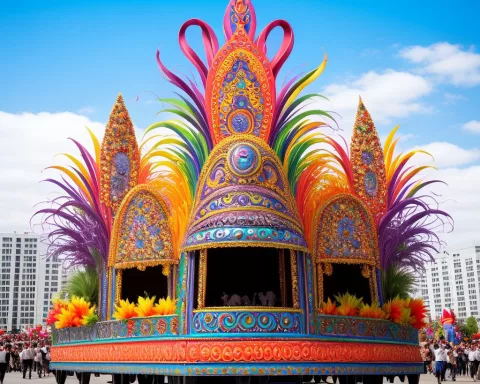
The past year has seen the careful conception and crafting of new visual wonders that aim to amaze. Standout spectacles include the visually arresting Technicolour Savannah, the powerful Umkhuseli (the Ant), and the fanciful Schweet float. In a captivating transformation, the beloved 7m Dream Doll float has morphed into the Zwakala float, a display guaranteed to leave onlookers enchanted.
The steering force behind this colossal event is the Cape Town Carnival’s Board Chair, Prof Rachel Jafta. She emphasized how the carnival transcends the single day of festivities. Since its humble beginnings with one float in 2010, the carnival has blossomed into a diverse showcase of attractions. Moreover, it has generated consistent employment opportunities, boosting the city’s economic health.
More than Glitter and Glam
Beneath the vibrant spectacle are hardworking individuals creating each detail with passion. The performers’ costumes, in particular, are examples of masterful craftsmanship. Each outfit is painstakingly designed, produced, and tailored by a devoted costume team. Jenette Lawrence, a seamstress fondly known as ‘Aunty’, began her career in a factory at 15. She appreciates the carnival’s lively creative atmosphere as a stimulating workplace.
The fabrication department serves not only as a workplace but also as a nurturing environment for personal growth and skill enhancement. Lebohang Litsili, who joined the carnival team in 2012, expressed the joy of witnessing a design materialize.
A Learning Experience
One of Cape Town Carnival’s primary objectives is to facilitate skill transfer. This is eloquently demonstrated by Maluva Gandiwa, head of the Carnival’s construction department. From starting as a cleaner in 2012, he now runs a steel fabrication business in addition to his carnival responsibilities. Moreover, he teaches welding skills to school students. He has grand plans of opening a welding school in the future.
With only a month left until the Carnival, it’s time to secure prime viewing spots. Jo-Ann Strauss, Cape Town Carnival Trustee and international celebrity, endorsed the event wholeheartedly, stating, ‘It’s just lekker. It’s a fantastic theme this year, celebrating our unique Capetonian culture. Let’s have some fun. The Cape Town Carnival is a unique opportunity for unity, togetherness, and a display of the city’s creativity.’
Anticipation and Participation
In a bid to give a sneak peek into the creative process, Cape Town Carnival has initiated a social media campaign called #followyourheART, spotlighting 13 participating community groups. The campaign aims to showcase their passion, commitment, and the transformative experience the event provides. The event is open to the public for free, although tickets are available for seats along the parade route. For more information, visit the Cape Town Carnival’s official website.
As the city gears up for the Carnival, it’s a call to not just spectate but also partake in this colorful, energetic extravaganza that is the Cape Town Carnival. Let’s embrace the spirit of Cape Town, its creativity, its unity, and its distinctive culture. After all, there’s nothing more ‘lekker’ than that.
When is the Cape Town Carnival?
The Cape Town Carnival takes place on March 16th and is open to the public for free.
What can we expect to see at the Cape Town Carnival?
The Cape Town Carnival consists of visually stunning floats and masterful costumes that showcase the city’s creativity, unity, and distinctive culture.
Who is behind the organization of the Cape Town Carnival?
The Cape Town Carnival’s Board Chair is Prof Rachel Jafta, who has been steering the event since its humble beginnings in 2010.
How does the Cape Town Carnival benefit the city?
The Cape Town Carnival generates consistent employment opportunities, boosts the city’s economic health, and facilitates skill transfer.
Can we participate in the Cape Town Carnival?
The Cape Town Carnival is a unique opportunity for unity and togetherness, and anyone can participate by securing prime viewing spots or partaking in the event’s social media campaign.
Where can we find more information about the Cape Town Carnival?
For more information about the Cape Town Carnival, visit the event’s official website.