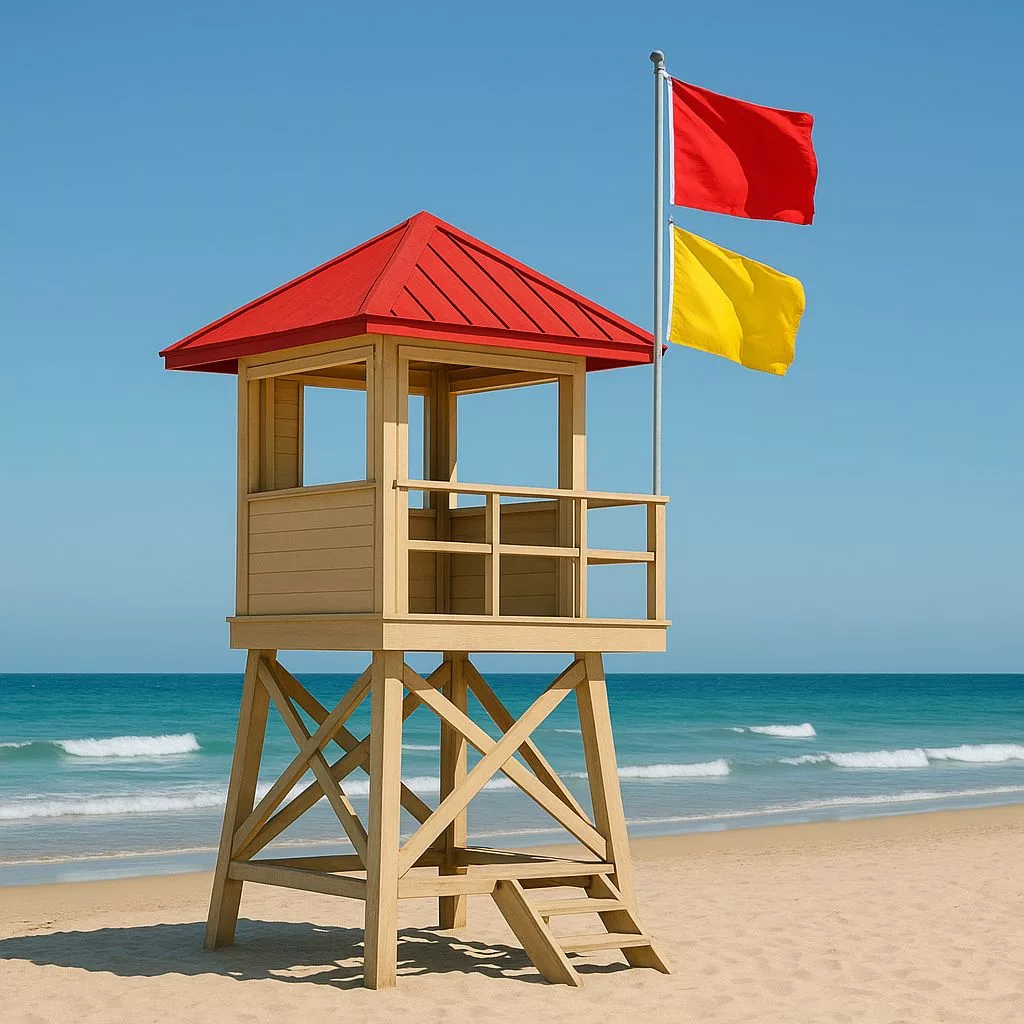
Cape Town turns its beaches into super safe playgrounds for summer! They have a special “Safe Zone” with lifeguards always watching, using flags and whistle sounds to keep everyone safe. They teach you how to escape tricky rip currents, remind you not to drink alcohol, and say grown-ups must watch kids super closely. They even use cool QR wristbands to help find lost children fast. This way, everyone can have fun and be safe at the beach!
How does Cape Town ensure beach safety during peak season?
Cape Town implements a comprehensive safety system on its beaches, including a 400m “Safe Zone” with constant lifeguard patrols, flag systems, and specific whistle codes for hazards. They also educate visitors on rip current safety, discourage alcohol consumption, emphasize child supervision, and use technology like QR wristbands for lost children.
- A resident-and-visitor playbook for the 2025/26 season*
1. The invisible fence: how 400 m of sand and sea is turned into a controlled playground
The bell rings for December holidays and, before the echo fades, every lifeguard tower between Big Bay and Muizenberg is already a mini-military post: neon bibs, rescue tubes, VHF chatter.
The “Safe Zone” is not a feel-good sticker; it is a living grid rehearsed since winter – rip simulations in chlorinated pools, library staff stress-testing lost-child databases, interns slicing 20 km of wristband fabric that will soon coil around sun-pink arms.
Walk onto any flagged beach and you stand inside a 400 m rectangle – 200 m up the sand, 200 m seaward to the last line of breaking waves.
At dawn, municipal rakers erase ankle-breaking dongas; jet-skis rake the shoreline every three hours to haul away kelp that can tie up a toddler’s foot; pink-drain outlets are eyeballed for jelly blooms.
Flags go up every 50 m so that even a four-year-old lying flat can spot two poles without turning his head. Lifeguards haul a sledgehammer and PVC pipe and relocate those flags with the tide – every 90 minutes, no exceptions.
Sound is part of the architecture.
One prolonged whistle = “Heads up, hazard spotted.”
Three staccato tweets = “Everybody out, now.”
An upsweeping siren = “Missing child – lock the gates.”
Teach the code while you’re still unfolding the blanket; adrenaline wipes memory clean.
2. Rip currents: the conveyor belt that outruns Usain Bolt
Nine in ten surf rescues are rip-centric.
A rip is not a wave; it’s a horizontal river that can accelerate from a gentle 0.5 m/s to 2.5 m/s – faster than any human sprint.
Look for the cheat sheet: a gap where waves refuse to break, darker water because the floor has dropped, a floating breadcrumb trail of foam heading seaward, that eerily calm patch kids love to wade into.
Trapped?
First, freeze – flailing burns the oxygen you need.
A raised arm is a live GPS pin; tower guards scan for it every 30 seconds.
Swim sideways, not back.
Parallel to shore until the treadmill stops, then bodysurf the next wave.
Trying to beat the rip head-on is like sprinting up a downwards escalator – your muscles surrender long before the ocean does.
3. Alcohol, the silent riptide – and other behavioural multipliers
A lager at 11 a.m. feels harmless under an umbrella, yet ethanol is a marine anaesthetic.
It rushes hypothermia by a quarter, scrambles the inner-ear ruler kids use to judge wave height, and shuts down the gag reflex so that a face-plant in ankle-deep water can end in ICU.
Cooler boxes are catalogued from the tower; crack too many and the beach rover appears – fines start at R1 500, but the real price is the three-minute CPR delay while security argues.
Swap the six-pack for a frozen rooibos-mint slush: hydration, core cooling, and zero glass.
Supervision, not assumption.
“Keep an eye on my kid” is not a hand-over; it’s hope.
The City’s rule: if the child is under seven, an adult must be within touching distance.
Older kids who can knock out 25 m still need eye contact every ten seconds.
Buy the ugliest beach hat you can find; whoever wears it is the designated water-watcher – no phone, no novel, no braai gossip.
Rotate every 15 minutes; peripheral motion detection plummets after 20.
Scribble your mobile, nearest flag number and allergy on the child’s upper arm with a skin-safe marker; it survives sweat better than any paper bracelet.
4. Tech, tags and tiny acts that keep the ocean alive
From 15 December, fifteen beaches run registration gazebos.
A volunteer snaps a photo, logs name, age, language, second contact, then wipes the data on 31 January.
Kids walk away with a colour QR band – blue for non-swimmer, yellow for 10 m capable, green for fish-in-training.
Guards zap the code; reunions average under five minutes.
Last year the longest separation lasted 18 minutes because mom hunted the parking lot instead of staying put – proof that the system works only if you stay inside it.
Sunburn is a flotation liability.
Serious UV damage leaks plasma, shrinking blood volume and hastening cramps.
A SPF-50 rash vest is therefore both shield and spare buoyancy.
Re-apply cream to dry skin every second hour; zinc on the nose stays visible, giving tower staff a quick ID on a panicked, suddenly pale child.
Plastic peaks the day after Christmas.
Hand each kid a mesh sack and pledge ice-cream only after ten pieces of litter are landed.
Lifeguards issue cloth badges; five badges earn a free swimming lesson.
Saving ourselves includes saving the ocean that saves us.
Before the towels hit the sand, run the 180-second family drill:
– Where are our two meeting spots? (Lifeguard tower + parking meter.)
– Who wears the watcher hat first?
– Recite three rip clues.
– Translate three whistle blows.
– Can every child shout “SafeZone” and their own phone number?
Rehearsed on land, the script runs itself when panic floods the brain.
Thread yourself into the choreography – flags, whistles, scanners, slushies, ugly hats – and that strip of Cape sand becomes a place where memory, not tragedy, is the thing you take home.
[{“question”: “What is the ‘Safe Zone’ on Cape Town beaches and how does it operate?”, “answer”: “The ‘Safe Zone’ on Cape Town beaches is a carefully managed area, typically a 400m rectangle (200m up the sand and 200m seaward). It’s staffed by lifeguards, marked with flags every 50m that are relocated with the tide every 90 minutes, and includes regular patrols by jet-skis to clear kelp. The zone is maintained daily, with municipal rakers clearing the sand at dawn. Lifeguards use specific whistle codes to communicate hazards and emergencies: one prolonged whistle for a hazard, three staccato tweets for immediate evacuation, and an upsweeping siren for a missing child.”}, {“question”: “How can beachgoers identify and escape a rip current?”, “answer”: “Rip currents can be identified by a gap where waves don’t break, darker water indicating a deeper floor, a trail of foam moving seaward, or an unusually calm patch of water. If caught in a rip, the advice is to remain calm and not to flail. Raise an arm to signal for help, and swim sideways, parallel to the shore, until you are out of the current. Once out, you can bodysurf a wave back to shore. Attempting to swim against a rip current directly is ineffective and exhausts energy quickly.”}, {“question”: “Why is alcohol consumption discouraged on Cape Town beaches, and what are the consequences?”, “answer”: “Alcohol consumption is strongly discouraged on Cape Town beaches because it acts as a ‘marine anesthetic,’ increasing the risk of hypothermia, impairing judgment of wave height, and suppressing the gag reflex, which can be dangerous if submerged. Lifeguards monitor for alcohol use, and fines for consumption can start at R1,500. Instead of alcohol, visitors are encouraged to stay hydrated with non-alcoholic options like frozen rooibos-mint slush.”}, {“question”: “What are the rules and recommendations for supervising children on the beach?”, “answer”: “For children under seven, an adult must be within touching distance at all times. Older children who can swim still require eye contact every ten seconds. The ‘watcher hat’ system is recommended: designate one adult to wear a distinctive hat, making them the primary water-watcher with no distractions (phone, book, conversation). This role should rotate every 15 minutes to maintain vigilance. It’s also advised to write your mobile number, nearest flag number, and any allergies on the child’s upper arm with a skin-safe marker.”}, {“question”: “How does Cape Town use technology to help find lost children?”, “answer”: “From December 15th, fifteen beaches offer registration gazebos where volunteers take a photo and log a child’s name, age, language, and a second contact. Children receive a color-coded QR wristband (blue for non-swimmer, yellow for 10m capable, green for ‘fish-in-training’). Lifeguards can scan these codes for quick identification, with reunions averaging under five minutes. The data is wiped on January 31st.”}, {“question”: “What measures are recommended for sun protection and environmental responsibility on Cape Town beaches?”, “answer”: “For sun protection, an SPF-50 rash vest is recommended not only for UV protection but also for buoyancy. Sunscreen should be reapplied to dry skin every two hours, and zinc on the nose can help lifeguards identify a child quickly. Regarding environmental responsibility, beachgoers are encouraged to give children a mesh sack and pledge ice cream rewards for collecting ten pieces of litter. Lifeguards also issue cloth badges, with five badges earning a free swimming lesson, promoting the idea that saving ourselves includes saving the ocean.”}]