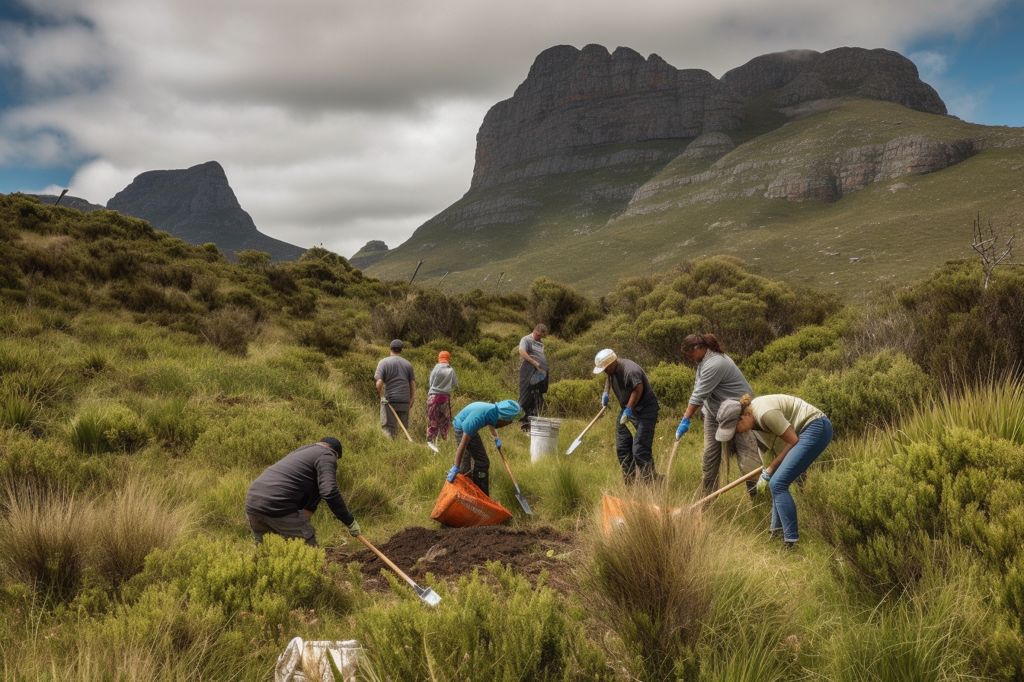
Cape Town has been a leader in environmental conservation and sustainability for years. One of its most remarkable initiatives is the partnership between the City of Cape Town’s Water and Sanitation Directorate and the Greater Cape Town Water Fund. Together, they have made remarkable strides in eradicating non-indigenous plants that deplete the region’s water resources.
The Problem: Invasive Alien Plants
Invasive alien plants, such as pines, gums, and wattles, are notorious for consuming enormous amounts of water. Scientific research has shown that these plants waste over 55 billion liters of water annually in dam catchments. If left unchecked, this figure could escalate to a mind-boggling 100 billion liters per year in a mere two decades.
The Solution: Clearing Alien Invasive Plants
To tackle this impending crisis, the collaborative project focused on clearing alien invasive plants from catchment areas. The initiative has achieved astounding results:
- A staggering 40,790 hectares of invasive alien plants have been cleared.
- Annual water savings amounting to 13.1 billion liters have been realized.
- The project has generated 722 job opportunities, propelling a greener economy.
The Impact: Environmental, Socio-economic, and Cultural
The efforts of the City and the Water Fund have not gone unnoticed. By the end of the 2022/23 fiscal year, it is anticipated that 12,487 hectares will be cleared, resulting in an estimated daily water savings of 8 million liters. To maintain and expand these clearing efforts, the City of Cape Town has committed an additional R75 million over the next three years.
This nature-based solution is heralded as the most cost-effective and sustainable approach to safeguard water supplies and meet future demands. The project’s success serves as a testament to the potential of collaborative work between local authorities and environmental organizations.
The initiative’s impact goes beyond environmental preservation—it also contributes to the city’s socio-economic well-being. By generating hundreds of job opportunities, the project has fostered a greener economy, ultimately enhancing the quality of life for Cape Town’s residents.
Furthermore, the project demonstrates a deep appreciation for the historical and cultural significance of Cape Town’s indigenous flora. The removal of invasive species allows native plants to flourish, enriching the city’s biodiversity and providing essential habitats for various species.
The Inspiration: A Remarkable Precedent
The success story of Cape Town’s unwavering fight against invasive plants highlights the power of strategic, nature-based solutions in addressing environmental challenges. As urbanization continues to escalate, cities across the globe can draw inspiration from Cape Town’s example, adopting similar strategies to preserve and protect their water resources and natural ecosystems.
The City of Cape Town, along with the Greater Cape Town Water Fund, has shown that through collaboration, determination, and a deep understanding of the environment, even the most daunting challenges can be overcome. This partnership sets a remarkable precedent for other cities worldwide as they confront their ecological and sustainability issues.