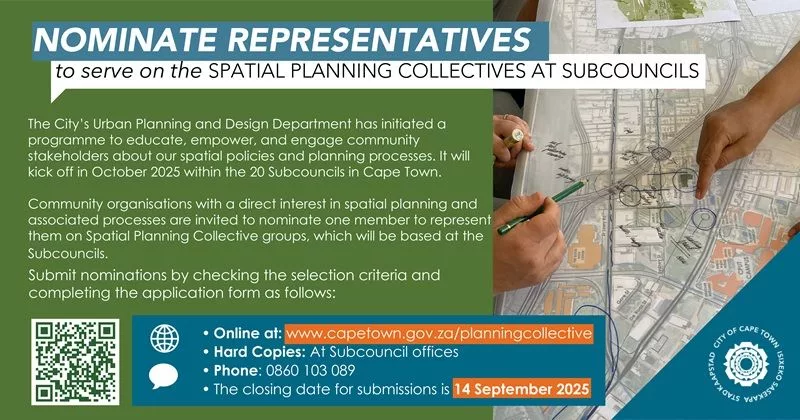
Cape Town is inviting its residents to help shape the future of their neighborhoods through new community groups called Spatial Planning Collectives. These groups will bring people together from all parts of the city to share ideas and work with city planners on important decisions about land, parks, housing, and transport. Anyone can join by nominating local groups online, in offices, or by phone. This exciting chance lets everyday people learn about city planning and turn their ideas into real changes, making Cape Town a more fair and lively place for everyone.
What are Cape Town’s Spatial Planning Collectives and how can residents get involved?
Cape Town’s Spatial Planning Collectives are community forums launched in all 20 Subcouncils to involve residents in urban planning decisions. Residents can participate by nominating local groups online, via Subcouncil offices, email, or phone, promoting inclusive, collaborative city development.
Charting a New Path for Urban Participation
As August 2025 draws to a close, Cape Town stands on the verge of a transformative moment in its urban narrative. The city’s neighborhoods, alive with unique rhythms and histories, now become the stage for a fresh approach to citymaking. The Urban Planning and Design Department, long responsible for steering Cape Town’s spatial direction, introduces a pioneering initiative: the Spatial Planning Collectives, set to launch across all 20 Subcouncils.
This move is far more than a bureaucratic exercise – it is a call to reinvigorate the city’s relationship with its citizens. By reaching out to residents’ associations, advocacy groups, and local organizations, the City seeks not just to inform, but to involve. The parallels to movements like the early European garden cities or the vibrant neighborhood activism of Jane Jacobs in New York are clear. Yet, Cape Town is determined to carve out its own model of collaborative urban governance.
Every corner of Cape Town, from the lively streets of Woodstock to the tranquil avenues in the Southern Suburbs, owes its character to the often-invisible hand of spatial planning. Choices around land use, zoning, development, and public space – frequently made in distant municipal offices – directly influence the lives of residents. The routes children take to school, the availability of parks, and even the amount of sunshine a home receives all trace back to these critical decisions. The City now wants to bridge the gap between decision-makers and those most affected by their choices.
Embracing Community Voices
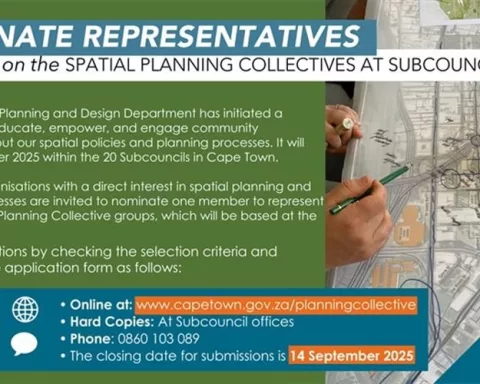
At the core of the Spatial Planning Collectives lies a powerful invitation: Cape Town’s residents are urged to become co-authors of the city’s evolving story. The City welcomes nominations from neighborhood associations, community organizations, and any stakeholders with a vested interest in how space is organized and used. The window for nominations remains open until the middle of September 2025, creating both a sense of urgency and a rare opportunity for meaningful influence.
Accessibility stands as a cornerstone of this effort. Whether online, at Subcouncil offices, or through simple phone calls and emails, the nomination process caters to a wide range of participants. By lowering barriers to entry, the City actively works to counteract historical exclusions, signaling a genuine desire to ensure that every voice – no matter how small – can find its place in the planning process.
Deputy Mayor Eddie Andrews, responsible for Spatial Planning and Environment, champions this initiative with visible passion. “This project changes the way we talk with our communities,” he says. “We want residents to gain the tools and confidence to help shape the policies that will guide Cape Town’s development.” His words reflect a commitment to co-creation, a concept often discussed by urban thinkers but rarely implemented at such a scale. The Collectives promise to usher in a new era of shared decision-making, where residents shift from observers to active participants.
Building Capacity Through Knowledge
One of the enduring challenges in urban planning is the dense web of terminology and complex procedures that can leave many feeling out of their depth. Recognizing this, the City aims to transform the Collectives into spaces for both contribution and education. The goal is to empower participants with the knowledge needed to make meaningful interventions, regardless of their prior experience.
Training forms the backbone of this empowerment strategy. Members of the Collectives will receive guidance on Cape Town’s Municipal, District, and Local Spatial Development Frameworks, as well as practical instruction on how to review and comment on plans and proposals. The curriculum also covers essential topics such as land use dynamics, budgeting for urban projects, environmental stewardship, affordable housing, disaster resilience, transport planning, and economic development.
Picture a group of residents in Mitchells Plain or Khayelitsha, gathered around detailed maps, debating the best use for a vacant site or discussing the future of their local transport routes. Elders recount how apartheid-era boundaries once divided their communities, while younger members propose visions of inclusive parks and safer streets. Through these interactions, abstract policies become real, and the knowledge gained by participants translates into tangible change in their neighborhoods.
Sustaining Dialogue for Long-Term Change
The Spatial Planning Collectives are more than just occasional meetings – they represent an ongoing commitment to dialogue between citizens and city officials. Each Subcouncil’s Collective will offer a regular platform for exchanging ideas, raising concerns, and proposing solutions. These forums become spaces where issues unique to each community – like preserving green spaces in the Northern Suburbs or integrating new affordable housing options in historic districts – can be debated and addressed.
This regular engagement acknowledges that cities are dynamic, constantly shifting in response to economic, social, and environmental forces. By creating an iterative process, the City ensures that planning keeps pace with the evolving needs of its residents. Municipal planners gain firsthand insight into local priorities, while communities enjoy greater transparency and influence over decisions that affect them.
Successful examples from around the globe provide inspiration. Scandinavian cities, renowned for their livability, routinely involve citizens in every stage of planning. In Copenhagen, for instance, ongoing community participation has helped develop world-class public spaces and transportation networks. Cape Town’s initiative aims to achieve similar results, with residents and planners working hand in hand to build a more inclusive, responsive city.
Expanding Urban Imagination
Urban planning, at its best, harnesses the collective imagination of its people. New parks, reimagined streetscapes, and vibrant public spaces all emerge from the collaborative efforts of those who live and work in a city. The launch of the Spatial Planning Collectives elevates this process, inviting Cape Town’s residents to help shape the city in both practical and creative ways.
This approach becomes especially significant in the South African context, where the scars of apartheid-era spatial divisions still dictate much of the urban landscape. While the Collectives cannot erase decades of inequity overnight, they offer a genuine chance for communities to reclaim agency. By opening up the planning process, the City creates fertile ground for more just and inclusive outcomes.
Examples from local workshops highlight what is possible. In recent years, residents in Khayelitsha organized a “visioning day” to redesign a neglected public space. The community’s ideas – ranging from playgrounds and gardens to murals and performance venues – eventually won municipal support, demonstrating the power of grassroots planning. This model now stands to be replicated citywide, empowering neighborhoods to move their aspirations from concept to reality.
How to Get Involved
Participating in the Spatial Planning Collectives could not be simpler. Interested groups and individuals should first review the eligibility criteria to ensure they represent stakeholders directly connected to spatial issues in their area. Applications can be completed online via the City’s website at www.capetown.gov.za/planningcollective, at any Subcouncil office, or by reaching out through email or telephone.
The City specifically encourages not only established civic bodies but also new and emerging organizations to step forward. By casting a wide net, the programme welcomes fresh perspectives – from youth leaders and environmental activists to small business owners and representatives of informal settlements. This diversity is essential to building a planning process that truly reflects the complexity of Cape Town society.
For those eager to contribute, the City’s website offers detailed guidelines and support. Applicants will find resources to help them navigate the process, ensuring that everyone, regardless of background or experience, can find a pathway to involvement. The City’s commitment to transparency and inclusion promises to make this initiative accessible to all.
Looking Ahead: A City Shaped by Its People
With the nomination deadline fast approaching, conversations throughout Cape Town are charged with anticipation. Residents gather in living rooms, community halls, and neighborhood cafés, discussing the possibilities that greater involvement in urban planning might unlock. For some, the Collectives present a chance to protect cherished landmarks or green spaces. For others, they offer a platform to advocate for vital issues such as affordable housing, better transport connections, or safer public environments.
The establishment of the Spatial Planning Collectives marks a significant step in Cape Town’s ongoing evolution. By fostering open dialogue, building capacity, and valuing every resident’s insight, the City moves closer to a truly participatory model of urban development. The legacy of migration, innovation, and resilience that defines Cape Town now finds new expression through this collaborative process.
Ultimately, the city’s future will be written not just by policymakers or experts, but by the collective efforts of its people. Through the Spatial Planning Collectives, Cape Town invites all residents to become active participants in shaping the city they call home – ensuring that its next chapter is inclusive, imaginative, and genuinely shared.
What are Spatial Planning Collectives in Cape Town?
Spatial Planning Collectives are newly established community forums in all 20 Subcouncils of Cape Town, designed to involve residents directly in urban planning decisions. These groups bring together local residents, associations, and organizations to collaborate with city planners on issues like land use, parks, housing, and transport. The aim is to create a more inclusive and participatory approach to shaping the city’s future.
How can residents join the Spatial Planning Collectives?
Anyone interested can join by nominating local groups or themselves through multiple accessible channels. Nominations can be submitted online at www.capetown.gov.za/planningcollective, at any Subcouncil office, via email, or by phone. The City encourages participation from all community stakeholders, including youth leaders, environmental activists, small business owners, and representatives from informal settlements. The nomination period closes mid-September 2025.
What kinds of training and support will members of the Collectives receive?
Members of the Spatial Planning Collectives will be offered training to help them understand Cape Town’s complex spatial policies and frameworks. This includes guidance on Municipal, District, and Local Spatial Development Frameworks, land use, budgeting for urban projects, environmental management, affordable housing, disaster resilience, transport planning, and economic development. The goal is to empower all participants, regardless of prior experience, to make informed contributions.
How often will the Spatial Planning Collectives meet and what will they do?
Each Subcouncil’s Collective will meet regularly to maintain ongoing dialogue between residents and city planners. These forums provide a space to discuss local priorities, raise concerns, propose solutions, and review planning proposals. This continuous engagement ensures that urban development keeps pace with changing community needs and fosters transparency and accountability in decision-making.
Why is this initiative important for Cape Town’s future?
Cape Town’s Spatial Planning Collectives represent a shift towards collaborative urban governance, giving residents a real voice in how their neighborhoods develop. This approach helps address historical spatial inequalities rooted in apartheid-era planning by promoting inclusivity and community empowerment. It also encourages creative, locally-informed solutions to urban challenges like affordable housing, transport, and green space preservation.
Can new or small community groups participate in the Spatial Planning Collectives?
Absolutely. The City of Cape Town actively encourages new, emerging, and small community groups to get involved alongside established civic bodies. The diversity of voices – from grassroots organizations to environmental groups and local businesses – is seen as essential to ensuring the planning process accurately reflects the varied needs and aspirations of Cape Town’s residents. Resources and support are available to help all applicants navigate the nomination and participation process.