South Africa’s freight and rail industry is undergoing a rebirth as the government focuses on modernization and rejuvenation. The National Logistics Crisis Committee (NLCC) is working with Transnet Freight Rail (TFR) to address challenges in rail, port, and road transport systems, while promoting public awareness of ongoing reforms. Investment in infrastructure and technology can lower transportation costs, improve connectivity, and open new opportunities for businesses and communities. The upcoming GCIS webinar provides an opportunity to learn about the ongoing reforms and their potential benefits for South Africa’s economy and environment.

The upcoming season is expected to see a significant increase in seat capacity at Cape Town International Airport, which will result in over one million inbound international seats for the first time ever. The Western Cape in South Africa is getting ready for an incredible summer tourism season, with over one million international seats expected. The province has taken coordinated steps to ensure improvements in visa systems, visitor safety, and skilled labor availability in tourism and hospitality sectors.
KwaZuluNatal is gearing up for a groundbreaking twoday CannabisHemp Conference & Expo that aims to unlock the vast potential of the cannabis industry in South Africa. The event, organized by the Department of Economic Development, Tourism, and Environmental Affairs and the Department of Agriculture and Rural Development, aims to provide rural entrepreneurs with the latest technology, funding, and market access to become leading exporters of highquality cannabis products. The conference and expo are also expected to boost the local economy while promoting environmental sustainability, and will be open to a diverse audience including industry experts, government officials, and local communities.
The Western Cape Government in South Africa has launched an electricity wheeling toolkit to connect private electricity producers with individual consumers, reducing the impact of loadshedding and increasing access to renewable energy. This joint effort aims to provide sustainable energy solutions to address energy challenges, demonstrating the government’s dedication to discovering inventive methods. The toolkit offers economic benefits by allowing private consumers to save on their electricity bills and promoting the region’s green economy, creating new employment opportunities and drawing investment for sustainable energy infrastructure.
The Department of Employment and Labour conducted a weeklong blitz inspection in Potchefstroom, North West Province, to evaluate compliance with acts related to employment services. The focus was on the hospitality sector, with noncompliance identified as a prevalent issue, especially with the Unemployment Insurance Act. The Department expanded its services to over 1600 communities, offering Public Employment Services, Unemployment Insurance Fund services, and Compensation Fund services. The Department is committed to advocating for adherence to relevant acts and ensuring fair labor practices.
The Pioneering Alliance between the National School of Government and the University of Johannesburg aims to improve state capacity and professionalize public administration. UJ academic staff will participate in research and education aligned with NSG initiatives during their sabbaticals, promoting knowledge exchange, innovation, and teamwork. The collaboration signals a new stage in how academic establishments and government agencies work together, with a common goal of nurturing a competent, ethical developmental state.
AGOA has helped small businesses like Black Mamba Foods in Eswatini to expand and thrive by providing preferential access to US markets for eligible countries in subSaharan Africa. Black Mamba Foods has successfully achieved exports totaling over $160,000, positively impacting their community and country. Their success story serves as a potent example of how international trade can empower small businesses, elevate communities, and create lasting positive change in developing nations.
Under the leadership of MEC Nonkqubela Pieters, the Grain Planting Season Initiative is empowering over 9,000 black farmers in the Eastern Cape to grow grain on 27,774 hectares of land. The initiative, backed by a R93 million investment from the Department of Rural Development and Agrarian Reform, is transforming the region’s grain value chain and ensuring food security. The project has had an extraordinary impact on the Nkondlo region, turning it into an agricultural center and generating opportunities for local employment and income.
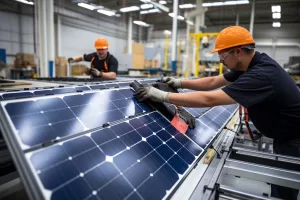
EnerGAfrica has made a massive R135 million investment in South Africa to revolutionize the energy sector and support communities. The investment has led to the inauguration of a cookstove production line and expanded solar panel production capacity to become the largest solar panel assembly plant in Africa. EnerGAfrica’s advanced manufacturing processes use biomass stoves and solar panels to provide costeffective energy solutions, create job opportunities, enhance living standards, and support local communities. The company aims to export its products to other African countries, creating even more employment prospects.
Central banks can impact climate policy coordination by understanding how climate change affects their responsibilities, mitigating policy planning and coordination risks, and avoiding excessive interference due to policy failures. They must consider the effects of climate change on the economy when developing monetary policy. To support the green transition, central banks should maintain financial and price stability, provide analytical support, and address financial market data inconsistencies. They can work with governments to minimize unintended side effects and optimize employment benefits.
The Gauteng Department of Roads and Transport has launched an advanced Panel Beating and Apprenticeship Training Workshop to manage its fleet of vehicles more efficiently. The workshop will handle inhouse accident repairs, ensuring better quality and control over the entire value chain. It will also serve as a training ground for aspiring auto repair professionals and contribute to sustainable economic growth and South Africa’s transportation infrastructure. The launch of this innovative workshop marks a significant milestone in the department’s commitment to progress, efficiency, and local talent development.
South Africa is increasing its use of wind energy, with plans to add 14 GW of wind energy capacity to the power system in the next seven years. Currently, 36 wind energy projects in the country have a combined installed capacity of 3,442 MW, supplying electricity to over three million households and creating nearly 23,000 jobs. The Western Cape province’s abundant wind conditions make it a crucial location for achieving these ambitious goals, and initiatives like the Premier’s Council on Skills aim to support job creation and sustainable development in the renewable energy space.
Ernest Khosa, the Chairperson of NSFAS, recently discussed the findings of an investigation into the direct payment service providers bid process at a media briefing. The investigation discovered irregularities and conflicts of interest during the selection process, including a lack of feasibility study and modifications to bid specifications. The NSFAS Board has taken actions such as offering the CEO a chance to explain why his contract should not be terminated and initiating disciplinary inquiries. Despite these issues, NSFAS remains dedicated to providing financial assistance to students from lowincome and workingclass backgrounds.
The BRICS Tourism Ministers Meeting is a gathering of five major emerging economies Brazil, Russia, India, China, and South Africa aimed at promoting tourism recovery through information exchange and policy consensus. The upcoming meeting, hosted by South Africa, will focus on sustainable and inclusive tourism recovery and building a more resilient future for global tourism. The event presents an opportunity for transformative change within the tourism industry, with collaboration among influential nations potentially creating a more sustainable, inclusive, and resilient future for global tourism.
Farmers must adapt to fluctuating climate conditions, monitor and manage livestock and crop health, and collaborate with relevant stakeholders to navigate the challenges of the 2023/24 summer season. They should prioritize droughtresistant cultivars, implement preventative measures against pests and diseases, and be ready for weather uncertainties such as flooding and veld fires. With the support of the Department of Agriculture and other stakeholders, farmers must embrace resilience and innovation to safeguard their livelihoods and the country’s food supply. The upcoming season serves as a call to action for farmers to prepare, be vigilant, and adapt to ensure a brighter future for all.
Cape Town’s Business Process Outsourcing (BPO) industry is gaining attention from British investors due to its skilled labor force, costeffective procedures, and solid infrastructure. The UK is the largest global source market for Cape Town’s BPO sector, and the city has invested in developing necessary skills and infrastructure for the industry. As more international companies outsource operations to Cape Town, the city solidifies its status as a prime location for BPO activities. The symbiosis between Cape Town’s BPO sector and British investors offers potential for economic growth and job opportunities for local residents.