
The Dido Valley Development in Simon’s Town, South Africa, is a housing project worth R170 million, offering housing opportunities to 600 Redhill and Luyolo beneficiaries. The project represents a symbol of recovery and reparation, enabling the Luyolo community to reclaim their ancestral home in Simon’s Town and catering to the needs of the Redhill community. The City’s comprehensive housing allocation policy ensures a fair and transparent distribution of housing opportunities, with the project set for completion in June 2026.
What is the Dido Valley Development in Simon’s Town?
The Dido Valley Development is a housing project worth R170 million, aimed at offering housing opportunities to 600 Redhill and Luyolo beneficiaries, most of whom have their roots in Gugulethu. The project represents a symbol of recovery and reparation, offering a chance for the Luyolo community to reclaim their ancestral home in Simon’s Town. The project also includes a Breaking New Ground component that caters to the needs of the Redhill community. The City’s comprehensive housing allocation policy ensures a fair and transparent distribution of housing opportunities.
Simon’s Town, a charming coastal city in South Africa, recently commemorated a significant historical event. On April 18, 2024, the long-awaited anticipation was brought to an end as the initial group of Luyolo land claimants were presented with their Breaking New Ground (BNG) homes in the newly developed Dido Valley. This deeply moving occasion marked a change in the course of history, instilling hope and offering a sense of rectification to a community that had endured years of displacement and deprivation.
Dido Valley: More Than Just a Housing Project
The Dido Valley Development is an audacious housing venture worth R170 million. It seeks to offer 600 opportunities to the Redhill and Luyolo beneficiaries, most of whom have their roots in Gugulethu. In the initial phase, eight families were presented with their new homes, indicating the beginning of a journey towards redress and restitution for the first 100 Luyolo land claimants.
This project is not just a housing initiative; it represents an emblem of recovery and reparation. It includes a segment dedicated to the descendants of the original Luyolo community, enabling them to reclaim their ancestral home in Simon’s Town. These beneficiaries experienced displacement in the mid-1960s due to the apartheid Group Areas Act, which forced them to relocate to Gugulethu.
Additionally, the project features a significant Breaking New Ground component that caters to the needs of the Redhill community, a vulnerable informal settlement located between Simon’s Town and Scarborough. The beneficiaries from this area were selected in accordance with housing allocation policies, ensuring a fair and equitable distribution of housing opportunities.
Maintaining Integrity and Transparency in Allocation
The City’s comprehensive housing allocation policy and Housing Needs Register supervise this selection process. This system guarantees that housing opportunities are provided in a fair, transparent manner, thereby preventing queue jumping. The City’s political office bearers have no access or influence over the Register or its eligible beneficiaries, thus maintaining the integrity of the process.
Due to the potential risk of illegal occupation in large housing projects like this, the City has established a direct communication line to report such incidents and encourages anonymous tip-offs.
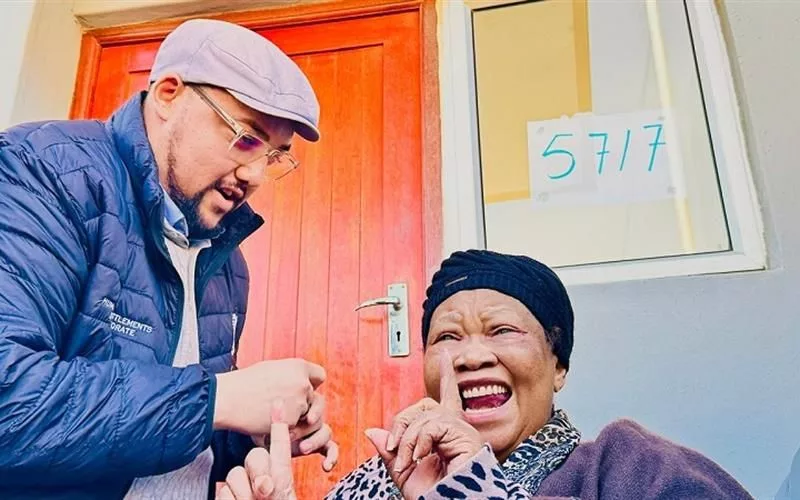
Among the first beneficiaries of this historical moment were Broadhurst and Zelda Cona, together with Nontobeko Msengana, whose joy and pride were evident. Their smiles were not just expressions of individual triumph but also a testament to the resilience and determination of a community. This moment was more than just a key handover; it was a highly anticipated homecoming.
A Journey Towards a Greater Goal
This project, however, is not only an end in itself. It symbolises the acknowledgement of past injustices, the resolve to rectify them, and most importantly, a pledge for a future where every citizen has a right to call a place home.
Councillor Carl Pophaim, the City’s Mayoral Committee Member for Human Settlements, along with prominent officials from the Human Settlements Directorate, graced the historic occasion alongside the beneficiaries and their families. His presence symbolised not just a gesture of support but an acknowledgement of their shared history and a commitment to a brighter future.
Councillor Pophaim stated his honour in sharing this milestone with the Luyolo land claimants. He recognised the torment and hardships endured by those who were forcibly removed from Simon’s Town under apartheid rule, and acknowledged the gravity of the moment. “The City has constructed 100 units for the Luyolo community, and it is a privilege for us to bring about tangible change. This flagship project exemplifies our actions of redress and restitution,” he said. The project is set for completion in June 2026, and Councillor Pophaim expressed his gratitude to all the teams, the community, and beneficiaries for their commitment to the project.
The Dido Valley Development project is much more than a mere engineering achievement; it serves as a beacon of hope for a community that seeks to reclaim its history, one home at a time. Councillor Carl Pophaim’s words encapsulate the essence of this journey best, “We are looking forward to sharing many more special moments with beneficiaries as the project progresses.”
What is the purpose of the Dido Valley Development in Simon’s Town?
The Dido Valley Development aims to offer housing opportunities to 600 Redhill and Luyolo beneficiaries, most of whom have their roots in Gugulethu. The project represents a symbol of recovery and reparation, offering a chance for the Luyolo community to reclaim their ancestral home in Simon’s Town and catering to the needs of the Redhill community.
Who are the beneficiaries of the Dido Valley Development project?
The beneficiaries of the project are 600 Redhill and Luyolo beneficiaries, most of whom have their roots in Gugulethu. The Luyolo community experienced displacement in the mid-1960s due to the apartheid Group Areas Act, which forced them to relocate to Gugulethu.
What is the Breaking New Ground component in the Dido Valley Development project?
The Breaking New Ground component of the project caters to the needs of the Redhill community, a vulnerable informal settlement located between Simon’s Town and Scarborough.
How does the City ensure a fair distribution of housing opportunities in the Dido Valley Development project?
The City of Simon’s Town has a comprehensive housing allocation policy and Housing Needs Register that supervises the selection process. The system guarantees that housing opportunities are provided in a fair, transparent manner, thereby preventing queue jumping. The City’s political office bearers have no access or influence over the Register or its eligible beneficiaries, thus maintaining the integrity of the process.
When is the Dido Valley Development project set for completion?
The project is set for completion in June 2026.
What does the Dido Valley Development project symbolize?
The Dido Valley Development project symbolizes the acknowledgement of past injustices, the resolve to rectify them, and most importantly, a pledge for a future where every citizen has a right to call a place home.