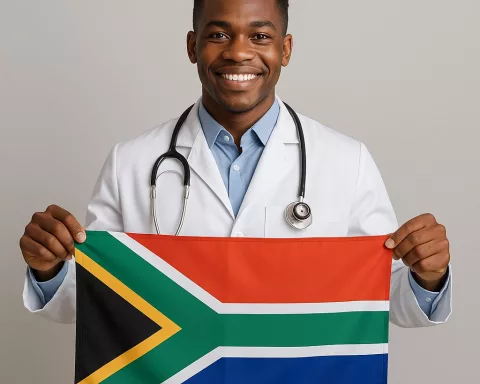
The 2025 G20 Development Planning Ministers’ Meeting in South Africa was a historic first, bringing world leaders together on African soil to focus on global solidarity and fair growth. Against the beautiful backdrop of Kruger National Park, discussions centered on making social protection a right for all, stopping illegal money flows, and working together on shared global challenges like health and climate. Inspired by Mandela’s spirit of unity, the meeting sparked hope that countries can join hands to build a fairer, stronger future for everyone.
What was the significance of the G20 Development Planning Ministers’ Meeting held in South Africa?
The 2025 G20 Development Planning Ministers’ Meeting in South Africa was historic as the first held on African soil, emphasizing global solidarity and development. Key focuses included advancing universal social protection, combating illicit financial flows, and promoting global public goods to foster inclusive economic growth and shared prosperity.
A Landmark Gathering on African Soil
As the first rays of sun crest over the vast expanse of Kruger National Park, a new chapter in global diplomacy begins to unfold. In July 2025, South Africa assumed the world’s gaze by hosting the G20 Development Planning Ministers’ Meeting within this storied landscape. For the first time in history, leaders representing the world’s largest economies convened at this level on African soil. The choice of location—an intersection of natural grandeur and deep historical significance—served not only as a nod to Africa’s emerging influence but also as a reminder of the continent’s contributions and enduring challenges.
The opening moments of the conference possessed a distinctly South African soul. Minister Maropene Ramokgopa greeted delegates in several indigenous languages, each phrase weaving a tapestry of the nation’s diversity. This gesture transcended mere protocol; it was an invocation of Ubuntu, the enduring principle that “I am because we are.” Ubuntu guided not only the etiquette of the gathering but infused the discussions with a sense of collective humanity and interconnected destiny.
The timing of the meeting further heightened its symbolic weight. July marks Nelson Mandela Month, with the world pausing on the 18th to honor the legacy of a global icon. Mandela’s insistence on dignity, justice, and the transformative power of individual and collective action became a living current through the proceedings. “What counts in life is not the mere fact that we have lived. It is what difference we have made to the lives of others,” Mandela once said, and the ministers used his words as both challenge and compass. The spirit of Mandela animated discussions, urging participants to anchor their ambitions in tangible improvements for the world’s most vulnerable.
Facing Down Global Headwinds
South Africa’s tenure as G20 host arrived during a moment of mounting uncertainty. Around the globe, economic disruptions rippled through societies; cross-border tensions threatened cooperation, and climate change delivered sharp reminders of shared vulnerability. The gaping chasm of inequality—both among and within nations—remained a stubborn obstacle, deepened by the lingering aftermath of pandemic shocks.
Yet within this daunting context, a sense of possibility began to crystallize. Delegates brought with them not just caution but commitment. There was an unmistakable determination to revive global solidarity with concrete, people-centered solutions. President Cyril Ramaphosa’s recent appeals to the United Nations echoed through the halls: the world must act with urgency, fairness, and mutual respect. South Africa’s leadership called for collaboration that extended beyond mere words, urging the world’s economic giants to rise above geopolitics in pursuit of shared prosperity.
The South African Presidency shaped the agenda around three core pillars: universal social protection; innovative development financing with a focus on curbing illicit financial flows; and a renewed emphasis on delivering global public goods. Each priority reflected an interplay between national aspirations and international commitments, drawing inspiration from the African Union’s Agenda 2063, the country’s own National Development Plan, and multilateral frameworks like the Seville Commitment. South Africa’s journey from apartheid to constitutional democracy lent both credibility and urgency to its vision.
Social Protection: Advancing Rights and Dignity
Not long ago, social security in much of the world’s south was seen as a distant dream—a privilege for the few, rather than a right for all. Data presented at the meeting underscored how much work remains. Just 13% of people in Sub-Saharan Africa currently access social protection, a stark contrast to the 86% coverage rates in North America and Europe. Such disparities are not the result of fate, but of history, policy, and persistent underinvestment.
Minister Ramokgopa and her peers forcefully asserted that social protection must move beyond charity or benevolence. It is, at its core, about justice. The G20’s adoption of more ambitious targets, inspired by the International Labour Organization’s Recommendation 202, signals a shift in perspective: robust social protection is now recognized as essential infrastructure for economic resilience and human development.
South Africa’s own path offers compelling lessons. More than half of its non-interest public spending is devoted to the “social wage”—a bundled commitment to free education, meals for schoolchildren, quality healthcare, affordable housing, and reliable utilities. During the COVID-19 pandemic, the government expanded grants and income support for the most vulnerable, proving that social safety nets can be scaled up in times of crisis. Contributory social security systems—such as unemployment insurance and compensation funds—were reimagined to include those in informal and non-traditional employment, further closing historic gaps.
The impact is profound. Studies have shown that access to child support grants empowers girls to stay in school longer and improve their academic performance. These are not mere statistics but stories of transformation—testimonies to the power of public investment to break intergenerational cycles of poverty.
Financing Development: Confronting the Shadow Economy
No discussion of long-term development can avoid the question of resources. For too many low-income countries, the weight of debt payments overwhelms budgets for health, education, and infrastructure. Even as governments struggle to raise funds, illicit financial flows—driven by tax evasion, corruption, and illegal trade—bleed roughly $1.5 trillion from the global economy each year. Africa’s annual losses, as calculated by the African Union’s panel led by Thabo Mbeki, reach a staggering $89 billion—funds that could have transformed schools, clinics, and roads across the continent.
The Kruger Park meeting became a forum for frank debate. Delegates called for a development-driven approach to global financial integrity, one that balances transparency and fairness with practical support for capacity building. While the Financial Action Task Force’s work to close loopholes earned praise, the consensus was clear: more sweeping reforms are needed. The South African Presidency outlined principles emphasizing data sharing, tax justice, and investment in revenue authorities’ capacity. These aligned with the Seville Outcome Document’s vision of a new global compact to finance development and overhaul financial systems.
Technology emerged as both a solution and a risk. On one hand, digital platforms allow for better tracking and recovery of illicit assets; on the other, they risk deepening the digital divide, especially in places where infrastructure remains weak. The ministers agreed that technological progress must be paired with deliberate efforts to ensure no one is left behind.
Women and informal sector workers received special attention in deliberations. The group resolved to redesign contributory social insurance so that these groups, often neglected by traditional models, can also claim their place in the social contract. Recent research suggests that robust social spending can fuel broader economic growth, creating a virtuous cycle rather than an unsustainable burden.
Shaping a Shared Future: The Imperative of Global Public Goods
The COVID-19 pandemic shattered any illusions about the insularity of national challenges. Across the days of deliberation in the South African bush, ministers returned again and again to the need for collaboration in delivering global public goods—whether in health security, climate resilience, or pandemic preparedness. The Ubuntu Commission, a new initiative proposed at the meeting, aims to harness the ethic of collective responsibility for global wellbeing.
Concrete steps emerged from the conference: new commitments to transparent procurement, stronger efforts to recover stolen assets, plans to modernize tax systems, and reinvigorated investment in human capital. These building blocks offer hope that the G20, under South African guidance, can shift from rhetoric to results, laying the groundwork for a more equitable form of global development.
The Kruger Park meeting did not produce instant solutions, but it did establish a new sense of purpose and partnership. Under the vast African sky, delegates rediscovered something vital: that solidarity, not rivalry, will define the next chapter in humanity’s collective journey. The legacy of this gathering, much like the sun rising over the savannah, promises to illuminate the path ahead for years to come.
FAQ: The 2025 G20 Development Planning Ministers’ Meeting in South Africa
1. What was the significance of the 2025 G20 Development Planning Ministers’ Meeting held in South Africa?
The 2025 meeting was historic as the first G20 Development Planning Ministers’ Meeting held on African soil. It marked a new chapter in global diplomacy by emphasizing global solidarity, fair growth, and inclusive development. The meeting focused on advancing universal social protection, fighting illicit financial flows, and promoting global public goods like health security and climate resilience. Hosting the event in South Africa highlighted Africa’s emerging influence and underscored the continent’s development challenges and contributions.
2. Why was Kruger National Park chosen as the venue for the meeting?
Kruger National Park was chosen not only for its natural beauty but also for its symbolic significance. Located in South Africa, the park represents a unique intersection of natural grandeur and historical depth. Hosting the meeting there reflected Africa’s growing role on the world stage and provided a powerful backdrop that connected the themes of unity, protection, and shared responsibility. The setting also evoked the spirit of Ubuntu, the African philosophy meaning “I am because we are,” which inspired a collective approach to global challenges.
3. What were the main priorities discussed during the meeting?
The agenda was shaped around three core pillars:
- Universal Social Protection: Promoting social security as a right for all, moving beyond charity to justice and economic resilience.
- Innovative Development Financing: Addressing illicit financial flows, tax justice, and capacity building to ensure sustainable funding for development.
- Global Public Goods: Enhancing cooperation on health security, climate action, and pandemic preparedness through shared responsibility and new initiatives like the Ubuntu Commission.
These priorities aimed to foster inclusive economic growth, reduce inequality, and strengthen global solidarity.
4. How does social protection fit into the goals of the G20 meeting?
Social protection was emphasized as fundamental infrastructure for human development and economic stability. Currently, only about 13% of people in Sub-Saharan Africa have access to social protection, compared to 86% in North America and Europe. The meeting urged countries to adopt ambitious targets inspired by the International Labour Organization’s Recommendation 202, recognizing social protection as a universal right. South Africa’s example—investing heavily in education, healthcare, housing, and social grants—demonstrated how social safety nets can be scaled up, especially during crises like the COVID-19 pandemic.
5. What measures were proposed to combat illicit financial flows and improve development financing?
Delegates agreed on the urgent need to tackle illicit financial flows, which drain about $1.5 trillion globally each year, with Africa losing an estimated $89 billion. The meeting called for a development-driven approach to financial integrity, emphasizing:
- Enhanced transparency and data sharing
- Strengthening tax systems and revenue authorities
- Supporting capacity building in low-income countries
- Leveraging technology carefully to avoid deepening the digital divide
These measures aim to close loopholes, recover stolen assets, and increase resources available for development priorities like health, education, and infrastructure.
6. What is the Ubuntu Commission and why was it proposed?
The Ubuntu Commission is a new initiative proposed at the meeting to embody the principle of collective responsibility for global wellbeing. It seeks to foster collaboration on global public goods such as health security, climate resilience, and pandemic preparedness. Inspired by the African philosophy of Ubuntu—“I am because we are”—the commission aims to promote solidarity over rivalry, encouraging countries to work together transparently and fairly to address shared challenges and build a more equitable future for all.
If you want to learn more about the meeting or related initiatives, feel free to check resources from the South African Presidency of the G20 and organizations like the International Labour Organization and African Union.