Imagine a vibrant chess festival where a university track becomes a giant outdoor chessboard! World champions and local talents play Chess960 with cool pieces made from ocean plastic. It’s a blend of technology, green living, and local vibes, making every game a thrilling show. This event even plants trees for every flight and inspires young minds, proving chess can be wild and wonderful.
What is “Chess on Turf” in Cape Town?
“Chess on Turf” is a revolutionary chess event held at the University of the Western Cape, transforming a track into a giant outdoor arena. It features Chess960 (Fischer Random Chess) played with unique ocean-plastic pieces by world champions and local prodigies, integrating technology, environmental consciousness, and local culture into a vibrant festival.
Section 1 – The Stadium That Forgot Its Sport
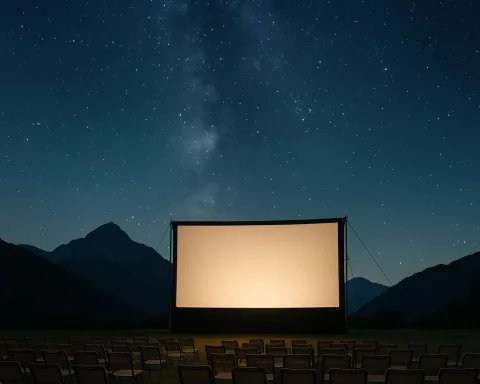
The University of the Western Cape track has never hosted a soccer match, yet tonight the oval buzzes like a World Cup final. Carpenters spent the week turning the 400-metre circle into a giant indoor-outdoor chess coliseque: eight scaffold islands hover above lane eight, each carrying a board big enough for Thanksgiving dinner. Overhead, an LED belt cycles integers 1-960 the way Times Square quotes Tesla stock; every flash signals a fresh shuffle of back-row royalty.
When the counter freezes on 317, the stands exhale as one. Bishops glare from opposite-colour diagonals, rooks nestle on central files, and both kings cower on g1/g8 like castle-less monarchs caught in a storm. Commentator Peter Leko calls it “a position that never read a book,” and the phrase is stamped on tomorrow’s newspaper headline.
Magnus Carlsen vaults up the aluminium steps two at a time, trainers squeaking on the recycled-plastic boards. He tells his teenage opponent, “Today we ride the wave, not the library,” and the sentence ricochets around the stadium in English, Afrikaans and isiXhosa, printed on festival tees that sell faster than Gatsby sandwiches.
Section 2 – Ocean-Plastic Pieces and Township Prodigies
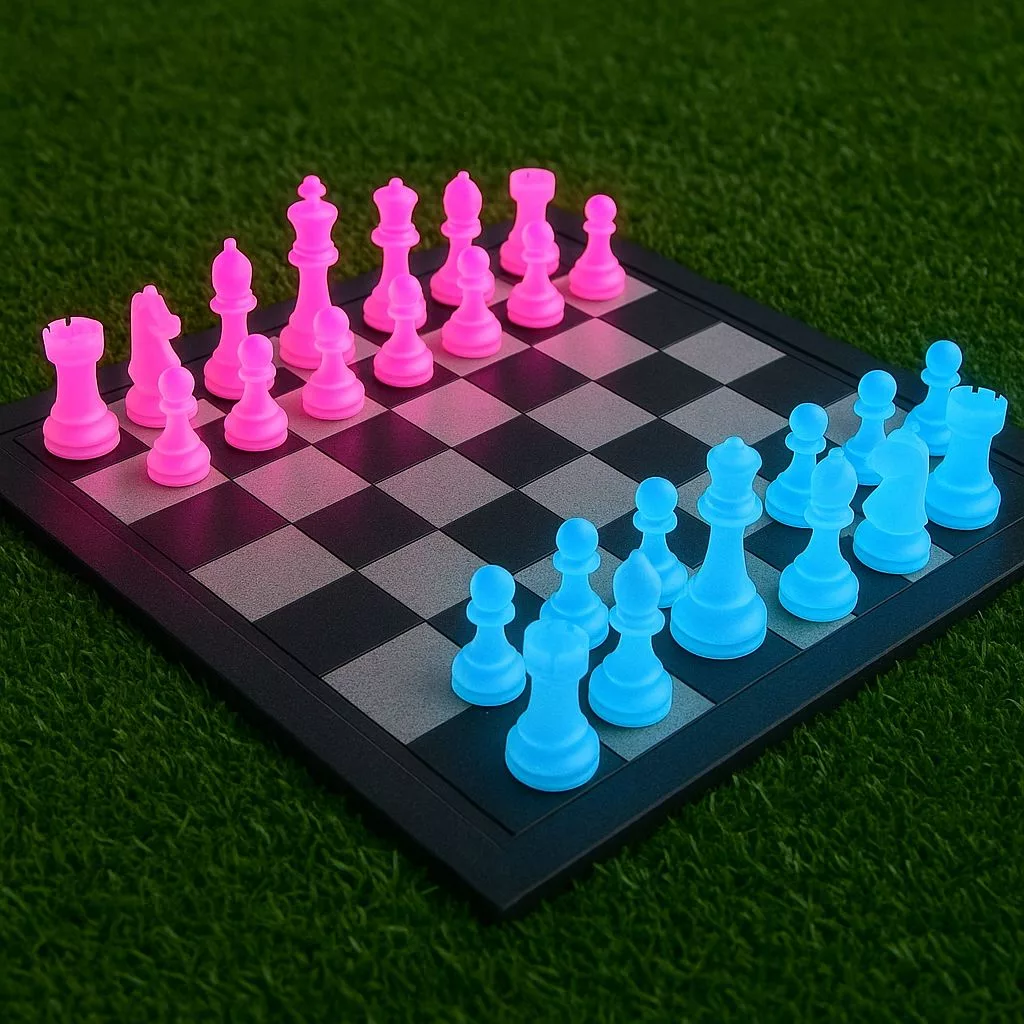
The chessmen are born from fishing nets dragged out of Muizenberg surf. Fine-arts major Kay Yonis splits the sets into mountain fynbos-pink and Atlantic midnight-blue; under UV floodlights they glow like sea anemones, turning each game into a snorkel trip. Kids lean so far over the railings that security guards fear a pawn will end up in someone’s pocket.
German wunderkind Vincent Keymar, passport still warm from its first African stamp, squares off against a Turing-hoodie sophomore. He improvises h4-h5 even though 960 lore frowns on wing advances when the queen starts on h1; the gamble nets him a mess of tangled major pieces and a sloppy but grin-inducing win.
Across the arena, Iran’s Parham Maghsoodloo launches a 23-board blitz merry-go-round: no increment, just 2.8 minutes per ride. Eight-year-old Amara Mqoco from Langa delivers the evening’s first true shock when her knight lands on c2 with a thud heard three scaffolds away. The grandmaster’s king staggers to d3 and topples; he signs the score sheet in flowing Farsi and promises a rematch under a slower clock.
Section 3 – Data, DJs and Carbon-Neutral Knights
UWC data nerds roam the steps brandishing tablets. Their crowd-sourcing engine, nicknamed “Soweto-Stockfish,” invites fans to pick the next move; arrows bloom across the jumbotron like swarm geometry. In symmetric-bishop shuffles the hive agrees with Carlsen two-thirds of the time, but when prelates share a colour the concord drops below fifty. Every click feeds a live study destined for an academic journal titled “High-Entropy Chess: Human-Machine Synergy in Cape Town.”
Between rounds, house legend DJ Ham fuses gqom with the clack-clack of Garde clocks: 124 beats per minute, the precise pulse of a club player three moves from flag fall. Grandmasters bob their heads, sneakers tapping railings in involuntary metronome.
Environmental auditors count kilometres, not victories. For every airline mile the stars travelled, Grootbos Nature Reserve will plant twelve spekboom cuttings. Before the last piece is boxed, 3,840 succulents sit ready in a nursery, their future roots pledged to cancel the carbon of eighty-eight Frankfurt–Cape return flights. The players autograph burlap sacks of biochar, turning each shrub into a signed time-capsule of fame.
Section 4 – Midnight Playoffs and Whale-Route Futures
When the house lights snap to ultraviolet, the boards become aquariums again. Levon Aronian bows to 71-year-old Rose Adams after she declines his draw offer, sacrifices her queen for three minor pieces, and goes down fighting in a rook endgame. He slips her his Armenian-American wristband; she will frame it beside the scoresheet in Kraaifontein library where she coaches novices on Saturdays.
A single DGT board survives for the nightcap, its image magnified on a 12-metre screen. Mitchells Plain’s 12-year-olds trade blitz blows with world-class elite until only Stellenbosch’s Chloe van der Merwe remains. She bangs out a win over Maghsoodloo on the razor-edge of zero seconds, her reward a stipend equal to her mom’s monthly hospital paycheck plus a trainee pass to next week’s Grand Slam at Grootbos, where southern right whales breach within view of the analysis room.
Carlsen licks chili oil off his fingers and answers the question everyone keeps shouting: “I like the version I can’t prepare for – only then am I really thinking.” The refrigerated truck closes its doors on fluorescent boards tagged “Freestyle Chess: Contents – Possibility,” and the convoy rolls east toward the R44, fynbos perfume chasing salt air all the way to the whale coast.
[{“question”: “What is ‘Chess on Turf’ in Cape Town?”, “answer”: “‘Chess on Turf’ is a revolutionary chess event held at the University of the Western Cape, transforming a track into a giant outdoor arena. It features Chess960 (Fischer Random Chess) played with unique ocean-plastic pieces by world champions and local prodigies, integrating technology, environmental consciousness, and local culture into a vibrant festival.”}, {“question”: “What is Chess960 (Fischer Random Chess)?”, “answer”: “Chess960, also known as Fischer Random Chess, is a variation of chess where the starting position of the pieces on the back rank is randomized, with 960 possible starting positions. This eliminates pre-game memorization of openings and emphasizes creativity and on-the-spot strategic thinking from the very first move. It was invented by chess legend Bobby Fischer.”}, {“question”: “How does ‘Chess on Turf’ incorporate environmental sustainability?”, “answer”: “The event uses chess pieces made from recycled ocean plastic, specifically from fishing nets collected from Muizenberg surf. Furthermore, for every airline mile traveled by the participating chess stars, Grootbos Nature Reserve plants twelve spekboom cuttings, aiming to offset the carbon footprint of their travel.”}, {“question”: “What makes the chessboards at ‘Chess on Turf’ unique?”, “answer”: “The University of the Western Cape track is transformed into a giant outdoor chess arena with eight scaffold islands, each holding an oversized chessboard. These boards are made from recycled plastic, and the ocean-plastic chessmen glow under UV floodlights. An LED belt overhead cycles through the 960 possible Chess960 starting positions.”}, {“question”: “How does ‘Chess on Turf’ engage and inspire young minds and local talent?”, “answer”: “The festival actively involves local talents, from fine-arts students designing the pieces to young prodigies from townships like Langa and Mitchells Plain competing against world champions. The event encourages participation, offers opportunities for rematches, and provides valuable experiences and even stipends and future training passes to promising young players.”}, {“question”: “What role does technology play in ‘Chess on Turf’?”, “answer”: “Technology is integrated through an LED belt displaying Chess960 positions, oversized DGT boards for magnified play, and a crowd-sourcing engine nicknamed ‘Soweto-Stockfish’ that allows fans to suggest moves. This data is used for academic study on human-machine synergy in chess. DJs also fuse gqom music with the sounds of chess clocks, creating a unique soundscape.”}]