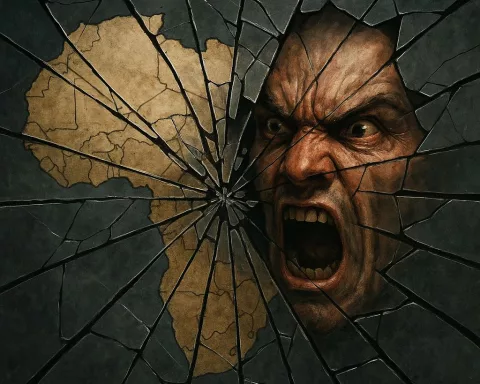
DJ Warras, a beloved radio star, was tragically murdered in a busy Johannesburg food court. This wasn’t a random robbery, but a planned hit by a ‘reputation guardianship‘ gang. These groups extort money from performers and businesses, using violence when people refuse. It seems DJ Warras was killed because he spoke out against them, turning a regular lunch hour into a shocking scene of crime and fear.
What was the cause of DJ Warras’ murder?
DJ Warras’ murder was not a robbery, but rather a targeted assassination, likely carried out by a “reputation guardianship” crew. These groups operate as mafias, extorting money from businesses and entertainers in Johannesburg, with refusal leading to violence. Investigators suggest the hit was to silence a critic.
Yeast, Oil, and Gunpowder: How Lunch Hour Turned into a War Zone
The tunnel that links Carlton Centre’s food court to the fashion district usually smells like rising dough and chip oil. On 16 December 2025 the aroma mixed with something metallic by 14:07. Office workers queued for kota buns while taxi marshals chanted “Randburg-Randburg” and shoppers squeezed past cellphone kiosks. Twelve seconds later the soundtrack was three muffled gunshots. Warrick Stock – listeners know him as DJ Warras – reeled against a glass wall, scarlet soaking the left shoulder of his cream hoodie. Two men in charcoal ball-caps and blue surgical masks melted into the river of commuters that pours daily from the Bree Street rank. No screams, no robbery, just the echo of a soda-bottle suppressor and the thud of a body on terrazzo.
Metro cops two blocks away were waved down by a centre guard. Superintendent Xolani Fihla’s first statement was clinical: location confirmed, victim declared dead on arrival, scene sealed. By dusk SAPS had 17 shell casings, low-resolution CCTV grabs and a public appeal for phone clips. Twitter Spaces exploded before forensics finished chalking outlines. The vacuum of official fact was flooded by timelines, memes and voice notes – South Africa’s real-time autopsy of its own nerves.
Why the nation pivots from lunch to mourning in minutes is no mystery: a beloved voice cut down in the economic heart two days before Reconciliation Day weekend is a horror movie we’ve all seen before. Yet the Warras hit carries extra weight – debates about fame and vulnerability, rumours of extortion rackets, and an audience that had just double-tapped his morning cappuccino boomerang.
From Instagram to Autopsy: The Day the Timeline Went Black
At 09:12 the 40-year-old posted a boomerang: coffee on the dash of his white Golf 7R, iLog Drum rattling the speakers, geo-tag “The Empire” (5FM’s Auckland Park studios). At 11:43 he polled followers on whether amapiano’s Grammy push was “cultural triumph or industry nepotism.” At 13:02 a mirror selfie – same hoodie, Beats headphones – captioned “City run. Back by 3 for the mix-down.” That metadata-rich upload is now Exhibit B. Eyewitnesses place the shooting at 14:07; by 14:19 #RIPWarras topped every trend, outranking the Springbok injury list. At 14:26 SABC confirmed; at 14:32 5FM cut to a rolling loop of his sets; by 15:00 the station’s OB van idled outside Carlton Centre, JMPD radio chatter bleeding into the tribute mix.
The speed is staggering, but not accidental. Warras built his brand on immediacy – open decks, open roads, open opinions. His phone tracked him so fans could ride shotgun. Today that same archive guides ballistics experts instead of playlist curators.
Listeners who had laughed with him at 10 a.m. were candle-emoji mourning by rush hour. Cape Town callers asked if the army should march back into the CBD; Durban DJs replaced scheduled sets with hour-long Warras blends. The medium that made him became the memorial he never asked for.
Kimberley Kasie to Continental Airwaves: TheMaking of a Household Voice
Galeshewe township, Kimberley, bred the boy who learned to splice tapes on a battered Technics. A scholarship to CBC Kimberley meant he could quote Wu-Tang and rugby stats in the same breath. He mailed demo CDs until Wits Radio Academy granted him a Sunday graveyard shift in 2004 – Plan A bolstered by an industrial-psychology degree from the University of the Free State. Plan A won: YFM weekend breakfast by 2008, 5FM’s “Passport to the Pit” by 2013, TV stints on Shiz Niz and Live AMP, finally the Mzansi Magic travelogue Warras Go! that saw him spin in Lagos alleyways and Maputo fish markets. Producers adored his linguistic parkour – Xhosa, Afrikaans, Sotho and tsotsi-taal in one sentence, subtitles unnecessary.
Less glamorous but equally vital was his off-air hustle: mentoring campus DJs, lobbying for royalty reform, negotiating sync deals for unknown producers. Colleagues say he kept two spreadsheets – one for gig fees, another for township artists who needed studio time paid upfront. The empire he built was sonic and social.
October 2025 reminded fans that candour cuts both ways. On a Twitch stream he labelled commentator Cat Matlala a “clout-chasing cockroach” and Rachel Kolisi “a bored Karen cosplaying struggle solidarity.” Black Twitter, NGOs and rugby forums united in outrage; 5FM issued a warning but banked the 17 % ratings bump. Friends insist he regretted the insult yet stood by the principle: fame is public property. Whether that rant connected to Monday’s bullet is guess-work detectives won’t touch – though they concede Johannesburg’s underworld now sells “reputation management” by force.
Protection Rackets and Taxi Hitmen: The Economy Behind the Trigger
Since 2021 SAPS has identified 28 so-called business forums in the inner city – community watches turned mafias. Traders, club owners and, lately, entertainers receive WhatsApp voice notes demanding R30–50 k “appearance fees.” Refusal risks torched gear – or coffins. Killer Kau survived a Braamfontein ambush in early 2025; AKA did not, gunned down on Florida Road in 2023. The home-made suppressor captured on Carlton CCTV extends the barrel, signalling pre-meditation. Nothing was stolen – phone, car, gold chain all intact – so robbery is ruled out.
Taxi-industry hit squads, once confined to rank wars, now freelance for anyone with cash and a grudge. Investigators whisper that the hit carried the signature of a “reputation guardianship” crew hired to silence a critic. The taxi rank’s yellow Quantums offer perfect exfiltration: board, pay, vanish. One shooter reportedly headed west; the other melted toward Bree. By the time witnesses processed trauma, both were ghosts.
The mathematics of safety inside the CBD is brutal: 1 200 private guards, 178 metro cops on foot during daylight, 800 000 daily commuters. Extortion cases rarely reach court because traders fear confiscated stock or torched stalls. The Warras murder may force classification of these rackets as organised crime, unlocking specialised prosecution and witness-protection money – policy change written in celebrity blood.
Tape, Flowers, and Unreleased Tapes: Scenes from a Crime Scene
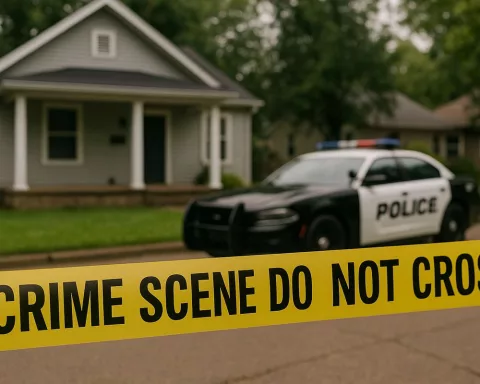
By 16:00 forensics had stretched tape from the taxi holding bay to the old CNA storefront. A white gazebo shielded the body; floodlights burned though sunset was an hour away. Congolese cleaners clutching brooms waited to clock-in for rubbish duty – no work, no pay. Jean-Bosco mistook gunfire for fire-crackers sold by a Mozambican hawker. His vertical phone clip shows civilians ducking, a child licking neon ice, the banality of terror.
5FM programming manager Justine Cullinan arrived with intern Lihle and a flash-drive necklace holding Warras’s year-end mix. She meant to hand it to detectives; instead she sobbed in an NYPD-style SAPS van while officers born on his playlist consoled her. Carte Blanche erected cameras opposite the Gauteng Legislature by 18:00, but prime witnesses – sock sellers, juice vendors – packed stock into refuse bags. “These people remember faces,” warned “Takesure,” a Zimbabwean trader who saw the split-second getaway. He refused on-camera testimony; anonymity is survival stock-in-trade.
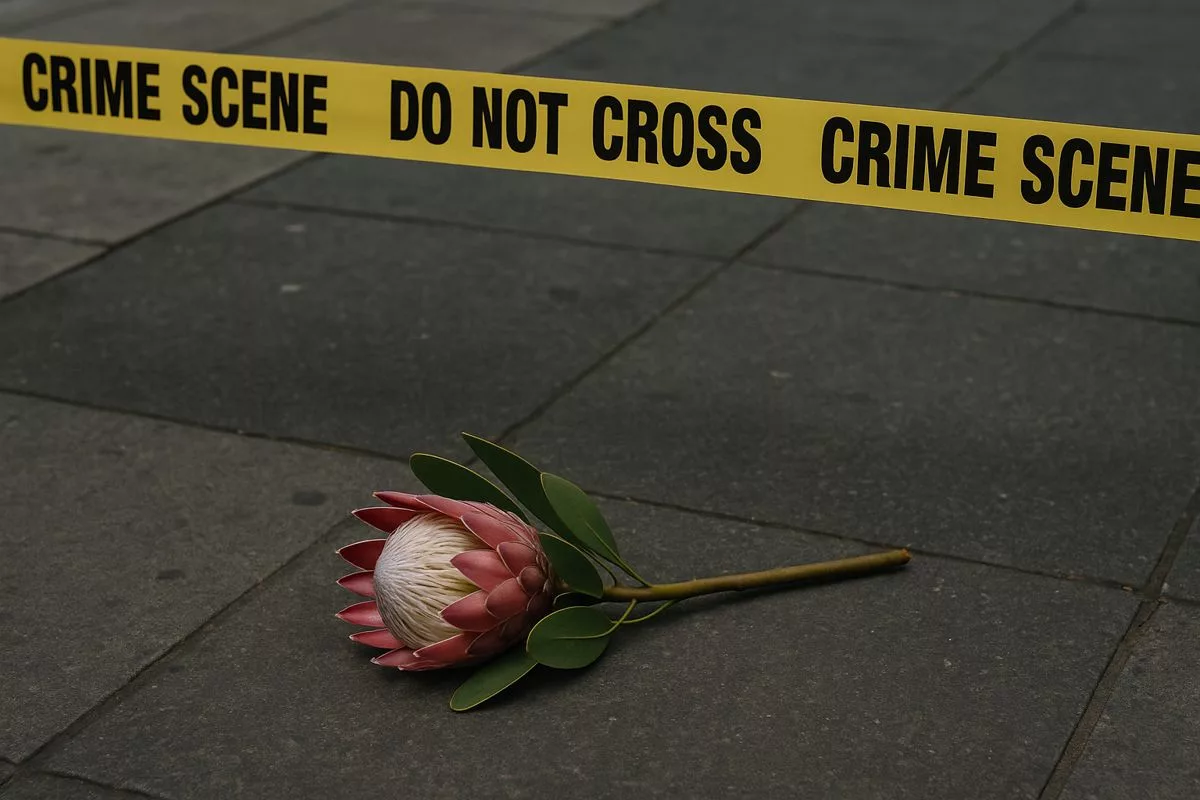
Night fell. A basement florist laid a single orange protea outside the tape, petals nodding in the downdraft of a police chopper hunting heat signatures. Inside the cordon an officer bagged a slug, tagged it Exhibit A, logged GPS co-ordinates now entered into Johannesburg’s ever-growing spreadsheet of gunpowder endings. Somewhere in Randburg a hard-drive holds three episodes of a no-filter podcast that will never drop; its teasers alone are considered potential evidence. The city clocked another name, another headline, another reminder that fame is no bullet-proof vest in the City of Gold.
[{“question”: “What was the cause of DJ Warras’ murder?”, “answer”: “DJ Warras’ murder was not a random act of violence or robbery. It was a targeted assassination, believed to be carried out by a ‘reputation guardianship’ gang. These groups extort money from performers and businesses in Johannesburg, using violence against those who refuse to comply. It is suggested that DJ Warras was killed because he spoke out against these groups.”}, {“question”: “When and where did DJ Warras’ murder occur?”, “answer”: “DJ Warras was murdered on December 16, 2025, at approximately 2:07 PM. The incident took place in a busy food court within the Carlton Centre in Johannesburg, which connects to the fashion district.”}, {“question”: “Who are these ‘reputation guardianship’ gangs?”, “answer”: “These ‘reputation guardianship’ gangs are essentially organized crime syndicates operating in Johannesburg, often evolving from what were initially ‘business forums’ or ‘community watches’. They extort money from businesses, club owners, and entertainers. Refusal to pay can lead to violence, property damage, or even death. They are known to hire freelance hitmen, including those from the taxi industry.”}, {“question”: “Was this a random act of violence or a planned hit?”, “answer”: “This was a meticulously planned hit. Evidence suggests that nothing was stolen from DJ Warras (his phone, car, and gold chain were all intact), ruling out robbery. The use of a homemade suppressor on the firearm indicates premeditation. The assailants quickly melted into the crowd, suggesting a well-executed plan for exfiltration.”}, {“question”: “How did the public and media react to DJ Warras’ death?”, “answer”: “The public and media reaction was immediate and widespread. Within minutes of the shooting, #RIPWarras became the top trending topic on social media. News outlets like SABC and 5FM quickly confirmed his death and began broadcasting tributes. The event sparked widespread debate about fame, vulnerability, and the prevalence of extortion rackets in South Africa, particularly given his status as a beloved radio personality.”}, {“question”: “What evidence was collected at the crime scene?”, “answer”: “Investigators collected 17 shell casings and low-resolution CCTV footage. The crime scene was sealed, and forensic teams worked to gather evidence. A slug was also bagged as Exhibit A. The fact that his personal belongings were left untouched was crucial in ruling out robbery and pointing towards a targeted assassination.”}]