Cape Town is taking action against the pothole crisis caused by heavy rainfall, with Road Infrastructure Management teams prioritizing repairs based on specific criteria. The city also focuses on maintaining and preserving the road network through regular resurfacing and resealing interventions. Residents can report potholes through various channels, and Cape Town’s response reflects its dedication to keeping its transportation network running smoothly. The city’s decisive response to the issue demonstrates its resolve to overcome the crisis.
How is Cape Town tackling the pothole crisis?
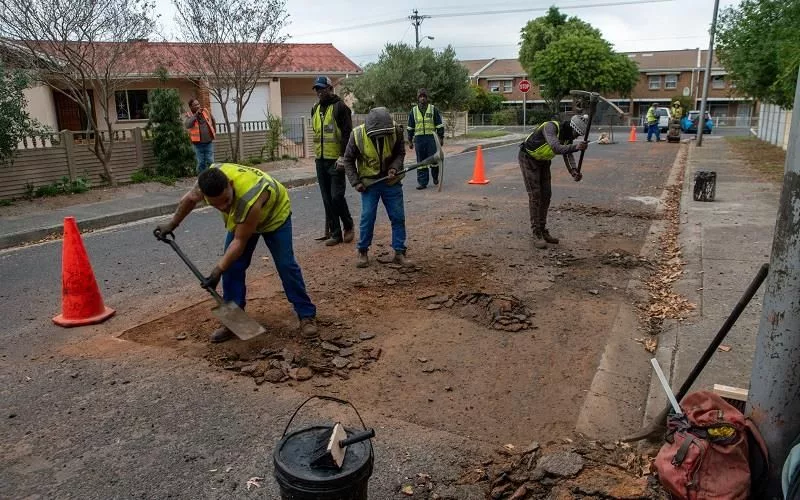
Cape Town’s Road Infrastructure Management teams are taking action against the pothole crisis caused by unprecedented rainfall. Potholes are repaired based on specific criteria, with higher traffic roads prioritized. The city also focuses on maintaining and preserving the road network through regular resurfacing and resealing interventions. Residents can report potholes via the City of Cape Town app or customer call center. Cape Town’s decisive response to this issue reflects its dedication to keeping its transportation network running smoothly.
Taking Action Against Pothole Predicament
In the vibrant city of Cape Town, a brief pause in the incessant rainfall provides a golden opportunity for the city’s Road Infrastructure Management (RIM) teams. This respite allows them to tackle the escalating pothole crisis that has cloaked the city. This is a fallout from a weather event that the SA Weather Service reports as being the most significant rainfall in nearly six and a half decades. The relentless showers have left an indelible mark on the city’s roads, which have borne the brunt of this meteorological brutality.
Far from being a helpless observer in this scenario, Cape Town is resolutely confronting this daunting challenge. The city is marshalling all its resources to manage the widespread damages. As Councillor Rob Quintas, the city’s Urban Mobility Mayoral Committee Member, states, “Our teams have been relentlessly working… we assure residents that we are doing everything in our power to address their areas at the earliest opportunity.”
Prioritizing Pothole Repairs
The task of pothole repair isn’t random. There are specific criteria that dictate the priority of repairs. Potholes are temporarily filled during winter, with comprehensive repairs planned for the dry, sunny days of summer. The annual recurrence of this cycle often produces a backlog. However, considering the unprecedented rainfall this year, the demand for repair is undeniably higher.
To enhance the efficiency of the repair process, the city has designed a road classification system. Roads higher up in the hierarchy—those accommodating significant traffic and boasting high-speed limits—get first dibs on the repair schedule. In contrast, residential streets with less traffic and slower speed limits adhere to a ‘first-come-first-served’ model. This system highlights the necessity of accurate reporting by residents when they spot a pothole, complete with precise location details and the type of road—whether a street, avenue, or road.
The Whys and Hows of Pothole Maintenance
Potholes are typically caused by water infiltrating the road structure via surface cracks or deteriorations due to aging or other external influences. But the presence of a pothole does not necessarily imply that the entire road needs to be resurfaced. The city is keen on preserving the road network with regular resurfacing and resealing interventions, efforts that help prolong the road structure’s life. Typically, these maintenance projects are launched during drier weather conditions. Factors such as traffic volume have a significant impact on the durability of the road surface. Nevertheless, the recent severe winter rains have indeed accelerated the need for some roads to be resurfaced.
As Councillor Quintas articulates, “I wish to express my gratitude to the residents for their patience and unwavering support while we execute repairs as efficiently and swiftly as possible.” The Road Infrastructure Management Department is currently overseeing numerous road resurfacing and rehabilitation projects throughout Cape Town, with several more planned until June 2025.
Keeping Cape Town Connected
For any queries or complaints related to Roads and Stormwater services, residents can reach out via the provided helpline, email, or SMS. The City also urges residents to report obstructed stormwater infrastructure, illegal dumping, and potholes using the City of Cape Town app, the City’s customer call center, or by submitting a service request on the official website.
Cape Town’s decisive response to the pothole issue, along with its comprehensive strategies and proactive measures, reflects its dedication to keeping the city’s transportation network running smoothly. Despite the magnitude of the crisis, the city and its residents’ resolve is equally formidable. It’s a validation of the city’s rallying slogan: Cape Town will not be defeated.
1. What is causing the pothole crisis in Cape Town?
The pothole crisis in Cape Town is caused by heavy rainfall, which has led to surface cracks and deteriorations in the road structure, resulting in potholes.
2. How is Cape Town tackling the pothole crisis?
Cape Town’s Road Infrastructure Management teams prioritize pothole repairs based on specific criteria, with higher traffic roads given priority. The city also focuses on maintaining and preserving the road network through regular resurfacing and resealing interventions. Residents can report potholes via the City of Cape Town app or customer call center.
3. How are pothole repairs prioritized in Cape Town?
Pothole repairs are prioritized based on a road classification system, with higher traffic roads given priority. In contrast, residential streets with less traffic and slower speed limits adhere to a ‘first-come-first-served’ model.
4. What is the process for pothole maintenance in Cape Town?
The City of Cape Town focuses on preserving the road network through regular resurfacing and resealing interventions, efforts that help prolong the road structure’s life. Typically, these maintenance projects are launched during drier weather conditions.
5. How can residents report potholes in Cape Town?
Residents can report potholes via the City of Cape Town app, customer call center, or by submitting a service request on the official website.
6. What is Cape Town’s resolve in overcoming the pothole crisis?
Cape Town is resolutely confronting the pothole crisis and marshalling all its resources to manage the widespread damages. The city’s decisive response to this issue reflects its dedication to keeping its transportation network running smoothly.