Cape Town’s Title-Deed-to-Door program brings homeownership documents straight to people’s doors in Mitchells Plain, making it easier and free to claim their homes. City officials don’t just hand over papers; they share meals and stories, turning a legal step into a joyful community celebration. This program helps thousands of families feel proud and secure in their homes, healing old wounds and building stronger neighborhoods. It’s a powerful reminder that owning a home is not just about paper – it’s about belonging and hope.
What is Cape Town’s Title-Deed-to-Door program in Mitchells Plain?
Cape Town’s Title-Deed-to-Door program delivers homeownership title deeds directly to residents in Mitchells Plain, removing transfer fees and celebrating ownership with community meals. It promotes equitable property rights, strengthens local bonds, and supports over 6,600 homeowners in reclaiming their homes.
A New Dawn for Homeownership
In the early chill of a Cape Town winter, the pastel roofs of Tafelsig catch the morning sun, forming a patchwork brighter than any canvas. On this day, the regular rhythm of the neighborhood pauses for an unusual procession: Mayor Geordin Hill-Lewis and Councillor Carl Pophaim, responsible for Human Settlements, walk the streets not as distant officials but as messengers of change. Their purpose is direct and personal – they bring homeownership paperwork, not policy pamphlets, directly to citizens’ doors, and they stay for stories and a communal meal.
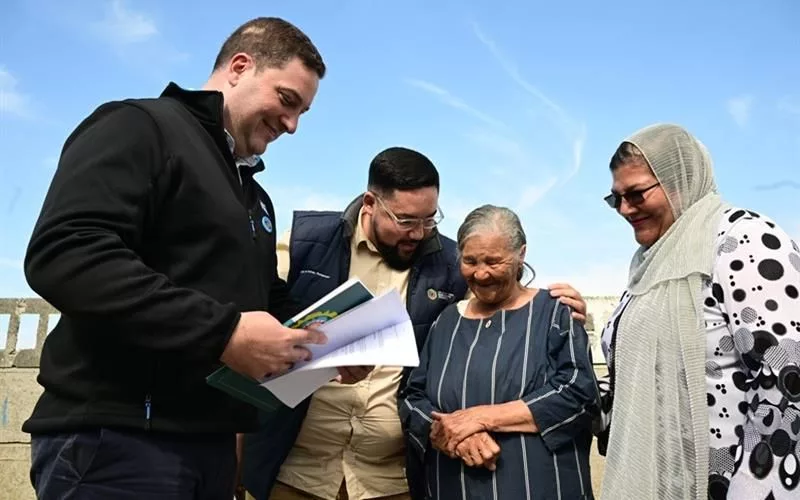
This initiative, dubbed “Title-Deed-to-Door,” transforms a bureaucratic milestone into a neighborhood celebration. Rosina Plaaitjies, who has called Tafelsig home for nearly eighty years, becomes one of many to receive her title deed in person. The moment symbolizes far more than a transaction; it marks the affirmation of decades of hope and persistence. For city officials, the act of hand-delivering these documents is deliberate, embodying a hands-on approach to leadership and a commitment to rooting progress in personal relationships.
Title deeds in South Africa carry a weight established by years of inequality and struggle. In a country where property rights have historically divided communities, the act of granting formal title is loaded with promise. Councillor Pophaim, reflecting on his own family’s journey, explains his motivation: seeing his grandmother’s life improve after receiving her deed fuels his drive to extend the same possibility to thousands of others. The program, then, is not just policy – it is personal, mobilizing the city’s resources for generational impact.
The Mechanics of Transfer: Service as Solidarity
The “No Cost Transfer” scheme underpins this transformation. Backed by over R20 million from city funds, the initiative enables qualifying residents to acquire property without the burden of transfer fees, removing a longstanding barrier for low-income families. By shifting the financial responsibility from individuals to the municipality, the city signals a new philosophy – ownership should not be a privilege, but a right, accessible to those who have called these neighborhoods home for decades.
This approach reflects a broader global movement to make cities more inclusive and equitable. In the post-apartheid landscape, South African cities like Cape Town confront the lingering effects of spatial exclusion. Where governments once enforced separation, they now endeavor to foster unity through acts of inclusion. The transfer of title deeds is a response to these historical wounds, an administrative reversal of forced removals and institutional neglect.
The city’s Service Blitz, the umbrella under which Title-Deed-to-Door operates, challenges the conventional model of government as a faceless entity. Here, public servants traverse the city, bringing services directly to residents rather than waiting in distant offices. The symbolism runs deep: officials not only deliver legal documents but also affirmation, bridging gaps between authority and citizen. The initiative operates as a living example of hands-on governance, echoing artistic traditions that value personal craftsmanship over impersonal process.
Community, Celebration, and the Power of Place
Olifantshoek Community Hall comes alive as new homeowners gather for lunch with Councillor Pophaim. The event, reminiscent of the communal scenes depicted in early twentieth-century social realist art, radiates warmth and camaraderie. Conversations center on family histories, new plans for renovations, and the emotional significance of finally holding a title deed. The shared meal transforms a legal formality into a celebration, strengthening bonds between neighbors and between residents and the city.
With over 6,600 deeds already distributed and around 5,000 remaining, the program’s scale is unprecedented in the national context. Each delivery tells its own story: a young couple secures credit to start a business, a grandmother renovates a kitchen, a family plants a new tree with confidence their home is truly theirs. These private victories accumulate, creating a groundswell of change that is perhaps invisible from afar but deeply felt in every household touched by the initiative.
Mitchells Plain, with its history of adversity and activism, provides a resonant backdrop for this campaign. Established as a “coloured” township under apartheid policies, the area has long stood as a testament to the power of community and resilience. Today, the arrival of the mayor and his team, bearing deeds and sharing meals, adds a new chapter to a story defined by struggle and hope. The neighborhoods of Tafelsig and beyond become living symbols of the city’s commitment to restoration and recognition.
Looking Forward: Beyond Paper to Presence
Cape Town’s ambitions do not end with deed delivery. A Human Settlements bus, equipped as a mobile office, will soon crisscross the metro region, making it even easier for residents to access ownership documentation. This approach recalls the traveling libraries and clinics that once brought knowledge and care to distant communities, highlighting the enduring value of direct human presence in an increasingly digital era.
The city’s outreach goes beyond numbers and paperwork. Officials urge residents of older developments to claim their deeds, signaling that every household, regardless of age or location, deserves inclusion. The message is clear: the city’s mosaic is incomplete without each individual piece. By showing up in person, officials underscore their belief that government has a duty not only to serve, but to engage, listen, and validate personal histories.
As residents walk their streets with new deeds in hand, they carry more than proof of ownership. They bear witness to a shift in how the city values, supports, and empowers its people. The story of Cape Town’s Title-Deed-to-Door initiative, played out in the streets and homes of Mitchells Plain, stands as a living record of transformation – written not through statistics, but through the daily realities and renewed hopes of its citizens.
FAQ: Cape Town’s Title-Deed-to-Door Program in Mitchells Plain
What is the Title-Deed-to-Door program in Mitchells Plain?
Cape Town’s Title-Deed-to-Door program delivers homeownership title deeds directly to residents in Mitchells Plain, eliminating transfer fees and bringing the paperwork straight to people’s homes. This initiative is not just about legal documents – it transforms the transfer of ownership into a community celebration featuring shared meals and storytelling, fostering a sense of belonging and pride among over 6,600 homeowners who have already benefited.
Who qualifies for the Title-Deed-to-Door program and how does it work?
The program targets qualifying residents of Mitchells Plain who have lived in their homes for years but have not yet received formal title deeds. By covering all transfer fees (funded by over R20 million from city resources), the city removes financial barriers for low-income families. Officials personally deliver deeds to recipients’ doors, engage with them, and host communal meals to celebrate this significant milestone.
Why is delivering title deeds personally so important?
Hand-delivering title deeds goes beyond administrative procedure; it symbolizes the city’s commitment to restoring trust and addressing historical inequalities rooted in apartheid-era spatial exclusion. This personal approach helps bridge the gap between government and citizens, affirming residents’ rights and fostering stronger community relationships by making ownership a shared, celebrated experience.
How does this program address historical inequalities in Cape Town?
During apartheid, many communities like Mitchells Plain were systematically excluded from property ownership and faced forced removals. The Title-Deed-to-Door program reverses this legacy by providing free, accessible ownership documentation, thereby promoting equitable property rights and healing generational wounds caused by institutional neglect. It is part of a broader effort to make Cape Town a more inclusive and united city.
What role does community celebration play in the program?
Community meals and gatherings are integral to the program, turning what might be a routine legal process into a joyous social event. These celebrations, often held at local halls like Olifantshoek Community Hall, encourage residents to share stories, dreams, and plans for their homes, strengthening neighborhood bonds and emphasizing that homeownership is about people and relationships, not just paperwork.
What are the future plans for expanding and supporting homeownership documentation in Cape Town?
Cape Town plans to extend its outreach through initiatives like the Human Settlements mobile office bus, which will travel across the metro area to make deed access even easier. The city encourages residents, especially in older neighborhoods, to claim their deeds and be part of the inclusive growth process. This ongoing effort highlights the city’s dedication to engagement, accessibility, and empowerment beyond the initial deed delivery.
If you want to learn more or check eligibility, visit the City of Cape Town’s official website or contact the Human Settlements department directly.