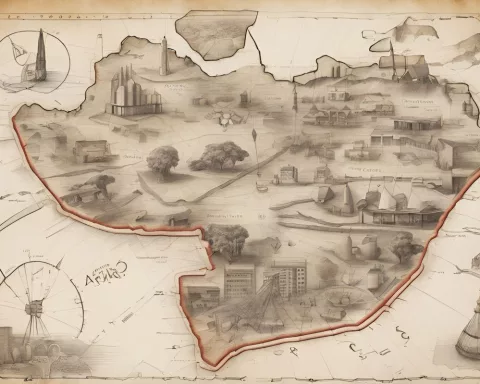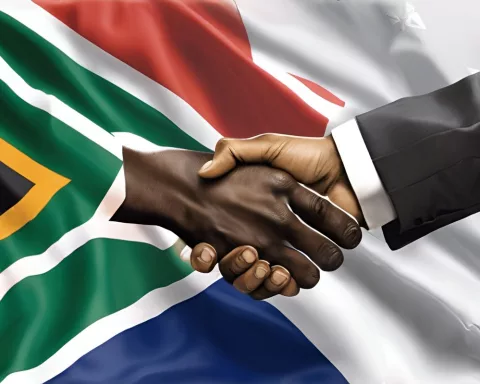
The State of the Nation Address (SONA) is a highly anticipated event in South Africa, where the President lays out the government’s priority policy goals and forthcoming year’s deliverables. Media professionals are invited to apply for accreditation to cover both the ceremonial procession and the SONA, providing an opportunity to distribute information to the wider public and aid in the formation of an informed citizenry. The Parliament’s accreditation process plays a fundamental role in ensuring press freedom and democracy, reinforcing the pillars of a strong democracy. The Parliament building, steeped in historical significance, adds a layer of mystery and historical context to the entire process, further enhancing the narrative around the SONA.
Role of Media in SONA
Parliament has invited all press members to apply for online accreditation to cover the State of the Nation Address. This offers media professionals the opportunity to distribute information to the wider public, aiding in the formation of an informed citizenry. Accreditation applications can be submitted on the Parliament’s official website, and the deadline for completing applications is set for 17:00 on Friday, 19th January 2024.
Anticipating the Event
The year 2024 is on the horizon, and South Africa’s vibrant political arena is buzzing with activity, all centered around the much-awaited State of the Nation Address (SONA). Scheduled for the 8th of February at 19:00, the SONA will have President Cyril Ramaphosa in command. To orchestrate this crucial occasion, the President has asked the National Assembly (NA) Speaker, Ms Nosiviwe Mapisa-Nqakula, and the National Council of Provinces (NCOP) Chairperson, Mr Amos Masondo, to organize a Joint Sitting of the two Houses.
SONA essentially serves as an all-encompassing platform for the President to lay out the government’s priority policy goals and forthcoming year’s deliverables. In addition to spotlighting achievements, it’s equally an opportunity to recognize obstacles and suggest strategic actions designed to spur development for the imminent financial year. As such, the State of the Nation Address signifies the launching of the parliamentary agenda for the following year.
Role of Media in SONA
Recognizing the media’s crucial role in spotlighting such an essential event, Parliament has warmly invited all press members to apply for online accreditation. This gives the media the opportunity to cover both the ceremonial procession and the SONA, thus securing their fundamental place in the democratic procedure. This allows them to distribute information to the wider public, aiding in the formation of an informed citizenry.
Accreditation applications can be submitted on the Parliament’s official website by media professionals. The deadline for completing applications is set for 17:00 on Friday, 19th January 2024. The given timeline is strict and does not permit any extensions, prompting prompt action from interested candidates.
The digital application requires primary information such as the full name of the applicant as per their identity document, ID number, the name of the media organization and the media group they represent, and their position— whether a writer or a photographer. Contact details, including email address, telephone number, and mobile phone number are also necessary.
Furthermore, media members wishing to broadcast from the parliamentary precinct should provide additional details, like the make and registration number(s) of their broadcasting vehicles. They also need to provide service provider clearance certificates for any temporary broadcast-related structures they plan to set up. Details of additional equipment, along with the expected arrival and departure date and time, are also required.
For assistance with this process, Parliament has made available Masego Dlula and Malentsoe Magwagwa, both of whom can be contacted by email or phone for help with the media accreditation procedure.
Democracy and Press Freedom
In a wider perspective, this process symbolizes a crucial intersection between democracy and press freedom in South Africa. The Parliament’s accreditation process plays a fundamental role in ensuring that the media, as the fourth estate, can freely perform its duties of informing the public and holding the government accountable, thereby reinforcing the pillars of a strong democracy.
Interestingly, the Parliament building, which will host the upcoming SONA, is steeped in historical significance. The debate room, affectionately dubbed the “Chamber,” is a prime example. These interesting tidbits add a layer of mystery and historical context to the entire process, further enhancing the narrative around the State of the Nation Address.
The Parliament not only acts as a stage for democratic proceedings but also symbolizes the nation’s rich history and heritage. The public is invited to tour the Parliament, attend a debate, and immerse in the democratic process.
Among the Parliament’s distinguished members is Ms. Jane Seboletswe Mananiso of the African National Congress, representing Gauteng. She is part of the Portfolio Committee on Higher Education, Science, and Innovation, embodying public service’s spirit.
In conclusion, the forthcoming State of the Nation Address and the media accreditation process underscore the essential harmony between democracy, press freedom, and informed citizenship, all of which converge within Parliament’s revered halls. As we transition into 2024, the part played by an open and accountable government, partnered with a free and active press, will be more vital than ever.
1. What is the State of the Nation Address (SONA)?
SONA is an annual event in South Africa where the President lays out the government’s priority policy goals and forthcoming year’s deliverables.
2. When and where will the 2024 SONA take place?
The 2024 SONA is scheduled for the 8th of February at 19:00 in the Parliament building in South Africa.
3. Who is invited to apply for accreditation to cover the SONA?
Media professionals are invited to apply for accreditation to cover both the ceremonial procession and the SONA.
4. What is the role of media in the SONA?
The media’s role in SONA is crucial as they are responsible for distributing information to the wider public, aiding in the formation of an informed citizenry.
5. What is the deadline for completing media accreditation applications?
The deadline for completing media accreditation applications is set for 17:00 on Friday, 19th January 2024 and does not permit any extensions.
6. What is the significance of the Parliament building in relation to democracy and press freedom?
The Parliament’s accreditation process plays a fundamental role in ensuring press freedom and democracy, reinforcing the pillars of a strong democracy. The Parliament building is steeped in historical significance, adding a layer of mystery and historical context to the entire process, further enhancing the narrative around the SONA.