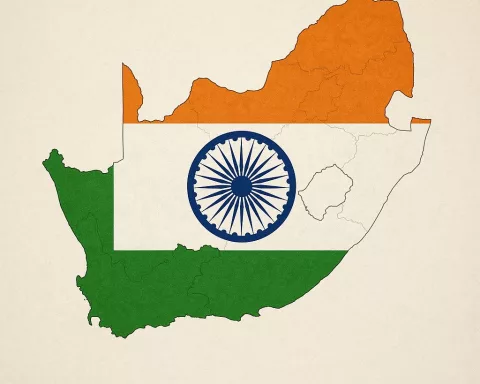
At the 2025 G20 Summit in South Africa, Donald Trump stirred a big fight by demanding protection for white Afrikaners, saying they faced violence and land loss. This surprised many because the summit was supposed to focus on world money and trade, not one country’s problems. South Africa’s leaders pushed back, saying Trump was wrong and meddling in their affairs. The clash made tensions rise between the US and South Africa, turning the global meeting into a heated debate about history, race, and politics. Now, everyone watches closely to see if they can find peace or if the conflict will grow even bigger.
What caused the diplomatic tension between Donald Trump and South Africa at the 2025 G20 Summit?
Donald Trump tied his attendance at the 2025 G20 Summit in Johannesburg to South Africa protecting white Afrikaners from alleged violence and land dispossession. This intervention sparked controversy by shifting focus from global economics to South Africa’s internal conflicts and strained US-South African relations.
Rising Tensions: Trump’s Stand and the G20 Agenda
International summits have always played host to high-stakes drama, but rarely have the stakes felt as personal and volatile as they did in early 2025. The G20 Summit, scheduled to take place in Johannesburg, would usually focus on issues like global economics, financial policy, and collective security. Instead, the world’s attention turned to a growing rift between the United States and South Africa, fueled by former US president Donald Trump’s controversial intervention in South African domestic affairs.
Trump, never one to shy away from controversy, abruptly tied his potential attendance at the Johannesburg summit to a demand: South Africa must take swift action to protect white Afrikaners from what he described as systematic violence and dispossession. “I don’t know how we can go unless that situation is taken care of,” Trump declared, adding a layer of urgency and putting the South African government on the defensive. This move reframed the summit’s agenda, pushing global economic priorities into the background while elevating South Africa’s internal struggles to the international stage.
Such a maneuver was not new for Trump, whose presidency often focused on themes of protectionism and victimhood. He cited past examples, such as when his administration granted asylum to 49 Afrikaners who had come to the US seeking refuge. This act, he argued, demonstrated America’s readiness to offer sanctuary to those “escaping violence.” However, critics pointed out the contrast with Trump’s restrictive policies toward asylum seekers from other regions, raising questions about whose suffering merited American intervention.
Historical Roots and Contemporary Controversies
To understand the current diplomatic clash, one must examine South Africa’s complicated history. The nation’s story is shaped by centuries of conflict, colonization, and the struggle for equality. Afrikaners, descendants of Dutch settlers, built much of their identity around land ownership and political dominance during the apartheid era. With the end of apartheid in the 1990s, South Africa committed itself to redress, reconciliation, and equality, but decades of injustice left deep scars.
Land reform remains one of the most contentious issues. Black South Africans see land redistribution as a necessary step toward rectifying historical wrongs, while many white farmers and Afrikaners view their land as a vital part of their heritage and means of livelihood. Violence in rural areas, including attacks on farms, has heightened anxieties, fueling debates both within and beyond South Africa’s borders.
Trump’s intervention thrust these debates into the global spotlight. He asserted that white farmers face a campaign of violence and expropriation, framing it as “genocide.” This statement sparked heated reactions, both supporting and denouncing his claims. South African president Cyril Ramaphosa pushed back, dismissing allegations of state-sanctioned violence against whites as unfounded. Independent reports and human rights organizations generally dispute the existence of a government-driven campaign against Afrikaners, noting that South Africa’s violent crime problem affects all communities and stems from broader issues of inequality and social unrest.
Media, Rhetoric, and Escalation
Trump’s approach followed a familiar pattern: using high-profile platforms and incendiary language to draw attention. He shared a video featuring Julius Malema, the firebrand leader of South Africa’s Economic Freedom Fighters (EFF), whose speeches in favor of radical land redistribution are both celebrated and feared. Malema’s rhetoric, drawing on revolutionary imagery, evokes strong reactions across South African society, but critics argue that Trump’s decision to spotlight these comments only inflamed tensions.
The ensuing media storm reverberated in both countries. Trump supporters applauded his willingness to “stand up” for white Afrikaners, while opponents accused him of selective outrage and racial bias. South African officials condemned the intervention as an unwelcome interference in domestic affairs, warning that such statements could worsen social divisions and undermine efforts at national unity.
Diplomatic consequences quickly followed. The US administration, under Trump’s influence, withdrew from several G20-related planning meetings, signaling a willingness to use absence as a form of pressure. This echoed historical moments in international relations, such as France’s 1965 walkout from European talks or the United States’ own boycotts of UN forums. Such tactics underscored the high stakes: the potential for a major summit to be derailed by disputes rooted not in global economics, but in one country’s struggle to overcome its past.
Broader Implications and the Road Ahead
This controversy comes at a critical time for both nations. South Africa, often regarded as a symbol of transition and reconciliation, grapples with persistent economic challenges and deep social inequalities. The “Rainbow Nation” ideal, championed by Nelson Mandela and Desmond Tutu, faces severe tests as poverty, crime, and racial tensions continue to trouble the country’s progress.
For the United States, Trump’s stance towards South Africa’s white minority marks a dramatic reversal of earlier narratives. During the anti-apartheid era, Western powers vocally opposed the oppression of black South Africans. Today, Trump’s focus on the Afrikaner minority inverts that legacy, raising questions about the motivations behind American advocacy and the politics of global attention.
As the G20 summit approaches, diplomats on both sides work behind the scenes to prevent a breakdown in relations. High-level talks in Washington, D.C. seek to find common ground, while public statements remain pointed and uncompromising. Analysts draw parallels between these negotiations and historic diplomatic showdowns, noting that in the era of instant communication and social media, such disputes quickly grow larger than the leaders themselves.
The world watches, aware that the outcome of this diplomatic standoff will shape not only the immediate future of US-South African relations, but also set a precedent for how domestic controversies can reverberate through the highest echelons of global governance. The question remains: will the summit provide a platform for reconciliation and mutual understanding, or will it become another casualty of the growing divide between national interests and shared global responsibilities? Only time will tell whether pragmatism or polarization wins the day.
FAQ: Diplomacy at the Crossroads – Donald Trump, White Afrikaners, and the 2025 G20 Summit
1. What triggered the diplomatic tension between Donald Trump and South Africa at the 2025 G20 Summit?
Donald Trump tied his attendance at the Johannesburg G20 Summit to South Africa taking action to protect white Afrikaners from alleged violence and land dispossession. This demand shifted the summit’s focus from global economic issues to South Africa’s internal conflicts, provoking a strong backlash from South African leaders who accused Trump of meddling in their domestic affairs. The incident heightened tensions between the US and South Africa and sparked a wider debate on history, race, and politics.
2. Why did Donald Trump focus on the protection of white Afrikaners during the summit?
Trump claimed that white Afrikaners face systematic violence and land expropriation, describing the situation as dire and akin to “genocide.” He also referenced the US granting asylum to 49 Afrikaners fleeing violence as an example of American support. His intervention reflected his broader political style of highlighting victimhood and protectionism. However, critics argue this focus was selective and overlooked the broader complexity of South Africa’s social challenges.
3. What is the historical context behind the dispute over land and violence in South Africa?
South Africa’s history of colonization, apartheid, and racial segregation left deep inequalities, particularly in land ownership. Afrikaners, descendants of Dutch settlers, historically held political and economic power, including extensive land holdings. Post-apartheid governments have focused on land reform to address historic injustices faced by the black majority. This has led to contentious debates, as many Afrikaners view these reforms as threats to their heritage and livelihoods. Rural violence affects all communities, but its causes are linked to broader social and economic issues rather than targeted campaigns.
4. How did South African officials respond to Trump’s accusations?
South African President Cyril Ramaphosa and other officials rejected Trump’s allegations of state-sanctioned violence against white Afrikaners as unfounded and harmful. They emphasized that the country’s crime and violence problem affects all communities and stems from poverty and inequality, not racial targeting. South African leaders viewed Trump’s statements as interference in their sovereignty and warned that such rhetoric could exacerbate social divisions.
5. What role did media and political rhetoric play in escalating the controversy?
Trump amplified tensions by sharing inflammatory content, including speeches by Julius Malema, leader of the radical Economic Freedom Fighters (EFF), known for advocating aggressive land redistribution. This media spotlight intensified divisions both within South Africa and internationally. Trump supporters praised his stance as defending an oppressed minority, while opponents criticized it as racially biased and politically motivated. The media coverage contributed to a polarized environment around the summit.
6. What are the broader implications of this diplomatic conflict for US-South Africa relations and global diplomacy?
The dispute represents a significant shift in US foreign policy narratives, contrasting earlier Western support for black South Africans during apartheid with Trump’s focus on the white Afrikaner minority. It risks damaging long-standing diplomatic ties and undermining cooperation on global economic and security issues discussed at the G20. The controversy also highlights the challenges when domestic political issues of one country spill over into international forums, potentially derailing multilateral efforts. Both nations are engaged in behind-the-scenes diplomatic efforts to de-escalate tensions, but the outcome remains uncertain.
If you want to learn more about the complex history of South Africa’s land reform or the evolving role of international summits in global diplomacy, let me know!