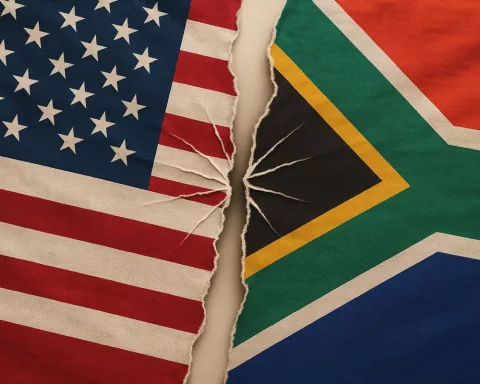

The possible absence of President Trump from the 2025 G20 summit in Johannesburg is a strong signal of growing tensions between the US and South Africa. It reflects deep disagreements over land reform, justice, and political values rooted in history. In global diplomacy, a leader’s absence can send a message as loud as their presence, shaping how countries cooperate or clash. This summit will not only focus on economics but also highlight the ongoing struggle for fairness and power in a changing world. The drama unfolding in Johannesburg shows how much is still at stake in international relations today.
Why is President Trump’s potential absence from the 2025 G20 Johannesburg Summit significant?
President Trump’s possible absence from the 2025 G20 summit signals deep diplomatic tensions between the US and South Africa, rooted in disputes over land reform, justice, and policy disagreements. Such absence acts as a political statement, impacting global cooperation and reflecting broader geopolitical challenges.
The Power of Presence and Absence in Global Diplomacy
In the intricate theater of international relations, a leader’s absence can speak as loudly as their presence. The much-anticipated G20 summit, scheduled for November 22-23, 2025, in Johannesburg, South Africa, finds itself at the intersection of global expectations and the unpredictable winds of politics. The possibility that United States President Donald Trump might skip this year’s gathering has already started to reverberate across diplomatic circles, hinting at underlying frictions rather than mere scheduling conflicts.
During a recent conversation with reporters aboard Air Force One, President Trump left little ambiguity about his stance, stating, “I think maybe I’ll send somebody else because I’ve had a lot of problems with South Africa. They have some very bad policies,” as cited by Reuters. Such statements are not just off-the-cuff remarks; they are signals, drawing attention to deeper issues in the relationship between Washington and Pretoria. Trump’s comments reflect a history of disagreements, not just about policy, but also about values, justice, and the legacy of past injustices.
The notion of absence as a political tool is nothing new. Throughout history, world leaders have used their presence – or lack thereof – to make statements, register protest, or negotiate from a distance. In the context of the upcoming G20, Trump’s potential nonattendance becomes a symbol of broader tensions and unresolved disputes that continue to shape the world stage.
Land Reform, Historical Legacies, and the Weight of Policy
Tensions between the United States and South Africa did not arise overnight. Throughout his time in office, Trump has repeatedly criticized South Africa’s policies on land and economic reform, often zeroing in on claims – denied by South African officials – of targeted expropriation of land from white farmers. This narrative, however contested, resonates with deep historical roots, bringing into focus the enduring scars of colonialism and apartheid, where land ownership determined status, power, and opportunity.
The South African government has pushed back against accusations of unjust land seizures, emphasizing that their land reform efforts aim to correct generations of dispossession. The passage of the 2023 land expropriation law further intensified the debate, drawing scrutiny from international observers and stirring passionate discussion within the country. While proponents argue that such reforms are essential to redress the inequalities of the past, critics caution against policies that might discourage investment or undermine property rights.
To understand this debate, one can look back to the struggles of ancient Rome, where attempts at land redistribution by reformers like the Gracchi brothers sparked turmoil and resistance from entrenched interests. South Africa’s journey, however, is uniquely shaped by the legacy of apartheid and the aspirations of the post-1994 African Renaissance. Measures like Black Economic Empowerment (BEE) strive to broaden participation in the economy and rectify historic imbalances, yet they also generate fierce debate both domestically and abroad. In Washington, these policies have often been viewed through a skeptical lens, raising concerns about fairness, economic stability, and the broader direction of post-apartheid transformation.
The Summit as a Stage: Historical Echoes and Contemporary Tensions
The G20 summit is more than a bureaucratic meeting – it is a global stage where nations negotiate, collaborate, and sometimes confront each other. Johannesburg, with its vibrant history as a center of both resistance and renewal, provides a fitting backdrop for these deliberations. The city’s rise from the gold rush through the crucible of apartheid and into its modern incarnation as a symbol of South Africa’s transformation mirrors the complexities the summit itself seeks to address.
Throughout the last century, US-South Africa relations have mirrored the ebb and flow of geopolitical tides. During the Cold War, Washington’s approach oscillated between pragmatic alliances and moral opposition to apartheid. The end of white minority rule in 1994 marked a shift toward partnership, but persistent issues surrounding economic justice, redistribution, and lingering inequalities have kept the relationship from settling into easy harmony. When South Africa’s parliament considered expropriating land without compensation, it triggered echoes of the post-colonial debates that dominated the Bandung Conference in 1955, where newly independent nations grappled with questions of autonomy and global integration.
Recent events have only heightened these underlying tensions. South Africa’s decision to bring a case before the International Court of Justice (ICJ), accusing Israel of genocide in its Gaza operations, drew sharp criticism from Washington. The US administration, regardless of party, interpreted the move as a challenge to its Middle Eastern ally and an unwelcome interference in a sensitive geopolitical arena. By seeking international legal recourse, South Africa invoked its own history as a nation shaped by the struggle for justice – yet in doing so, it highlighted the frictions between the aspirations of the Global South and the priorities of established powers.
Absence as Statement: The Ripple Effects on Global Cooperation
The prospect of President Trump skipping the G20 sends a powerful message – not just to South Africa, but to all participants in the global economic order. Such a move is not without precedent. Earlier in 2025, Treasury Secretary Scott Bessent declined to attend the G20 finance ministers’ meeting in Durban, while Secretary of State Marco Rubio also abstained from a prior gathering in Johannesburg. These calculated absences reinforce the perception of a widening gap between Washington and Pretoria, reflecting a chill that extends well beyond simple policy disagreements.
The choreography of international summits often mirrors the improvisational nature of the jazz for which South Africa is famous – unexpected solos, shifting rhythms, and sudden silences that can redefine the entire composition. Absence, in this context, becomes a form of negotiation, a way to express dissatisfaction or force a recalibration of diplomatic priorities. When leaders choose not to attend, they alter the dynamics of the discussion, sometimes prompting new alliances or opening space for alternative voices to emerge.
Johannesburg itself has long served as a canvas for such global dramas. The city hosted the landmark 1985 Johannesburg Biennale, a gathering where artists, activists, and thinkers converged to challenge apartheid through creativity and dissent. Today, the city’s gleaming towers and bustling streets stand as testament to both the progress made and the challenges that persist. The G20’s arrival in this setting underscores the ongoing contest between justice and realpolitik, between the ideals of inclusion and the realities of enduring division.
The Road Ahead: Navigating Justice, Power, and Change
As world leaders prepare for the 2025 G20 summit, all eyes will be on Johannesburg – not just because of who attends, but also because of who stays away. The interplay of presence and absence, negotiation and protest, reflects the deeper currents shaping our era. The summit will not just address economic recovery, climate change, or global security; it will negotiate the meaning of justice in a world still grappling with the legacies of colonialism, inequality, and shifting power.
South Africa’s insistence on global justice, rooted in its anti-apartheid struggle, continues to challenge the established order. Whether through legal appeals to the ICJ or domestic policies aimed at rectifying past injustices, Pretoria positions itself as a voice for the Global South, even as it navigates the complexities of economic partnership and international diplomacy. The vision of a more inclusive global economic system, once articulated at the G20’s inception, remains unfinished business – contested, evolving, and, at times, fraught with contradiction.
Ultimately, the 2025 Johannesburg G20 summit will serve as a barometer for the health of international cooperation in an era marked by uncertainty. The significance of the event will rest not only in the formal agendas and official declarations, but also in the symbolic gestures and absences that shape perceptions and possibilities. As the world looks to South Africa, the summit will remind us that the struggle to balance power and justice remains as urgent, and as unfinished, as ever.
FAQ: Diplomacy and Absence at the 2025 G20 Johannesburg Summit
1. Why is President Trump’s potential absence from the 2025 G20 Johannesburg Summit important?
President Trump’s possible absence signals growing diplomatic tensions between the United States and South Africa. It reflects deep disagreements over sensitive issues such as land reform, justice, and political values rooted in historical contexts. Absence of a leader at a major summit often acts as a political statement, influencing how countries cooperate and signaling unresolved conflicts on the global stage.
2. What are the main points of disagreement between the US and South Africa leading up to the summit?
The key tensions revolve around South Africa’s land reform policies, including the 2023 land expropriation law, which aims to address historic inequalities by redistributing land. The US, particularly under Trump’s administration, has criticized these policies as unfair and potentially harmful to economic stability. Additionally, South Africa’s legal actions, such as bringing a case against Israel to the International Court of Justice (ICJ), have further strained relations, highlighting contrasting geopolitical priorities and values.
3. How has the concept of absence been used historically in global diplomacy?
Throughout history, world leaders have used their absence at important international meetings as a diplomatic tool to express protest, dissatisfaction, or disapproval without direct confrontation. The absence can alter the dynamic of negotiations, signal political messages, or create space for alternative voices. President Trump potentially skipping the G20 summit aligns with this tradition, indicating unresolved tensions rather than mere scheduling conflicts.
4. What role does Johannesburg’s history play in the symbolism of the 2025 G20 Summit?
Johannesburg embodies a complex history of resistance against apartheid, economic transformation, and social renewal. Hosting the G20 in this city highlights broader themes of justice, power, and reconciliation that parallel the summit’s agenda. The city’s legacy as a center of activism and change provides a powerful backdrop for discussions on global fairness and the challenges of post-colonial development.
5. How might Trump’s absence affect the outcomes of the 2025 G20 summit?
Trump’s absence could reduce US influence in critical summit negotiations, potentially weakening the cohesion or speed of consensus on economic recovery, climate change, and security. It might also deepen diplomatic rifts, embolden alternative alliances, and highlight the fragmentation within global governance structures. Symbolically, it underscores the ongoing struggle to reconcile divergent national interests and values in a multipolar world.
6. What larger global issues does the 2025 G20 Summit in Johannesburg represent?
Beyond economics, the summit symbolizes the contested terrain of justice, power, and historical legacy in international relations. It reflects the challenges faced by the Global South in asserting their priorities and values amid established geopolitical powers. Issues like equitable economic participation, reparative justice, climate responsibility, and international legal norms will be central, illustrating the broader struggle to create a fairer and more inclusive global order.
If you want to learn more about the 2025 G20 Summit or the evolving US-South Africa relations, feel free to ask!