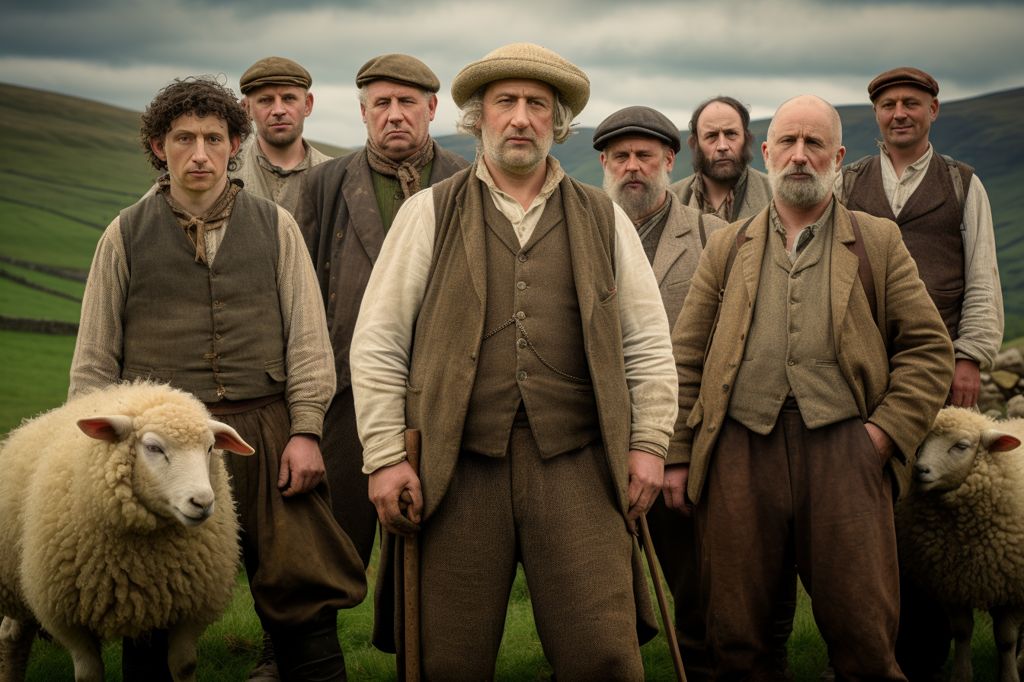
The Eastern Cape Department of Rural Development and Agrarian Reform (DRDAR) has partnered with the Eastern Cape Communal Wool Growers Association (ECCWGA) to organize the Provincial Flock Competition at the Tsolo Agriculture and Rural Development Institute (TARDI). The main objective of the event is to support the Livestock Production Improvement Programme, which seeks to enhance the quality and quantity of sheep and wool production in the province.
Renewing Partnerships for Economic Transformation
DRDAR and ECCWGA are working together to empower farmers and maximize their economic benefits through customized partnerships with commercial partners and other entities. As part of the Departmental Economic Transformation Strategy, DRDAR is renewing its partnership with ECCWGA for five years through a Memorandum of Understanding (MoU) to provide continued support for farmers.
A Platform for Knowledge Exchange and Productivity Boosting
The Provincial Flock Competition provides a platform for farmers to exchange knowledge and engage with experts from DRDAR and its strategic partners, ultimately boosting productivity. The competition follows Local and District Competitions, with participating farmers judged according to various criteria such as Pure Merino Rams, Dohne Merino Rams, 4 to 8 tooth ewes, 2 tooth ewes, and Lamb.
Valuable Prizes and Media Coverage
Farmers participating in the Provincial Flock Competition stand a chance to win vouchers worth approximately R100,000 in the form of quality rams and ewes, animal feed, and medicine. Media representatives are invited to attend and cover the event, which will take place at the Tsolo Agriculture and Rural Development Institute (TARDI) on August 25, 2023, beginning at 9 am.
Fostering a Sense of Community and Mutual Support
The Provincial Flock Competition exemplifies the Eastern Cape’s commitment to rural development and agrarian reform. Such initiatives not only offer farmers the opportunity to access valuable resources and services but also foster a sense of community and mutual support among participants.
Collaboration for Innovation and Progress
The event also highlights the importance of maintaining strong collaborative relationships between government departments, industry associations, and farmers. By working together, these stakeholders can drive innovation and progress in the agricultural sector, benefiting both individuals and the wider community.
Showcasing Economic Potential and Encouraging Investment
The Provincial Flock Competition underscores the value of knowledge sharing and collaboration between farmers and industry experts, as well as the significance of adopting modern techniques and best practices to optimize productivity. The event also serves as a valuable showcase of the economic potential of the Eastern Cape’s agricultural sector, encouraging investment and growth in the region.
Learning, Sharing, and Growing Together
By bringing together farmers, experts, and support organizations, the Provincial Flock Competition represents a unique opportunity for all stakeholders to learn, share, and grow together. This event plays a vital role in promoting the Eastern Cape’s agricultural sector, contributing to its ongoing development and prosperity.
A Commitment to Uplifting Rural Communities
The partnership between DRDAR and ECCWGA demonstrates a genuine commitment to uplifting the Eastern Cape’s rural communities by providing resources, support, and opportunities for growth. This dedication to agrarian reform and rural development is crucial for the region’s economic transformation, and the Provincial Flock Competition is a shining example of how collaboration can lead to success in the agricultural sector.