On a cold Sunday at Cape Town’s historic Castle of Good Hope, hundreds gathered to remember Nakba Day – the 1948 Palestinian displacement. The ancient fortress, once a symbol of colonial power, was filled with vibrant Palestinian colors, heartfelt speeches, and powerful art linking the struggles of Palestinians with South Africa’s fight against apartheid. Calls for justice, peace, and solidarity echoed through the crowd, reminding everyone that these fights for freedom are connected across continents. The rally was not just about remembering the past, but about standing together for a fairer future.
What is the significance of the Nakba Day rally at Cape Town’s Castle of Good Hope?
The Nakba Day rally at Cape Town’s Castle of Good Hope commemorates the 1948 Palestinian displacement, linking South African and Palestinian struggles against colonialism and apartheid. It features protests, art, and calls for justice, including ceasefire demands, BDS support, and solidarity across global movements.
A Fortress Reimagined: The Castle of Good Hope as a Site of Protest
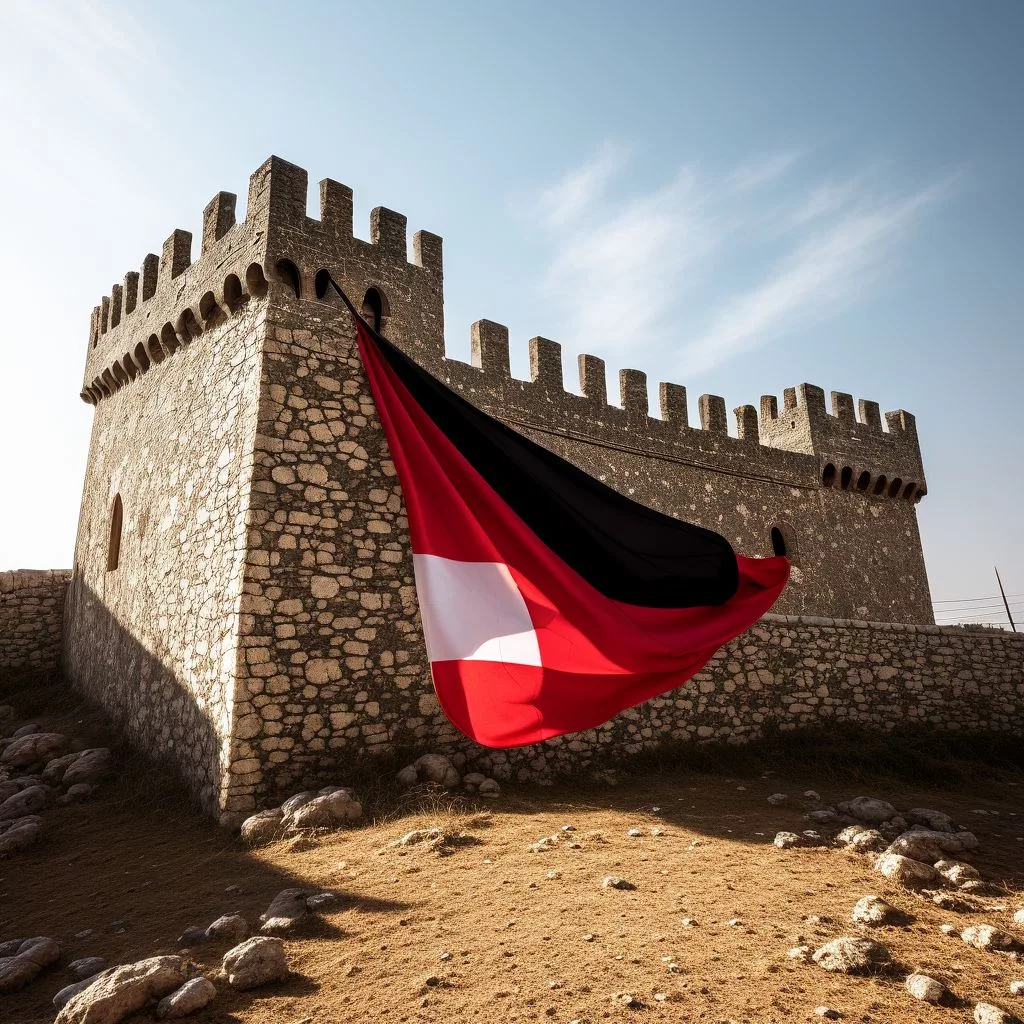
Cape Town’s Castle of Good Hope, a centuries-old monument built during Dutch rule, stood at the heart of a significant gathering on a chilly, wind-blown Sunday. This imposing structure, once intended to project colonial dominance, became the backdrop for a poignant day of solidarity and remembrance: the 77th anniversary of Nakba Day. Hundreds flocked to its grounds, their clothing a vibrant blend of red, white, green, and black – the unmistakable colors of the Palestinian flag.
The event marked not just another commemoration, but a convergence of past wounds and present struggles. Nakba Day, observed every 15th of May, memorializes the displacement of approximately 700,000 Palestinians in 1948 – a chapter known as the “Nakba,” or catastrophe, in Arabic. For many, this date doesn’t simply retell history; it embodies a living trauma, a scar that each new act of dispossession or violence reopens. The presence of so many in Cape Town reflected a determination to remember, to resist, and to forge connections across continents and centuries.
Organized by the Palestine Solidarity Campaign (PSC), a key voice in South Africa’s activist landscape, the rally coincided with renewed international attention on Gaza. As news of suffering and conflict dominated headlines, Cape Town’s demonstration joined a global surge of protests – in cities as far-flung as London, Berlin, and New York – calling for justice and an end to violence. The crowd commenced the day with a solemn silence, bowing their heads to honor the countless Palestinians who have lost their homes or their lives since 1948.
Interwoven Struggles: Linking South African and Palestinian Histories
The choice of the Castle of Good Hope as the rally’s venue carried deliberate symbolism. South Africa’s own history of colonialism and apartheid finds echoes in the Palestinian experience of displacement and occupation. At the rally, signs demanded a “permanent ceasefire in all colonial wars” and called for the “release of all Palestinian hostages,” making clear that the struggle in Gaza resonates with local histories of resistance. The ancient fortress, once a symbol of oppression, now hosted calls for liberation.
Usuf Chikte, coordinator for the PSC, highlighted these intertwined histories. Addressing the crowd, he described the Castle as a lasting reminder of settler colonialism and apartheid’s legacy. “We dismantled apartheid in South Africa, and [the Castle] is a symbol of settler colonialism and apartheid. We want it to resonate with what is taking place in Palestine. There’s nothing permanent about fascism,” he asserted. His words underscored the belief that systems of injustice, however entrenched, can be overcome.
This narrative of connected struggle stretches back decades. Nelson Mandela and others in South Africa’s liberation movement drew explicit parallels between their own fight and the Palestinian cause. The analogy remains potent for many: the legal structures of segregation, the theft of land, and the daily indignities – these are experiences familiar to South Africans, and help fuel their solidarity with Palestinians. The rally’s energy drew from this shared well of memory and aspiration, transforming remembrance into a form of ongoing resistance.
Jaamia Galant, PSC’s chairperson, addressed an attentive audience with clarity and passion. She reminded participants that the Palestinian fight for self-determination extends beyond religious boundaries. “We remind ourselves again that the freedom struggle of the Palestinian people is not a Muslim versus Jewish struggle; it is an anti-colonial struggle for justice; a struggle of reclaiming land, reclaiming identity and statehood,” she declared. Galant’s message connected the fight for Palestinian rights to broader ideals of justice, dignity, and statehood – a refrain that rang out across the Castle’s ramparts.
Art as Resistance: Cultural Expression and the Power of Solidarity
The rally’s program offered more than speeches. Artistic performances filled the air with melodies of loss and hope – songs that evoked exile, longing, and the dream of return. Music, long a staple of liberation movements worldwide, became a vehicle for both mourning and mobilization. South Africa’s own anti-apartheid struggle relied on music and art to sustain spirits and challenge authority, a tradition that continues in Palestinian activism today.
A standout moment came when the Women on Farms Project took the stage to perform a play about farm evictions in South Africa. Through drama, they drew a striking parallel between local land struggles and those faced by Palestinians, weaving together shared narratives of dispossession and resistance. Their performance transformed abstract political issues into lived human stories, reinforcing the notion that artistic expression can bridge geographies and foster empathy.
Throughout the rally, children mingled among adults, some clutching hand-painted signs, others absorbing the atmosphere. The Castle’s grounds buzzed with conversation – stories swapped about family histories, memories of apartheid, and the pain of distant relatives enduring hardship in Gaza. This intergenerational exchange contributed to a sense of community, where past and present blended through song, speech, and activism.
Images and accounts from the event quickly spread via social media, linking South Africans with global networks of protest. Paris, Toronto, Sydney – all hosted parallel demonstrations, each infusing the worldwide movement with unique local perspectives. The digital age amplified the rally’s impact, allowing solidarity and advocacy to transcend physical borders.
Demands for Change: Political Action and the Call for Accountability
The rally’s political objectives rang out clear and forceful. Activists urged an immediate ceasefire in Gaza, where civilian casualties continue to rise. They also promoted the strategy of boycott, divestment, and sanctions (BDS) against Israel – a campaign modeled on the tactics that helped topple apartheid in South Africa. Supporters of BDS believe that sustained international pressure could compel Israeli authorities toward a just settlement, drawing inspiration from South Africa’s own history of isolation as a catalyst for change.
Chants and placards demanded the release of Palestinian prisoners and an end to occupation, echoing the rhetoric of South Africa’s anti-apartheid era. The language of solidarity – boycott, divestment, sanctions – finds deep roots in the country’s collective memory. The international community’s role in dismantling apartheid, through economic and cultural isolation, serves as both precedent and hope for those advocating for Palestinian rights today.
South Africa’s government added its voice to the conversation. The Department of International Relations and Cooperation issued a statement calling for a swift ceasefire and a resumption of negotiations. While official policy often moves slowly, the alignment between government statements and grassroots activism lent the rally additional weight and legitimacy.
A significant proposal emerged from the day’s proceedings: the introduction of an “apartheid bill.” The PSC envisions this legislation as a tool to ban any involvement in or facilitation of apartheid practices, and to establish a committee for investigating related complaints. Such a bill, if enacted, could reverberate internationally, expanding the conversation around human rights and accountability far beyond South Africa’s borders.
Remembrance and Resolve: The Enduring Power of Solidarity
As afternoon sunlight faded over the Castle of Good Hope, the rally’s spirit lingered. The gathering brought together people of all ages, united by a belief in justice and a shared commitment to memory. The legacy of 1948, and the ongoing pain it represents for Palestinians, hovered in the background – an ever-present reminder of what has been lost, and what might yet be regained.
The transformation of a colonial fortress into a space of solidarity illustrated the possibility of reclaiming even the most troubled sites for causes of justice. Activists, artists, and community members collectively reimagined the Castle, if only for a day, as a beacon for resistance and hope. Their voices joined a global chorus, insisting that remembrance is not passive nostalgia, but a call to action.
Cape Town’s Nakba Day rally offered a snapshot of the enduring human quest for dignity, belonging, and self-determination. Drawing on deep reservoirs of historical memory and creative expression, the event forged connections across time and space. As the sounds of music and activism faded into the evening, the Castle’s ancient stones stood witness to the latest chapter in a long and unfinished story of struggle, memory, and hope.
What is Nakba Day and why is it commemorated in Cape Town?
Nakba Day, observed annually on May 15th, commemorates the 1948 displacement of approximately 700,000 Palestinians following the creation of the state of Israel – a tragic event Palestinians call the “Nakba” or catastrophe. In Cape Town, the day is marked by rallies such as the one held at the Castle of Good Hope, where Palestinians and supporters gather to remember this history and express solidarity. The event links the Palestinian struggle with South Africa’s own fight against apartheid and colonialism, emphasizing shared experiences of dispossession and resistance.
Why was the Castle of Good Hope chosen as the venue for the Nakba Day rally?
The Castle of Good Hope is a centuries-old fortress originally built by the Dutch during colonial times and became a symbol of colonial power and oppression. Holding the Nakba Day rally at this historic site was a deliberate act of reclaiming and transforming a symbol of injustice into a space for protest, solidarity, and remembrance. It emphasizes the parallels between South Africa’s apartheid past and the ongoing struggles faced by Palestinians and serves as a powerful reminder that systems of oppression can be challenged and dismantled.
How does the rally connect South African and Palestinian struggles?
The rally draws strong parallels between South Africa’s history of apartheid and colonialism and the Palestinian experience of displacement and occupation. Activists highlight shared themes such as land dispossession, segregation, and systemic injustice. Prominent voices at the rally, including organizers from the Palestine Solidarity Campaign, underscore that both are anti-colonial struggles for freedom, justice, and self-determination. This connection builds a global solidarity movement that uses South Africa’s successful fight against apartheid as inspiration for Palestinian liberation efforts.
What role does art and culture play in the Nakba Day rally?
Artistic expression is a vital component of the rally, serving as both resistance and remembrance. Performances of music and drama evoke themes of loss, hope, and the dream of return, continuing the tradition of liberation movements worldwide using culture to sustain morale and challenge oppression. For example, the Women on Farms Project performed a play about farm evictions in South Africa, paralleling local land struggles with Palestinian dispossession. Such cultural activities help humanize political issues and foster empathy across diverse communities.
What political demands and actions were emphasized at the rally?
Activists called for an immediate ceasefire in Gaza, the release of Palestinian prisoners, and an end to the Israeli occupation. The rally promoted the Boycott, Divestment, and Sanctions (BDS) movement against Israel, modeled on the tactics that helped end apartheid in South Africa, aiming to pressure Israeli authorities toward justice. Additionally, there was a proposal for an “apartheid bill” in South Africa to ban involvement in apartheid-related practices and establish mechanisms for accountability. The South African government’s calls for ceasefire and negotiations aligned with these grassroots demands, reinforcing the rally’s political significance.
How does the Nakba Day rally contribute to global solidarity and awareness?
The Cape Town rally is part of a worldwide network of demonstrations held in cities like London, Berlin, New York, Paris, Toronto, and Sydney. Social media has amplified these events, connecting local actions to a global movement advocating for Palestinian rights and justice. By linking South African experiences with Palestinian struggles, the rally fosters cross-cultural understanding and collective activism. This global solidarity is crucial for sustaining pressure on governments and institutions to uphold human rights and work toward peaceful resolutions.