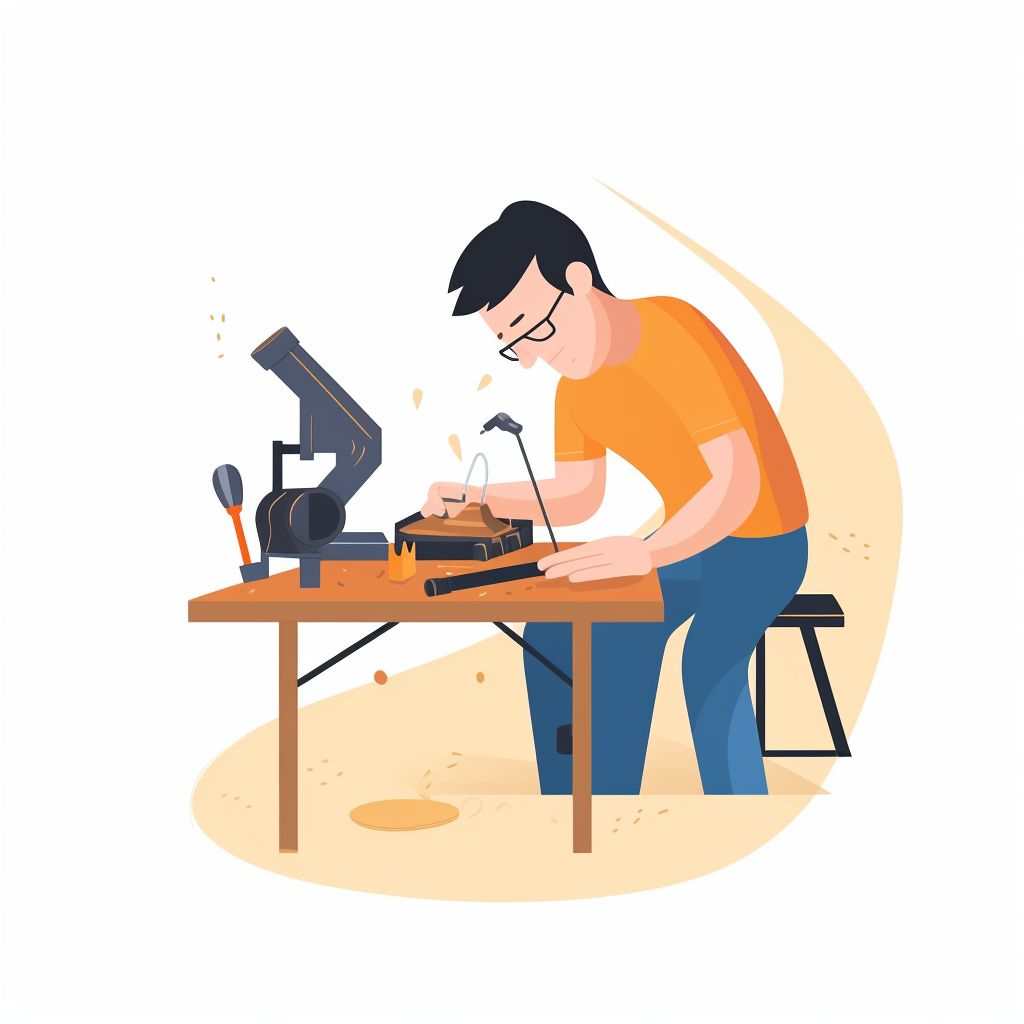
Empowering Persons with Disabilities through Supported Employment Enterprises: A Comprehensive Overview

1 min read
supported employment enterprises persons with disabilities

Supported Employment Enterprises (SEE) is committed to creating job opportunities for Persons with Disabilities (PwD) by developing partnerships with various economic stakeholders to facilitate their transition from education to the labor market. Vocational training is emphasized by SEE to broaden future opportunities for PwDs who are not academically inclined.

Workshops for Employability

SEE has been conducting several workshops as part of the Education for Employability (E4E) program supported by the European Union. The latest workshop, titled “Transitioning from Education to Work for Persons with Disabilities,” was held at ANEW Hotels & Resorts: Hunters Rest in Rustenburg, North West. Representatives from the Department of Basic Education, Department of Higher Education and Training, Department of Employment and Labour, Compensation Fund, special schools, and non-governmental organizations attended the event.

Newsletter

Stay Informed • Cape Town

Get breaking news, events, and local stories delivered to your inbox daily. All the news that matters in under 5 minutes.

Join 10,000+ readers
No spam, unsubscribe anytime

A Community-Centered Approach

SEE proposes that stakeholders collaborate to drive local content and promote the employability of PwDs. SEE’s spokesperson emphasized focusing on the abilities, rather than disabilities, of PwDs. This perspective is crucial as the North West province struggles with high unemployment rates despite its economic output.

The E4E Program

The E4E program launched in 2019 is a three-model stream initiative implemented by the Department of Basic Education, the Department of Higher Education and Training, and the Department of Employment and Labour. The program seeks to provide youth with the skills needed to find or create meaningful employment in today’s labor market. However, the COVID-19 outbreak has hindered the program’s progress.

Creating Job Opportunities

SEE, an entity of the Department of Employment and Labour, operates 13 factories across South Africa, employing 1,100 persons with disabilities. These factories manufacture various products such as office and school furniture, hospital clothes, office safes, and gates. SEE aims to foster an inclusive approach that empowers PwDs through skill development and targeted support, ultimately enabling them to become active participants in the labor market.

An Inclusive and Accessible Working Environment

Esther Tloane, the Department of Employment and Labour’s Chief Director of Public Employment Services, expressed concern over the low absorption rate of PwDs into the labor market and highlighted the need to provide opportunities to willing and capable individuals. SEE and its partners hope to create a more inclusive and accessible working environment for PwDs, ensuring that they are not left behind in the pursuit of economic growth and development.
A Russian-Spanish journalist and Cape Town native, channels his lifelong passion for South Africa into captivating stories for his local blog. With a diverse background and 50 years of rich experiences, Serjio's unique voice resonates with readers seeking to explore Cape Town's vibrant culture. His love for the city shines through in every piece, making Serjio the go-to source for the latest in South African adventures.

Leave a Reply

Your email address will not be published.

Previous Story

Cape Town’s Vegan Thrift Market: A Sustainable Shopping Experience

Next Story

The Controversy Surrounding the Central Line Relocation

Latest from Blog

From Randburg to the Record Books: How Tyla Rewrote Pop History in 2:45

Tyla, a young artist from Randburg, South Africa, exploded onto the music scene with her song “Chanel.” This catchy tune, made simply on headphones, became a massive hit without biglabel help. Thanks to TikTok and Spotify’s smart playlists, her music found millions of listeners globally. Tyla’s success shows that a great song, shared widely online, can now rewrite music history and reach the top charts, even from far away. She owns her music, giving her power that earlier artists never had.

Cape Town’s “Red Wedge”: How a 900-Metre Airport On-Ramp Became South Africa’s Most Watched Kill-Zone

{“summary”: “The \”Red Wedge\” in Cape Town is a dangerous 900meter stretch of airport road. It’s famous for terrible crimes like carjackings and smashandgrabs, making it South Africa’s most watched ‘killzone.’ This area was poorly designed in the 1970s, which now helps criminals ambush cars. Even with many cameras, police struggle to stop the quick attacks. Now, a big wall is being built, and new tech like drones and special apps are helping to fight back against the robbers.”}

South Africa’s 2025 Beef Surge: When Biology, Red Tape and a Thirsty Planet Collide

South African beef prices shot up in 2025, not because of local good news, but because the world ran short of red meat. Fewer cattle everywhere and China’s pork problems made other countries hungry for South African beef. Even with local sickness and people here buying less, farmers made more money. They sold to new places like the Middle East, using special tricks to get around problems. But the future is tricky, with animal sickness, changing weather, and how much money is worth all playing a part in what happens next for South African beef.

A Province That Won’t Stop Knocking on the Constitutional Door

The Western Cape really wants to break away from South Africa, but it’s super hard because of the law. The country’s main rule says South Africa must stay as one, and changing that is almost impossible. Even though many people in the Western Cape feel left behind and want to control their own future, the government keeps saying ‘no’. So, for now, the Western Cape has to find other ways to get more power without leaving the country.