
The Muizenberg seafront enhancement project is set to revitalize Cape Town’s top tourist attraction, with plans to improve infrastructure, facilities, and preserve significant landmarks. The project aims to strike a balance between preserving heritage and accommodating future needs, while staying true to Cape Town’s essence. The enhancement includes a stepped revetment to protect against rising sea levels, upgraded parking and restroom facilities, improved playground equipment, and more. The project is set to begin in February 2025, with a projected completion date at the end of October 2026.
Muizenberg Seafront Enhancement: A Comprehensive Redevelopment Plan
The Muizenberg seafront enhancement aims to revitalize one of Cape Town’s top tourist attractions by improving coastal infrastructure and facilities. The enhancement plan includes a stepped revetment to protect against rising sea levels, upgraded parking areas and restroom facilities, improved playground equipment, and the preservation of significant landmarks. The project emphasizes achieving balance between preserving heritage and accommodating future needs while staying true to Cape Town’s essence.
A Bold Urban Initiative
In an exemplary display of strategic urban development, Cape Town authorities open the doors for the public to witness the final design of the Muizenberg seafront enhancement. This initiative, aimed at revitalizing one of the most visited leisure and tourist destinations in Cape Town, speaks volumes about the potential of community involvement and astute planning.
Muizenberg seafront has always been a reflection of Cape Town’s diversity, a meeting point for the local populace and tourists, commercial activities and relaxation, as well as the urban setting and the natural environment. Its multifaceted appeal has earned it a place among Cape Town’s Top-20 global attractions, attracting an estimated 90,000 international tourists annually. This unique allure is both a blessing and a challenge.
However, the popularity of the beach has not been without its drawbacks. The coastal infrastructure and facilities have been under immense pressure over the years, prompting an urgent need for intervention. This necessity sparked the concept of an enhancement, a strategy to convert decay into opportunity while preserving the beachfront for upcoming generations.
A Comprehensive Redevelopment Plan
A crucial part of this enhancement is the implementation of a stepped revetment, designed to lessen the effect of rising sea levels, storm surges, and wave action. The design, although requiring concrete, has been aesthetically upgraded with sandstone aggregate and a sandblasted finish to avoid a drab, grey appearance. The revamped design, developed from over 500 public suggestions, now features large rounded corners and additional seating areas, making it both functional and welcoming.
The enhancements go far beyond the revetment. The gravel parking area will be formalized, with a focus on safety and pedestrian-friendly design. The restroom facilities will be reconstructed in a safer location with universal access. Significant landmarks such as the iconic pergola will be duplicated further inland, ensuring the area’s character is preserved.
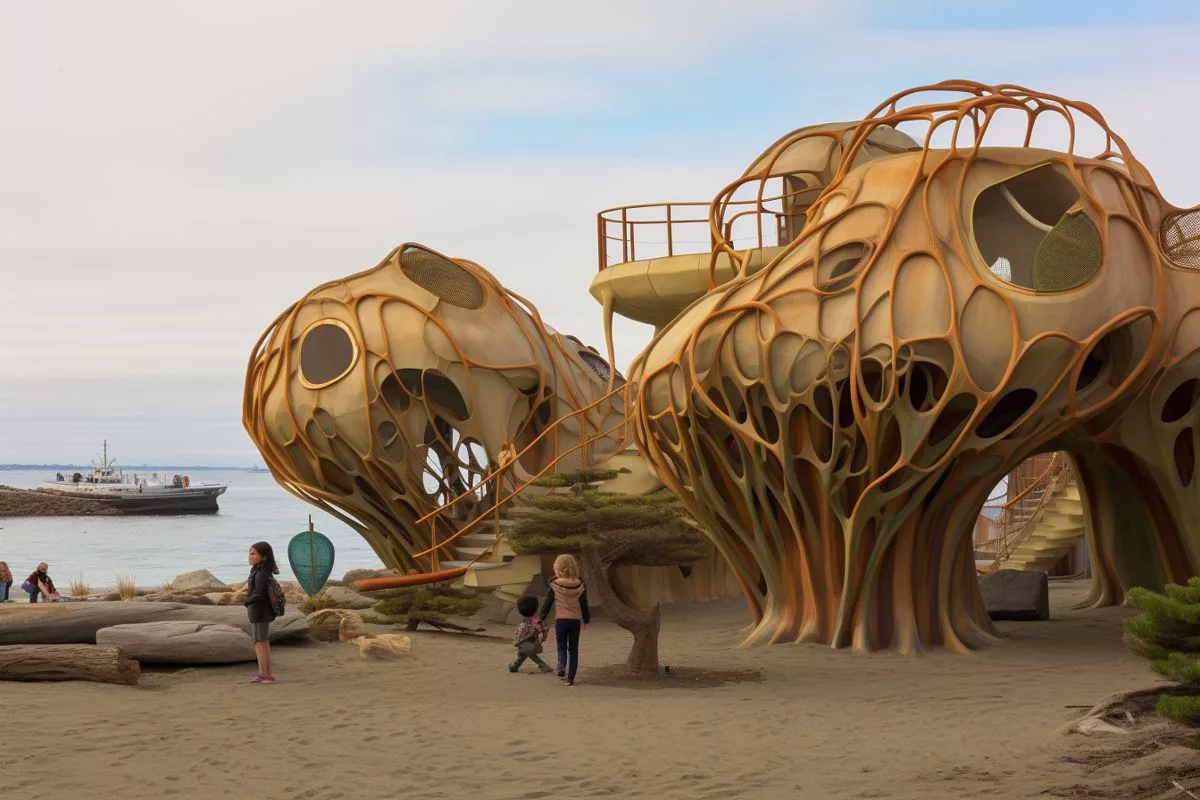
The playground will also undergo improvements featuring a kelp forest theme and inclusive play equipment, creating an inclusive space for children. The station forecourt will be restored, providing parking for individuals with special needs and a universally accessible ramp to the walkway. By relocating the beach huts to the central plaza and maintaining opportunities for informal trading, the plan reinforces its dedication to preserving the beachfront’s dynamic nature and economic vitality.
Balancing Heritage and Future Needs
Underground services, such as sewer and stormwater mains, will be adjusted as required, to minimize coastal impact. The severe coastal weather and powerful easterly winds have necessitated the introduction of locally indigenous vegetation and grassy spaces, in lieu of trees.
The City’s Deputy Mayor, Alderman Eddie Andrews, while interacting with the public, acknowledged the temporary inconvenience that the construction might bring. However, the focus remains on the promise of a rejuvenated beachfront. The plan is to initiate construction work in February 2025 and aims for a projected completion date as the end of October 2026.
The upgrade of the Muizenberg beachfront is not merely about preserving a popular leisure area. It embodies the preservation of a lifestyle—a philosophy that unites the best of nature, commerce, and community. It is about securing and enriching a location that essentially reflects Cape Town.
As the city prepares for this significant undertaking, the emphasis is on achieving equilibrium—between preserving the heritage and accommodating future needs, between respecting nature’s limits and pushing the boundaries of architectural innovation. This project, in its vision and execution, epitomizes the essence of Cape Town—a city as concerned with its past as it is with its future. A city that treasures its natural beauty as much as it values urbanization. A city not afraid to envision, plan, and build for the future, while staying true to its roots.
1. What is the Muizenberg seafront enhancement project?
The Muizenberg seafront enhancement project is a comprehensive redevelopment plan aimed at revitalizing Cape Town’s top tourist attraction by improving coastal infrastructure and facilities. The project includes a stepped revetment to protect against rising sea levels, upgraded parking areas and restroom facilities, improved playground equipment, and the preservation of significant landmarks.
2. When will the Muizenberg seafront enhancement project begin and end?
The project is set to begin in February 2025, with a projected completion date at the end of October 2026.
3. What is the stepped revetment in the Muizenberg seafront enhancement project?
The stepped revetment is a design feature aimed at lessening the effect of rising sea levels, storm surges, and wave action. It will be constructed using sandstone aggregate and a sandblasted finish to avoid a drab, grey appearance. The design has been developed from over 500 public suggestions and now features large rounded corners and additional seating areas.
4. What other enhancements are included in the Muizenberg seafront enhancement project?
The project includes upgraded parking areas and restroom facilities, improved playground equipment, the preservation of significant landmarks such as the iconic pergola, restoration of the station forecourt, and relocating the beach huts to the central plaza.
5. What is the focus of the Muizenberg seafront enhancement project?
The project aims to strike a balance between preserving heritage and accommodating future needs while staying true to Cape Town’s essence. It emphasizes achieving balance between preserving heritage and accommodating future needs while staying true to Cape Town’s essence. Underground services will be adjusted as required, to minimize coastal impact. The severe coastal weather and powerful easterly winds have necessitated the introduction of locally indigenous vegetation and grassy spaces, in lieu of trees.
6. What is the significance of the Muizenberg seafront enhancement project?
The project embodies the preservation of a lifestyle—a philosophy that unites the best of nature, commerce, and community. It is about securing and enriching a location that essentially reflects Cape Town. The emphasis is on achieving equilibrium—between preserving the heritage and accommodating future needs, between respecting nature’s limits and pushing the boundaries of architectural innovation.