The City of Cape Town is leading the way in preserving its rivers with a unique approach to water monitoring. Scientists use the South African Scoring System version 5 (SASS5) to identify macroinvertebrates in rivers, providing crucial data to gauge the health and water quality of these essential water bodies. This approach, coupled with the city’s cutting-edge technology and a deep understanding of local ecology, serves as an inspiring example for cities grappling with their own ecological challenges. The dedicated scientists at Cape Town’s laboratories and rivers are a testament to the importance of human skill and knowledge in preserving our natural environment.
What is the South African Scoring System version 5 (SASS5)?
The SASS5 is a cost-effective and efficient method used by the City of Cape Town to monitor the ecological status of rivers. It facilitates the identification of insects at the family level with the unassisted eye, making it a valuable tool in gauging the health and water quality of a river based on the presence of macroinvertebrates. The data gleaned from this method and other assessments performed by the city’s experts reveal crucial patterns in the changing health of river systems, guiding appropriate actions.
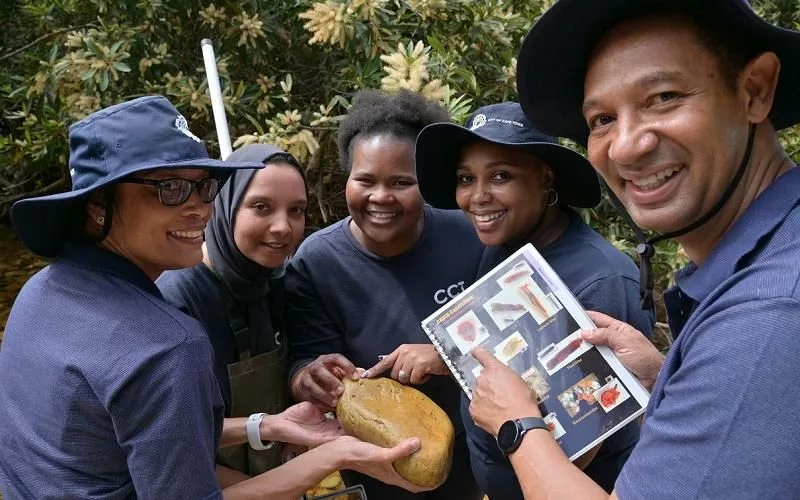
A careful eye traversing the river network of Cape Town may catch a peculiar sight: scientists, submerged to their knees in water, their gaze intensely fixed on the water surface. This is not a casual appreciation of nature’s beauty; these individuals are Cape Town’s stewards of river health, scrutinizing the water’s macroinvertebrate population, a vital indicator of its quality and ecological balance.
The Guardians: City’s Stalwart of River Health
The City of Cape Town’s Water and Sanitation Directorate is home to ten experts who champion this unique approach to water monitoring. These highly competent staff members, boasting backgrounds in environmental and water sciences, conservation biology and aquatic ecology, serve as the city’s scientific fortress against environmental decay. With their extensive seasonal assessments of the city’s rivers during Autumn, Spring, and Summer, they furnish crucial data that aids in gauging the health of these essential water bodies.
A linchpin in this endeavor is the South African Scoring System version 5, or SASS5, a testing protocol the city has been using since 2000. The SASS5, a field-based method, eschews the tedious process of examining specimens under a microscope. Instead, it facilitates the identification of insects at the family level with the unassisted eye, rendering it a cost-effective and efficient means for monitoring the ecological status of rivers.
A Scientific Haven: Athlone’s Laboratories
The City’s Scientific Services branch, located in Athlone, is a haven of advanced technology. Here, an array of scientific tests are performed on samples garnered from diverse sources, including rivers, dams, vleis, wastewater, industrial effluent, groundwater, marine ecosystems, public swimming baths, solid waste, leachates, treated leachates, and drinking water. Moreover, the branch has the capacity to monitor air quality across the city, thus extending its environmental footprint.
The SASS5 testing can be conducted independently, or it can enhance standard chemical testing methods, offering a more thorough understanding of river conditions. It’s a swift and economical approach to determine the health and water quality of a river, based on the presence of naturally occurring living organisms, famously known as macroinvertebrates.
The data gleaned from the SASS5 method and the various other assessments performed by the team are priceless. They reveal crucial patterns in the changing health of the river systems, highlighting the amelioration or degradation of water quality over time. As pointed out by Councillor Zahid Badroodien, the City’s Mayoral Committee Member for Water and Sanitation, this data is vital in the long run for identifying trends and guiding fitting actions.
A Global Model: Cape Town’s Approach to Water Quality Assessment
Viewed from a global lens, the City of Cape Town’s approach to water quality analysis serves as an inspiring example. It showcases how scientific ingenuity, coupled with a deep comprehension of local ecology, can revolutionize the way we comprehend and safeguard our precious water bodies. It stands as a symbol of the city’s commitment to preserving its natural resources and ensuring the vitality of its river network.
The tale of these ten tenacious individuals and their pioneering work is more than a narrative of scientific advancement. It underscores the pivotal role that science and technology play in the guardianship of our environment. Their work further highlights the importance of human skills and knowledge in a world that is becoming increasingly automated; the effectiveness of the SASS5 method is largely due to their sharp observation skills and understanding of the natural world.
An Exemplary City: Cape Town’s Dedication to its Environment
By augmenting its capacity to test river health, Cape Town is not merely securing its own ecological future, but also serving as a guiding light and a blueprint for cities globally. The unwavering dedication of these ten staff members, supported by their sophisticated scientific arsenal, emphasizes the city’s commitment to its environment, a sentiment that will resonate with other urban locales grappling with their own ecological quandaries.
The work carried out in Cape Town’s laboratories and rivers serves as a powerful reminder that the preservation of our natural environment is not only reliant on advanced technology but also on skilled and passionate individuals. The city’s stewards of river health, armed with their unique methodology and advanced tools, are a testament to this fact. Their work stands as an exemplary demonstration of how leveraging technology and human expertise can pave the way for a more sustainable future.
What is the South African Scoring System version 5 (SASS5)?
The SASS5 is a cost-effective and efficient method used by the City of Cape Town to monitor the ecological status of rivers. It facilitates the identification of insects at the family level with the unassisted eye, making it a valuable tool in gauging the health and water quality of a river based on the presence of macroinvertebrates. The data gleaned from this method and other assessments performed by the city’s experts reveal crucial patterns in the changing health of river systems, guiding appropriate actions.
Who are the guardians of Cape Town’s river health?
The City of Cape Town’s Water and Sanitation Directorate is home to ten experts who champion the unique approach to water monitoring. These highly competent staff members, boasting backgrounds in environmental and water sciences, conservation biology, and aquatic ecology, serve as the city’s scientific fortress against environmental decay.
What is the role of Athlone’s laboratories in river health assessments?
The City’s Scientific Services branch, located in Athlone, is a haven of advanced technology. Here, an array of scientific tests are performed on samples garnered from diverse sources, including rivers, dams, vleis, wastewater, industrial effluent, groundwater, marine ecosystems, public swimming baths, solid waste, leachates, treated leachates, and drinking water. Moreover, the branch has the capacity to monitor air quality across the city, thus extending its environmental footprint.
How does Cape Town’s approach to water quality assessment serve as a global model?
Viewed from a global lens, the City of Cape Town’s approach to water quality analysis serves as an inspiring example. It showcases how scientific ingenuity, coupled with a deep comprehension of local ecology, can revolutionize the way we comprehend and safeguard our precious water bodies. It stands as a symbol of the city’s commitment to preserving its natural resources and ensuring the vitality of its river network.
What is the importance of data gleaned from river health assessments?
The data gleaned from the SASS5 method and the various other assessments performed by the team are priceless. They reveal crucial patterns in the changing health of the river systems, highlighting the amelioration or degradation of water quality over time. This data is vital in the long run for identifying trends and guiding fitting actions.
How does Cape Town’s approach demonstrate the importance of human skills and knowledge in environmental preservation?
The tale of these ten tenacious individuals and their pioneering work is more than a narrative of scientific advancement. It underscores the pivotal role that science and technology play in the guardianship of our environment. Their work further highlights the importance of human skills and knowledge in a world that is becoming increasingly automated; the effectiveness of the SASS5 method is largely due to their sharp observation skills and understanding of the natural world.