
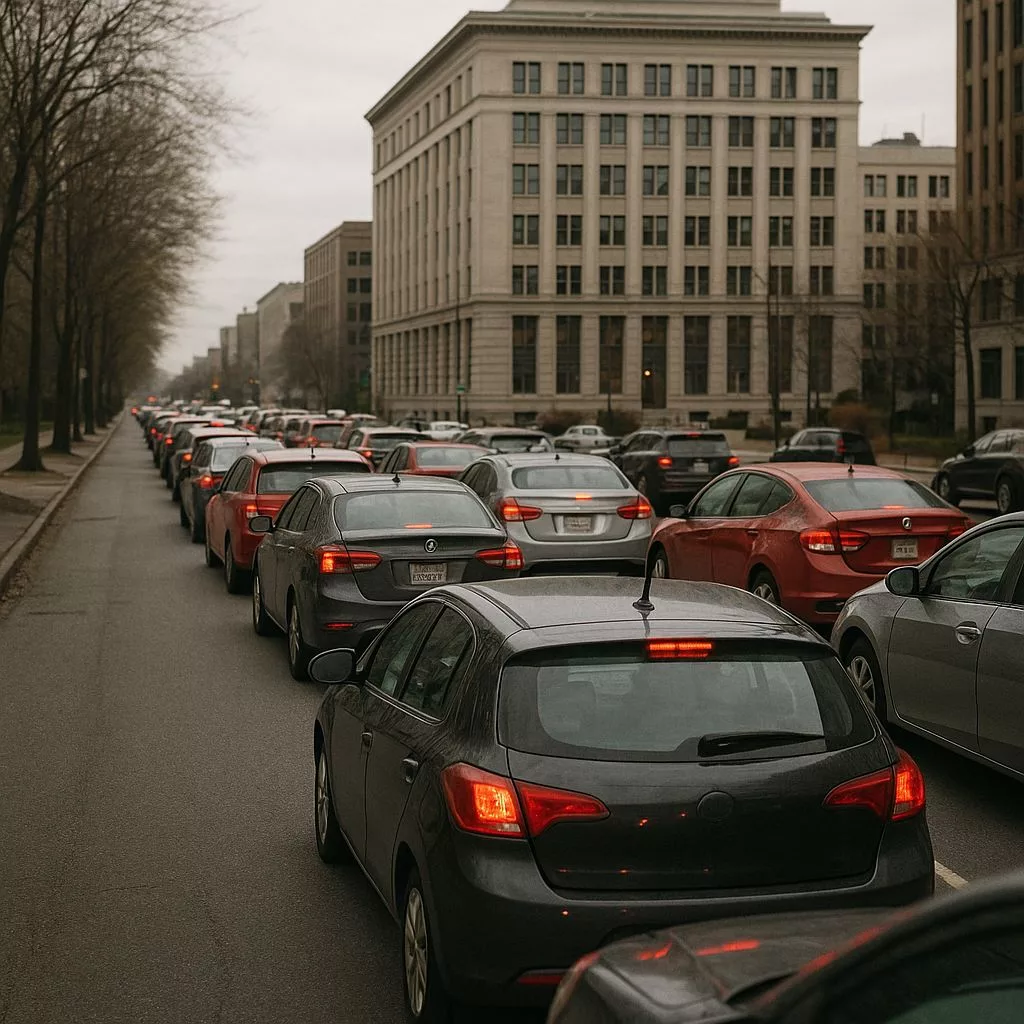
Cape Town is getting tough on rule-breakers this holiday season! They’re letting people pay old fines easily, but also sending out lots of police to catch bad drivers and criminals. They’re even using cool new technology to find people who break the law. It’s all about making the city super safe and making sure everyone follows the rules during the holidays.
What is Cape Town’s festive season crackdown on lawbreakers?
Cape Town’s festive season crackdown involves a multi-pronged approach combining an amnesty initiative for unpaid fines, rigorous law enforcement operations (Operation TORCH) targeting traffic violations and other crimes, and technological advancements like automated number plate recognition. The goal is to improve road safety, reduce crime, and collect outstanding penalties, making the city safer and more compliant during the holidays.
1. Dawn at the Civic Centre: Coffee, Contrition & a R1.8-billion Shoebox
Sun-up on 9 December painted the forecourt chrome-gold, yet no one noticed. Drivers were too busy counting yellow slips. By 07:30 the tail of engines coiled from the main doors, along Hertzog Boulevard and vanished where the N2 ramp kinks toward the harbour. Officials dragged a second tent from a borrowed fire truck and pressed 22 extra clerks into service; reflective bibs flashed like startled minnows. Inside, 68 pop-up counters throbbed with tablets, card machines and portable label-printers, every screen topped by a single cheery word: AMNESTY.
The pop-up court was never designed as group therapy. October’s slide deck had been pitiless: almost two billion rand in unpaid penalties, half a million live warrants, some summonses old enough to attend Grade 1. A Bellville pilot weekend bagged R4.3 million in 48 hours; scale that city-side and the coffers could swallow 15% of the backlog before Santa landed. No economist forecast the confessional fever that followed. Motorists arrived clutching shoeboxes. One Uber operator smoothed 62 infringement sheets across hockey astroturf like a paper quilt; a retired engineer paid R4 800 on the spot rather than play the wanted uncle at Christmas lunch.
By the second Sunday the dashboard glowed lilac in the Joint Ops Centre: 4 077 citizens processed, 27 921 tickets challenged, 1 046 warrants cancelled on the nail, R14.9 million poured into municipal bank accounts. The violation pie told its own tale: 38% for breaking 60 km/h, 21% for WhatsApp-at-wheel, 14% for unroadworthy heaps. Drunk-driving warrants – only 7% of the pile – carried the steepest average tag (R3 400). Alderman JP Smith stabbed a laser pointer at a crimson strip of the N1. “Same plates every fortnight,” he grunted. “Habitual, not accidental.”
2. Behind the Gantries & Inside the Laptop Bag: Tech, Traps and Turbocharged Receipts
Step outside the forgiveness tent and the atmosphere flips. Operation TORCH – Visible, Unpredictable, Relentless – mobilises 1 400 officers drawn from seven disciplines. Between 1 and 13 December they scribbled 31 208 fines, executed 1 102 arrest warrants, towed 223 unlicensed minibus taxis and cuffed 380 people for crimes ranging tik to hot electricity. Ninety-six roadblocks netted 32 drunk pilots; a mobile blood bus trimmed results to 72 hours.
The Ghost Squad – just 2% of staff – bagged 14% of DUI arrests. Officers lean on passive-alcohol sniffers hidden in clipboards and camera rigs that marry e-Natis to a facial-recognition library. Favourite fishing spot: the lower deck of Nelson Mandela Boulevard where the limit drops to 60 km/h but velocity nudges three figures. Engines killed, they wait inside construction tarpaulins until the algorithm pings.
Cash still talks, loudly. A CCTV operator tracking Greenmarket Square spotted a man in a scarlet puffer counting bricks of banknotes on a Toyota bonnet. Plain-clothes pounced: R74 040 banded in thousands. Forty minutes later a glove-wearing accomplice with a laptop bag was intercepted two blocks away – inside, another R97 900 plus US$2 300, €860 and a spreadsheet titled “DEC CASHFLOW”. Detectives suspect the duo ferry tourist money outside formal forex channels; CCTV trawls suggest a weekly loop north of R2-million.
3. Taxi Torque, Tourists & the Ripple on the Bay
Impound rows at a disused Ysterplaat airfield now hold 223 minibus taxis. CODETA drivers torched tyres at Nyanga terminus after 14 Quantums were seized for counterfeit permits – polymer forgeries so slick they bend like real DOT cards, except the QR code dumps you in a dead Dropbox. The new pound is ring-fenced by razor wire, patrolled by K9s and visited by a roaming magistrate every Wednesday. Pay within 24 hours, earn a 30% discount; after 21 days your pride and joy goes under the hammer. Smith is unrepentant: “We will not let public transport be weaponised.”
Tour operators feel the pinch and the praise. Joanne Koopman, who runs 12 tour vans, admits clients applaud visible policing – until one of her drivers is flagged for 67 in a 60. Sentiment scraping of online reviews nevertheless shows a 12% spike in words such as “safe” and “secure” compared with December 2024. Whether that confidence converts to longer stays will be clear when tourism levy data lands in February.
Nightshift tells the human tale. At 23:17 Sergeant Nosisa Mfazwe collars a 26-year-old audit manager blowing 0.92 mg. Body-cam records the young exec’s silent tears while friends film on phones. “For every one we catch, four slip home,” Mfazwe shrugs. “But maybe those four text mates: ‘Not worth it.’ That’s the ripple.”
4. Nudges, Phishes & the Road Ahead: Behaviour, Bytes and Billion-Rand Habits
The City’s SMS laboratory is busy. Instead of the usual “WARRANT ISSUED” scream, selected motorists receive: “85% of Claremont drivers have settled. Join the compliant majority – tap here.” Early returns show a 22% click-through-to-payment rate, triple the threat model. UCT researchers reckon a national roll-out could rake back R900-million across eight metros.
Cyber crooks are riding the wave too. Within 48 hours of the amnesty launch, 14 phishing domains aped the payment portal, dangling 75% Bitcoin discounts. IPs trace to Lagos and Novosibirsk; take-downs crawl through foreign registrars. The legitimate portal now demands a rotating OTP plus ID or passport check.
Gantries of tomorrow are already live on the M5–Koeberg interchange. Mobile aluminium portals read 3 600 plates an hour, rain or shine, pinging hot-lists for stolen, unlicensed, uninsured or hijacked vehicles. Capture-to-interception time: 92 seconds. Treasury liked the 34% hit-rate enough to unlock R28-million for city-wide expansion before New Year’s.
As the festive heat thickens, variable-message boards recalibrate every 48 hours, mirroring Google Trends. Today it’s “Drunk driving costs R120 k + your job.” By Monday the lexicon may shift, but the roadside theatre remains: warm breathalysers, printers humming, the soft click of cuffs echoing against a copper sunset. The queue at the Civic Centre may have shrunk, yet the message is painted across the peninsula: settle up, sober up, or meet the green-and-blue tide under a flashing blue halo.
[{“question”: “What is Cape Town’s festive season crackdown on lawbreakers?”, “answer”: “Cape Town’s festive season crackdown involves a multi-pronged approach combining an amnesty initiative for unpaid fines, rigorous law enforcement operations (Operation TORCH) targeting traffic violations and other crimes, and technological advancements like automated number plate recognition. The goal is to improve road safety, reduce crime, and collect outstanding penalties, making the city safer and more compliant during the holidays.”}, {“question”: “What is the amnesty initiative for unpaid fines?
“, “answer”: “Cape Town launched an amnesty initiative allowing citizens to pay old fines easily. This initiative had a pop-up court at the Civic Centre with 68 counters, processing thousands of citizens and collecting over R14.9 million in unpaid penalties, some dating back years. It aims to clear a backlog of nearly two billion rand in unpaid penalties and half a million live warrants.”}, {“question”: “What is Operation TORCH and what are its results?
“, “answer”: “Operation TORCH is a multi-disciplinary law enforcement effort involving 1,400 officers. Between December 1 and 13, it resulted in 31,208 fines issued, 1,102 arrest warrants executed, 223 unlicensed minibus taxis towed, and 380 arrests for various crimes. Ninety-six roadblocks specifically nabbed 32 drunk drivers.”}, {“question”: “How is technology being used in the crackdown?
“, “answer”: “Cape Town is utilizing advanced technology, including passive alcohol sniffers, camera rigs linked to e-Natis and facial recognition, and automated number plate recognition (ANPR). ANPR gantries are being expanded city-wide to identify stolen, unlicensed, uninsured, or hijacked vehicles within seconds. The city is also experimenting with ‘nudge’ SMS messages to encourage fine payments.”}, {“question”: “What are the main types of violations identified during the amnesty?
“, “answer”: “During the amnesty, the most common violations were speeding (38% for breaking 60 km/h limits), using a cell phone while driving (21%), and operating unroadworthy vehicles (14%). Drunk driving warrants, though only 7% of the total, carried the steepest average fine.”}, {“question”: “How are minibus taxis being addressed in the crackdown?
“, “answer”: “The crackdown has heavily targeted unlicensed minibus taxis, with 223 being impounded. This has led to protests from drivers and the establishment of a new impound facility. The city offers a 30% discount if fines are paid within 24 hours, otherwise, impounded vehicles may be auctioned after 21 days.”}]