Table Mountain National Park in South Africa is facing a crisis due to an alarming increase in fires, with 119 fires documented in one year alone. The fires are caused by a variety of factors ranging from everyday activities to natural phenomena like lightning strikes. Despite the challenges, TMNP has adapted its strategies and formed partnerships with firefighting organizations to combat the fires. The resilient individuals who work to protect the park every day showcase an unwavering love for the environment and an indomitable spirit.
Why is Table Mountain National Park in Crisis?
Table Mountain National Park (TMNP) is facing a crisis due to a significant increase in fires. In one year alone, TMNP documented 119 fires, marking a considerable increase from the preceding year’s 85 episodes. TMNP’s fire manager cites a variety of causes for these fires, ranging from everyday activities such as cooking fires to intentional arson and natural phenomena like lightning strikes.
Delicate Sanctuary in Peril
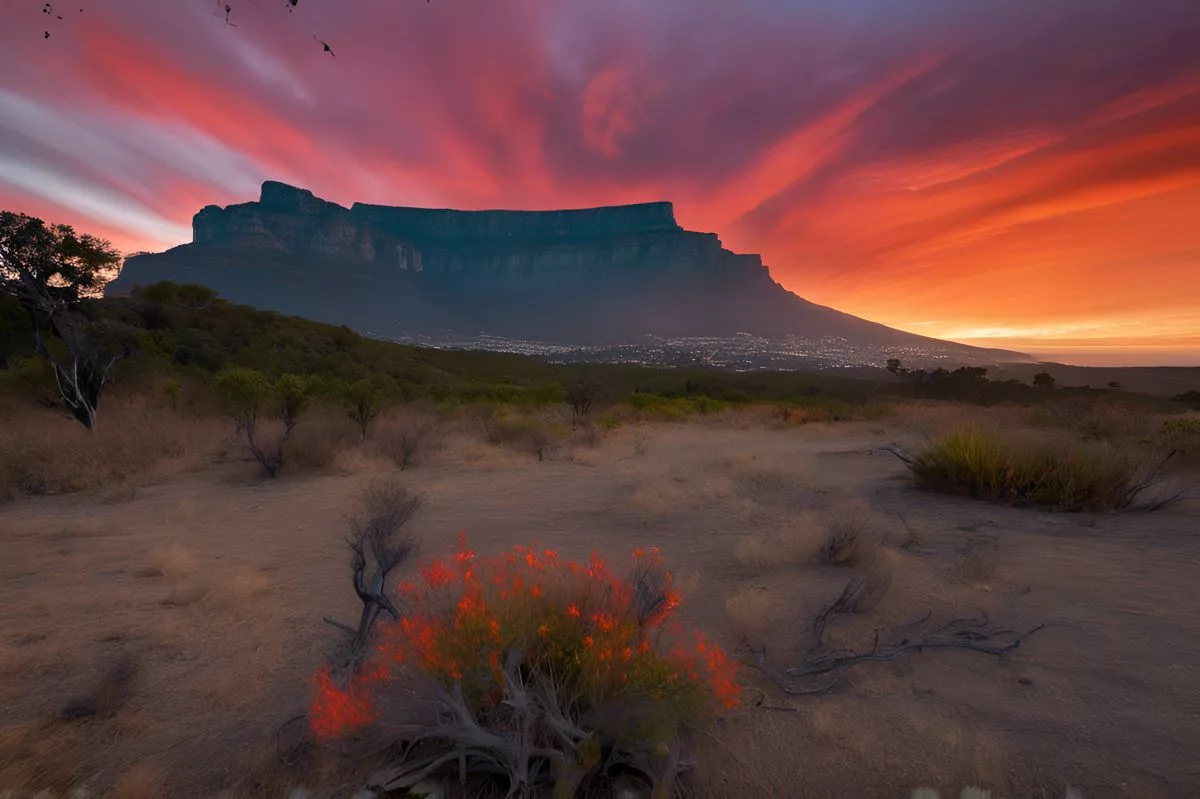
Table Mountain National Park (TMNP), a cherished gem of South Africa, has long been a refuge for diverse vegetation and an array of wildlife. However, the tranquility of this sanctuary is under attack, not from predatory animals or illegal hunting, but from a primordial adversary: fire. In one year alone, TMNP documented a staggering 119 fires, marking a considerable increase from the preceding year’s 85 episodes.
Distinctly, the period spanning April to May observed TMNP combatting 32 fiery incidents, including five categorized as ‘multi-day fires‘, indicating these infernos required several days to extinguish. Justin Buchmann, TMNP’s fire manager, cites a variety of causes for these fires, ranging from everyday activities such as cooking fires to intentional arson, and even natural phenomena like lightning strikes.
Vulnerability and Adaptation
An unexpected bolt of lightning or an unintentional cooking fire may appear as disparate events, but they reveal TMNP’s susceptibility to extreme weather incidents. As Buchmann explains, such events amplify the intensity of fires, making their containment increasingly difficult. However, the resilient TMNP has turned this crisis into a catalyst for change.
In light of the heightened risk, Buchmann highlights how TMNP has adapted its strategies. The park has forged tactical partnerships with NCC Environmental Services, Volunteer Wildfire Services, and Working on Fire. The objective behind these collaborations is to augment team capabilities at strategic locations, thereby creating a terrestrial force capable of bolstering the aerial suppression response.
Understanding the Terrain and Challenges
However, the fight against fire isn’t simply a measure of might, it also necessitates a comprehension of the land. TMNP’s landscape is predominantly characterized by fynbos, a variety of vegetation with a remarkable affinity with fire. This unique plant community is fire-adaptive and fire often aids their process of regeneration and rejuvenation. Thus, certain areas that were subject to fire this season required the burn for ecological purposes.
Despite this, Buchmann underlines the problems associated with too frequent fires, which could lead to loss of species in extreme scenarios. The ever-growing wildland-urban interface introduces additional complications for fire services. A surge in park activities augments the risk of fire, particularly in remote zones.
Heroic Firefighting Efforts
Firefighting endeavors at TMNP have been nothing short of commendable. More than 533 hours of dynamic flight and over 6,318 litres of water have been utilized to quell the fires. Firefighters from the Western Cape have tackled over 9,500 fires between December and May. As disclosed by Anton Bredell, Western Cape Local Government, Environmental Affairs and Development Planning MEC, the fires have destroyed more than 135,000 hectares of land.
Resilience in the Face of Destruction
In the aftermath of such devastation, the resolve to recover is palpable. The individuals devoted to preserving TMNP, from the fire manager to the ground crew, are more than mere guardians of the land. Every day, they confront a fundamental force of nature with courage, knowledge, and an unwavering love for the environment. The fire predicament at TMNP is more than an isolated event; it serves as a poignant reminder of the challenges our valuable ecosystems face and the indomitable spirit of those who tirelessly strive to protect them.
1. Why is Table Mountain National Park facing a crisis?
TMNP is facing a crisis due to an alarming increase in fires, with 119 fires documented in one year alone, caused by factors ranging from everyday activities to natural phenomena like lightning strikes.
2. What are the causes of fires at Table Mountain National Park?
The causes of fires at TMNP range from everyday activities such as cooking fires to intentional arson and even natural phenomena like lightning strikes.
3. How has Table Mountain National Park adapted to combat the fires?
TMNP has adapted its strategies and formed partnerships with firefighting organizations like NCC Environmental Services, Volunteer Wildfire Services, and Working on Fire to augment team capabilities at strategic locations, creating a terrestrial force capable of bolstering the aerial suppression response.
4. What are the challenges associated with firefighting at Table Mountain National Park?
TMNP’s landscape is predominantly characterized by fynbos, a variety of vegetation with a remarkable affinity with fire. This unique plant community is fire-adaptive, and fire often aids their process of regeneration and rejuvenation. However, too frequent fires could lead to the loss of species in extreme scenarios, and the ever-growing wildland-urban interface introduces additional complications for fire services.
5. How have firefighting efforts been at Table Mountain National Park?
Firefighting efforts at TMNP have been commendable, with more than 533 hours of dynamic flight and over 6,318 litres of water utilized to quell the fires. Firefighters from the Western Cape have tackled over 9,500 fires between December and May.
6. What is the spirit of those who work to protect Table Mountain National Park?
The individuals devoted to preserving TMNP, from the fire manager to the ground crew, showcase an unwavering love for the environment and an indomitable spirit, confronting a fundamental force of nature with courage, knowledge, and dedication.