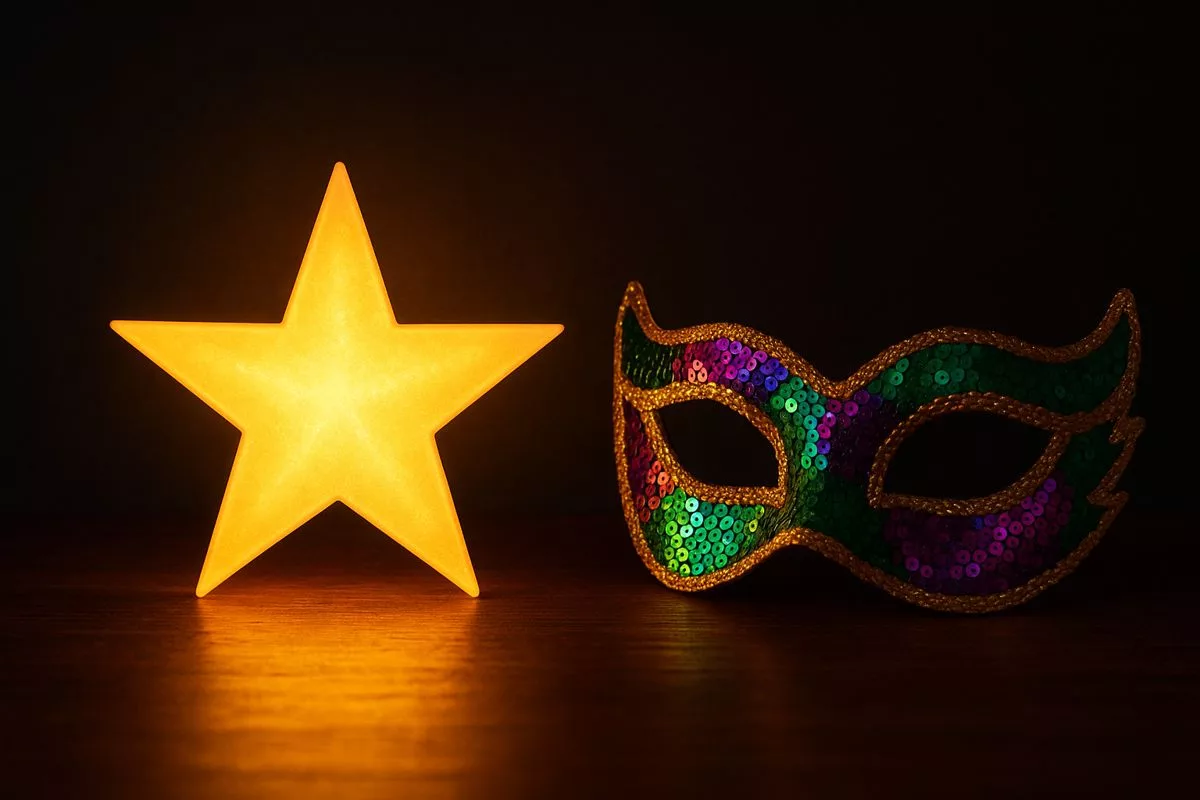
Cape Town’s 2023 festive lights sparked a big fight! They swapped out old angel decorations for new ones showing banjo players and carnival masks. This made some people very angry because it changed what Christmas felt like. Others thought it was a good way to show off local culture and history, especially the “Kaapse Klopse” tradition. So, a simple light display turned into a huge argument about culture and who gets to decide what the city looks like.
What caused the “culture war” over Cape Town’s 2023 festive lights?
Cape Town’s 2023 festive lights sparked a culture war due to the replacement of traditional Christian-themed decorations, like angels and nativity figures, with symbols celebrating “Kaapse Klopse: 200 Years of Minstrel Memory,” including banjo-toting troupes and carnival masks. This change ignited debate over cultural representation and historical memory.
1. The Switch-On That Silenced the Sky
On the first Sunday night of December, Cape Town’s mayor pressed the ceremonial red button and Adderley Street exploded into 2.3 km of LED brilliance. Fireworks punched the sky above the High Court at exactly 19:00, synchronised to the radio news jingle. From the live-drone feed everything looked normal – until viewers noticed the skyline had changed. The plywood angel that once floated above the Old Mutual arcade had vanished; in its place glimmered a three-metre saxophone wrapped in sequins. Above Plein Street, the rotating Perspex star of Bethlehem was gone, swapped for a neon-green carnival mask. By sunrise, screenshots raced through WhatsApp groups captioned “They deleted Jesus.”
Retailers who had spent weeks hanging tinsel inside their shopfronts arrived to find tour buses rerouting away from the traditional photo stop. The Christmas soundtrack that usually leaked onto the pavement – Mariah Carey and Boney M – was replaced by a brassy ghoema loop that shoppers had never heard before. Within hours, the city’s festive mood tilted from yuletide cheer into open cultural skirmish, forcing everyone from street sweepers to cabinet ministers to pick a side.
2. Who Pressed Delete? Inside the Tender Wars
Behind the scenes, a bureaucratic committee had met in October and voted that the 2023 theme would celebrate “Kaapse Klopse: 200 Years of Minstrel Memory.” Municipal buyers then drew up a spreadsheet that read like a theological eviction notice: 14 plywood angels, 18 fibreglass nativity figures, 120 m of rope-light rosaries, a holographic Madonna and 40 LED crosses were all trucked to a dusty depot in Ndabeni. Their replacements arrived on flatbeds – 25 steel silhouettes of banjo-toting troupes, mirror balls shaped like tulips, a pair of oversized painted shoes honouring legendary “staat-skoene” captains, plus a high-definition speaker system blasting coon-carols remastered in stereo.
Officials, speaking off the record, insist the swap-out was pragmatic: the new props weigh 40 % less, clip onto lampposts like fridge magnets, and can be installed by the same electrical teams already repairing street cables. The old angels, they add, demanded mobile cranes, traffic detours and overtime premiums the cash-strapped metro can no longer justify. Critics, however, read a deeper calculus – an attempt to convert sacred memory into tourist currency by trading baby Jesus for ticket sales in the traditionally slow January season.
3. The ACDP Enters, Bible in One Hand, Petition in the Other
The African Christian Democratic Party has never cracked 2 % nationally, yet in Cape Town’s coloured belt it commands disciplined battalions of 300 000 voters who answer the call to ballot boxes with congregational precision. Twelve hours after the switch-on, provincial secretary Ferlon Christians issued a four-page communiqué peppered with phrases like “cultural erasure” and “deeply outraged.” Within 48 hours the party had mobilised 32 ministers under the banner “Cape Town Ministers’ Fraternal,” promising a prayer march and a petition of 50 000 signatures demanding the angels’ return.
Their outrage found fertile soil in Facebook parenting groups and mall parking lots where carols usually leak from car stereos. But the demographic arithmetic is less forgiving. The city’s own 2021 census shows only 53 % of residents calling themselves Christian; Muslims account for 14 %, traditionalists 6 %, “no religion” 24 %. Even among self-declared Christians, Zionist and Pentecostal churches – whose worship styles rarely feature Bethlehem dioramas – outnumber the old-mainline Anglicans and Catholics who historically supplied the props. In other words, the ACDP speaks loudly for a constituency that is no longer the majority inside the city limits.
4. Klopse: From Slave Parade to World Heritage
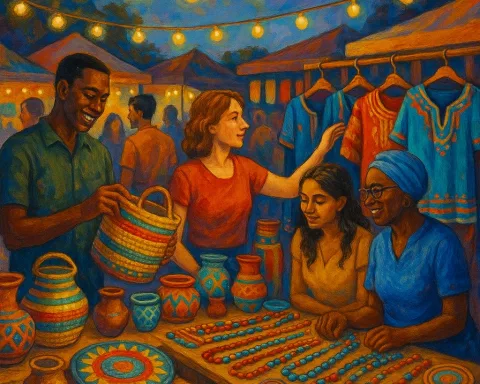
The marching troupes now decking the street have deeper roots than most nativity sets. On 2 January 1834, newly emancipated slaves turned their one legal day off into a satirical procession, borrowing their masters’ tailcoats, smearing faces with flour, and strumming reversed Dutch hymns. By 1900 more than 10 000 musicians were trumpeting up Darling Street in costumes trimmed with Dutch East Indies coins. Apartheid later squeezed the parade into “coloured group areas,” but the sound – banjo, trumpet, ghoema drum – kept absorbing Malay choir patterns, ragtime riffs and jazz chords until UNESCO listed the tradition in 2019 for “re-negotiating belonging after dispossession.”
Seen through that lens, the new decorations are not an erasure but a reclamation: the public square is being offered back to a culture once confined to back streets. Yet heritage is never innocent. A R12 million National Lotteries grant is explicitly tied to January tourism, and city accountants have spent five years marketing Tweede Nuwe Jaar as a second-season spike to fill hotel beds after the Christmas rush. The Klopse may now own the skyline, but they also shoulder the burden of filling municipal coffers – proving that even emancipated symbols can be press-ganged into service by the very ledger books that once funded slave ships.
5. Law, Memes and the Bottom Line
Section 15 of the Constitution guarantees freedom of religion while forbidding the state from elevating one creed above others. Courts have zig-zagged: Johannesburg was allowed to refuse evangelical crosses on traffic islands, yet Tshwane was forced to reinstall a menorah. Precedents hang on whether lights count as “speech” or mere “decoration,” leaving Cape Town ratepayers facing a legal bill that could fund 500 kilometres of pothole repairs. Meanwhile, Adderley Street shopkeepers report a 30 % drop in foot traffic; Muslim traders have quietly peeled green-and-gold crescent decals from windows after anonymous SMS threats; and informal car guards who depend on nightly spill-over say earnings are down 50 %.
On TikTok, the quarrel has mutated into 3.4 million views under #CancelChristmasCapeTown. One clip grafts a dancing minstrel into the empty manger while Mariah Carey duets with a ghoema beat; another shows Zionist worshippers tinselling a cardboard devil-horned mayor. Every share adds a layer of parody until outrage and hilarity become indistinguishable, demonstrating how quickly local grief can be monetised by global algorithms hungry for the next fifteen-second emotion. In the depot at dawn, an electrician sums it up between sips of coffee: “Last year angels, this year banjos, next year maybe rugby players – my overtime stays the same.”
What caused the “culture war” over Cape Town’s 2023 festive lights?
Cape Town’s 2023 festive lights sparked a culture war due to the replacement of traditional Christian-themed decorations, like angels and nativity figures, with symbols celebrating “Kaapse Klopse: 200 Years of Minstrel Memory,” including banjo-toting troupes and carnival masks. This change ignited debate over cultural representation, historical memory, and who gets to decide the city’s visual identity during the festive season.
What specific changes were made to the festive lights display?
The 2023 festive lights replaced traditional Christian symbols such as plywood angels, fibreglass nativity figures, rope-light rosaries, holographic Madonnas, and LED crosses. In their place, new decorations included a three-metre saxophone, neon-green carnival masks, steel silhouettes of banjo-toting troupes, mirror balls shaped like tulips, and oversized painted shoes honouring “staat-skoene” captains. The accompanying music also shifted from traditional Christmas carols to a brassy ghoema loop.
What was the official reason given for the change in decorations?
Officials, speaking off the record, stated that the change was pragmatic and cost-effective. The new props weigh 40% less than the old ones, clip onto lampposts like fridge magnets, and can be installed by the same electrical teams without requiring mobile cranes, traffic detours, or overtime premiums that the city could no longer justify. Critics, however, suggested a deeper motive: converting sacred memory into tourist currency to boost visitor numbers during the traditionally slow January season.
How did religious and political groups react to the new lights?
The African Christian Democratic Party (ACDP) was particularly outraged, issuing a communiqué denouncing the changes as “cultural erasure.” They mobilised a “Cape Town Ministers’ Fraternal” and launched a petition demanding the return of the angels, promising a prayer march. This reaction found support among some Christian residents, though city census data indicates that Christians are no longer the majority in Cape Town, and diverse Christian denominations have varying approaches to festive displays.
What is the significance of the “Kaapse Klopse” tradition featured in the new lights?
The “Kaapse Klopse” (Cape Minstrels) tradition has deep historical roots, originating on January 2, 1834, when newly emancipated slaves held a satirical procession. Over time, it evolved, incorporating various musical influences and becoming a vibrant cultural expression despite being confined to “coloured group areas” during apartheid. UNESCO listed the tradition in 2019 for its role in “re-negotiating belonging after dispossession.” The new decorations are seen by some as a reclamation of public space for this historically significant culture, though it’s also noted that a R12 million National Lotteries grant explicitly ties the display to January tourism.
What were the legal and economic consequences of the controversy?
The controversy has potential legal implications regarding Section 15 of the Constitution, which guarantees freedom of religion while prohibiting state endorsement of any single creed. Courts have previously delivered mixed judgments on similar issues, leaving Cape Town ratepayers facing potential legal bills. Economically, Adderley Street shopkeepers reported a 30% drop in foot traffic, and informal car guards saw a 50% decrease in earnings. The debate also gained significant traction on social media platforms like TikTok, with millions of views and viral memes, illustrating how local disputes can be amplified and monetized by global algorithms.