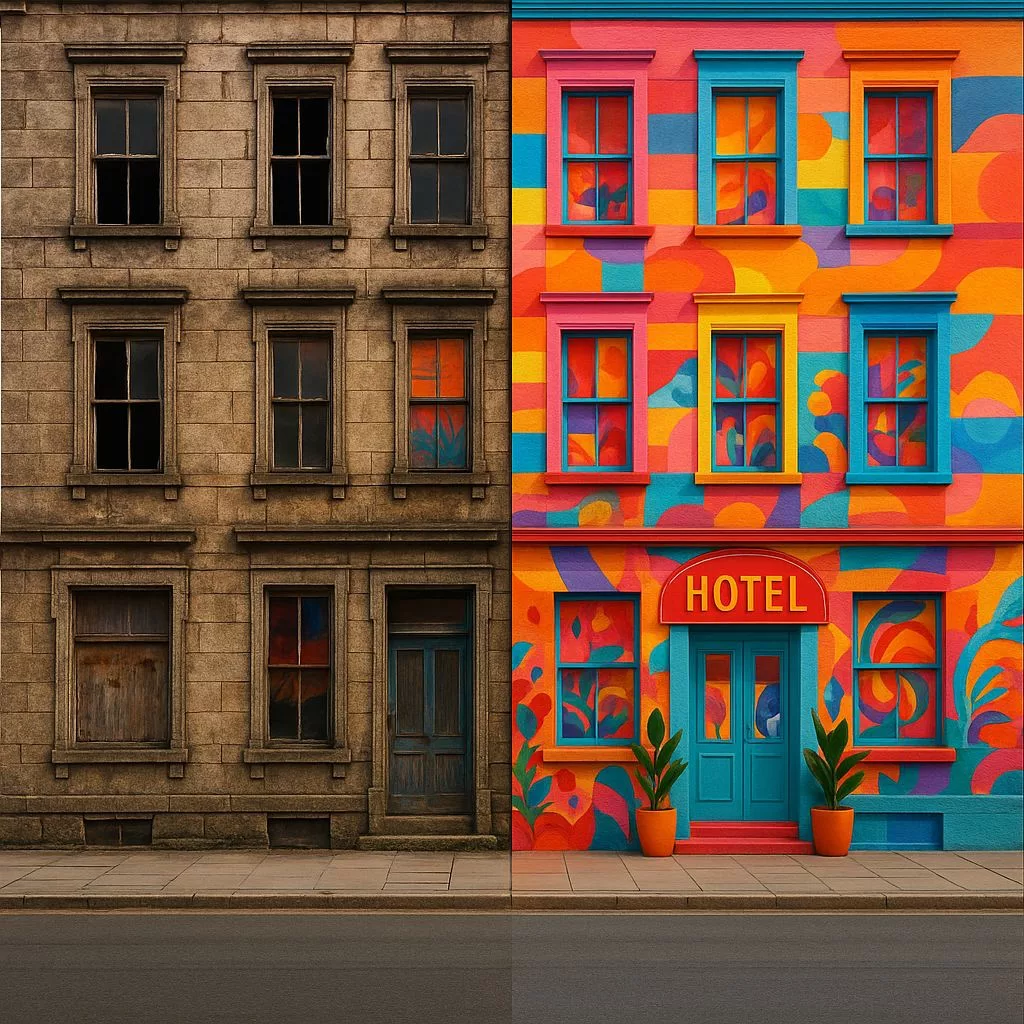
Cape Town’s old Supreme Court Annex, built in 1897, is becoming Africa’s very first ‘living-art’ hotel called The Lenox. This amazing place mixes history with fresh art, letting guests see artists at work and enjoy cool exhibitions. Imagine sleeping where verdicts were made and having art all around you! It’s a truly special spot where old stories meet new creativity, making it a vibrant cultural hub.
What is the Lenox hotel in Cape Town?
The Lenox is Africa’s first “living-art” hotel, transforming Cape Town’s 1897 Old Supreme Court Annex into a unique cultural destination. It combines historical preservation with contemporary art, offering a dynamic experience where guests can immerse themselves in creative processes and enjoy exhibitions within the hotel’s distinctive architecture.
A Silent Handover That Broke the Internet
On 10 December 2025, while Cape Town parents juggled last-minute school runs and Eskom’s load-shedding app crashed again, 43 invitation-only guests glided through a side entrance of the Queen Victoria Hotel. No red carpet, no camera click – just a solo cellist reworking Miriam Makeba’s “Pata Pata” into baroque counterpoint and waiters pouring 2007 Klein Constantia Vin de Constance. The sommelier confided that the noble rot mirrored the peeling sandstone of the nearby 128-year-old courthouse that had just changed hands.
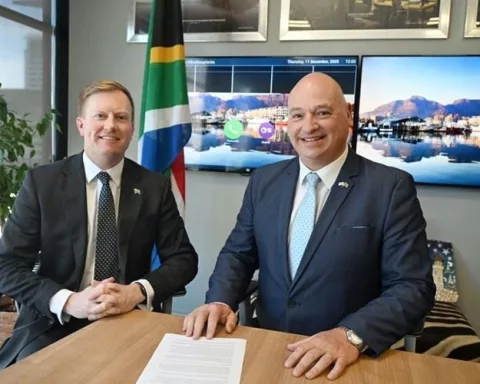
Two leather-bound contracts, 138 pages each, waited on a velvet cloth. Neil Markovitz, head of Johannesburg-based Newmark Hotels, signed first, spun the folder 180 degrees, and slid it toward Alain Taïeb, patriarch of Parisian fund Mobilitas. Forty-three seconds later the room erupted in exactly sixty seconds of applause timed by a stopwatch-wielding publicist. No journalists, no step-and-repeat – yet a bootleg of the WhatsApp live-stream became South Africa’s most-screen-grabbed hospitality clip of the year, proving that silence can be louder than publicity.
Why a Dilapidated Courthouse is Suddenly Priceless
Commissioned when Victoria still ruled the waves, the 1897 “Old Supreme Court Annex” is one of only seven sandstone monuments left on the leafy spine between Parliament and Company’s Garden. Architect George Ransome’s instructions were Spartan: erect something “as enduring as Roman-Dutch law itself.” Neo-Dutch gables, Glasgow-forged spiral stair, rusticated stone three storeys high – the building outlived the 1918 flu surge (overflow morgue), the 1948 forced removals (seventeen families evicted from adjoining “non-European” rooms), and the 1980s ministries’ desertion to Pretoria.
By 2005 pigeons outnumbered people. Art students broke padlocks, spray-painted “LEWNOS” (they meant Sol LeWitt) across the portico, and moved mattresses into former jury rooms. The misspelled tag stuck, the leaks grew, and security guards still refuse the third-floor corridor after midnight – they claim footsteps echo where no feet walk. Mobilitas snapped the corpse-up for R78 million in a closed 2024 tender, betting that heritage plus narrative equals profit.
The Ledger Behind the Legend
Hard numbers underpin the romance. Restoration and furniture will swallow another R210 million. When doors open in 2027, management expect an average daily rate of R7,400, 68 % occupancy by year three, and a 32 % EBITDA margin. A 240 m² photovoltaic slate carpet on the old carriage-house roof and a ground-source loop plunging 110 m into the Table Mountain aquifer should deliver carbon neutrality by 2030 – a badge no Cape Town competitor yet owns.
Community optics are equally polished: 87 % of Gardens residents voted “yes” after 19 months of town-hall ping-pong; 142 construction posts, 63 % ring-fenced for women and youth; 41 separate heritage green lights – more than Zeitz MOCAA and the One&Only combined. In a city allergic to developer promises, the checklist reads like a political manifesto that actually added up.
Check-in at a Court Bench, Sleep Inside a Verdict
Lobby: “Forensic”
The 1903 parquet was lifted, RFID-chipped, and relaid in the identical stress pattern archaeologists mapped under the grime. Guests register at a magistrate’s bench salvaged from a demolished Robben-Island tribunal. Behind the clerk’s grille, an e-ink wall scrolls tomorrow’s court roll – except every case title is an anagram of a guest surname, computed by an in-house linguist.
Mezzanine: Evidence Gallery
Original riveted trusses hover above 2,047 glass bubbles, each cradling a shredded apartheid passbook page reassembled by algorithm. Visitors borrow a shard with an NFC ring; when they exit the door, the fragment rejoins the cloud ledger, visible to the next curious eye – memory as performance.
First-Floor Residency
Eleven studios open off the advocates’ old smoking porch. Recruited creatives – half African, half planetary – pocket a three-month stipend, material budget, and a brief: “Make something that could only hatch here, now.” At dusk perforated shutters tilt upward, turning the passage into a glowing public lantern visible to chess players in Company’s Garden.
Guestrooms 1–16
Ceilings stripped to 4.2 m reveal king-post trusses. Headboards are pressed from 2018 subway-spree Culemborg-blue bricks; back-lit, they radiate the exact Prussian tint of the old colony flag. So-called “witness mirrors” in the bathroom flip from reflective to opaque, live-streaming the studio downstairs – you brush your teeth while watching a sculptor weld railway spikes.
Guestrooms 17–28 & Jury-Room Suite
A corridor carpet of 47,000 wooden micro-tiles bears the entire 1996 constitutional post-amble, line by line. Follow the text and you reach the 108 m² presidential suite where the chief justice once robed. A laser-cut skylight projects Table Mountain upside-down onto the marble dinner table at cocktail hour – designers call the trick “legislative inversion.”
Rooftop Apiary
Moroccan rooftop guru Tarik Bouchamaoun planted 3,200 Cape bulbs in 28 cm of soil fed by grey-water reeds. Four hives promise 180 kg of “Constitutional Honey,” jarred with GPS coordinates of landmark court cases – breakfast you can locate on Google Maps.
Basement Speakeasy
The 14 °C evidence vault mutates into a 38-seat jazz & natural-wine bar. A 1.2-ton safe door – still functional – swings shut nightly at 00:47, the moment Mandela left Victor Verster. Patrons finish a pet-nat as the bolt thuds, history ticking one minute closer to morning.
Food Cross-Examined
Analiese Gregory, ex-La Grenouillère and Hobart’s Franklin, heads the kitchen with a one-line brief: cook as though every plate could be Exhibit-A. A preview menu includes “Chain-of-Custody” Karoo lamb loin dry-aged 72 hours in a salt coffin laced with crushed site bricks, served on a hand-warmed roof slate. Beetroot-and-buchu sorbet arrives with a grater of tartaric “snow” that oxidises from ruby to murky brown at the table – dessert as degrading evidence. The 68-seat space, provisionally “The Docket,” wraps around a 200-year-old yellowwood; the kitchen was poured around its root flare and the glass floor etched with FIAT JUSTITIA – eat under the gaze of Latin command.
Artist-in-Residence: the Machinery
Applications open 1 March 2026 for painters, perfumers, digital coders, even gastronomes. Successful fellows pocket €2,700 a month, R25,000 materials purse, and keep 80 % of sales. In return they donate one finished work, join one weekly public encounter, and must pass the algorithmic gate: 30 % weighting for geographic under-representation, 25 % for medium diversity, 20 % for carbon-light practice, 15 % for multilingual chops, 10 % for a 500-word creative reaction to a real Lenox trial. By 2032 the collection should top 312 pieces, insured for US$14 million and scheduled to tour as “Hotel Evidence” to Marrakech, São Paulo, Seoul – a roving archive born in a Cape Town attic.
Neighbours, Ghosts, and Other Variables
Traffic consultants were paid to count every tyre; the result – only three on-street parking bays lost and a subsidised MyCiTi shuttle every twenty minutes until 01:00. Gardens Community Association chair Felicity Schooling, once sceptic, calls the pact “surprisingly adult.” Former squatter Samora Machel Jr., now official “story keeper,” shoots 35 mm film of the metamorphosis and laughs: “I once peed in that lift shaft; now I unlock the wine cave.”
Yet hurdles stalk the poetry. Heritage hardliners demand the 1970s asbestos lift be encased, not removed – a six-figure asbestos cocoon. Fire engineers argue the 900-mm judges’ stair is too narrow for modern egress; a proposed steel escape may sever the yellowwood’s roots. And then there is the ghost of prosecutor Johannes Meintjies, whose 2.4 kHz hum – the resonant pitch of the steel trusses – gate-crashes decibel meters at 2 a.m. Structural engineer Altaaf Kariem shrugs: “Poltergeists aren’t in the warranty, but harmonic fatigue is.”
The Cultural Spine That Mandela Built
Within a six-minute stroll you can sleep in a converted church at Labotessa, stare at Kehinde Wiley’s portrait of a Khayelitsha taxi guard in the National Gallery, drop R4,000 on an indigo kimono at the Watershed, or picnic to a lunchtime philharmonic concert. Zeitz MOCAA’s 6,000 m² of African contemporary art sits ten minutes south; the District Six Museum will open a VR wing in 2026; the Pan-African Printmaking Institute breaks ground in nearby SABC offices come 2028. Urban planners label the string “the Mandela-Government Avenue cultural spine,” and the Lenox lands plumb in the middle – 47 rooms doubling as sleep laboratories for curators who presently helicopter in for forty-eight frantic art-fair hours.
Dawn Rehearsal, 14 February 2027
Scaffolding still hugs the façade, yet the yellowwood is already shedding pollen. On the roof, Khayelitsha collective iQhiya rehearses a sunrise symphony through contact mics pressed against beehives; the drone drifts down the lift shaft and vibrates the jurors’ mirrors inside the presidential suite. In the lobby a ceramic key-chip clicks open Room 23. A guest from Shenzhen scrolls a live feed of the studio below, where a Senegalese sculptor welds nineteenth-century railway spikes into the outline of the old courtroom dock. Outside, Table Mountain blushes pink, and for the first time in 130 years the building’s heartbeat is not judgment – but imagination.
What is The Lenox?
The Lenox is Africa’s first ‘living-art’ hotel, located in Cape Town. It is a transformation of the historic 1897 Old Supreme Court Annex, blending historical architecture with contemporary art to offer guests an immersive cultural experience.
Where is The Lenox located and what is its history?
The Lenox is situated in Cape Town, South Africa, within the 1897 Old Supreme Court Annex. This building is one of the few remaining sandstone monuments between Parliament and Company’s Garden. It has a rich history, having survived various historical events and transformations, from a courthouse to being abandoned before its current renovation.
When will The Lenox open and who is behind its development?
The Lenox is expected to open its doors in 2027. The project is a collaboration between Johannesburg-based Newmark Hotels, led by Neil Markovitz, and Parisian fund Mobilitas, headed by Alain Taïeb. Mobilitas acquired the dilapidated courthouse for R78 million in 2024.
What unique features can guests expect at The Lenox?
Guests can expect a highly immersive and art-centric experience. Highlights include checking in at a magistrate’s bench, a mezzanine ‘Evidence Gallery’ with reassembled apartheid passbook pages, guestrooms with unique historical and artistic elements (like headboards made from subway bricks and ‘witness mirrors’ live-streaming art studios), a rooftop apiary producing ‘Constitutional Honey,’ and a basement speakeasy in the old evidence vault.
How is The Lenox contributing to sustainability and the community?
The Lenox aims for carbon neutrality by 2030, utilizing a 240 m² photovoltaic slate carpet and a ground-source loop. It has strong community support, with 87% of local residents voting in favor of the project. It’s also creating 142 construction jobs, with 63% earmarked for women and youth.
What is the ‘artist-in-residence’ program at The Lenox?
The hotel will host an artist-in-residence program, inviting creatives (painters, perfumers, coders, gastronomes, etc.) for three-month residencies. They receive a stipend and material budget to create art unique to the location. In return, artists donate one finished work and participate in public encounters. The program is designed to build a significant art collection that will eventually tour internationally.