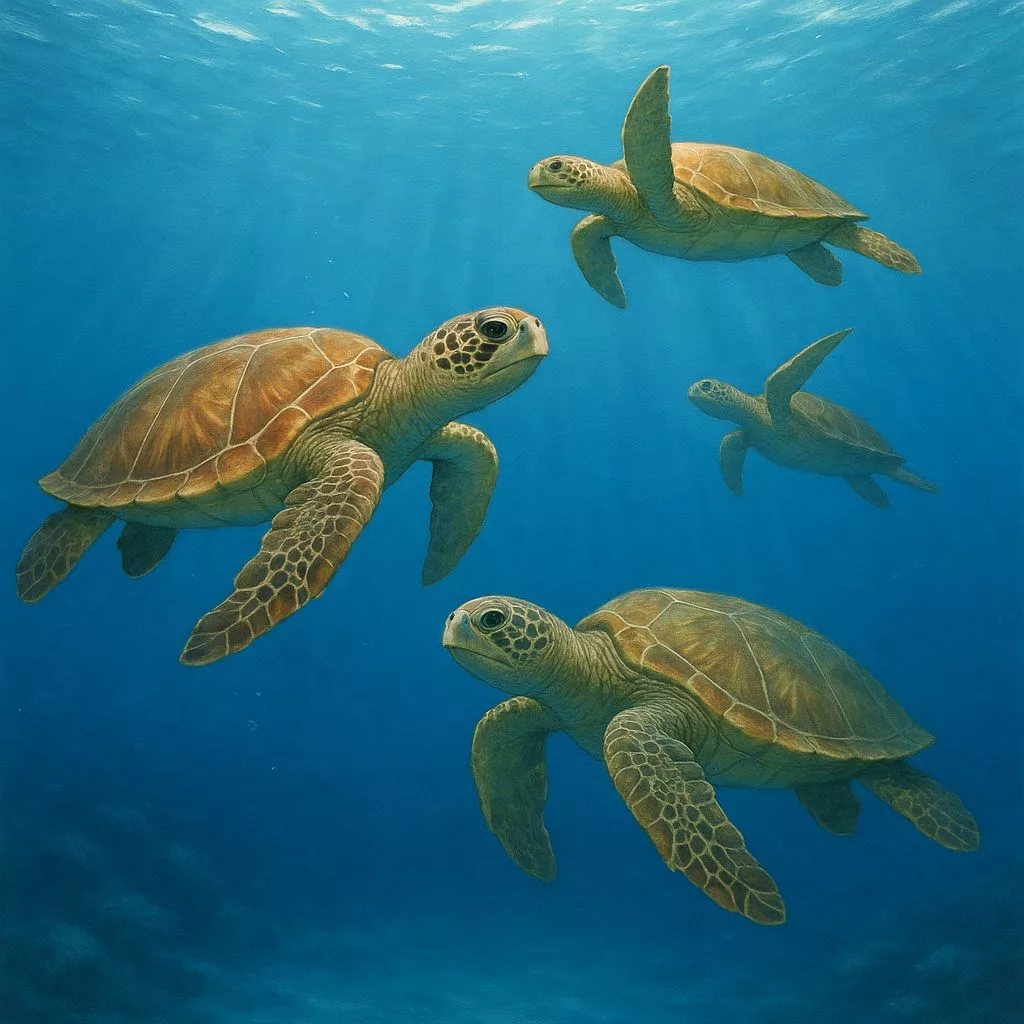
Four brave turtles, Nori, Stella, Pebbles, and Cinnamon, who were once very sick, are now back in the big, blue Indian Ocean! Many caring people helped them get strong again. They traveled safely in special cars and were carefully put into the water. Now, little trackers on their shells send messages, showing everyone how these amazing turtles swim free, helping us learn how to protect them and their ocean home.
How were four rehabilitated turtles released into the Indian Ocean?
Four rehabilitated turtles – Nori, Stella, Pebbles, and Cinnamon – were released into the Indian Ocean through a meticulously planned operation involving gradual temperature acclimation, health checks, a specialized transport convoy, and careful release into a protected marine sanctuary with ongoing satellite tracking. This effort ensured their safe return and provided valuable data for conservation.
- A real-time chronicle of the morning Nori, Stella, Pebbles and Cinnamon left intensive-care tubs on the edge of Cape Town and paddled into one of South Africa’s most fiercely protected marine sanctuaries.*
Dawn Prep: Turning Aquarium Tubs into a Slice of Wild Sea
Shanet Rutgers reaches the quarantine wing before sunrise, when the Atlantic horizon looks like pale mussel shells washed in bleach. She tweaks the thermostat in four plastic tanks, shaving half a degree every 600 seconds so the water gradually copies the thermal shock the turtles will meet once they leave the warm Agulhas ribbon and meet the cooler gyre beyond. Biodegradable tie-tags flutter against curved carapaces; just aft of the hind flippers, a 27-gram satellite beacon – bonded with epoxy to the rear scutes – promises 220 days of non-stop telemetry. Every dive, every breath, will hop to polar-orbiting ARGOS units and rain down on a laptop in the apartment above the jellyfish corridor.
Veterinarian Talya Davidoff arrives next, torch in hand. She flicks a green laser across Nori’s right eye; the pupil snaps shut in 210 milliseconds, comfortably inside the healthy range for wild chelonians. Stella, who once sounded like someone walking on bubble wrap, now carries lungs that ring hollow and smooth. Pebbles’ blood reads 2.1 mmol lactate, down from the lethal 14 she registered when volunteers pulled her from the surf – evidence that cellular engines have rebuilt themselves after a near-drowning. Cinnamon, the lone hawksbill, thrashes when a thermometer nears her beak, exactly the aggression the physiotherapy team hoped to resurrect after five months of float-tank workouts.
Custom “ambulance boxes” wait by the door. Each crate is fleece-lined and vented with 3-D-printed honeycomb ports that slice wind shear during the two-hour road trip. Twin temperature loggers sit inside; a third rides the chassis. Drift more than two degrees from 22 °C and the driver’s phone erupts in buzzes. For three consecutive nights the route has been scouted at 03:00; potholes that could punch above 0.4 g have been circled on a GPS map. If a sudden jolt still occurs, an automatic WhatsApp flags the convoy before anyone can curse the suspension.
Convoy & Corridor: 90 km of Green Lights and Limestone Cliffs
At 08:45 the tiny procession – two aquarium vans, a CapeNature pickup and a snorkel-fitted Jeep – slides unnoticed through Cape Town’s yawning rush. City traffic engineers have sequenced the lights to roll green the moment the lead van approaches, the same courtesy they reserve for heads of state. Inside, educator Aisha Wylie holds her phone steady, live-streaming asphalt and aloes to 4,800 schoolchildren who donated R50 at a time to buy squid strips and vitamin jabs. Their messages scroll upward – smiley emojis, turtle doodles, a teacher’s promise to chart the animals on classroom wall-maps.
Past the last vineyards the road dives between limestone ramparts. De Hoop Nature Reserve – 36,000 ha of protea-scented fynbos and fossil dunes – usually keeps its gate locked to private traffic, but today the iron wings swing open. A whale-stranding researcher waits with a Yagi antenna; she will log background VHF chatter so analysts can later scrub electronic noise from the satellite feed.
The convoy halts 300 m short of high tide. Overnight, crews have laid removable boardwalks to keep footprints from collapsing the crypts of African black oystercatchers whose eggs sit in shallow scrapes. A suitcase-sized desalination unit hums, pushing 36 ppt brine into transport tubs – perfectly matching the salinity of the reef where the turtles were originally found.
First Breath of Freedom: Weigh-in, Waves and a Quick Getaway
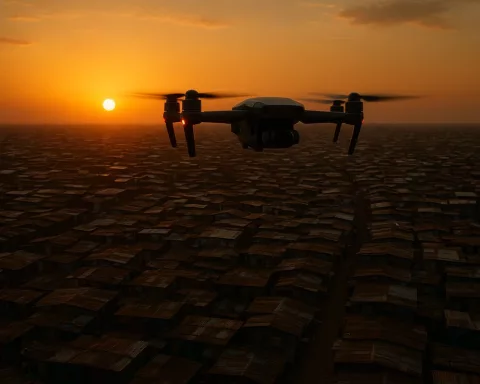
Mesh slings – hand-stitched from reclaimed ghost-net nylon – appear in four colour codes. Stella, heaviest at 38 kg, claims the quad-handle model. Digital luggage scales, pre-calibrated with a 20 kg kettlebell, hang from bamboo poles; any animal under 90 % of expected mass would be red-flagged for buoyancy trouble. All four pass, so the caravan moves. Wave crests detonate against blinding sand, but the spring range is gentle: 1.2 m amplitude, 11-knot south-easterly breeze. A drone lifts off the dune, camera slanted to trace the first 300 m of swim paths. Four blue dots wink onto the telemetry laptop – GPS lock achieved even before salt touches skin.
Release rules are strict: no helping flipper, no guiding hand. Handlers wade to mid-thigh and freeze, arms wide like scarecrows. Cinnamon bulldozes through a foam wall and disappears in under ten seconds, true to her reef-dweller reputation. Pebbles performs two cautious loops, then an undercurrent yanks her seaward; within a minute her carapace flattens 50 m beyond the breakers. Nori pops up once, opal sun stripes flashing across her neck scutes before she angles down. Stella lingers longest, yet later data will credit her with a blistering 4.3 km sprint in the first 120 minutes – the fastest post-release burst ever logged by the project.
Onshore, a school choir erupts in an isiXhosa anthem about the whale-road binding ancestors to the horizon. A ranger thumbs the sighting into iNaturalist, minting four fresh data nodes for global turtle distribution maps. The drone auto-lands at 12 % battery, gifting one last frame: four turtle silhouettes melting into metallic cobalt like coins dropped into a wishing well.
Aftermath & Impact: Bytes, Beats and a Frozen Library of Faeces
Telemetry registers four “Z-class” fixes – positional error under 150 m, sharp enough to distinguish reef from open blue. The team will watch for 48 hours; should any icon drift north of the shelf break, an automated hotline will push turtle-friendly trawl codes to fishing captains. Meanwhile interns bury a decoy in damp sand; within minutes an oystercatcher hammers the shell, reminding everyone why releases happen at mid-tide when predators are fewer and wave energy is high.
Return vans are quiet, sloshing with 400 L of spent seawater that will be filtered and recycled for the next patient – a loggerhead hatchling who mistook plastic nurdles for crustaceans. Dr Davidoff downloads 1.2 GB of sensor logs; Nori’s stroke frequency has already settled at 0.8 Hz, textbook evidence of restored muscle metabolism. Rooftop solar panels upstairs pump 89 kW into the city grid, offsetting every drop of diesel burnt on the 180 km round trip.
Far offshore, temperature probes inside the transmitters record a 4 °C plunge, confirmation that the turtles have located the Agulhas conveyor. At current speed they could sight Madagascar in three months. Every 180 seconds each beacon compresses 40 kB of dive and acceleration data, firing it toward the same orbiting routers. Bandwidth bills are crowdfunded by a Johannesburg carbon-offset start-up; in return they receive verifiable conservation metrics for their ESG reports.
Back at the aquarium, ultra-cold freezers guard faecal samples at –80 °C. Somewhere inside those tubes drift antibiotic-resistance genes that may rewrite the story of coastal pollution. One vial ships next week to a Swedish genomics lab where scientists will compare turtle resistomes against hospital sewage from three Cape provinces, probing whether rehabilitation facilities amplify super-bugs or dilute them. The answer could change husbandry rules on every continent.
Nine hundred kilometres northeast, a prawn-trawler captain glances at the same tracking portal he learned about in a fisheries workshop. He recognises the cartoon turtle icons, adjusts his helm five degrees to port, and keeps his nets on deck. Two loggerheads stay free, the data loop widens, and the ripple that began with four fragile shells keeps expanding across shipping lanes, genetic labs, classrooms and trawl pockets – proof that a single morning’s quiet science can still tilt an entire ocean toward hope.
[{“question”: “What is the main news about the four turtles?”, “answer”: “Four rehabilitated turtles named Nori, Stella, Pebbles, and Cinnamon have successfully been released back into the Indian Ocean after recovering from severe illnesses. They were carefully transported and released, and are now being tracked by small devices on their shells to help conservation efforts.”},
{“question”: “How were the turtles prepared for their release?”, “answer”: “The turtles underwent extensive preparation, including gradual temperature acclimation in their tanks to match the ocean’s varying temperatures. Veterinarians performed thorough health checks, ensuring their eyes, lungs, and blood lactate levels were healthy. Even their aggression was monitored as a sign of recovery. They were also fitted with biodegradable tie-tags and 27-gram satellite beacons for tracking.”},
{“question”: “What special measures were taken for their transport?”, “answer”: “The turtles were transported in custom-designed \”ambulance boxes\” that were fleece-lined and vented with 3-D-printed honeycomb ports to minimize wind shear. Each crate had twin temperature loggers, with a third on the chassis, triggering an alert if the temperature deviated by more than two degrees from 22 °C. The 90 km route was scouted for potholes, and city traffic engineers sequenced lights to ensure a smooth, green-light procession for the convoy.”},
{“question”: “Where were the turtles released, and what happened during the release?”, “answer”: “The turtles were released into the De Hoop Nature Reserve, a fiercely protected marine sanctuary. Crews laid removable boardwalks to protect nesting oystercatcher eggs. Before release, their weight was checked, and they were gently placed into the water at mid-tide to avoid predators. Cinnamon quickly disappeared, Pebbles was pulled seaward by an undercurrent, Nori angled down after popping up once, and Stella, despite lingering, showed an impressive 4.3 km sprint in the first two hours.”},
{“question”: “How is their post-release progress being monitored?”, “answer”: “Small trackers on their shells send real-time data, including dive and acceleration information, to polar-orbiting ARGOS units. This data is collected and analyzed to understand their movements and behavior. Automated hotlines push turtle-friendly trawl codes to fishing captains if a turtle drifts north of the shelf break, helping prevent accidental capture. Temperature probes in the transmitters also confirm their location in the Agulhas conveyor.”},
{“question”: “How does this release contribute to broader conservation and scientific understanding?”, “answer”: “This release provides crucial data for global turtle distribution maps and conservation metrics. The telemetry data helps researchers understand their post-release behavior and identify critical habitats. Additionally, faecal samples collected from the turtles are being analyzed for antibiotic-resistance genes, which could inform husbandry rules globally and shed light on coastal pollution. The project also educates the public and engages fishing communities, promoting responsible practices and fostering a ripple effect of conservation awareness.”}]