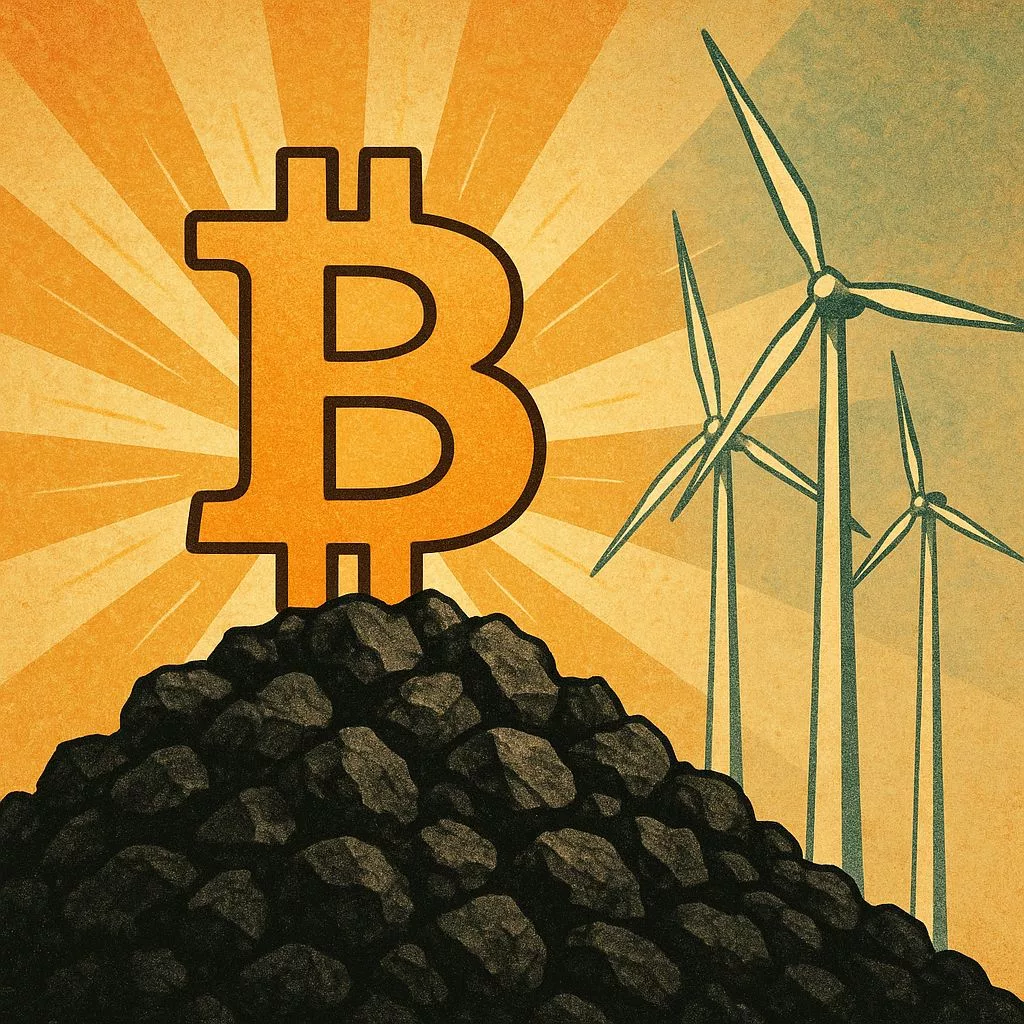
Bitcoin uses tons of electricity to create each coin. This energy use, called “Proof-of-Work,” makes Bitcoin super strong and hard to change, like a digital energy receipt. This makes it a great way for people worldwide to send money, especially when their local money is shaky. It helps them avoid high fees and changing money values, giving them a steady way to store wealth. This new type of money is built on physics, not politics, making it a powerful tool for those who need it most.
What is the fundamental principle behind Bitcoin’s value and immutability?
Bitcoin’s value and immutability stem from its foundational principle: “Proof-of-Work = Proof-of-Joule.” Each Bitcoin is secured by an energy receipt, meaning its creation requires verifiable electricity consumption. This makes physics, specifically thermodynamics, the ultimate auditor, ensuring scarcity and preventing forgery or retroactive changes.
1. The Tweet That Echoed in WhatsApp Family Groups
Elon Musk fired off a 46-character zinger: “Bitcoin is a currency built on energy, not politics.”
Within minutes, trading chats lit up with green-candle emojis and hedge-fund PDFs.
But beyond the speculative fireworks, the line landed where it always lands first – in the phones of people who earn in euros, pounds or dollars yet buy groceries in naira, lira or rand.
For them, the sentence wasn’t content; it was confirmation that the ground beneath their feet keeps sliding because someone in a distant capital hit “print.”
Musk’s aphorism, then, is less a forecast than a mirror: it reflects every time a mother’s wire transfer shrinks before it clears, every time a semester’s tuition jumps overnight.
The message also reframes the old classroom mantra about money’s three functions.
Unit of account, medium of exchange, store of value – yes – but who guarantees them?
A flag, a central-bank governor, a promise that “this note is legal tender.”
Strip away the sovereign seal and textbooks predict barter or anarchy.
Bitcoin reverses the syllabus: it issues the scarcity first – 21 million, no overtime vote – then attaches each coin to a kilowatt receipt that no committee can fake.
In short, physics becomes the auditor, and thermodynamics the board of directors.
For the diaspora, that twist is personal.
They already run a private FX desk every payday, comparing the screen rate, the booth rate and the “Mom finally received” rate.
They watch politics bleed into purchasing power in real time – one ministerial tweet, one ratings-agency downgrade, one election surprise.
An asset whose inflation curve is knowable until the year 2140 feels like a holiday from non-consensual surprises.
Volatility they can hedge; volatility imposed by strangers who never asked for their vote is harder to stomach.
2. Proof-of-Work = Proof-of-Joule
Each new block is a sealed envelope of electricity.
Miners buy electrons first, coins second; if the wattage stops, the ledger stalls.
That rule turns energy markets into the monetary policy committee.
turbines in Sichuan, flared-gas rigs in North Dakota, geothermal vents in Iceland – all bid for the right to hash.
A 2023 Cambridge survey tagged 52 % of Bitcoin’s power as renewable, beating the global grid average.
The network, then, is less a rogue polluter than a buyer of last resort for stranded electrons.
Critics still wave the Sweden-sized consumption figure, but they skip the next line in the invoice: someone paid for those terawatts.
Miners chase the cheapest marginal megawatt, which often equals sun hitting empty prairies at 2 a.m. or monsoon water spinning turbines with no transmission line out.
Bitcoin converts that surplus into a portable store, a feat development banks have spent decades trying to bottle with special-export zones.
Call it a battery you can e-mail.
Forgery is priced out by the heat bill.
To rewrite a single block, an attacker must rerun the energy movie for every subsequent minute, burning cash faster than a Vegas buffet.
No sanctions list, freezing order or sovereign tantrum can retroactively unpaid the kilowatts that anchored history.
That immutability is not rhetorical – it’s thermal.
3. The Expat Toolkit: Five Hacks for a leaking Paycheck
First, split the salary wire.
The moment fiat hits the account, convert 30 % to stable-coin, park it in a 6 % DeFi pool, then drip-sell into local currency on rent day.
Second, Lightning gift-cards: buy EUR vouchers over the mesh, screenshot the barcode, WhatsApp it to Mom; she redeems at the corner kiosk, bypassing 4 % reload fees.
Third, multi-sig vaults – two keys in different time-zones, one in a bank drawer – so a burglar in Joburg and a bureaucrat in Lagos both need plane tickets to win.
Fourth, hedge with hash-rate vouchers.
Cloud-mining forward contracts rise with coin price, offsetting tuition hikes denominated in dollars.
Finally, play the tax map.
Spend 180 sunny days in Portugal and crypto gains are tax-free; clock the other half in Dubai for zero income levy.
The combination turns volatility from enemy to employee.
Traditional corridors still skim $48 billion a year – 6 % globally, 8 % in Sub-Saharan Africa.
That is a family tax, levied for the crime of loving someone across a border.
Lightning invoices settle at 0.1 % and clear in seconds.
Yes, the price wiggles, but wiggles can be insured; a 7 % remittance leak compounded quarterly for a decade is a permanent hole.
Expats who once queued at Sandton’s forex bar now swap satoshis in Telegram chats, settling balances later over a pint in Shoreditch.
4. When Nations Push Back – and Hash Routes Around
Beijing outlawed mining in 2021; hash-rate reappeared in Kazakhstan, Alberta and the Texas panhandle within months.
New Delhi wants a 30 % crypto tax while flirting with its own CBDC.
El Salvador went the other way, granting legal-tender status and buying one coin a day with tax receipts.
Each reaction maps the same geography: energy can’t be handcuffed at customs; you must police the turbine, an expensive whack-a-mole.
Even if every technical boast evaporated tomorrow, the meme “money should be harder to print than to mine” would linger.
For citizens whose grandparents watched Argentine australes evaporate, the phrase is ancestral grievance in seven words.
Memes decay slowly, irradiating parliaments and boardrooms long after the original tweet is buried under newer noise.
Entropy still looms.
Lightning hubs can be subpoenaed, wallets labeled “encrypted munitions,” SHA-256 someday outrun by quantum rigs.
Bitcoin can’t price a kidney, negotiate carbon treaties or guarantee civility.
But for the diaspora, it has already done one thing: converted non-consensual volatility into a calculable coefficient, something you can hedge, time-zone, or code around.
The protocol spits 6.25 new coins every ten minutes; everything else – price, politics, privacy, power mix – is an open homework set for the planet’s most global classroom.
[{“question”: “What is the fundamental principle behind Bitcoin’s value and immutability?”, “answer”: “Bitcoin’s value and immutability stem from its foundational principle: \”Proof-of-Work = Proof-of-Joule.\” Each Bitcoin is secured by an energy receipt, meaning its creation requires verifiable electricity consumption. This makes physics, specifically thermodynamics, the ultimate auditor, ensuring scarcity and preventing forgery or retroactive changes.”}, {“question”: “How does Bitcoin’s energy consumption (Proof-of-Work) contribute to its security and reliability?”, “answer”: “Bitcoin’s Proof-of-Work mechanism requires miners to expend significant computational energy to validate transactions and add new blocks to the blockchain. This energy expenditure makes it incredibly difficult and economically unfeasible for anyone to alter past transactions, as it would require re-doing all the work for every subsequent block. This ‘digital energy receipt’ ensures the network’s integrity and makes Bitcoin a \”super strong and hard to change\” digital asset, audited by physics rather than political entities.”}, {“question”: “Why is Bitcoin particularly attractive to individuals in countries with unstable local currencies?”, “answer”: “Bitcoin offers a steady way to store wealth and send money for individuals in regions with volatile local currencies. It helps them avoid high fees associated with traditional remittances and protects them from the devaluation of their local money. For these individuals, Bitcoin represents a financial tool built on physics, providing a more reliable alternative to state-backed currencies whose value can be influenced by political decisions or economic instability.”}, {“question”: “What role does renewable energy play in Bitcoin mining?”, “answer”: “A significant portion of Bitcoin’s energy consumption comes from renewable sources. A 2023 Cambridge survey indicated that 52% of Bitcoin’s power is renewable, surpassing the global grid average. Miners often seek out the cheapest marginal energy, which frequently includes surplus or stranded renewable energy from sources like solar, hydro, or flared gas. This allows Bitcoin to convert otherwise unused energy into a portable store of value, acting as a \”buyer of last resort for stranded electrons.\””}, {“question”: “How does Bitcoin offer practical financial solutions for expats and individuals sending remittances?”, “answer”: “Bitcoin, particularly through technologies like the Lightning Network, offers expats and individuals sending remittances significantly lower fees and faster transaction times compared to traditional banking corridors. It provides tools for hedging against volatility, such as converting a portion of salary into stablecoins or using multi-signature vaults for enhanced security. This bypasses the high costs and delays of conventional remittance services, giving individuals more control over their money.”}, {“question”: “Can governments effectively control or stop Bitcoin?”, “answer”: “While governments can attempt to regulate or even outlaw Bitcoin mining and trading within their borders, history shows that such efforts often lead to the relocation of activities rather than their cessation. For example, when China banned mining, hash-rate quickly reappeared in other regions. The decentralized nature of Bitcoin means that its underlying energy consumption and network activity are difficult to \”handcuff at customs,\” making it challenging to control without policing the energy sources themselves, which is a complex and often impractical task.\””}]