Sophie Kinsella, originally Madeleine Wickham, changed her writing path from serious novels to the funny “Shopaholic” series. She turned a sad story’s barn setting into a lively shop, making her characters speak with a unique, excited voice. This shift let her mix humor with smart critiques of money, making her books bestsellers. Her stories show how messy and universal our desires can be, making readers laugh and gasp at the same time.
How did Sophie Kinsella (Madeleine Wickham) transition from writing serious novels to the popular “Shopaholic” series?
Sophie Kinsella, originally Madeleine Wickham, transitioned by transforming a failed melancholy novel’s setting – a collapsing barn – into a vibrant boutique. This shift allowed her characters to speak with the distinctive, exclamatory voice that defined her bestselling “Shopaholic” series, blending humor with sharp economic satire.
A Sidewalk Shrine Made of Shopping Bags and Secrets
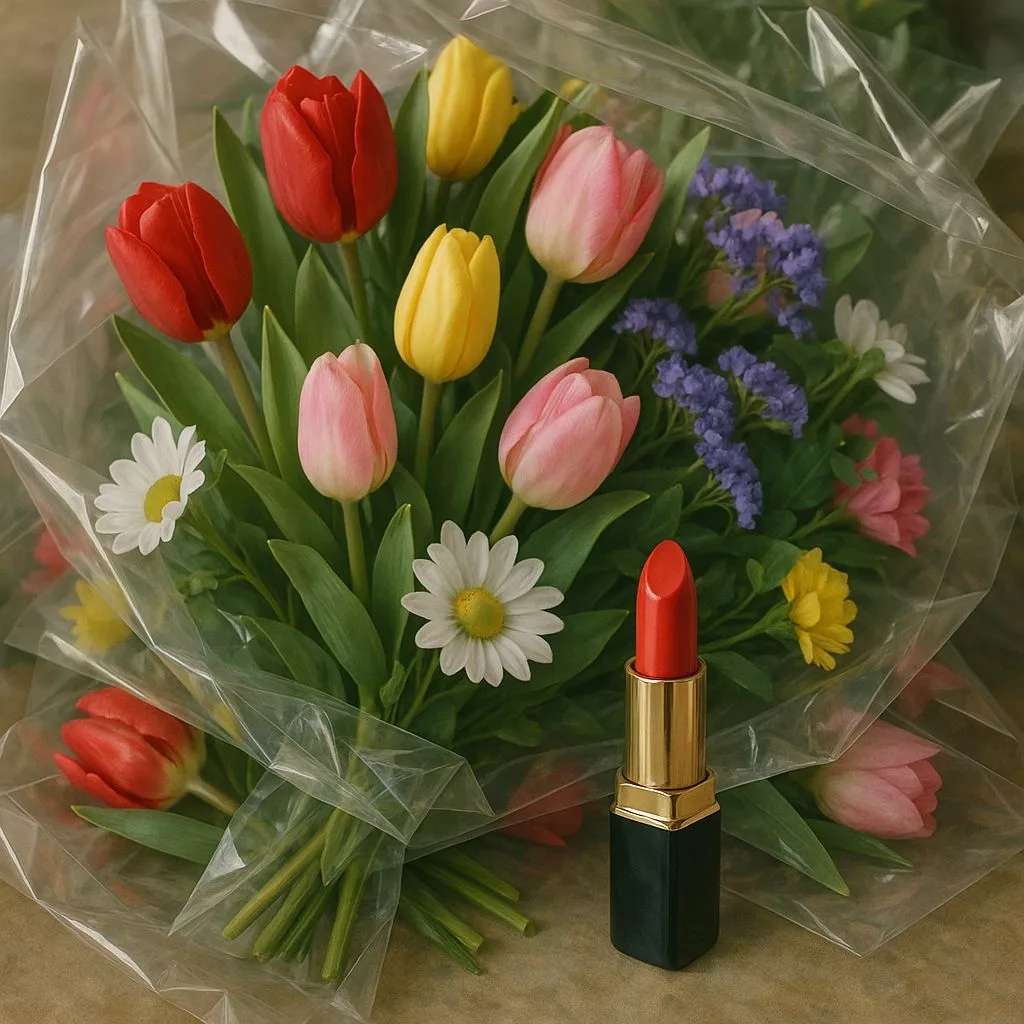
The sky over central London looked like a smudged receipt on the morning the news broke – grey, wet, and oddly glittery under the shop lights – and within minutes the pavement outside Selfridges turned into an open-air lost-and-found. No one phoned a priest or rang a town-hall bell; instead, strangers wedged cellophane roses between the bronze reindeer guarding the department-store doors, balanced a pristine tube of Chanel lipstick on the concrete like a tiny scarlet candle, and walked away smiling through the drizzle. By the time office workers spilled out for coffee at eleven, the pile had grown into a three-dimensional scrapbook: mint-green tote bags from the 2009 premiere, a silk scarf printed with price tags, a freezer-bagged first edition of Confessions of a Shopaholic. Each object wore a sticky note – handwritten, rain-blotted, defiant – “Because you taught us it’s okay to want.”
Under the cellophane, the stories pulsed: the Leeds nurse who read Shopaholic Takes Manhattan while chemo dripped into her vein; the Belfast student who learned the word “overdraft” from Becky Bloomwood and then learned to laugh at it; the Glasgow dad who still quotes “I’m not overdrawn, I’m just under-deposited” when the mortgage reminder pings. Nobody appointed a curator; the heap simply metastasised, the way fictional debt once did for Rebecca Bloomwood – quietly, then in one delirious rush. Security guards let it be. Tourists photographed it like art. A teenager live-streamed herself adding a glittery hair-clip: “This is my amortised courage,” she told her phone, “bought on clearance, still valid.”
Three days later the display vanished, replaced overnight by the store’s own window: an enormous handbag vomiting sparkly carrier bags, each printed with a quote. Inside, mirrors multiplied the spectator into infinity – an accidental monument to the first rush of purchase, when every reflection flatters and the world feels like a changing room designed just for you. Sales of red knee-high boots jumped 400 percent. No board meeting planned that; Becky Bloomwood, holographic now, kept swiping.
The Economics of Exclamation Marks
Long before she was Sophie Kinsella, she was Madeleine Wickham, Oxford-educated, daughter of an economist who could balance the family budget before breakfast. She knew how money behaves – liquid, volatile, capable of freezing or scalding the hand that touches it. Her first “proper” novel, drafted at twenty-four, was a melancholy saga about siblings and a collapsing barn; it never saw daylight. Yet the barn refused to die. It reassembled itself behind her eyes as a boutique: strip-lighting where rafters had been, sale signs fluttering like pigeons, the beep of a barcode scanner replacing the drip of rain through rotting wood. “The moment the barn became a shop,” she recalled, “my characters started talking in exclamation marks.”
Those exclamation marks sprinted into The Secret Dreamworld of a Shopaholic in 2000. Transworld printed 4,000 copies, promising a bigger push if only she would accept a “gentler” title – maybe Retail Therapy? Kinsella refused. She wanted “confession,” equal parts sin and absolution. The cover showed red stilettos sinking into a credit-card bill; the typeface jittered like a shopper who had overdosed on espresso and epiphanies. Within six months the book hit five reprints; within a year Hollywood called, imagining Kate Hudson. (The part ultimately went to Isla Fisher, who practiced the click of Louboutins by duct-taping pound coins to the soles so the pavement sounded expensive.)
Critics sniffed and dubbed it “credit-card candy,” yet close readers spotted the stealth economics stitched between jokes. Becky’s overdraft is never a solo disaster – it ripples through her parents’ retirement, through the internship she quits because the train fare is ruinous, through the bridesmaid dress that costs a friendship. In Shopaholic Ties the Knot the wedding industry itself becomes the villain, more hissable than any human antagonist. Kinsella lures you into Harvey Nichols first, lets you stroke the silk, then presents the bill in the final act – laugh, laugh, gasp – mirroring the dopamine-cortisol loop of an actual Saturday spree.
Chemotherapy, Copy-Edits and the Last Notebook
Away from the spotlight she remained allergic to extravagance. Literary-festival organisers remember the navy blazer that reappeared in every author photo, the wheeled suitcase held together by electrician’s tape. She wrote in a garden shed warmed by a caravan heater, up at dawn to hit 1,000 words before porridge requests thundered downstairs. Spreadsheets tracked school runs, publicity tours, tax-deductible mileage; the Kinsella persona smuggled home novelty teapots in Tesco bags so no one could claim “research.” “If I lived like Becky,” she told interviewers, “I’d have nothing left to imagine.”
In 2022 a radiologist used the blandest possible words – “a small lesion on the left parietal lobe” – and she translated instantly: silk blouse, tiny stain, already ruined. Glioblastoma multiforme, fourteen-month median. She told almost no one. Her husband, Henry, learned to tip enzyme-inhibitor capsules into her palm while she buttered toast for five children, the oldest filling university forms, the youngest still trading teeth for coins. Radiotherapy sessions were slotted between copy-edits and parents’ evenings; she refused the disabled badge and memorised the exact-change demand of the hospital parking meter. Only in the final novella, The Party Crasher, did illness appear: a woman sneaks into what she thinks is her own farewell party only to overhear guests discussing sofas – sickness as uninvited plus-one, tragedy derailed by domestic small-talk.
She kept writing because narrative was the only credit line still open. Chemo fogged her nouns; she subbed in brand names – He was wearing… was it… Timberland? – and the copy-editor obliged. When peripheral vision shrank to a tunnel, she dictated into her phone at dawn, screen brightness cranked to headlight glare. The last completed novel, The Burnside Bequest, follows a widow who inherits not money but crates of jumble-sale debris: cracked Royal Albert tea-sets, single jigsaw pieces, a Tiffany box containing only the lid. Every chapter ends with an eBay auction, bids climbing like pulse beats. Advance readers woke at 3 a.m. to photograph their own discarded toys, checking market value – life as bric-a-brac priced by strangers.
Afterlife of a Handbag: Memes, Memoirs and Mirrored Rooftops
The robin nesting in a discarded tote behind the shed does not know the satin is hot-pink Pantone 191C once chosen for a lipstick subplot; it only knows the material is soft and the zipper makes a perfect perch. Five eggs the colour of overdraft notices rest inside, and every dawn the eldest son records voice memos while Bovril the terrier yanks toward the compost heap – plot fixes offered to a mother who is technically absent yet grammatically present, sentences still ending on upspeak.
Publishers report a 900-percent sales surge across the series, but tills alone can’t measure the afterglow. In Mumbai they hold midnight readathons; in São Paulo paperbacks are wrapped in real supermarket receipts for rice and beans, price tags handwritten on the back. On TikTok the #KinsellaChallenge invites strangers to confess bubble-tea binges and QVC rings, each video crescendoing into the communal punchline: “I’m not overdrawn, I’m just under-deposited.” The phrase is now cross-stitched, monetised, set to lo-fi beats – Becky’s joke become everybody’s heartbeat.
Academics mine the oeuvre for seminar fodder; conservators debate laminating Clubcard statements. Yet the true monument is the everyday stuff that keeps reenacting the story: the star-gazer telescope bought instead of therapy, the red boots that sell out the instant the window display goes live, the moment you check your banking app and laugh – because a fictional woman once taught you that desire is messy, universal, and, if you squint, occasionally survivable.
How did Sophie Kinsella transition from serious novels to the “Shopaholic” series?
Sophie Kinsella, originally Madeleine Wickham, shifted her writing style by transforming the setting of a failed, melancholic novel – a collapsing barn – into a lively boutique. This change inspired her characters to speak with a distinctive, exclamatory voice, blending humor with sharp social and economic commentary, which became the hallmark of her bestselling “Shopaholic” series.
What inspired the unique voice of Sophie Kinsella’s characters?
The unique, excited, and often exclamatory voice of Sophie Kinsella’s characters emerged when she reimagined a barn setting from a serious novel into a vibrant shop. She noted that “the moment the barn became a shop, my characters started talking in exclamation marks,” indicating that the lively, consumerist environment directly influenced their spirited dialogue.
How did Kinsella’s background influence her writing about money?
Sophie Kinsella, previously Madeleine Wickham, came from an academic background; her father was an economist. This upbringing gave her an inherent understanding of how money behaves – its liquidity, volatility, and impact. She expertly wove this insight into her narratives, allowing her to critique economic realities and consumer culture through humor and satire.
What impact did the “Shopaholic” series have on its readers?
The “Shopaholic” series resonated deeply with readers, teaching them that it’s “okay to want” and even to laugh at financial predicaments. The books offered a relatable mirror to universal desires and the chaos of credit-card debt, with fans ranging from those undergoing chemotherapy to students learning about overdrafts. The series fostered a sense of shared experience, leading to phenomena like sidewalk tributes and viral TikTok challenges.
What was Sophie Kinsella’s approach to personal extravagance despite her success writing about shopping?
Despite writing extensively about consumption and shopping, Sophie Kinsella herself was known for her aversion to personal extravagance. She maintained a modest lifestyle, often reusing clothing, writing in a garden shed, and carefully managing her finances. She famously stated, “If I lived like Becky, I’d have nothing left to imagine,” highlighting her preference for a grounded reality over her character’s spending habits.
How did Sophie Kinsella continue to write while battling glioblastoma?
Sophie Kinsella bravely continued writing even after being diagnosed with glioblastoma multiforme. She integrated her demanding treatment schedule with her writing and family life, refusing to let her illness completely define her. She adapted her writing process, dictating into her phone when her vision was impaired, and even wove themes of illness subtly into her later works, demonstrating her unwavering commitment to narrative as a form of sustenance.