The Garden Route, once a sleepy coastal area, has exploded into South Africa’s hottest property market. High-earning professionals, working remotely, have flocked there, changing the area from a quiet place to a bustling hub. This shift brought big money, new jobs in tech, and cool, green ways of living. Now, it’s a vibrant, future-focused place where nature meets modern life.
How did the Garden Route transform into South Africa’s leading property hotspot?
The Garden Route evolved from a quiet coastal region to a premier property hotspot due to an influx of high-earning professionals seeking a future-ready micro-economy. This demographic shift, driven by remote work and lifestyle priorities, spurred significant property value increases and attracted substantial investment in infrastructure, technology, and sustainable living.
The Ribbon That Became a Magnet
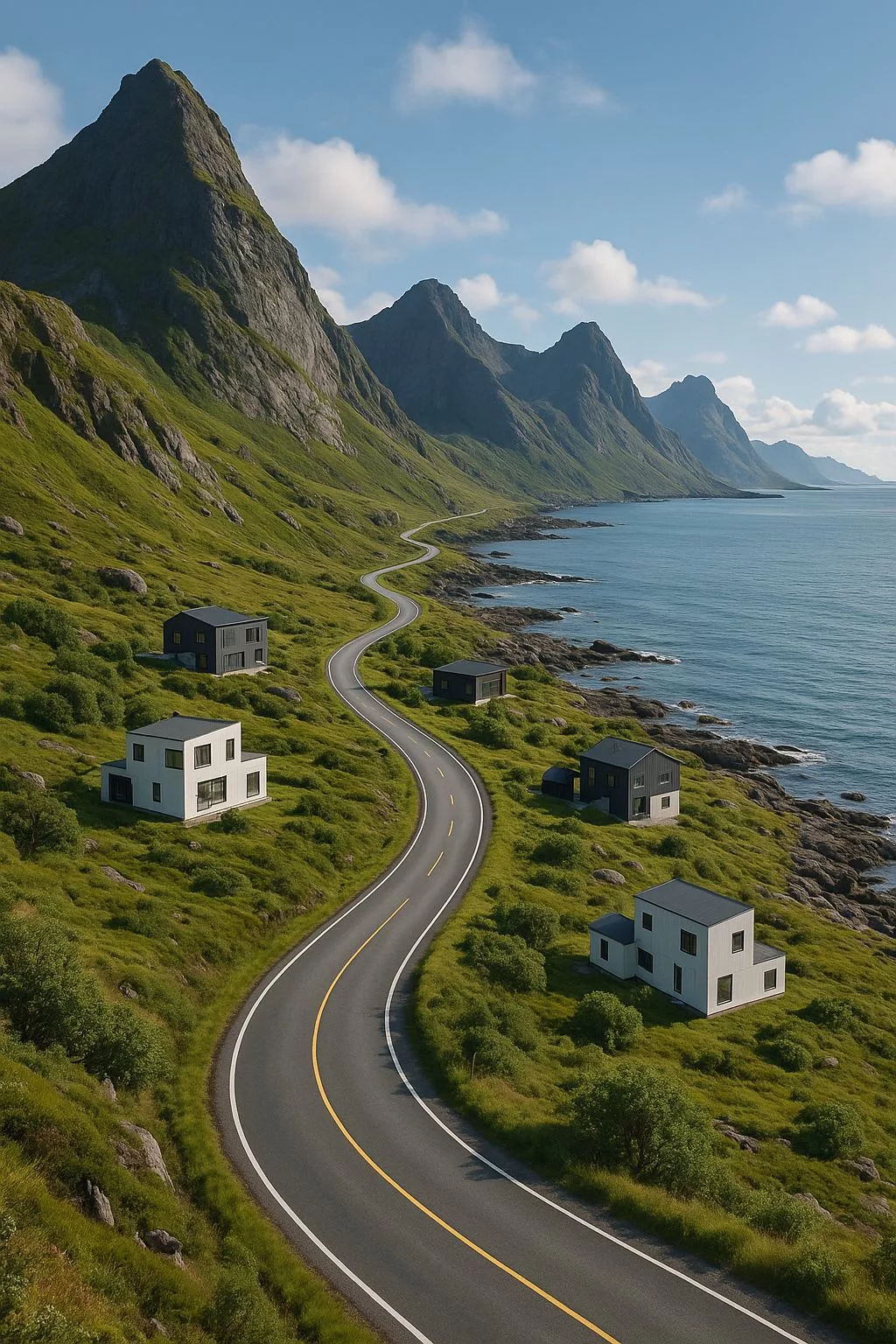
Twenty years ago the N2 snaked between the Outeniqua Mountains and the Indian Ocean like an after-thought, used mostly by December caravans and pensioners hunting sea air. Today the same tarmac funnels cloud engineers, currency traders and Gauteng parents who log off at 14:30 to meet the school bell. They arrive chasing daylight, not discounts, and leave with more than a sunburn: they lock in a fully wired, future-ready micro-economy disguised as a postcard.
Land-registry clerks clocked the shift first. George recorded 3 092 freehold sales in the year to September 2025, numbers unseen since the 2007 bubble, but this time the median price is up 31 % and homes change keys in 18 days, not 68. Sectional-title owners – usually first to appeal valuations down – demanded 42 % increases, flipping the taxpayer script. Municipal bean-counters had to tear up the roll and start again.
Behind the numbers sits a demographic jolt: four in ten new title deeds now carry a VAT number, proof the buyer still earns a living, not a pension. Fibre crews report a 74 % surge in upload traffic, the highest rural spike outside the Cape winelands. Even the regional airport – once a sleepy strip – added three mid-week shuttles to Johannesburg after Kulula noticed 62 % of seats snapped up by monthly subscribers, not seasonal sun-seekers.
George: Pensioner Town that Out-coded Sandton
Victorian sandstone still frames George’s main road, but walk one block back and you’re in 12 hectares of co-working lofts, dog-friendly cafés and warehouses humming with Netflix Afrikaans rom-com shoots. Forty-square-metre studios deliver 11 % net yields, beating Observatory and Hatfield, because young professionals crave lock-up-and-go safety without the big-city edge.
The steam train to Mossel Bay is being reborn as a battery tram-train that halts every 400 m along the coast, converting car parks into cycle lanes. Rolling stock arrives from Durban’s defunct People-Mover; local graffiti artists wrap each carriage in fynbos prints engineered to fade 2 % a year, forcing commuters to watch seasons scroll past their windows.
Schools, once the deal-breaker that sent families packing back north, now pitch AI labs and surf dashboards. Glenwood House runs a machine-vision project where Grade 9s count dassies on Robberg; CapeNature licenses the dataset. Eden Montessori bans homework until after sunset so pupils can surf while wearables feed heart-rate data into personal learning apps. Stellenbosch and Groningen recruiters scout here, reversing the small-town brain-drain story.
Knysna, Plett & Mossel Bay: Three Towns, Three Different Gold Rushes
Knysna still glows on fridge magnets, but the real action hides in 3 600 ha of alien wattle being chainsawed by two ex-Jozi fundies. Homeowners on Thesen Island can pay R38 a tonne to retire CO₂ and receive blockchain certificates tradable on the JSE. The invisible perk adds a 4 % “green premium” to canal prices; agents now brag about “tonnes offset” the way they once boasted about marbletops.
Plett has slipped the surly bonds of South African pricing. A bare beachfront plot in Whale Rock changed hands for R47 million after a Zoom bidding war; the winner wanted the 1-millisecond fibre edge for European forex trades, not the private funicular to the sand. Security estates market “dark-fibre redundancy” the way they once hyped granite kitchens. One homeowner runs a micro-data-centre cooled by lagoon water and sells 5-ping gaming slots to Joburg teens.
Mossel Bay plays a grittier, more copy-paste game. When PetroSA shrank in 2019, retrenched diesel techs turned severance pay into drone start-ups that inspect wind turbines at Gourikwa. Leon Miggels, former shift boss, now fields 22 pilots and prints carbon-fibre drones in an old engine hangar. Average salary: R42 k, 40 % above the old oil wage. Property followed the payroll: Groot Brak prices doubled in five years, yet more than half the buyers kept their Gauteng homes, signalling real relocation, not holiday flipping.
Sunlight, Water & Culture: The New Asset Classes
Golf estates still charge R2 200 a round, but the juicy profit lies overhead. Owners along Fancourt’s Outeniqua course tiled 38 % of roofs with solar made at George’s 60 MW plant, forming an energy co-op that sells weekend surplus at 112c/kWh. Banks reward net-positive homes with prime-minus-1 % “green bonds”, valuing exported sunlight at R850 k per property.
Water is the next currency. Climate models promise 7 % less winter rain by 2035, so estates race to brag about litres. Thesen Island’s floating reed-beds and UV sterilisers deliver 340 litres per resident daily – double the national average – without touching municipal taps. Buyers gladly fork out an extra R450 k for “water-positive” certification verified by drone-measured garden evaporation. In Plett, a developer trials atmospheric water generators driven by the sea-versus-mountain temperature gap, yielding 1 800 litres a day – enough for the house and the magnesium-treated pool.
Culture, once an after-thought, now anchors value. Knysna’s Literary Festival lures more foreign authors than Franschhoek thanks to Qatar direct flights and Amazon sponsorship. Wilderness hosts forest concerts where foraged mushrooms pair with baroque strings; tickets vanish in 42 minutes. Plett’s Polo Festival donates gate takings to shark tags, turning bubbly swilling into conservation capital. Even dinner is data: “Fynbos Friday” pings subscribers the GPS of that morning’s dune-spinach harvest; by dusk you’re eating it while scanning a QR code that reveals the plant’s rainfall record. Visitors no longer come only for the view – they come for the verified back-story.
The Next Frontier: Vertical Dunes & Inland Overflow
Planners warn George has 18 months of serviced land left; green-field approvals stretch to 42 months. The answer is vertical, not horizontal: four-storey timber apartments on stilts above sensitive dunes, designed by Stuttgart graduates lured by SA’s looser carbon-sequestration rules. In Knysna a derelict 1980s marina plant morphs into 220 ownership units capped at R1.2 million, funded by a community REIT that pays 9 % from short-stay rents. Smart-door analytics enforce a 180-night residency minimum, hacking the gig economy to favour locals over fly-by-night Airbnb owners.
Estate agents already whisper about Route 62 hinterland – Barrydale, Uniondale, Willowmore – as the next overflow valve. Fibre trenches snake across mountain passes once ruled by biker gangs. A retired Stellenbosch viticulturist bought 800 ha outside Haarlem for the price of a Sea Point parking bay, plotting a carbon-neutral wine label bottled in lightweight aluminium and shipped from Mossel Bay’s deep-water port to dodge Cape Town’s harbour queue.
History says prices triple the moment a billboard reads “90 minutes from George Airport”. Until then the Garden Route stays what it has always been: a thin strip where commerce and conservation strike daily deals, and where the best ROI is still the minute you slam the laptop, walk 200 m, and realise the only traffic jam is a pod of dolphins threading sardines through the break.
[{“question”: “
What factors transformed the Garden Route into a property hotspot?
\n
The Garden Route’s transformation into South Africa’s leading property hotspot is primarily due to an influx of high-earning professionals. These individuals, often working remotely, sought a future-ready micro-economy, driving significant increases in property values, attracting investment in infrastructure, technology, and sustainable living, and shifting the area from a quiet coastal region to a bustling, vibrant hub.
\n”,”answer”: null},{“question”: “
How has remote work influenced the Garden Route’s property market?
\n
Remote work has been a major catalyst, attracting ‘cloud engineers, currency traders and Gauteng parents’ who prioritize lifestyle and a future-ready environment over traditional office proximity. This demographic shift has led to record freehold sales, significant median price increases (up 31% in George), and homes changing hands in a mere 18 days, reflecting high demand from buyers chasing a better quality of life rather than discounts.
\n”,”answer”: null},{“question”: “
What makes George a particularly attractive location within the Garden Route?
\n
George, once considered a ‘pensioner town,’ has rapidly evolved into a dynamic hub. It now boasts 12 hectares of co-working lofts, dog-friendly cafés, and even warehouses used for Netflix productions. Its 40-square-metre studios deliver 11% net yields, surpassing traditionally popular areas like Observatory and Hatfield, due to young professionals seeking safe, lock-up-and-go living without the intensity of big cities. Additionally, schools in George are now equipped with AI labs and surf dashboards, attracting families.
\n”,”answer”: null},{“question”: “
How are infrastructure and sustainability playing a role in the Garden Route’s appeal?
\n
Infrastructure development and a strong focus on sustainability are key attractions. Examples include the rebirth of the steam train to Mossel Bay as a battery tram-train, promoting cycle lanes, and a significant surge in fibre optic internet usage (74% rural spike outside the Cape winelands). Environmentally, initiatives like carbon offsetting in Knysna, ‘green premium’ on properties, and advanced water management systems (e.g., Thesen Island’s floating reed-beds providing double the national average water) are highly valued by new residents, leading to ‘green bonds’ and ‘water-positive’ certifications.
\n”,”answer”: null},{“question”: “
What unique economic activities are emerging in different towns along the Garden Route?
\n
Each town offers distinct economic opportunities. Knysna is seeing a focus on environmental projects like alien wattle removal and traceable carbon offsetting. Plett is attracting high-net-worth individuals seeking ultra-fast fibre for European forex trading and even micro-data centers cooled by lagoon water. Mossel Bay’s economy has diversified with retrenched PetroSA diesel techs starting drone businesses for wind turbine inspection, leading to significant property price increases and real relocation from Gauteng.
\n”,”answer”: null},{“question”: “
What does the future hold for property development in the Garden Route, especially with limited land?
\n
With George having only 18 months of serviced land left, the future of development is shifting towards vertical solutions, such as four-storey timber apartments on stilts. There’s also a move towards community-funded ownership units, capped at R1.2 million, in places like Knysna, using smart-door analytics to favor locals over short-term Airbnb owners. Additionally, estate agents are eyeing the Route 62 hinterland (Barrydale, Uniondale, Willowmore) as the next ‘overflow valve’ for development, as fibre infrastructure expands into these previously remote areas.
\n”,”answer”: null}]