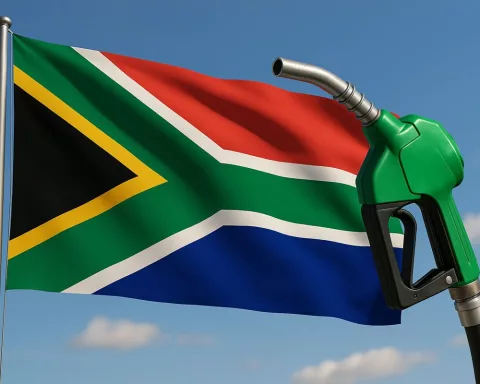
Good news for drivers in South Africa! Fuel prices might drop in May, giving some much-needed relief to those feeling the pinch at the pump. This possible decrease comes from falling international oil prices and a stronger rand, which makes fuel cheaper. Recent data shows that there’s been a significant over-recovery in fuel prices, hinting at a second month of savings. As people fill up their tanks, they can feel a glimmer of hope amidst the ups and downs of the economy and global trade.
Will fuel prices in South Africa decrease in May?
Yes, South African motorists may experience a decrease in fuel prices for May. Factors contributing to this potential drop include a significant over-recovery in fuel prices, declining international oil prices, and a modest strengthening of the rand, offering relief from high fuel costs.
A Glimmer of Hope for South African Motorists
South African drivers could soon find themselves spending less at the fuel pumps. Recent trends indicate a possible decrease in both petrol and diesel prices for the month of May. This anticipated reduction comes on the heels of favorable shifts in the global oil market and a modest strengthening of the rand, offering a rare reprieve for consumers strained by high fuel costs.
Data from the Central Energy Fund (CEF) indicates a significant over-recovery in fuel prices, suggesting another potential dip following April’s decline. By mid-April, petrol demonstrated an over-recovery of up to 14 cents per liter, while diesel showed an even more substantial over-recovery of 35 to 36 cents per liter. Additionally, illuminating paraffin saw a positive adjustment of 27 cents per liter. These developments are largely influenced by declining international oil prices and the volatile nature of global trade politics.
Brent Crude, the benchmark for South African fuel pricing, has been trending downward amidst concerns over an ongoing trade conflict between the United States and China, the world’s largest energy consumers. The friction between Washington and Beijing escalated when China retaliated against American tariffs by imposing punitive measures, raising duties on U.S. goods to as high as 125%. Despite these tensions, President Donald Trump’s administration has remained steadfast on high tariffs targeting Chinese imports.
Global Trade Politics and Fuel Prices
While this political standoff has contributed to economic instability worldwide, it has also paradoxically pushed oil prices to their lowest levels in weeks. In a surprising move, Trump temporarily lowered tariff rates for certain international trading partners, including South Africa. The tariff levels for these nations were reduced from 30% to a global minimum of 10% for a 90-day period. This adjustment helped the rand rebound slightly from a record high of R19.93 to the dollar to approximately R19.31. Although still volatile, this minor recovery of the currency provided some cushioning against rising fuel costs.
Domestically, the political landscape remains uncertain. The Democratic Alliance’s (DA) recent vote against the 2025 National Budget has raised eyebrows, particularly given the party’s role within the Government of National Unity (GNU). With ActionSA and Build One South Africa backing the budget, questions about the GNU’s future composition have emerged. Analysts warn that if the DA exits the GNU, the risk of a fragmented coalition made up of populist and smaller parties could erode investor confidence, potentially weakening the rand once again. Such a scenario could disrupt the current trend of fuel price relief.
As the Department of Mineral Resources and Energy finalizes prices at the end of the month, it remains too early to commit to specific figures. However, the current trajectory suggests that May could see a second consecutive month of relief at the pumps. For now, global oil markets and local political dynamics remain under close scrutiny. If conditions remain stable, South Africans could look forward to more affordable commutes and warmer winter budgets.
Historical Context of Fuel Pricing
Amidst these economic and political fluctuations, it’s worth considering the broader historical context of fuel pricing. The intricate relationship between oil prices and global politics dates back to the mid-19th century when the first oil wells were drilled in Pennsylvania in 1859. This discovery marked the beginning of a new era of energy dependence, with subsequent booms and busts intricately tied to geopolitical events—from the oil shocks of the 1970s to the more recent shale boom in the United States.
Artistic expressions throughout history have often mirrored the impact of such shifts. The Industrial Revolution, powered by coal and later oil, inspired the gritty urban landscapes of artists like J.M.W. Turner and the dynamic compositions of the Futurists. Today, as the world confronts climate change and explores sustainable energy solutions, contemporary art increasingly reflects concerns over fossil fuel dependence. Artists like Olafur Eliasson, who incorporates sustainable energy concepts into his installations, provoke thought on our collective energy future.
Returning to the present, the potential fuel price cuts in South Africa offer more than just economic relief; they represent a brief respite in a complex, interwoven tapestry of local and global challenges. As motorists fill their tanks, they participate in a larger story stretching from the trade corridors of ancient civilizations to the bustling highways of modern cities. Each drop of fuel carries within it echoes of political maneuvers, economic strategies, and the relentless human quest for progress and prosperity.
Navigating the Future
While the immediate focus remains on the forthcoming price adjustments, the broader narrative underscores the intricate connections between energy, economy, and environment. The current situation highlights the delicate balance policymakers must maintain to ensure both short-term relief and long-term stability. As South Africans navigate these waters, they do so with a historical awareness that every economic decision today reverberates through the annals of time.
The anticipation surrounding the May fuel price cuts is not just about numbers and cents. It symbolizes hope, resilience, and the enduring human spirit to adapt and thrive amidst ever-changing circumstances. The journey from oil rigs to fuel pumps, from political chambers to individual wallets, continues to shape the narrative of our interconnected world.
In conclusion, the potential fuel price cuts in South Africa represent more than a temporary financial relief. They reflect a momentary alignment of various economic and political factors that have significant implications for both the local and global landscape. As motorists enjoy this respite, they do so with an understanding of the broader context that shapes these changes, underscoring the importance of navigating future challenges with foresight and resilience.
“`markdown
What is the expected change in fuel prices in South Africa for May?
South African motorists may experience a decrease in fuel prices for May. Key factors contributing to this potential drop include a significant over-recovery in fuel prices, declining international oil prices, and a modest strengthening of the rand, which collectively provide some relief from high fuel costs.
How much could fuel prices drop in May?
While specific figures have yet to be confirmed, data from the Central Energy Fund (CEF) indicates an over-recovery of approximately 14 cents per liter for petrol and 35 to 36 cents per liter for diesel. This suggests that motorists could see a meaningful decrease, although the exact amounts will be finalized by the Department of Mineral Resources and Energy at the end of the month.
What is contributing to the decline in fuel prices?
The decline in fuel prices can be attributed to several factors, including falling international oil prices, a stronger rand against the dollar, and a significant over-recovery in the local fuel pricing mechanism. These economic indicators suggest favorable conditions for a decrease in fuel prices.
How do global trade tensions affect fuel prices?
Global trade tensions, particularly between the United States and China, have paradoxically led to lower oil prices due to concerns over economic stability. The recent decision by the Trump administration to lower tariffs for certain countries, including South Africa, has also contributed to a modest recovery of the rand, further impacting fuel pricing positively.
What are the implications of political dynamics on fuel prices?
Local political dynamics, such as the Democratic Alliance’s recent vote against the 2025 National Budget, can create uncertainty that affects investor confidence. If political instability persists, it could weaken the rand, potentially reversing the current trend of fuel price relief.
Why is the historical context of fuel pricing important?
Understanding the historical context of fuel pricing highlights the complex interplay between energy, politics, and economics throughout history. From oil shocks to contemporary issues surrounding sustainable energy, these factors shape not only fuel prices but also broader societal trends and challenges, emphasizing the importance of considering long-term implications alongside immediate relief.
“`