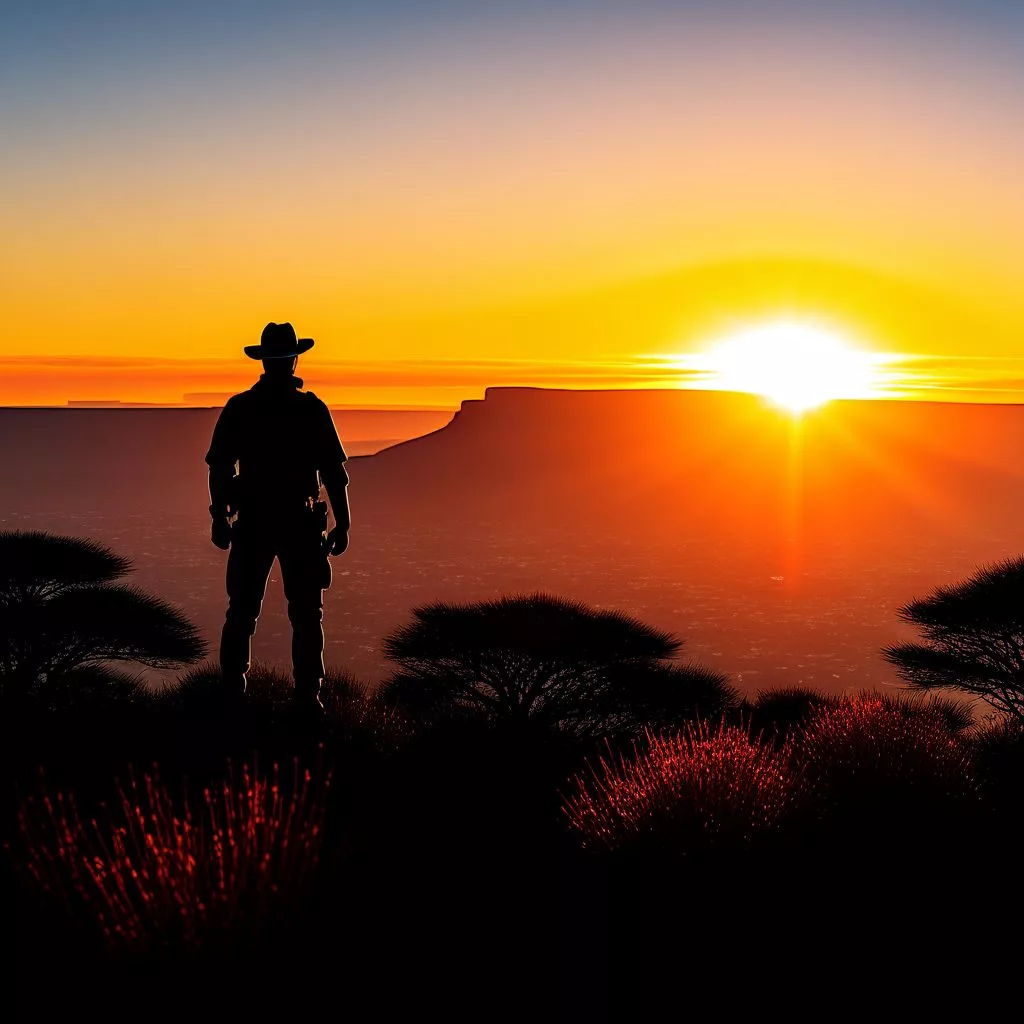
South Africa’s rangers are brave protectors of nature, fighting against dangerous poachers who threaten wildlife. They use modern tools like drones and work closely with local communities to keep parks safe. Their job is risky and tough, but they carry a deep love and duty to preserve the country’s wild places for future generations. Through courage and teamwork, these guardians stand strong to protect the beauty and life of South Africa’s wilderness.
What is the vital role of South Africa’s rangers in wildlife conservation?
South Africa’s rangers protect biodiversity hotspots by combating sophisticated poaching syndicates, enforcing conservation laws, and safeguarding ecosystems. They face personal risks, use advanced technology, and collaborate with communities to preserve wildlife, ensuring environmental health, economic stability, and cultural heritage.
Honoring a Profound Calling
At the base of Table Mountain, where the jagged terrain blends seamlessly into the restless sky above Cape Town, Dr. Dion George gathered with a crowd that radiated both urgency and respect. While World Ranger Day officially serves as a moment to recognize those who protect South Africa’s wild places, the event quickly became something deeper – an occasion to reflect on the often-unseen hardships, the personal risks, and the profound sense of duty that define the ranger’s profession.
South Africa’s unique position as a global biodiversity hotspot magnifies the significance of this day. Its ecological treasures stretch from the aromatic fynbos to teeming coastal pools, and from old-growth forests to the breezy highveld plateaus. These landscapes do more than sustain wildlife; they shape the cultural and psychological landscape of the entire nation, inspiring everything from ancient Khoisan art to modern poetry and painting. For generations, the wild places of South Africa have been a canvas for stories of resistance, wonder, and identity.
Yet, the image of the ranger is often misunderstood. Popular portrayals might suggest solitary wanderers with binoculars and sunhats, but Dr. George’s remarks shattered this illusion. He revealed the high-stakes reality of modern conservation, where rangers serve not only as caretakers but as frontline defenders against sophisticated criminal networks. These adversaries, ranging from abalone poaching rings to syndicates trafficking pangolin scales, operate with the ruthlessness and sophistication of any organized crime operation, drawing profits that match some of the country’s legitimate industries and connecting local crime scenes to global black markets.
Rangers at the Front Lines
The dangers rangers face are not abstract or distant – they are immediate and deeply personal. Dr. George described situations where rangers hesitate to return home, fearing for their families’ safety amid threats from those they pursue. Stories abound of bribery attempts, violent clashes, and the constant awareness that danger often lurks in the very landscapes rangers strive to protect. In such an environment, commitment to this work requires more than a sense of duty – it demands relentless discipline, mental fortitude, and an ethical resolve that few other professions require.
The history of conservation in South Africa has always wrestled with competing priorities: making nature accessible to the public while ensuring its preservation for future generations. Table Mountain National Park, which weaves through Cape Town and lacks traditional boundaries, highlights this tension. Its openness invites the whole city to share its beauty, but also exposes it to the realities of social and economic disparity. This dynamic shapes both the patterns of crime within the park – robberies, assaults, and theft – and the strategies conservationists must employ.
Recent years have brought both setbacks and progress. Crime surged in Table Mountain National Park, peaking in 2023, but then declined sharply thanks to strategic interventions. Under Dr. George’s leadership, SANParks increased ranger staffing by 43% over two years, and more than doubled the ranks of the Sea, Air and Mountain Special Operations Ranger Unit. These developments signal a new era in conservation, where rangers combine traditional bush skills with specialized training reminiscent of elite police or military forces.
Battling Sophisticated Threats
Today’s rangers inherit the legacy of early conservationists, like those who established Kruger National Park a century ago. Back then, many rangers came from military backgrounds, prepared to defend South Africa’s natural heritage under siege. Now, their successors wield not only rifles but also cutting-edge technology: drones patrol wetlands, trained dogs track smugglers, and forensic labs analyze DNA from seized wildlife products.
However, enforcement alone cannot solve the myriad threats facing the region’s wildlife. Dr. George made it clear that safeguarding biodiversity involves more than patrolling boundaries or arresting poachers. Safety, conservation, and community well-being are interconnected. The well-being of Table Mountain National Park reflects the broader health of Cape Town – a city marked by both extraordinary wealth and deep-seated inequality. Protecting the park, its rangers, and its visitors requires collaboration across all levels of government, robust intelligence sharing, and the kind of trust-building that only deep community partnerships can achieve.
Abalone poaching exemplifies the scale and complexity of these challenges. Once a local delicacy, abalone now underpins an international black market that drains millions from South Africa’s economy and devastates coastal ecosystems. Syndicates deploy high-speed boats and stage nighttime raids, moving their illicit catches through intricate global supply chains. Dr. George shared a gripping account of poachers fleeing a raid near Robben Island, leaving both their catch and their boat behind – a small victory in an ongoing and often uphill struggle.
The scope of the illegal wildlife trade extends far beyond abalone. Rhino horn, lion bones, pangolin scales, and even once-overlooked succulent plants have become highly sought commodities. During the first half of 2025 alone, rangers documented fourteen lion poaching incidents, several seizures involving pangolins, and mass poisonings affecting vultures and crocodiles in Kruger National Park. Each crime represents not just a blow to biodiversity, but a direct threat to the region’s economic and cultural future.
A Call to Action and Enduring Hope
Within this crucible of challenges, the ranger’s identity takes on a near-mythic quality. Dr. George reflected on his own experience training at the Southern African Wildlife College – a two-week immersion that stripped away any romantic illusions. The reality: long stretches away from family, traversing dangerous terrain, and carrying the weight of national trust alongside weapons and field gear. This experience recast the ranger not as a passive caretaker, but as a modern-day guardian, echoing traditional African stories of heroes whose journeys demand sacrifice, grit, and wisdom.
Art and storytelling have always shaped how people perceive conservation. The screening of “Poacher’s Moon” on World Ranger Day continued a tradition that spans from the powerful protest murals of the 1980s to the poignant documentaries that have raised global awareness about anti-poaching efforts. By placing rangers’ lived experience at the center, the film transforms private struggles into a collective call to action, urging viewers to recognize the intense, often invisible battles fought in South Africa’s parks each night.
But Dr. George made it clear that symbolic recognition cannot replace meaningful support. Passion for these wild places must be matched by concrete measures: stable funding, robust policies, advanced technologies, and a culture of respect that shields rangers from neglect and exploitation. These convictions echo the legacies of reformers from both South Africa and beyond – those who understood that lasting change only comes when vision aligns with infrastructure and systemic support.
Backing rangers is not an act of charity; it is an investment in the country’s future resilience. As climate change intensifies and economic pressures mount, the resources that rangers protect – clean water, pollinators, forests, fisheries – grow ever more vital. Their work sits at the crossroads of environmental health, economic stability, and social well-being.
On World Ranger Day, this recognition stands as both a tribute and a challenge. The stories and data Dr. George shared offer more than an account of current struggles; they chart a path forward. The determination and adaptability of South Africa’s rangers, honed through adversity, set a powerful example for collective action. In their efforts, we find a living testament to the fragile beauty and urgent necessity of conservation – a tapestry woven from sacrifice, ingenuity, and the stubborn hope that the wild may yet persist.
FAQ: Guardians of the Wild – South Africa’s Rangers
1. What is the main role of South Africa’s rangers in wildlife conservation?
South Africa’s rangers serve as frontline defenders of biodiversity hotspots by combating poaching syndicates, enforcing conservation laws, and protecting ecosystems. They use advanced technology such as drones and forensic analysis, work in dangerous conditions, and collaborate closely with local communities to ensure the survival of wildlife and maintain ecological balance for future generations.
2. What kinds of threats do rangers face while protecting wildlife?
Rangers face significant risks including violent confrontations with poachers, threats to their personal safety and families, bribery attempts, and operating in challenging terrains. Poaching syndicates are highly organized and ruthless, using sophisticated methods such as high-speed boats and global trafficking networks to exploit wildlife, making the rangers’ work both dangerous and complex.
3. How have modern technologies changed the way rangers operate?
Modern conservation efforts employ advanced tools like drones for aerial surveillance, trained tracking dogs, and forensic laboratories that analyze DNA from seized wildlife products. These technologies enhance rangers’ ability to detect, track, and combat illegal activities more effectively than traditional methods alone.
4. Why is community collaboration important in conservation work?
Community collaboration builds trust, enhances intelligence sharing, and creates cooperative networks that help combat poaching and illegal activities. Since conservation areas like Table Mountain National Park intersect with urban environments and social challenges, working with local residents ensures better protection of parks and promotes sustainable coexistence.
5. What impact does poaching have on South Africa’s environment and economy?
Poaching devastates biodiversity by threatening species such as rhinos, lions, pangolins, and marine life like abalone. These losses damage ecosystems and cultural heritage, while also draining millions from the economy through illegal wildlife trade. The ripple effects undermine tourism, traditional livelihoods, and the long-term sustainability of natural resources.
6. How does World Ranger Day contribute to raising awareness and support for rangers?
World Ranger Day honors the courage and sacrifices of rangers, shedding light on their often unseen struggles. Events and storytelling, including documentaries like “Poacher’s Moon,” help educate the public and galvanize support. However, meaningful change requires more than recognition – it demands stable funding, strong policies, improved technologies, and a culture of respect and protection for those who defend South Africa’s wild places.