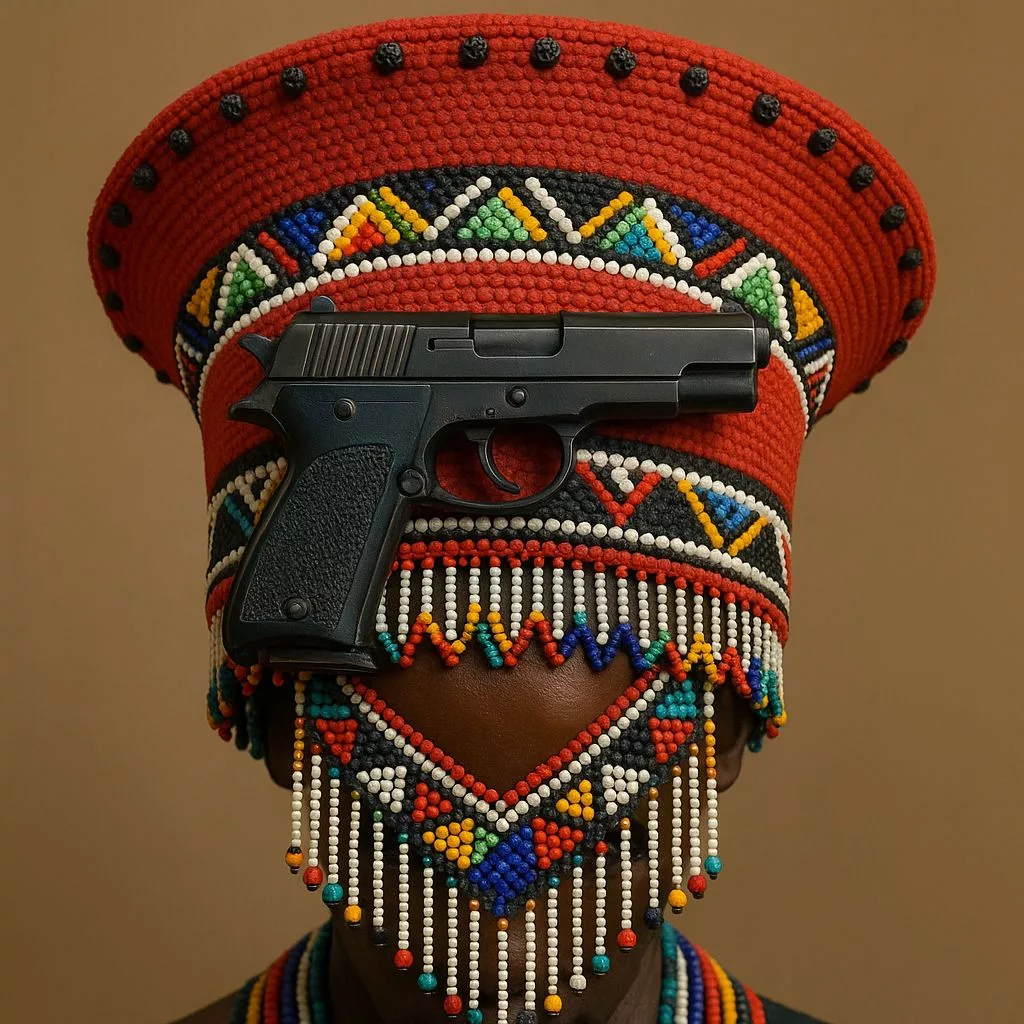
Deputy Mayor Nokuzola Kolwapi fired a gun at a festive community event, caught on video. This act, meant to be celebratory, has sparked a national uproar, raising questions about politicians’ use of firearms and its serious consequences. The incident could lead to criminal charges, ruin her reputation, and harm local tourism and finances. This event shines a light on a bigger problem: some politicians use guns to show power, mixing old traditions with dangerous actions, even though the law is clear that firing a gun without a good reason is a crime.
What are the consequences for politicians who discharge firearms unlawfully in South Africa?
Politicians who discharge firearms unlawfully in South Africa face severe consequences, including criminal charges under the Firearms Control Act, which carries a penalty of up to five years in prison. Such actions also trigger a by-election if convicted, result in significant reputational damage, and can negatively impact local tourism and credit ratings.
From Dance-Floor to Courtroom: The 11 Seconds That Changed Everything
The December sun had barely begun to dip over the Tsitsikamma range when Kwanokuthula erupted in its annual pre-Christmas mgidi. Drums pounded, braai smoke curled skyward, and Deputy Mayor Nokuzola “Noksi” Kolwapi – resplendent in white-and-red Xhosa bead-work – step into the circle. A smartphone tilts, the frame steadies, and eleven seconds of footage become evidence: Kolwapi’s right hand rises, a black pistol shape glints, three sharp cracks slice through the ululating chorus. By sunset the clip is on Twitter; by breakfast it is on every breakfast show in the country.
Detectives say seventeen separate recordings have already been uploaded to their evidence portal. Ballistic technicians have isolated the clips, measured time-lag between muzzle-flash and sound-wave, and logged the cadence as “consistent with live 9 mm rounds.” Yet the same experts warn that without the firearm itself the chain of proof is incomplete. Captain Thandi Mbatha, case officer, has walked the trampled field twice: first at dawn on 22 December, again after the New-year rain, tweezers hunting for brass among bottle-tops and lost slops. Two casings surfaced; the rest may have vanished into drains or been souvenired by selfie-chasing teens.
Kolwapi has not spoken publicly. William Booth, the criminal lawyer she briefed within hours, cites “a storm of misinformation” and reminds reporters that a video is not a verdict. Inside the council corridors of Bitou, staffers whisper about two possible scripts: a theatrical but harmless starter-pistol, or a licensed 9 mm she borrowed from a body-guard. Either narrative will have to survive forensic examination, witness statements and, increasingly, the court of public opinion that already sentenced her on social media.
Culture, Power and the Trigger: Why Politicians Keep Reaching for Guns
South Africa hardly lacks earlier examples of senior office-bearers who wrap themselves in ammunition belts. Julius Malema’s 2018 AK-47 salute in the Eastern Cape earned him a R10 000 fine and a criminal record; last year an Mpumalanga mayor posed on Facebook cradling an R5 rifle; in 2023 Parliament’s internal sergeant-at-arms confiscated three hand-guns from MPs’ bags in separate incidents. Each episode is labelled “a lapse in judgment,” yet the pattern suggests something deliberate: a message that power here is measured not only in votes but in volts of fire-power.
Ethnographers trace celebratory gunfire to pre-colonial times: gunpowder replaced spear-throwing when warriors returned home, and later signalled weddings, initiations or the arrival of a new chief. Elders in Kwanokuthula remember fathers firing bird-shot into the air on New-year morning – long before stray bullets became newspaper obituaries. The custom migrated to township parties, where DJs sometimes cue “shoot-out” moments and crowds cheer the loudest bang. What was once communal ritual now doubles as personal branding for politicians who must look both “traditional” and “untouchable.”
The law, however, brooks no ambiguity. Section 120 of the Firearms Control Act labels any discharge without lawful cause a criminal offence punishable by up to five years in prison. “Lawful cause” embraces police duties, animal euthanasia or registered sport – not jubilation. Prosecutors secured 327 convictions under this section in the past twelve months, though only seven involved public figures. Critics say enforcement is coloured by fame: voters forgive a charismatic leader faster than they forgive an anonymous celebrant, and dockets against celebrities have a habit of stalling until headlines fade.
The Price of a Bang: Tourist Euros, Credit Ratings and Community Fault-Lines
Within forty-eight hours of the video drop, Plettenberg Bay’s tourism call-centre logged 200 cancellations worth an estimated R1.8 million in direct spend. Emails from Bremen and Berkshire asked whether “street gunfights” are routine; one operator attached a viral meme that splices Kolwapi’s dance with a Rambo poster. Mariëtte Venter, who runs a twelve-room guest house overlooking Look-out Beach, says she does not know whether to laugh or cry: “People imagine bullets whistling past dolphins.” The town’s 2024 marketing budget, already trimmed by COVID debt, now diverts cash into “safety perception” campaigns and German-language press releases quoting police statistics.
Rating agency Moodys lists political instability as a key risk for municipalities already flirting with downgrades. Bitou carries R480 million in long-term debt; even a one-notch slide could add R3 million a year in interest – money that was earmarked for resurfacing the airport strip used by safari charters. Councillors fear investors will shift boutique hotels to neighbouring Knysna if the saga drags. The local business chamber has petitioned provincial Treasury for an emergency “stability grant,” arguing that reputational damage constitutes a force-majeure event comparable to last year’s floods.
At street level, Kwanokuthula is split along generational and gender lines. Grandmothers who once cooked wedding feasts say rifles never killed innocents in their day; mothers who have lost children to cross-fire want politicians banned from carrying anything louder than a vuvuzela. Young men who film Tik-Tok clips insist the outrage is “a white-media invention,” yet quietly admit they now avoid open-air parties after midnight. A local pastor has offered his parking-lot for “gun-free celebrations,” complete with drum brigades and laser lights instead of lead. Whether dancers will trade the thrill of live rounds for LED special effects is, for the moment, an open question.
Court Dates, Campaign Calendars and the Road to 2026
The docket will land at the Director of Public Prosecutions on 15 February. Investigators want clarity on three fronts: who supplied the weapon, whether Kolwari holds a licence, and whether any rounds caused damage (a shattered tavern window two blocks away may be linked). If charged, she must vacate her council seat within fourteen days of conviction, triggering a by-election that opposition parties are already fundraising to contest. The Ikhwezi Political Movement – founded by ANC renegades in 2021 – could lose its king-maker role in Bitou’s hung council, tilting budgets and patronage networks back to larger parties.
Parliament’s Portfolio Committee on Police has pencilled in January hearings on “celebratory discharge,” inviting SAPS, traditional leaders and gun-control NGOs. Draft legislation circulating in the committee proposes minimum sentences of two years without the option of a fine, plus a civil compensation fund for victims of stray bullets. The draft also empowers police to search individuals within 500 metres of any public gathering if gunfire is reported – an idea civil-rights groups label “suspicion-less stop-and-frisk.” Public comment closes 30 June, meaning new laws could be in force before the 2026 local-government polls.
Whatever the courtroom outcome, Kolwapi’s political brand is already rewritten. Posters that once read “Jobs, Roads, Dignity” now appear on WhatsApp mocked up with bullet-holes. Yet veterans of South African scandals warn against early obituaries: voters can forgive spectacle if service delivery improves and headlines shift. For now she spends her days in the municipal headquarters, signing paperwork while lawyers shuttle to court. At night the Tsitsikamma crickets hum, and somewhere in Kwanokuthula a new generation rehearses dance moves, debating whether the next big entrance needs fireworks, fog machines – or the unmistakable cocking sound of a 9 mm sliding into place.
[{“question”: “What happened at the township bash involving Deputy Mayor Nokuzola Kolwapi?”, “answer”: “Deputy Mayor Nokuzola Kolwapi fired a gun at a festive community event in Kwanokuthula. This act, captured on video, was intended as celebratory but has led to a national uproar and potential criminal charges.”}, {“question”: “What are the potential consequences for Deputy Mayor Kolwapi?”, “answer”: “Deputy Mayor Kolwapi faces severe consequences, including criminal charges under the Firearms Control Act, which could lead to up to five years in prison. If convicted, she would have to vacate her council seat, triggering a by-election. The incident has also caused significant reputational damage, negatively impacted local tourism in Plettenberg Bay, and could affect the municipality’s credit rating.”}, {“question”: “Is celebratory gunfire a common practice or tradition in South Africa?”, “answer”: “Yes, ethnographers trace celebratory gunfire to pre-colonial times in South Africa, where gunpowder replaced spear-throwing for celebrations like weddings, initiations, or the arrival of a new chief. This custom migrated to township parties, though the law now clearly prohibits such actions without lawful cause.”}, {“question”: “What does South African law say about discharging a firearm without good reason?”, “answer”: “Section 120 of the Firearms Control Act explicitly states that any discharge of a firearm without lawful cause is a criminal offense, punishable by up to five years in prison. Lawful cause is strictly defined and does not include celebratory jubilation.”}, {“question”: “How has the incident impacted local tourism and finances in the Bitou municipality?”, “answer”: “Within 48 hours of the video’s release, Plettenberg Bay’s tourism call-centre reported 200 cancellations, totaling an estimated R1.8 million in direct spend. The incident has raised concerns among potential tourists and could lead to a downgrade in the municipality’s credit rating, potentially increasing its long-term debt interest and deterring investors.”}, {“question”: “What legislative changes might arise from this and similar incidents?”, “answer”: “Parliament’s Portfolio Committee on Police is considering draft legislation to implement minimum sentences of two years without the option of a fine for celebratory discharge. It also proposes creating a civil compensation fund for victims of stray bullets and empowering police to conduct searches within 500 meters of public gatherings where gunfire is reported. These changes could be in force before the 2026 local-government polls.”}]