
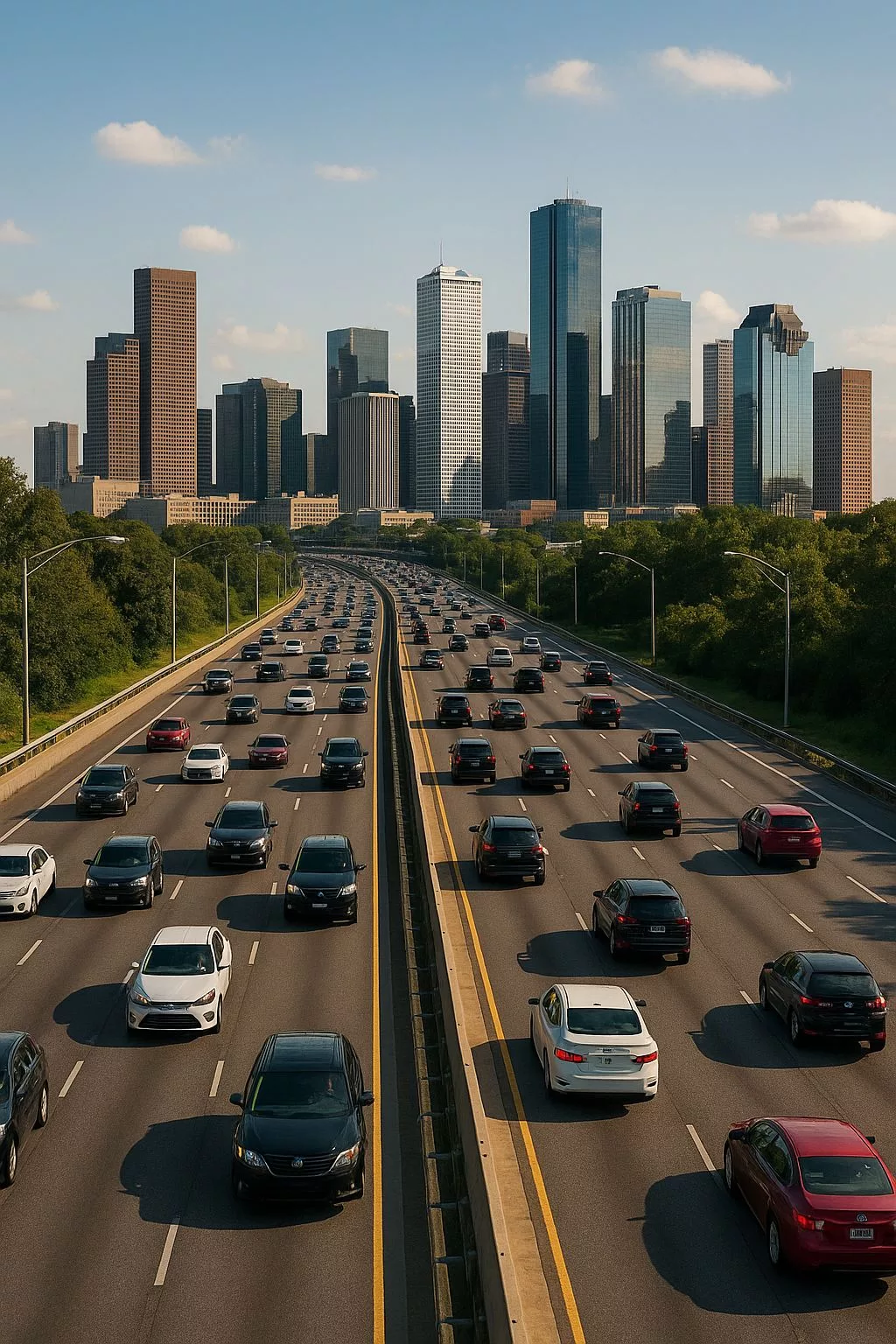
Get ready, Cape Town! The Jakes Gerwel Drive is reopening tonight at midnight, just in time for your holiday trips. After 11 months of hard work, all lanes are shiny and new, ready for cars and big trucks alike. This isn’t just any road; it’s super strong, good for the air, and even has special lanes for walkers and bikes. It’s a smart road for a modern city, making your travel smoother and greener!
When will the Jakes Gerwel Drive in Cape Town reopen?
The Jakes Gerwel Drive in Cape Town reopens on December 12 at 00:00. After eleven months of extensive reconstruction, all lanes, both old and new, will be accessible to traffic, providing a crucial reprieve for the metro’s heavily used freight corridor just in time for the holiday season.
Midnight Silence Swaps Jackhammers for Tyre-Hiss
At 00:00 on 12 December the yellow machines fall quiet. No more clatter of breakers, no reversing alarms – just the soft whoosh of rubber on fresh black-top. Every lane, old and new, north and south, fast and slow, will take cars again after eleven barren months. The gesture is more than seasonal goodwill; it is a calculated experiment on the metro’s most battered freight corridor.
Roughly 78 000 vehicles – one-fifth of them 40-ton rigs – use this shortcut daily, slipping from the N1 at Wingfield to the N2 airport interchange. Twenty years of relentless pounding turned the concrete base to gravel and carved troughs wide enough to trap a motor-bike tyre. By the start of 2024 the city faced a choice: close it forever or rebuild it stone by stone.
January brought the answer. Milling crews arrived with planers that strip 200 mm of pavement in one bite. Behind them came geotextile blankets and a cement-stabilised mix that reads like a chemistry exam: four parts rapid-hardening Portland, twelve parts recycled crush, two parts fly-ash, and a moisture window of 0,8 % guarded like a state secret. Each 150 m slab cures for seven days before traffic creeps across and the next lane is gutted. The method is slow, but the promised life span is forty years – double the norm for urban South African roads.
Beneath the Asphalt, Sand Dunes and Secret Injections
What motorists never see is the ghost geology. Radar teams discovered the 1970s carriageway had been laid straight on wandering dune sand. The silt had shifted, leaving pillow-sized cavities. In March, 38 000 m³ of marine sand was pumped in at 300 kPa through sleeved lances, a trick borrowed from Dubai’s metro builders.
Above that injection zone lies a 250 mm cement-treated mat that spreads wheel loads like a raft. The rebuilt pavement is rated for 900 standard axles a day; current demand is 1 100, but engineers banked on four percent annual growth until 2045. The festive reopening is therefore a live-fire test.
Ninety-two wireless strain gauges and fibre-optic temperature ribbons have been tucked beneath the final asphalt layer. Shoe-box data loggers hidden in the median will ping Roggebaai every quarter-hour, measuring micro-strain and heat. If the slabs survive the Christmas tsunami, the remaining southbound link will be finished in one 14-week sprint starting 6 January. If cracks appear, jack-hammers return and the April deadline slides.
Smart Surf, Clean Air and a Gift to Pedestrians
The black-top you will drive on is no ordinary mix. A 14 mm polymer-modified stone-mastic asphalt laced with 0,3 % Sasobit wax pushes the softening point from 64 °C to 72 °C – insurance against December’s sun. Cuprous-oxide granules baked into the mix turn exhaust fumes into harmless nitrates that rain will wash away. Over a full year the 3 km pilot should swallow pollutants equal to taking 1 000 cars off the road.
Walkers and cyclists win back space that had been lost to stacked kerbs. Fresh sidewalks pour 4 m wide, charcoal for feet, terracotta for bikes, eventually tying Epping to the Bellville grid. LED cat-eyes every 8 m work as lane dots and Bluetooth studs, flashing amber when a phone approaches – cheap intelligence without breaking the treasury.
Inside the new median barrier runs 144 strands of dark fibre in HDPE duct, ready to lease to mobile carriers for 5G back-haul. The road is thus a data pipeline as well as a freight vein, future-proofing the corridor for driver-assist platoons and smart logistics yet to come.
Hidden Flags, Secret Messages and the Price of Motion
Traffic analysts ran 1 200 Monte Carlo forecasts of holiday mayhem. Even the nightmare cocktail – cloudburst on 22 December, a five percent jump in harbour trucks, plus a stadium concert – adds only eleven minutes of jam. Portable zipper barriers can open a third lane in eight minutes, and Transnet has staggered container hauls between 22:00 and 05:00, smoothing the notorious dawn convoy.
Economics back the bravado. A single aborted reefer run from the docks to Philippi costs a haulier R1 400; multiply by 1 200 daily trips and congestion burns the R380 million project budget in half a year. Harbour turnaround data prove the point: average truck time inside the port fell from 68 minutes in 2023 to 49 minutes in October 2025, largely because the rebuilt gradient lets rigs cruise at 80 km/h instead of the former 50 km/h crawl.
Yet numbers never tell the whole story. Engineers have hidden a tiny Easter egg: the final 200 m of southbound fast lane was sprayed with a stencil reading “HAPPY TRAVELS 2025-2045”. When the last roller passes in April, the greeting will be locked under a film of reflective beads, worn away micron by micron until some distant planer rediscovers the words – an archaeological love letter from a city that paused, partied, and sped on without looking back.
{
“faq”: [
{
“question”: “When will the Jakes Gerwel Drive in Cape Town reopen?”,
“answer”: “The Jakes Gerwel Drive in Cape Town reopens on December 12 at 00:00. This reopening is just in time for the holiday season, after 11 months of extensive reconstruction.”
},
{
“question”: “What improvements have been made to the Jakes Gerwel Drive?”,
“answer”: “The drive has been completely rebuilt with a super strong foundation designed for a 40-year lifespan, double the norm. It features a new pavement rated for heavy vehicle loads, advanced materials for durability and air quality improvement (turning exhaust fumes into harmless nitrates), and dedicated lanes for pedestrians and cyclists. It also incorporates smart technology like wireless strain gauges, fibre-optic temperature ribbons, and Bluetooth studs.”
},
{
“question”: “How durable is the new Jakes Gerwel Drive?”,
“answer”: “The new pavement is designed for a 40-year lifespan, significantly longer than typical urban roads. It uses a cement-stabilised mix and a 250 mm cement-treated mat to spread wheel loads. The final asphalt layer is a polymer-modified stone-mastic asphalt with Sasobit wax, increasing its softening point to withstand high December temperatures.”
},
{
“question”: “How does the Jakes Gerwel Drive contribute to environmental sustainability?”,
“answer”: “The road surface is embedded with cuprous-oxide granules that convert exhaust fumes into harmless nitrates, which are then washed away by rain. This 3 km pilot section is expected to remove pollutants equivalent to taking 1,000 cars off the road annually. Additionally, some materials used in its construction include recycled crush.”
},
{
“question”: “What smart features does the new Jakes Gerwel Drive include?”,
“answer”: “The road incorporates 92 wireless strain gauges and fibre-optic temperature ribbons to monitor its performance. LED cat-eyes serve as lane markers and Bluetooth studs, flashing amber when a phone approaches. Furthermore, 144 strands of dark fibre run within the median barrier, ready to support 5G back-haul and future driver-assist technologies.”
},
{
“question”: “What impact will the reopening have on traffic and logistics?”,
“answer”: “Traffic analysts predict that even under severe holiday conditions, congestion will only add about eleven minutes to travel times. Portable zipper barriers can quickly open additional lanes, and Transnet has staggered container hauls to ease dawn convoys. The improved gradient allows trucks to travel at 80 km/h instead of 50 km/h, significantly reducing travel times and saving hauliers money. This has already led to a decrease in average truck time inside the port.”
}
]
}