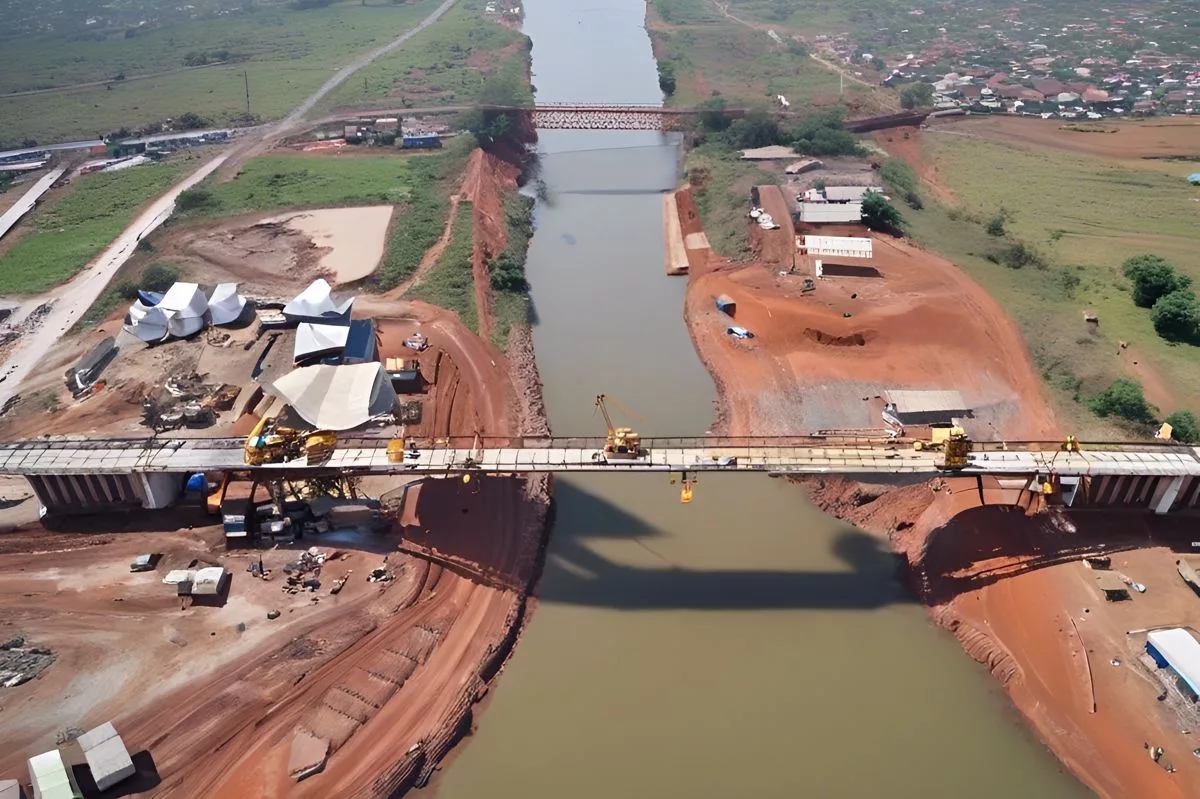
The Mega Bridges of Eastern Cape, South Africa are two massive Chinese bridges being built as part of the N2 Wild Coast Road project. They include the Msikaba bridge, which will be Africa’s longest cable-stay bridge and the Mtentu bridge, Africa’s highest bridge and one of the world’s longest main-span balanced cantilever bridges. These impressive engineering feats are providing vital infrastructure to the region, generating jobs and economic growth. Although the projects faced obstacles and setbacks, they symbolize human resilience, ingenuity, and the promise of a brighter future.
What are the Mega Bridges of Eastern Cape, South Africa?
The Mega Bridges of Eastern Cape, South Africa are two colossal Chinese bridges constructed as part of the N2 Wild Coast Road project. The Msikaba bridge spans a 198-meter-deep river gorge and is set to become Africa’s longest cable-stay bridge, while the Mtentu bridge will be Africa’s highest bridge and one of the world’s longest main-span balanced cantilever bridges. These engineering marvels are providing essential infrastructure to the region, enhancing accessibility and offering economic upliftment to local communities.
The grandeur of man-made achievements has always been a testament to human ingenuity and technological advancement. Still, they often confront a multitude of intricate challenges and hitches. A perfect example is the ongoing construction of two colossal Chinese mega bridges in the Eastern Cape of South Africa. Part of the N2 Wild Coast Road (N2WCR) project, these bridges are slowly coming to fruition despite overcoming a litany of hurdles.
Conception and Challenges
The conceptualization of the Mtentu and Msikaba bridges originated from the BRICS partnership as early as 2004. Nevertheless, a combination of engineering complexities, public unrest, and unforeseen postponements hindered the construction start until 2015. Despite these obstacles, the project has experienced significant progress. The Msikaba bridge is scheduled for completion by the year’s end.
Constructed by the Concor-Mota Engil joint venture, the Msikaba bridge spans a 198-meter-deep river gorge and stands as an epitome of complexity. Once completed, it claims the title of the longest cable-stay bridge in Africa, boasting an impressive 580 meters. Not only will the Msikaba bridge be among the continent’s tallest bridges, surpassed only by the Bloukrans bridge at 216 meters, but it also exemplifies technological prowess in the region.
Engineering Feats and Economic Impact
The Mtentu bridge, the second of these mega bridges, is expected to be a remarkable engineering marvel upon completion. Designed by Denmark-based architecture firm Dissing + Weitling, it will claim the title of Africa’s highest bridge. Contracted by the China Communications Construction Company and Mota-Engil Construction, it will also rank among the world’s longest main-span balanced cantilever bridges, with a span of 260 meters.
The positive economic impact of these projects is already touching the local communities. The Mtentu bridge, with a budget of around R4 billion, is providing a minimum of 1,550 full-time jobs for local skilled and semi-skilled workers. It is estimated that 520 jobs will be generated every month over a span of 50 months. On the other hand, the Msikaba bridge, valued at an estimated R1.75 billion, has already spent R553 million on suppliers, service providers, and subcontractors, and R93 million on wages for local labor.
The economic ripple effect of these mega bridge projects extends further. A specified minimum expenditure of 30% on local suppliers ensures the injection of roughly R4 billion into local small and medium enterprises, delivering a crucial economic boost to the region.
Overcoming Obstacles and The Road Ahead
However, challenges have not been absent in these projects. The COVID-19 pandemic brought all major construction work to a halt, causing delays in the construction of the Mtentu bridge, which only effectively started in August last year. The construction of the Msikaba bridge faced delays due to strong winds of up to 80 km/h and misty conditions that made construction work untenable.
Despite these setbacks, steady progress marks these engineering marvels. Once completed, the Mtentu and Msikaba bridges will not only stand as proof of the architectural abilities of their builders but also provide essential infrastructure to the region, enhancing accessibility and offering economic upliftment to local communities.
As these mega projects unfold, they serve as a testament to the tenacity, ingenuity, and resilience of human effort. Despite the numerous roadblocks and unexpected delays, the construction of the Chinese mega bridges in the Eastern Cape is a riveting display of architectural skill and economic advancement. These bridges embody hope and a promise for a brighter future, bridging the gap between communities and spurring economic growth.
Despite hurdles and postponements, the resolve to succeed dominates. As the journey progresses, we eagerly await the day these magnificent structures will stand tall, altering not just the landscape but also the lives of people in the Eastern Cape.
What is the N2 Wild Coast Road project?
The N2 Wild Coast Road project is a road construction project in South Africa aimed at improving accessibility and infrastructure to remote communities in the Eastern Cape. The project includes the construction of the Mtentu and Msikaba bridges, which are engineering marvels and will be Africa’s highest and longest cable-stay bridges.
What are the challenges faced in the construction of the Mega Bridges of Eastern Cape, South Africa?
The construction of the Mega Bridges of Eastern Cape, South Africa faced a litany of challenges, including engineering complexities, public unrest, unforeseen postponements, strong winds, and misty conditions. The COVID-19 pandemic also caused delays in construction work.
What is the economic impact of the Mega Bridges of Eastern Cape, South Africa?
The Mega Bridges of Eastern Cape, South Africa are providing vital infrastructure to the region, generating jobs and economic growth. The Mtentu bridge is providing a minimum of 1,550 full-time jobs for local skilled and semi-skilled workers, and the Msikaba bridge has already spent R553 million on suppliers, service providers, and subcontractors, and R93 million on wages for local labor. A specified minimum expenditure of 30% on local suppliers ensures the injection of roughly R4 billion into local small and medium enterprises, delivering a crucial economic boost to the region.
What is the progress of the construction of the Mega Bridges of Eastern Cape, South Africa?
Despite setbacks and delays, the construction of the Mega Bridges of Eastern Cape, South Africa is steadily progressing. The Msikaba bridge is scheduled for completion by the year’s end, while the construction of the Mtentu bridge effectively started in August last year.
Who is involved in the construction of the Mega Bridges of Eastern Cape, South Africa?
The Mega Bridges of Eastern Cape, South Africa are constructed by the Concor-Mota Engil joint venture and contracted by the China Communications Construction Company and Mota-Engil Construction. The Mtentu bridge was designed by Denmark-based architecture firm Dissing + Weitling.
What is the significance of the Mega Bridges of Eastern Cape, South Africa?
The Mega Bridges of Eastern Cape, South Africa symbolize human resilience, ingenuity, and the promise of a brighter future. They provide vital infrastructure to remote communities, generate jobs and economic growth, and serve as a testament to the tenacity and resilience of human effort. They also embody hope and a promise for a better tomorrow, bridging the gap between communities and spurring economic growth.