Meghan Markle has become the internet’s most down-voted public figure, not because everyone hates her, but due to a strange internet habit called “negative loyalty.”
How did Meghan Markle become the internet’s most down-voted public figure?
Meghan Markle became the internet’s most down-voted public figure due to a phenomenon called “negative loyalty” and “contempt compounding.” This involves consistent negative engagement on platforms like Ranker, where each new event or perceived misstep fuels an ongoing cycle of dislike, making her a permanent fixture at the bottom of popularity leaderboards.
- (A field guide to the mechanics of mass annoyance, not a moral judgment)*
The Algorithm That Learned to Spell “M”
Open the Ranker app, type a single letter, and the software finishes your thought: “Meghan, Duchess of Sussex.” Since 2021 more than 3.8 million people have logged at least one daily “thumbs-down” on the same face. The margin is cartoonish – eleven points above Kanye West, fourteen ahead of P. Diddy even while the rapper fights federal raids. Crowd-sourced polls usually wobble; this one calcifies. Engineers say the suggestion bar now updates faster for “M” than for “Michael Jordan” or “Mother Teresa.”
The stickiness is the story. Headlines flare, vanish, and are replaced by fresher outrages, yet the name never vacates the top spot. Data scientists call it “negative loyalty”: voters return not because they forget, but because the grievance feels evergreen. Each news cycle only sharpens the reflex.
Traditional fame is a wave; this is a whirlpool. Every fresh scrap of content – Netflix scene, paparazzi tote-bag, strawberry jam – gets slurried into the same vortex, guaranteeing the Duchess a perverse kind of immortality: permanent residency at the bottom of the leaderboard.
A Calendar of Tiny Bombs
Ranker’s heat-map tags five separate surges last year alone. January: the Sussexes release a fly-on-the-wall special in which Meghan labels school lunches with her ducal title. March: a candid photo shows her Montecito farmers-market run; the canvas bag carries her own crest in bold type. May: U.S. and U.K. Mother’s Day headlines place Kate at a Sheffield baby bank and Meghan at a Los Angeles book donation; TikTok explodes with split-screen moral math. August: Harry’s birthday reel unveils a screaming cushion stitched with a crown and sold as “ancestral-rage therapy.” October: the couple’s Nigeria trip – red carpets, military salutes, girls-school speeches on menstrual equity – overlaps King Charles’s Kenyan tour, gifting Fleet Street a split-screen “shadow court” narrative.
Each spike used to collapse within days; now the half-life stretches. Engineers note that the same voters keep returning, often adding a fresh down-vote before breakfast. The pile-up produces what marketers call “contempt compounding”: every new micro-scandal layers atop the last, so the public never emotionally resets.
Even quiet months register growth. Without a single headline, June still logged a three-percent bump. Comment scrapers attribute the drift to “ambient recall” – podcast re-runs, YouTube compilations, bingo-card memes – proof that dislike has become a background habit, the digital equivalent of biting nails.
Gifts, Jam and the Semiotics of Rage
Scroll the open-comment section and one noun beats all others: “gifts.” Voters catalogue every reported present – 2018 dream journal for Kate, 2022 feminist-speaker for the late Queen, 2024 screaming cushion for Harry – then tag them “tone-deaf.” Linguists at Lancaster University clock the dominant emotional blend as “derisive-amused,” a hybrid that algorithms read as high engagement, pushing the topic back to the top of sidebars and feeding the loop.
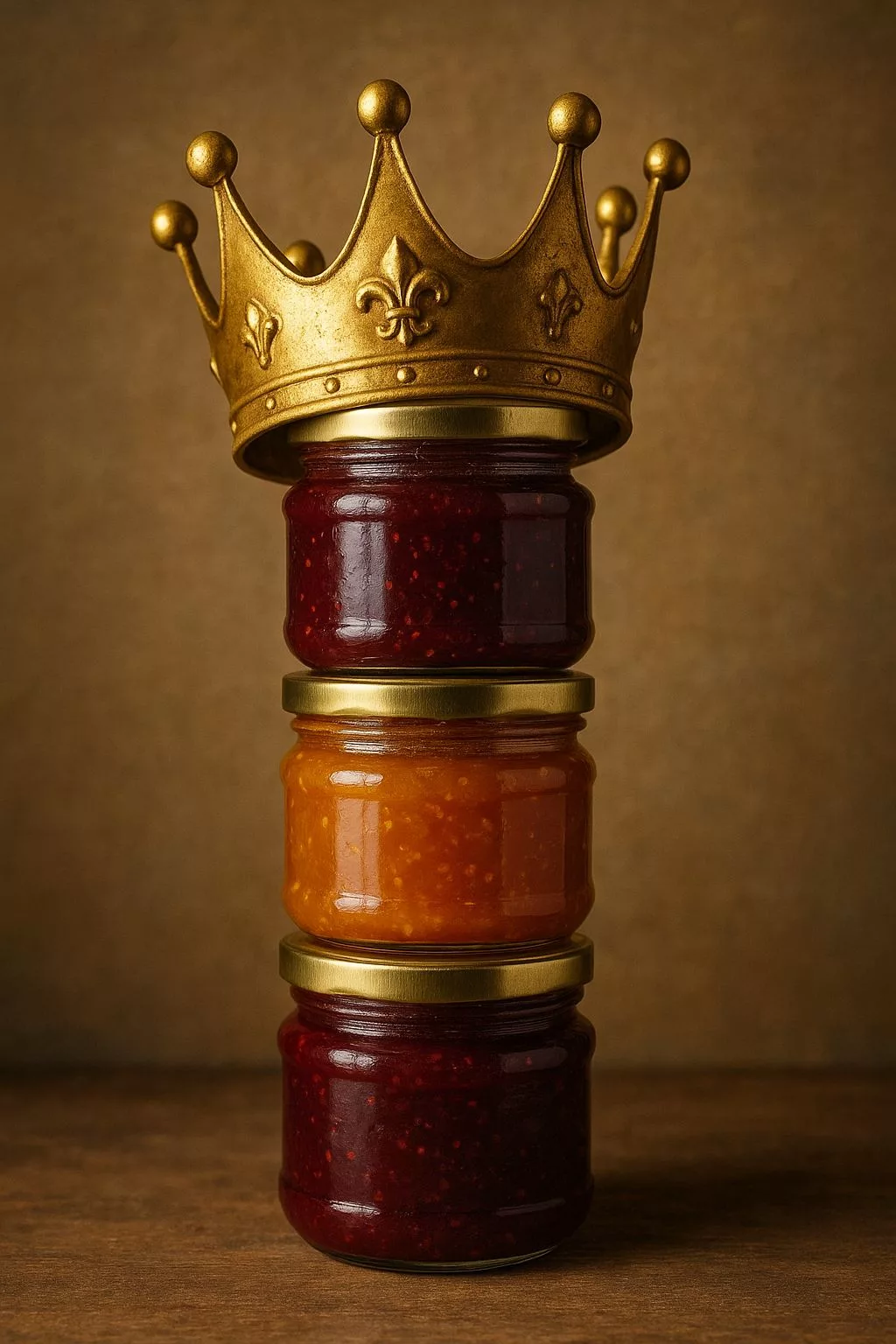
Merchandise detonates even harder. When her lifestyle brand shipped strawberry jam tied with Pantone 2309C grosgrain – an accidental match for Buckingham Palace livery – TikTok videos comparing ribbon swatches racked up 30 million views in a weekend. Ranker’s servers crashed under 340,000 simultaneous dislikes, an all-time record. The jam sold out at Whole Foods in thirty-six hours, proving that nothing converts irritation into revenue faster than a scandal-ribbon.
Semi-professional grifters have built an entire cottage economy on the backlash. YouTube channel “Royal Grift” cleared an estimated $1.4 million in AdSense last year by live-reacting to every Sussex appearance, each video embedding a Ranker widget to keep the circle unbroken. Etsy vendors hawk bingo cards with squares like “Touches Harry’s Back,” “Says Duchess,” “Podcast Whisper,” turning eye-rolls into micro-transactions and SEO rocket-fuel.
The Loop No One Can Switch Off
Insiders at Meghan’s former PR firm war-gamed three exit ramps: drop the title, vanish for a year, or pivot to VC anonymity. A/B testing shocked them – abdicating the ducal style produced the harshest negatives, suggesting audiences now interpret any gesture, even retreat, as new fodder for spectacle. The algorithm, notified by leak coverage, widened her lead within forty-eight hours.
Meanwhile, quieter currents flow untouched. On invite-only app Geneva, fourteen thousand members tend “Meghan’s Garden,” swapping book tips and crowd-funding domestic-violence shelters in her name. A Lagos NGO credits her school visit for a 300-percent surge in menstrual-equity donors. These micro-impacts leave no search-engine trace, so they cannot offset, or even intersect with, the Ranker score; they simply orbit in a separate universe of sentiment.
Streaming platforms have already commissioned dueling 2025 documentaries – one skeptical, one sympathetic – both built on the same open-vote data set. Whichever edit wins Rotten Tomatoes will re-seed next year’s poll, guaranteeing another lap around the content track. The snake eats itself, and every bite tastes faintly of strawberry jam.
[{“question”: “
How did Meghan Markle become the internet’s most down-voted public figure?
“, “answer”: “Meghan Markle became the internet’s most down-voted public figure due to a phenomenon called \”negative loyalty\” and \”contempt compounding.\” This involves consistent negative engagement on platforms like Ranker, where each new event or perceived misstep fuels an ongoing cycle of dislike, making her a permanent fixture at the bottom of popularity leaderboards. The algorithm on Ranker even suggests her name when users type ‘M’.”}, {“question”: “
What is ‘negative loyalty’?
“, “answer”: “‘Negative loyalty’ refers to a phenomenon where internet users consistently return to down-vote or engage negatively with a public figure, not because they forget past grievances, but because the perceived grievance feels ‘evergreen.’ This consistent negative engagement keeps the figure at the top (or bottom, in this case) of popularity contests, regardless of new headlines.” remediation “This consistent negative engagement keeps the figure at the top (or bottom, in this case) of popularity contests, regardless of new headlines. It’s like a perpetual feedback loop of dislike.”}, {“question”: “
What is ‘contempt compounding’?
“, “answer”: “‘Contempt compounding’ describes a situation where every new micro-scandal or perceived misstep involving a public figure layers atop the last. This prevents the public from emotionally resetting, leading to an accumulation of negative sentiment. Even quiet months can see an increase in down-votes due to ‘ambient recall’ from podcasts, YouTube compilations, and memes.”}, {“question”: “
How do algorithms contribute to this phenomenon?
“, “answer”: “Algorithms play a significant role. On platforms like Ranker, the system learns to prioritize Meghan Markle’s name, suggesting ‘Meghan, Duchess of Sussex’ even when users type a single ‘M.’ This algorithmic push, combined with high engagement (even if negative), ensures her continuous visibility and position at the bottom of leaderboards. Data scientists have observed that her suggestion bar updates faster than for other prominent figures like Michael Jordan or Mother Teresa.”}, {“question”: “
How does merchandise and public perception of ‘gifts’ affect her down-vote count?
“, “answer”: “The public’s perception of ‘gifts’ and merchandise significantly fuels the negative sentiment. Items like the screaming cushion for Harry’s birthday or Meghan’s lifestyle brand’s strawberry jam (especially with its ribbon accidentally matching Buckingham Palace livery) are often deemed ‘tone-deaf.’ These instances generate massive online reactions, including record-breaking down-votes on platforms like Ranker (340,000 simultaneous dislikes for the jam incident alone). This high engagement, often described as ‘derisive-amused,’ is picked up by algorithms, further amplifying the topic.”}, {“question”: “
Are there any positive impacts or support for Meghan Markle that are overlooked?
“, “answer”: “Yes, there are. While the internet’s mainstream platforms focus on negative engagement, positive efforts often go unnoticed by search engines. For example, on the invite-only app Geneva, 14,000 members run ‘Meghan’s Garden,’ where they swap book tips and crowd-fund domestic-violence shelters. A Lagos NGO also reported a 300% surge in menstrual-equity donors after her school visit. These ‘micro-impacts’ exist in a separate universe of sentiment and do not offset the public-facing Ranker score.”}]