Minister of Finance Enoch Godongwana recently launched the Spatial Economic Activity Data – South Africa (SEAD-SA) programme, a significant initiative aimed at enhancing the understanding of the spatial distribution and characteristics of economic activities in the country.
The Need for SEAD-SA
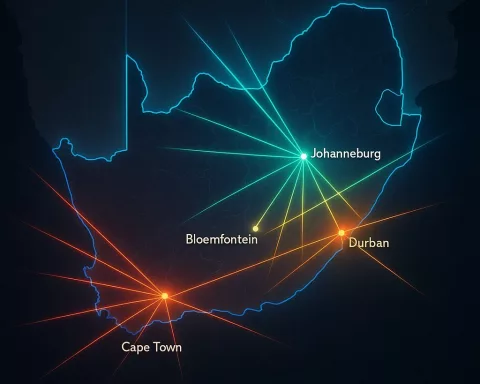
This project has been a long time in the making; nine years ago, metropolitan municipalities requested access to national administrative datasets to help them comprehend their city economies better. The lack of spatialized economic activity data in South Africa posed challenges for metros, as they were unable to accurately discern the locations of firms and jobs within their boundaries and observe changes over time.
The GTAC-convened Economies of Regions Learning Network
The situation led to the formation of the GTAC-convened Economies of Regions Learning Network, which aimed to identify potential administrative data sources to address this issue. The SEAD-SA programme is a significant step towards achieving the goals set forth in the Economic Reconstruction and Recovery Plan, which emphasized the need for targeted investments in urban infrastructure, services, and housing.
Collaborative Efforts
Financial support to metros through grant instruments is projected at R6.3 billion over the medium term. Collaborative efforts have extended to the exploration of a spatialized version of the entire SARS Integrated Business Register, aiming to integrate multiple public and private administrative data sources. This project’s success depends on the partnerships it has fostered.
Implications for Policymaking
The data provided by SEAD-SA has clear implications for policymaking, providing valuable insights to help the government make informed investment decisions. Metros are essential for job creation, and public sector planning and investment must support their growth. Additionally, sector composition across metros varies, which means that the collapse of one metro could have severe consequences for specific industries.
Marginalization of Certain City Economic Spaces and Communities
The data shows that urban centers play a crucial role in value-adding, logistics, and market demand. Furthermore, it highlights the marginalization of certain city economic spaces and communities, such as townships, youth, and women, from the formal economy.
Well-Governed and Stable Cities
Well-governed and stable cities are vital for increased productive activity, and there is a strong correlation between these aspects. The spatialized tax data allows for the measurement of the government’s impact on job creation and firm growth, providing an essential tool for accountability.
New Era of Evidence-Based Economic Planning and Investment
The SEAD-SA programme marks a new era of evidence-based economic planning and investment, promoting transparency and accountability within municipal spaces. Minister Godongwana calls on other public and private sector actors to join this collaborative effort, contributing to the next stage of the journey and ensuring continued success as they reach future milestones.
The initiative provides the necessary tools to question the current state of affairs, measure its impact, and determine the changes needed to rebuild and grow South Africa’s economy. The SEAD-SA programme is a significant step towards achieving the economic goals set forth in the country’s Economic Reconstruction and Recovery Plan.