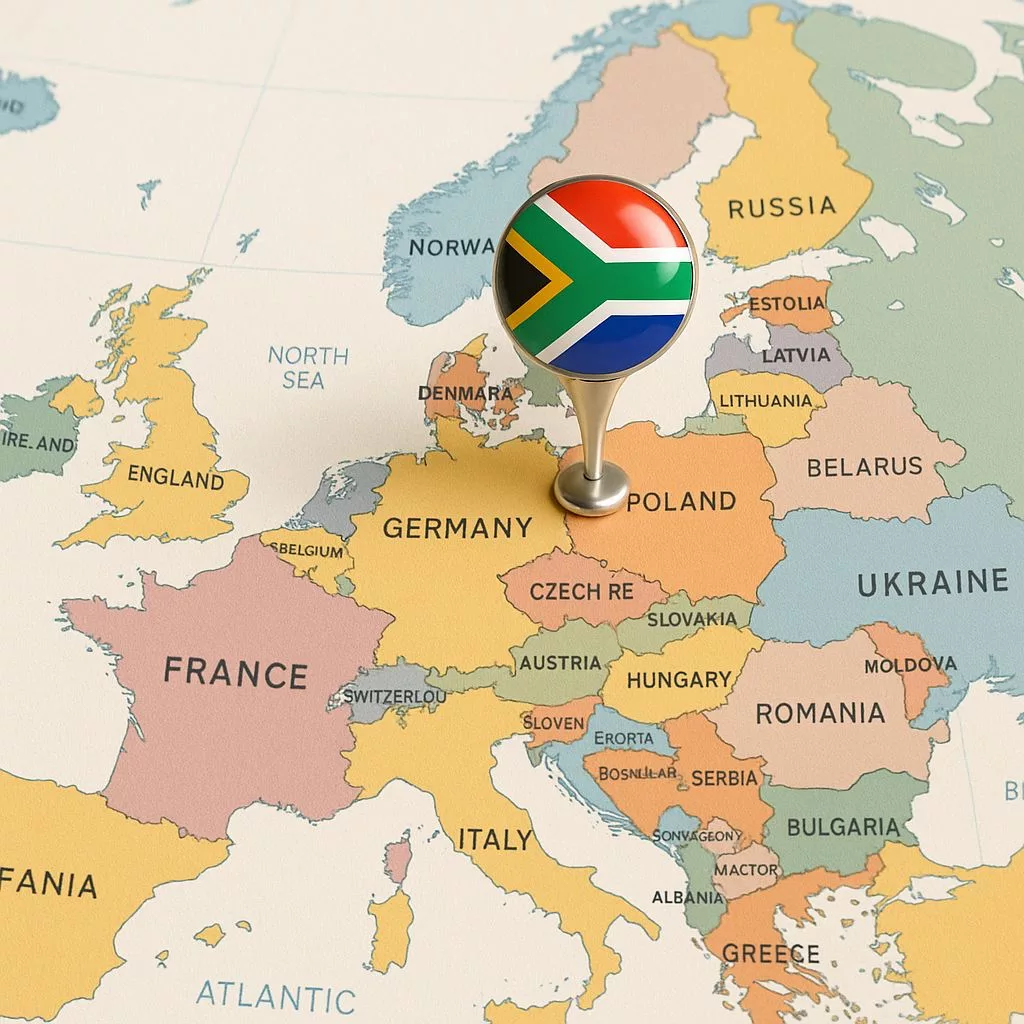
Mr Price, a South African company, just bought a German discount store called NKD for a lot of money. They did this to get into Europe and make money in a stronger currency. NKD is a smart, small-store business with no debt, selling clothes for families.
Mr Price plans to make NKD even better using new tech to manage stock and sales. They also want to save money on rent and shipping to keep prices low. Even with big challenges like currency changes and worker demands, Mr Price hopes to become a huge player in European discount fashion.
Why did Mr Price acquire NKD?
Mr Price acquired NKD, a German discount retailer, to gain a significant footprint in the European market, diversify its revenue streams into hard currency, and leverage NKD’s established micro-box store format and efficient operational model. This acquisition also allows Mr Price to achieve greater scale in sourcing.
1. A proudly Durban outfit swaps the Indian Ocean for the Rhine
Mr Price has never written a cheque this big: €487 million upfront, another €87 million in earn-outs, all of it scooped from existing cash piles and undrawn credit lines.
The rand equivalent – R9.66 billion – is more than the group spent on store roll-outs in the last five years combined, yet treasury insists no new equity will be tapped and domestic expansion will continue at 80-100 doors a year.
When competition authorities sign the last page, Mr Price will wake up with 2 108 extra stores, €1.7 billion of fresh revenue and its first meaningful hard-currency stream, pushing 39-year-old turnover past R53 billion and giving Johannesburg investors a 20 % euro shield they have never enjoyed before.
The target, family-run NKD, is no wounded carcass.
It has traded through four European recessions without breaching a banking covenant, pays its 13 700 staff from same-day cash flow and has carried no interest-bearing debt since 2014.
Its secret is a micro-box footprint: 1 850 stand-alone stores that average only 650 m², anchored in secondary German towns where rent sits at €48 per square metre – roughly half the ticket demanded by rivals New Yorker or KiK.
For Mark Blair, the moment completes a scouting cycle that began in 2019 when due-diligence notes labelled NKD “Pepkor-Europe-with-German-discipline”.
Covid stalled negotiations, but by late 2022 the Otto family was ready to sell.
A two-hour walk through the Bünde headquarters convinced the South Africans that cultural DNA trumped the fashion-forward clutter of Britain, France or Spain, markets Mr Price had already ruled out.
2. Why a 650 m² “rural cubby” fits the Durban playbook
Strip an NKD store to the studs and you will find the same merchandising religion Mr Price preached in 1985: 55 % apparel, 35 % home textiles, 10 % seasonal impulse, all private label, all bought direct from a tight vendor circle in Bangladesh, Turkey and, increasingly, Morocco.
Gross margin is thinner – sub-30 % versus 41 % at home – yet inventory spins eight times a year, two turns faster than South African rails, producing a self-funding cash loop that has kept bankers away for a decade.
The overlap is deliberate.
Both chains chase rural and peri-urban families who treat clothing as a utility, not a statement.
Both build ranges 24 weeks ahead, skip the fashion circus and price for “out-the-door” on day one.
The difference is scale: Mr Price now adds 650 million units of annual volume, enough to book mill capacity 18 months early and to strong-arm fibre costs while cotton trades 30 % above last year.
Goldman Sachs reckons three South African tech transplants can lift NKD’s EBIT margin from 4 % to 6.5 % within 36 months.
A cloud engine that re-forecasts size curves every 48 hours using weather feeds and WhatsApp chatter from store managers; RFID that shrinks monthly stock-take from a full shift to 20 minutes; and a colour-coded markdown app that clears lingerie and schoolwear at head-office-free triggers of 30 %, 50 % or 70 %.
None of the tools is revolutionary; together they squeeze out 250 basis points in a segment where every point is worth €17 million.
3. Currency, landlords and unions: the trip-wires under the glare
Elephants occupy the treasury room.
A 10 % swing in the rand-euro rate shuffles group earnings per share by roughly 7 %.
To soften the blow, CFOs have locked €300 million of forward cover at R19.30 and split acquisition debt 50/50 between euro and rand, creating a natural hedge.
A more creative buffer will come from the factory floor: 20 % of NKD sourcing is earmarked for South African mills that currently supply Miladys and Sheet Street.
Denim, fleece and school uniforms will sail duty-free to Hamburg under the SADC–EPA treaty, cutting landed cost by 8 % and generating rand-based export receipts that counterbalance euro profit translation.
Landlords offer another quick win.
German high-street vacancy has crept to 8 % as energy bills gut tenant pipelines.
Mr Price believes it can renegotiate 30 % of the lease expiry schedule within 18 months, extracting 5–7 % rent holidays in exchange for longer terms and self-funded facelifts.
A €60 million capex envelope is already ring-fenced for LED lighting, polished-concrete floors and self-checkout tills that cut queue time – the single metric German consumer watchdogs publish every quarter.
Ver.di, the country’s largest services union, wants job guarantees for all 13 700 workers and warns against “Anglo-Saxon” zero-hour contracts.
Management responds with history: no retrenchments followed any of the group’s six previous acquisitions, including Power Fashion’s 120 stores that were absorbed without closures in 2014.
Works-council statutes will be honoured, and profit-sharing is on the table once integration KPIs are met – concessions rare among foreign buyers of Mittelstand retailers.
4. Rivals, regulators and the race to build a continental champion
Competitors are sharpening discount knives.
Aldi Süd now drops a 750-piece apparel “special buy” every Thursday, mimicking Shein’s treasure-hunt dopamine.
Lidl sells €9.99 denim with QR-code traceability aimed at Gen-Z sustainability guilt.
Neither, however, can replicate NKD’s whole-family wardrobe depth.
Mr Price will widen the gap by shipping South African-designed plus-size ladies’ denim and half-size school shoes – niches German value chains avoid because extended size runs tie up capital.
Logistics could decide the pace.
NKD’s single 110 000 m² Löhne campus is already at 95 % capacity.
A planned 40 000 m² cross-dock in central Poland will slash Eastern-European lead time from 13 days to six, unlocking working capital equal to 2 % of sales.
Łódź Special Economic Zone has dangled a 25 % cash grant for investments above €30 million, letting Mr Price build at half the German cost while positioning the network for further expansion into Poland’s 100 000-plus cities.
Brussels and Pretoria still hold veto pens.
The European Commission will probe whether 18 % share of Germany’s sub-€10 apparel slice grants buyer power over Bangladeshi mills already on life-support margins.
South Africa’s Reserve Bank must bless the outward flow that squeaks in just R340 million below the R10 billion exemption cap.
Advisers split the bill – €400 million on closure, €87 million in EBITDA-linked earn-outs – to keep prudential gates open.
If the approvals land, Mr Price will morph from colourful emerging-market curiosity into a 650-million-unit euro buyer overnight.
Fifty high-performing NKD store managers could rotate through Durban on “reverse secondments”, seeding Europe with merchandisers who understand both €2.99 T-shirts and cloud-based size-curve algebra.
Success will be measured in basis points of margin, seconds saved at checkout and, ultimately, in whether a South African accent can sell discount fashion from Dortmund to Gdańsk without losing the authenticity that built the brand under African skies.
[{“question”: “
Why did Mr Price acquire NKD?
\n
Mr Price acquired NKD, a German discount retailer, primarily to expand into the European market and diversify its revenue streams into stronger currencies. NKD’s established micro-box store format and efficient operational model, along with its debt-free status, made it an attractive target. This acquisition also provides Mr Price with greater scale in sourcing, allowing them to leverage their purchasing power more effectively.
\n”,”answer”: “”},{“question”: “
What is the financial scope of the NKD acquisition?
\n
Mr Price invested a significant amount, with an upfront payment of €487 million and an additional €87 million in earn-outs, totaling €574 million. This amount, equivalent to R9.66 billion, was funded from existing cash piles and undrawn credit lines, with no new equity being tapped. This substantial investment is more than the group’s store roll-outs in the last five years combined.
\n”,”answer”: “”},{“question”: “
What are Mr Price’s plans to improve NKD’s operations?
\n
Mr Price aims to enhance NKD’s operations through technological advancements, particularly in stock management and sales forecasting. They plan to implement a cloud engine for re-forecasting size curves based on weather data and store manager feedback, RFID technology for faster stock-takes, and a color-coded markdown app for efficient clearance. Additionally, they intend to renegotiate rents and optimize shipping to maintain low prices and improve margins.
\n”,”answer”: “”},{“question”: “
What challenges might Mr Price face with the NKD acquisition?
\n
Mr Price anticipates several challenges, including currency fluctuations between the rand and the euro, which can significantly impact earnings. They also face negotiations with landlords to secure better rental terms and manage demands from German labor unions, specifically Ver.di, regarding job security and employment contracts. Logistical challenges, such as NKD’s near-capacity distribution center, also need to be addressed.
\n”,”answer”: “”},{“question”: “
How will Mr Price mitigate currency risks?
\n
To mitigate currency risks, Mr Price has locked in €300 million of forward cover at R19.30 and split the acquisition debt equally between euros and rand, creating a natural hedge. Furthermore, they plan to source 20% of NKD’s products from South African mills, utilizing the SADC–EPA treaty for duty-free exports to Europe. This strategy will reduce landed costs and generate rand-based export receipts, offsetting euro profit translation.
\n”,”answer”: “”},{“question”: “
How will the acquisition impact Mr Price’s global standing and future expansion?
\n
The acquisition of NKD will transform Mr Price from an emerging-market retailer into a significant European player, substantially increasing its turnover and providing a meaningful hard-currency revenue stream. It also positions Mr Price for further continental expansion, particularly with plans for a new cross-dock facility in Poland to improve logistics in Eastern Europe. The move could also lead to cultural and operational exchanges, with NKD managers potentially rotating through Durban to integrate best practices.
\n”,”answer”: “”}]