
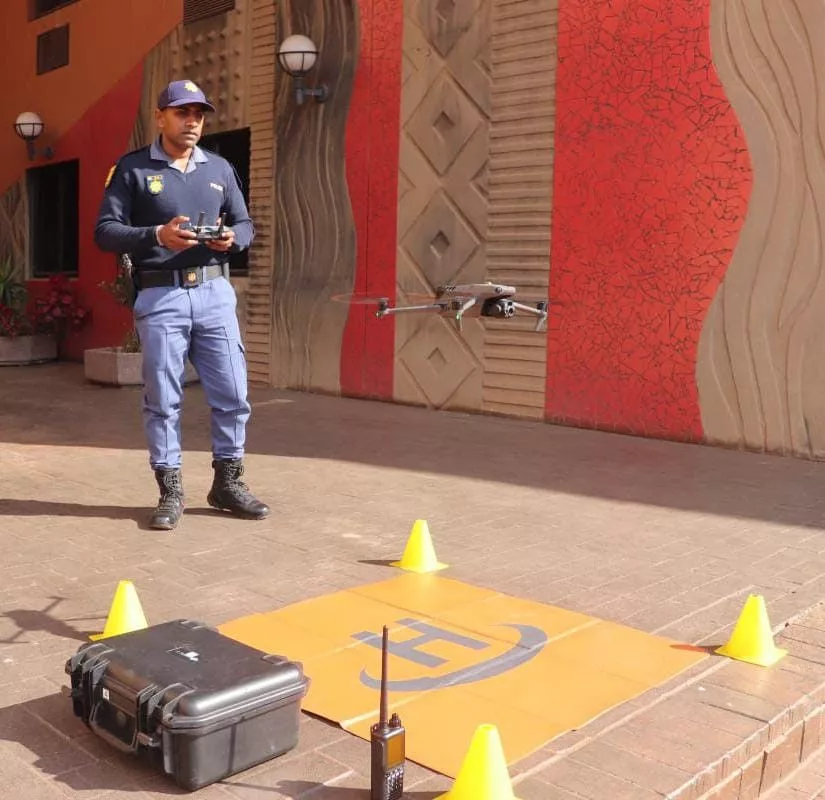
Constable Roycolle Naicker is changing the face of policing in South Africa by using drones to watch over Johannesburg’s streets from the sky. With his technical skills and passion, he pilots drones that help catch criminals, find missing people, and gather strong evidence. These flying cameras can reach places officers on foot cannot, making police work faster and safer. Naicker’s story shows how young leaders blend old traditions with new technology to build a safer future for their communities.
How is drone technology transforming policing in South Africa?
Drone technology in South African policing enhances surveillance, search and rescue, and crime scene documentation by providing real-time aerial support, thermal imaging, and access to hard-to-reach areas. It improves crime prevention, evidence collection, and operational efficiency, marking a significant innovation in law enforcement.
A New Generation of Law Enforcement
Johannesburg’s cityscape captures both opportunity and adversity, embodying the complex realities of modern urban life in South Africa. Within this dynamic backdrop, Constable Roycolle Naicker stands out as a symbol of youthful leadership and innovation in policing. At just 27, Naicker’s story intertwines the energy of youth with a deep-seated family tradition in law enforcement, presenting a compelling narrative of dedication and progress – especially relevant during the annual celebration of Youth Month.
Growing up surrounded by the influence of family members who served in uniform, Naicker encountered stories of bravery and sacrifice from an early age. These experiences did more than create expectations; they fostered a genuine sense of purpose and belonging within the world of public service. Rather than resist the legacy he inherited, Naicker embraced it, seeing service not as a burden but as a privilege and a calling.
Before donning the blue of the South African Police Service (SAPS), Naicker’s career began in a different kind of uniform. He worked as a fitter and turner in the automotive sector, a role that demanded careful attention to detail, technical skill, and problem-solving. Far from being a diversion, his time in the motor industry proved instrumental, equipping him with the precision and analytical thinking that would later set him apart in law enforcement’s evolving technological landscape.
Embracing Technology: The Journey to Drone Policing
When Naicker joined SAPS at the age of 21, he quickly recognized the value of his technical background. As policing methods shifted in response to global trends, the need for officers with both practical skills and a willingness to adopt new tools became increasingly evident. Today, alongside the familiar images of foot patrols and high-speed pursuits, drone pilots like Naicker represent the future of crime prevention and public safety.
Naicker strengthened his foundation in policing by pursuing a degree in Forensic Science and Technology. This academic achievement placed him at the cutting edge of a profession where digital expertise and technological competence have become essential. Following his initial police training, he further honed his skills through specialized Crime Intelligence training in 2020. Two years later, Naicker made a significant leap by earning his drone pilot license, stepping into a select group of SAPS officers trained in unmanned aerial vehicle (UAV) operations.
The incorporation of drones into South African policing has changed the way officers approach surveillance, search and rescue, and the documentation of crime scenes. Each day, Naicker pilots advanced UAVs over Johannesburg’s bustling streets, providing real-time aerial support that enhances both routine patrols and coordinated operations. The visual data he collects from the sky informs ground team strategies and strengthens the police’s response to complex situations.
The Impact and Promise of Drone Technology
Drones have redefined the boundaries of law enforcement. Unlike traditional methods that limit officers to the ground, UAVs grant access to areas once considered unreachable – narrow alleyways, dense vegetation, and hazardous urban spaces. Naicker points out that with high-definition cameras and thermal imaging, drones can detect hidden suspects or follow movements that elude ground pursuers. This innovation adds a new dimension to police strategy, transforming how officers perceive and address criminal activity.
The influence of drone technology extends beyond the immediate benefits of surveillance. Every mission generates valuable data, from heat maps to high-resolution images, which can later become critical evidence in legal proceedings. This digital archive not only improves investigative accuracy but also streamlines the judicial process, giving courts a clearer view of events as they unfolded.
Naicker draws inspiration from both his mentors and his family, emphasizing the importance of integrity – particularly when no one is watching. This personal code guides his conduct and motivates his message to fellow young South Africans. He encourages his peers to work diligently, believe in their capacities, and appreciate the transformative power of persistence. Naicker’s journey shows that dedication and adaptability can open doors to unexpected opportunities.
Bridging Tradition and Innovation: The Future of Policing
Though Naicker has found his niche in UAV operations, his aspirations continue to grow. He envisions a future where his expertise in both forensic science and drone piloting will converge, enhancing the speed and accuracy of crime scene investigations. By merging digital intelligence with traditional investigative methods, he hopes to create a model where technology amplifies – rather than replaces – the essential human element of policing.
The story of drone integration in SAPS mirrors social and cultural shifts occurring throughout South Africa. Young professionals now lead the charge in fields that demand both innovation and respect for tradition. Naicker’s role serves as a testament to the power of bridging generational knowledge with contemporary skill, much like the art movements that balanced past influences with avant-garde thinking. As South African society continues to evolve, the contributions of its youth – particularly in areas like law enforcement – will shape the nation’s future.
Globally, law enforcement agencies are adopting UAVs for a wide range of applications, from monitoring large gatherings to aiding in disaster recovery and securing borders. Yet, South Africa presents unique challenges for drone pilots: dense urban settlements, informal neighborhoods, and rugged geography test the limits of equipment and expertise. Naicker’s familiarity with Johannesburg’s ever-changing environment ensures that he can adjust flight plans on the fly, meeting obstacles with creativity and resolve.
Navigating Challenges and Celebrating Progress
Drones have proven vital in search and rescue missions, where rapid aerial sweeps can mean the difference between life and death. The ability to deploy thermal imaging at night has on several occasions led to successful rescues of missing persons. These achievements underscore a humanitarian aspect of policing that often goes unnoticed, highlighting the broader mission to protect and serve communities, not just combat crime.
With the rise of drone surveillance, concerns about privacy and ethical use have emerged. Civil society groups question how SAPS balances security needs with individual rights. Naicker and his fellow pilots operate within strict legal guidelines, ensuring that each deployment serves a legitimate and necessary purpose. This ongoing negotiation between technological capability and civil liberties reflects debates that have accompanied every major advancement in policing, from fingerprinting to CCTV.
Youth Month provides context and celebration for stories like Naicker’s. South Africa honors its young trailblazers not only for their achievements but also for the values they demonstrate – resilience, creativity, and a willingness to drive change. Naicker’s transition from the motor industry to law enforcement, and from ground-based work to commanding drones, mirrors a nation in the midst of transformation, its future written by those who dare to innovate while honoring traditions.
This blending of technical mastery and inventive spirit would resonate with the visionaries of the Renaissance, who imagined flight long before it became reality. Today, young professionals like Naicker transform those dreams into daily practice, adding new dimensions to public service in ways their predecessors could only imagine.
As SAPS continues its recognition of Youth Month, the experiences of officers like Naicker provide insight into the evolving nature of service. His personal and professional journey stands at the intersection of family heritage, technological progress, and individual ambition. With each aerial patrol over Johannesburg, Naicker contributes to a story of safety, justice, and hope – one that reflects both the challenges and the promise of twenty-first-century South Africa.
What role does Constable Roycolle Naicker play in South African policing?
Constable Roycolle Naicker is a pioneering young officer in the South African Police Service (SAPS) who pilots drones to enhance policing efforts in Johannesburg. Using his technical expertise and passion, he operates unmanned aerial vehicles (UAVs) to assist in catching criminals, finding missing persons, and gathering crucial evidence. Naicker’s work represents a blend of traditional policing values with cutting-edge technology, improving the speed and safety of law enforcement operations.
How is drone technology transforming law enforcement in South Africa?
Drone technology offers South African police real-time aerial surveillance, thermal imaging, and access to difficult or dangerous locations unavailable to officers on foot. This innovation improves crime prevention, search and rescue missions, and the documentation of crime scenes. The data collected via drones supports better strategies on the ground and provides strong digital evidence for investigations and court cases, enhancing overall operational efficiency.
What training and background does Constable Naicker have that supports his role as a drone pilot?
Before joining SAPS at 21, Naicker worked in the automotive industry as a fitter and turner, developing precision and technical skills. He pursued a degree in Forensic Science and Technology and specialized Crime Intelligence training, which equipped him with expertise crucial for modern policing. In 2022, he earned his drone pilot license, joining a select group of officers skilled in UAV operations within the police force.
What are some practical benefits of using drones in policing urban environments like Johannesburg?
Drones can access hard-to-reach or hazardous areas such as narrow alleys, dense foliage, and informal settlements – environments common in Johannesburg. Equipped with high-definition cameras and thermal imaging, they can detect hidden suspects and monitor movements that evade ground patrols. This aerial perspective improves situational awareness, speeds up response times, and enhances officer safety during operations.
How does SAPS address privacy and ethical concerns related to drone surveillance?
SAPS operates drone units within strict legal frameworks to ensure that each mission serves a legitimate and necessary law enforcement purpose. Officers like Naicker are trained to balance security needs with respect for individual privacy rights. The ongoing debate around surveillance technology reflects a broader societal discussion about finding the right equilibrium between public safety and civil liberties.
What is the broader significance of drone policing for South Africa’s future?
Drone policing symbolizes the intersection of tradition and innovation, led by young professionals like Naicker who bring new technical skills into public service. As South Africa faces complex urban challenges and evolving social dynamics, drone technology helps modernize law enforcement and improve community safety. This approach shows how youth leadership, dedication, and adaptability can drive progress while honoring the heritage of policing in the country.