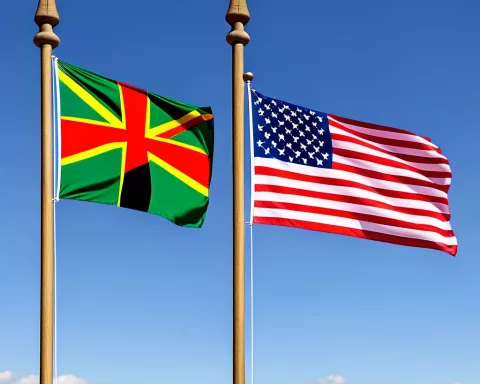

President Cyril Ramaphosa’s visit to the United States is a big moment for South Africa as it tries to balance old friendships with the West and new ties with countries like China and Russia. The talks in Washington focus on trade, investment, and building respect between the nations, even as the world changes fast. South Africa wants to keep its own path, staying independent while seeking partnerships that help its people grow. This visit shows the art of diplomacy – careful steps that shape a future both countries can share.
What is the significance of President Cyril Ramaphosa’s visit to the United States amid changing global partnerships?
President Cyril Ramaphosa’s visit highlights South Africa’s strategic effort to balance relations with the United States and emerging global powers like China and Russia. It focuses on enhancing trade, investment, and diplomatic cooperation while maintaining South Africa’s independent, multipolar foreign policy approach.
A Meeting Amid Global Uncertainty
The White House, with its neoclassical grandeur and restless energy, hosts many pivotal encounters. This week, President Cyril Ramaphosa steps into those storied halls for discussions with President Donald Trump. Their meeting unfolds not just beneath the gaze of history, but against a backdrop of shifting alliances and pressing national priorities. Each handshake and exchange carries the weight of decades, but also the urgency of the present.
In the lead-up to this engagement, policymakers and analysts on both sides have voiced both hopes and concerns. Moeletsi Mbeki, a respected political economist, frames the visit as a crucial test of intent. He argues that the Trump administration seeks to draw South Africa closer to the Western fold, reversing a drift toward new partners in the East. This ambition echoes through think tanks, editorial pages, and diplomatic cables.
For South Africa, the stakes are significant. Washington remains a dominant force in global finance, security, and trade. Yet Pretoria’s foreign policy, shaped by a legacy of struggle and transformation, resists simple alignment. South African officials arrive in the United States determined to advance their own agenda, even as they navigate mounting pressure to choose sides in a multipolar world.
Legacy and Transformation in South African-American Relations
The relationship between South Africa and the United States did not emerge in a vacuum. During the apartheid era, American student protests, economic boycotts, and cultural exchanges played a vital role in raising awareness and fueling the momentum for change. South African musicians, such as Hugh Masekela and Miriam Makeba, brought the rhythms and struggles of their homeland to American audiences, making jazz a bridge between continents.
After 1994, South Africa’s democratic transition unlocked opportunities for cooperation. Leaders in both countries spoke of shared values – democracy, human rights, and mutual prosperity. American investors poured money into South African industries, while South African civil society engaged with American foundations and advocacy groups. These ties often proved resilient, even when political climates shifted.
Yet, as the new millennium unfolded, the global order itself began to fragment. South Africa, striving for greater autonomy and economic growth, looked beyond the West. China’s rapid expansion in Africa offered fresh investment, technical expertise, and massive infrastructure projects. The Belt and Road Initiative brought highways, power stations, and digital networks to South African soil, reshaping trade routes and development priorities.
Russia, too, re-entered the African scene with renewed vigor. Moscow offered technical cooperation, energy deals, and military partnerships, sometimes appealing to leaders frustrated by Western conditions. South Africa, committed to non-alignment since the days of the African National Congress’s exiled diplomacy, welcomed these engagements while attempting to keep old friendships alive.
Diplomacy in a New Key: Balancing Interests and Narratives
Against this complex backdrop, Ramaphosa’s Washington visit reflects both familiarity and innovation. The South African leader, renowned for his negotiation skills honed during the transition to democracy, approaches the summit with confidence. Vincent Magwenya, his spokesperson, assures the press corps that Ramaphosa expects a constructive dialogue with President Trump, not a political showdown. The mood, he suggests, will be one of mutual respect, even when views diverge.
Trade and investment top the official agenda. Both leaders recognize that greater economic cooperation could spark job creation and bolster growth. Previous agreements, such as the African Growth and Opportunity Act (AGOA), have benefited South African exporters and American businesses alike. However, fresh disputes have emerged over tariffs, market access, and intellectual property. South African officials seek to expand industrial and agricultural exports, while American negotiators push for policy reforms and new investment guarantees.
Underlying these practical issues are deeper questions about South Africa’s place in the world. American officials often speak of encouraging South Africa to “return” to the Western sphere, emphasizing shared democratic traditions. Yet, Pretoria’s foreign policy reflects not just history, but pragmatic calculation. South Africa’s participation in the BRICS group – with Brazil, Russia, India, and China – signals a commitment to multipolarity, reform of global institutions, and diversified development strategies.
A recent controversy has further complicated the diplomatic landscape. When U.S. authorities granted asylum to nearly fifty white South Africans, citing alleged racial persecution, Pretoria bristled. South African officials vigorously rejected claims of systemic abuse, describing the episode as rooted in misunderstanding and misinformation. The incident now shadows this week’s meetings, reminding both sides of the potent role that domestic politics and public perception play in foreign policy.
History, Art, and the Subtle Craft of Statecraft
South African foreign policy draws on a tradition that values adaptability, dialogue, and a sense of justice. The spirit of Ubuntu – a philosophy of shared humanity – permeates both diplomatic briefs and grassroots activism. This ethos shaped the country’s peaceful transition from apartheid and continues to influence its engagement with global partners. South African diplomats, many trained in the era of liberation struggle, combine idealism with a finely tuned sense of the possible.
Diplomatic encounters often unfold like the great works of art that adorn the galleries of Washington and Pretoria. Movements like Cubism and Surrealism broke down the old rules, creating space for new perspectives and unexpected alliances. So, too, does modern diplomacy require creativity. Each negotiation, each communique, adds a new layer to the evolving relationship between nations.
Throughout these developments, civil society plays a crucial role. South African journalists, business leaders, and activists scrutinize every detail of the Washington meetings. Their debates reflect the diverse aspirations of a country still defining itself after decades of struggle. For many, the art of foreign policy lies in balancing sovereignty with engagement, and principled independence with pragmatic partnership.
South Africa’s current posture – open to the world, anchored in Africa, and mindful of its history – offers lessons for navigating an era of geopolitical flux. While the symbols and language of previous decades remain, the realities of global power have changed. Multipolarity, rapid technological change, and transnational challenges such as climate change and pandemics all demand new approaches.
Walking the streets of Washington during the spring, where cherry blossoms bloom and tourists fill the museums, Ramaphosa and his delegation face choices that will resonate far beyond the conference rooms. Their task is not just to respond to American overtures, or to defend past achievements. They must chart a course that honors South Africa’s unique journey while building new bridges in a divided world.
As the latest chapter in the story of US-South African relations unfolds, the art of diplomacy remains more essential than ever. Each gesture, each carefully chosen word, helps shape a future that belongs not only to leaders, but to the people and communities whose lives are shaped by the unpredictable dance of nations.
FAQ: South Africa, the United States, and the Changing Landscape of Global Partnerships
What is the main purpose of President Cyril Ramaphosa’s visit to the United States?
President Ramaphosa’s visit aims to strengthen trade, investment, and diplomatic cooperation between South Africa and the United States. It is a strategic effort to balance South Africa’s longstanding relationships with Western countries while maintaining independent ties with emerging global powers like China and Russia. The visit underscores South Africa’s commitment to a multipolar foreign policy and economic growth that benefits its people.
How does South Africa balance its relationships with the US, China, and Russia?
South Africa pursues a policy of non-alignment and multipolarity, engaging with multiple global powers without exclusively siding with any. While it maintains historic and economic ties with the United States and other Western nations, South Africa also embraces partnerships with China and Russia, attracted by investments, infrastructure projects, and technical cooperation. This balanced approach allows South Africa to maximize development opportunities and maintain its sovereignty in a rapidly changing global order.
What historical factors influence the current US-South Africa relationship?
The US-South Africa relationship is deeply shaped by history, particularly the apartheid era. American activism – including student protests, boycotts, and cultural exchanges – helped raise awareness and support for ending apartheid. After South Africa’s democratic transition in 1994, cooperation further expanded around shared values like democracy and human rights. Despite shifts in global politics, these historical ties form a resilient foundation for contemporary engagement.
What are the key economic issues discussed during the visit?
Trade and investment are central to the talks. Both nations seek to boost economic cooperation that can create jobs and drive growth. South Africa wants to expand its industrial and agricultural exports to the US market, while the US is interested in South African policy reforms and stronger investment protections. Past frameworks like the African Growth and Opportunity Act (AGOA) have facilitated trade but new challenges like tariffs and intellectual property disputes require ongoing negotiation.
How do recent political controversies affect diplomatic relations?
A notable recent controversy involved the US granting asylum to nearly fifty white South Africans citing racial persecution – a claim strongly rejected by South African officials as misinformation. This incident adds tension and highlights how domestic politics and public perceptions can influence international diplomacy. Both countries need to address such sensitive issues carefully to maintain mutual respect and constructive dialogue.
What role does South African philosophy and civil society play in its foreign policy?
South Africa’s foreign policy is influenced by the philosophy of Ubuntu, which emphasizes shared humanity, justice, and dialogue. This ethos guided the country’s peaceful transition from apartheid and continues to shape diplomatic efforts. Civil society – journalists, business leaders, and activists – actively engage in scrutinizing international relations, reflecting the diverse voices of South Africa and encouraging a balance between sovereignty, principled independence, and pragmatic partnerships.
If you have more questions about South Africa’s global partnerships or diplomatic strategies, feel free to ask!