
193 Gugulethu families get electricity in R2.5 million project
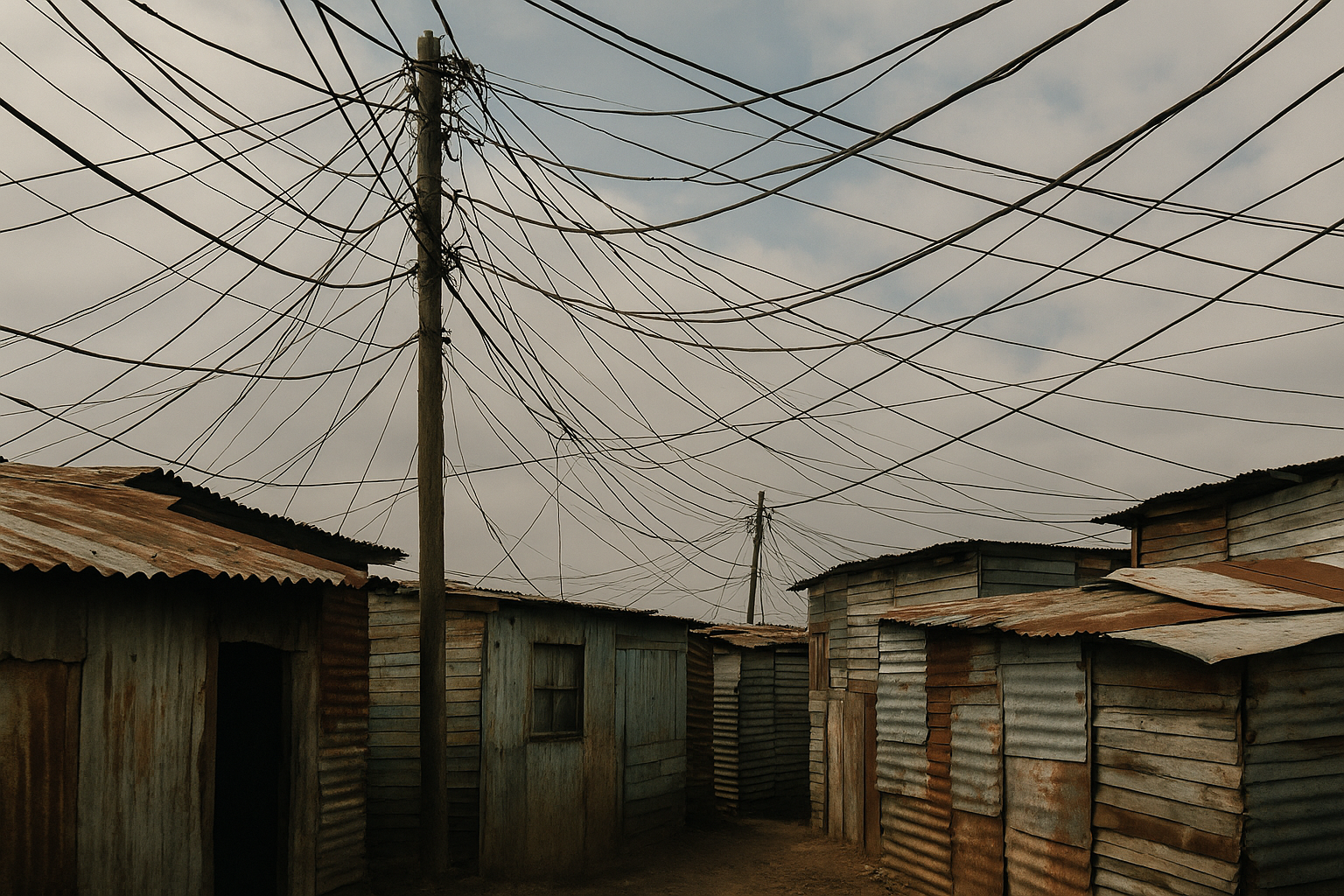
Cape Town's R2.5M electrification in Lotus Park, Gugulethu, provides 193 homes with power, safety, and civic rights, becoming a model for informal settlement development.
Cape Town's R2.5 million project brought electricity to 193 homes in Lotus Park. This made people safer by getting rid of dangerous illegal wires and giving them reliable power. Now, families can get free basic electricity, making their lives much better and helping them be more involved in their community. It's a big step in bringing dignity and essential services to everyone.
What is the significance of the Lotus Park electrification initiative?
The R2.5 million electrification initiative in Lotus Park, Gugulethu, is significant because it transformed 193 households from energy outsiders into registered electricity consumers. This project provided essential services, improved safety by replacing illegal connections with professional installations, and granted residents access to free basic electricity, enhancing their civic participation and quality of life.
Get Cape Town news in your inbox
Stay updated with the latest stories from the Mother City.
A Transformative Investment in Human Dignity
The completion of a R2.5 million electrification initiative in Lotus Park, Gugulethu, represents a significant milestone in South Africa's ongoing struggle to extend essential services to historically marginalized communities. What began as a technical infrastructure project has evolved into a powerful demonstration of how targeted municipal investment can fundamentally alter daily life for nearly 200 households, transforming them from energy outsiders into registered, supported electricity consumers with full civic participation rights.
The scope of this undertaking extends far beyond the surface-level statistics of 193 new connections. Municipal engineering teams executed a comprehensive network overhaul that included strategic upgrades to the local mini-substation - essentially the neighborhood's electrical heart - while simultaneously deploying new low-voltage cabling infrastructure and installing robust electricity poles designed to withstand Cape Town's challenging weather conditions. The integration of energy-efficient LED streetlighting throughout the settlement serves dual purposes: dramatically improving nighttime visibility for pedestrian safety while reducing the overall energy burden on the newly expanded network.
The Mechanics of Connection and Citizenship
Each household receiving connection through this program has been equipped with a prepaid electricity meter, a technology choice that reflects both practical municipal management considerations and progressive social policy objectives. Prepaid systems eliminate the accumulation of debt that has historically trapped low-income households in cycles of disconnection and reconnection fees, while simultaneously empowering residents with real-time consumption data that supports energy conservation behaviors.
The transition to registered customer status carries substantial weight beyond mere technical connectivity. Formal registration with the City of Cape Town's electricity department unlocks access to administrative protections, dispute resolution mechanisms, and - critically - the Free Basic Electricity policy allocation. Eligible households may receive up to 60 kilowatt-hours monthly at no cost, a provision that, while modest in absolute terms, can meaningfully offset energy poverty for families navigating rising living costs across multiple essential categories.
Safety Through Infrastructure: Addressing the Crisis of Illegal Connections
The Lotus Park intervention arrives against a backdrop of persistent informal settlement electrification challenges that have claimed lives and destroyed property throughout South Africa's urban areas. Unauthorized electrical connections - often cobbled together using substandard materials and lacking any professional installation oversight - create cascading risks that extend far beyond individual households. These improvised networks frequently overload legitimate distribution infrastructure, causing voltage fluctuations that damage appliances in formally connected homes and triggering protective shutdowns that darken entire neighborhoods.
The physical dangers are equally severe. Informal connections running across wet ground or through flammable building materials create electrocution hazards, while improperly fused circuits generate heat sufficient to ignite the combustible materials common in informal construction. Cape Town's fire services have documented numerous incidents directly attributable to electrical failures in informally wired settlements, with casualties disproportionately affecting children and elderly residents who spend more time in dwelling spaces during peak heating and cooking periods.
By offering a regulated, professionally installed alternative, the City directly confronts these risks while acknowledging that demand for electrical services will persist regardless of formal availability. Experience from electrification programs in comparable contexts - such as São Paulo's favela infrastructure initiatives and Mumbai's slum rehabilitation projects - demonstrates that legitimate service provision consistently outcompetes informal alternatives when accessibility and affordability barriers are sufficiently addressed.
The Governance Framework: Why Electrification Remains Uneven
Municipal officials have been transparent about the constraints limiting electrification expansion, identifying several structural barriers that prevent universal immediate coverage. Land tenure complications present perhaps the most intractable obstacle: South Africa's municipal finance management legislation restricts the deployment of public infrastructure funds on privately held properties, a provision intended to prevent subsidy capture by landowners but which inadvertently excludes communities occupying land without formal title recognition.
The dual-supply environment created by South Africa's energy sector fragmentation adds additional complexity. Areas falling within Eskom's direct distribution footprint require coordination between municipal and national utility planning cycles, procurement procedures, and technical standards - processes that can extend project timelines by months or years even when funding and political will align favorably.
Site conditions themselves filter project feasibility. Steep topography, unstable soils, flood-prone locations, or densities exceeding safe network loading parameters may render electrification technically inadvisable regardless of community need. In such circumstances, alternative service strategies - including solar home systems with battery storage, or planned relocation to serviced sites - may offer more sustainable pathways to energy access.
Expanding the Footprint: Metro-Wide Progress and Persistent Demand
The Lotus Park achievement forms part of a broader electrification trajectory that saw 1,814 new connections established across Cape Town's metropolitan area by mid-2026. This pace, while substantial in absolute terms, must be measured against the scale of remaining need. Cape Town's informal settlement population continues growing through rural-urban migration, backyard rental expansion, and the formalization of previously unrecognized occupation patterns - demographic dynamics that continuously regenerate the backlog even as existing projects advance.
Community demand for reliable electricity manifests across multiple channels. Social media platforms host sustained conversations about service quality, with residents documenting outage frequencies, reporting infrastructure deterioration, and sharing information about reporting procedures. This digital advocacy has emerged as an important accountability mechanism, creating pressure for responsive maintenance and transparent communication about network constraints and restoration timelines.
The City has established formal channels for infrastructure reporting, encouraging residents to flag faulty streetlighting, visible equipment damage, and suspected unauthorized connections. These reporting systems serve preventative functions, enabling intervention before minor degradations cascade into major failures, while simultaneously generating data that informs maintenance prioritization and capital planning.
Technical Innovations and Future Directions
Contemporary informal settlement electrification increasingly incorporates smart grid elements that enhance network monitoring and fault isolation capabilities. Advanced metering infrastructure, while more costly at installation, enables remote consumption reading, tamper detection, and rapid service limitation in cases of dangerous network abuse - capabilities that protect both individual customers and system integrity.
The LED streetlighting deployed in Lotus Park exemplifies broader municipal energy efficiency commitments. These luminaires consume approximately 60% less electricity than conventional sodium vapor alternatives while delivering superior color rendering that supports facial recognition and vehicle identification in security-sensitive applications. Solar-powered standalone streetlights, increasingly cost-competitive in South African conditions, offer potential for network-independent illumination in areas where grid extension remains pending.
Battery energy storage systems, rapidly declining in cost following global manufacturing scale expansion, present possibilities for household-level resilience even within formally connected settlements. Pilot programs in other South African municipalities have demonstrated how small-scale storage can bridge short-duration outages, maintain critical medical equipment operation, and enable time-shifting of consumption to exploit favorable tariff structures.
The Social Dimensions of Electrification
Energy access research consistently identifies electricity connection as a catalyst for broader household development trajectories. Illuminated evening hours extend educational time for schoolchildren, reduce reliance on polluting and expensive fuel-based lighting, and enable home-based economic activities ranging food preparation for local sale to digital connectivity-dependent enterprises. The gendered dimensions are particularly notable: women, who disproportionately manage household energy procurement in South African contexts, experience particular relief from the physical burdens and safety risks associated with fuel collection and generator operation.
The Lotus Park project thus represents not merely infrastructure provision but investment in human capability expansion - a framing that justifies continued municipal prioritization even amid competing budgetary demands and that supports advocacy for accelerated national funding flows to local government electrification programs.
[{"question": "What is the main objective of the Lotus Park electrification project?", "answer": "The primary goal of the R2.5 million Lotus Park electrification project was to provide safe, reliable, and legal electricity access to 193 homes in the informal settlement. This initiative aimed to replace dangerous illegal connections, enhance the quality of life for residents, and integrate them into the formal electricity grid, granting access to essential services and free basic electricity."}, {"question": "How does the project improve safety for residents?", "answer": "The project significantly improves safety by replacing hazardous illegal electrical connections, which are often made with substandard materials and lack professional oversight, with professionally installed and regulated infrastructure. This reduces the risks of electrocution, electrical fires, and overloads that can damage appliances and entire networks. The addition of energy-efficient LED streetlighting also enhances nighttime visibility, contributing to pedestrian safety."}, {"question": "What are the benefits of residents becoming registered electricity consumers?", "answer": "Becoming registered electricity consumers offers multiple benefits, including access to reliable power, improved safety, and eligibility for the City of Cape Town's Free Basic Electricity (FBE) policy, which provides up to 60 kilowatt-hours monthly at no cost. Formal registration also provides administrative protections, dispute resolution mechanisms, and empowers residents with real-time consumption data through prepaid meters, encouraging energy conservation."}, {"question": "What technical improvements were made as part of this initiative?", "answer": "The initiative included a comprehensive network overhaul. This involved strategic upgrades to the local mini-substation, deployment of new low-voltage cabling infrastructure, installation of robust electricity poles designed for Cape Town's weather, and the integration of energy-efficient LED streetlighting. Each household received a prepaid electricity meter."}, {"question": "What challenges does Cape Town face in expanding electrification to other informal settlements?", "answer": "Cape Town faces several structural barriers, including land tenure complications (restricting public infrastructure funds on privately held land), the dual-supply environment with Eskom's distribution footprint requiring complex coordination, and challenging site conditions such as steep topography, unstable soils, or flood-prone locations. The continuous growth of informal settlements also creates a persistent backlog despite ongoing projects."}, {"question": "How does electrification contribute to human dignity and community development?", "answer": "Electrification is considered a transformative investment in human dignity. It extends educational time for children through illuminated evenings, reduces reliance on polluting and expensive fuels, and enables home-based economic activities. It also addresses gendered dimensions by easing the burden of energy procurement, disproportionately managed by women, and fosters greater civic participation and overall community development by providing an essential service.", "title": "FAQs about Cape Town's Lotus Park Electrification Project"}]

Sizwe Dlamini is a Cape Town-based journalist who chronicles the city’s evolving food scene, from boeka picnics in the Bo-Kaap to seafood braais in Khayelitsha. Raised on the slopes of Table Mountain, he still starts every morning with a walk to the kramat in Constantia before heading out to discover whose grandmother is dishing up the best smoorsnoek that day.
View all articles →