
Sports Minister McKenzie rejects xenophobia claims amid rising crime crisis
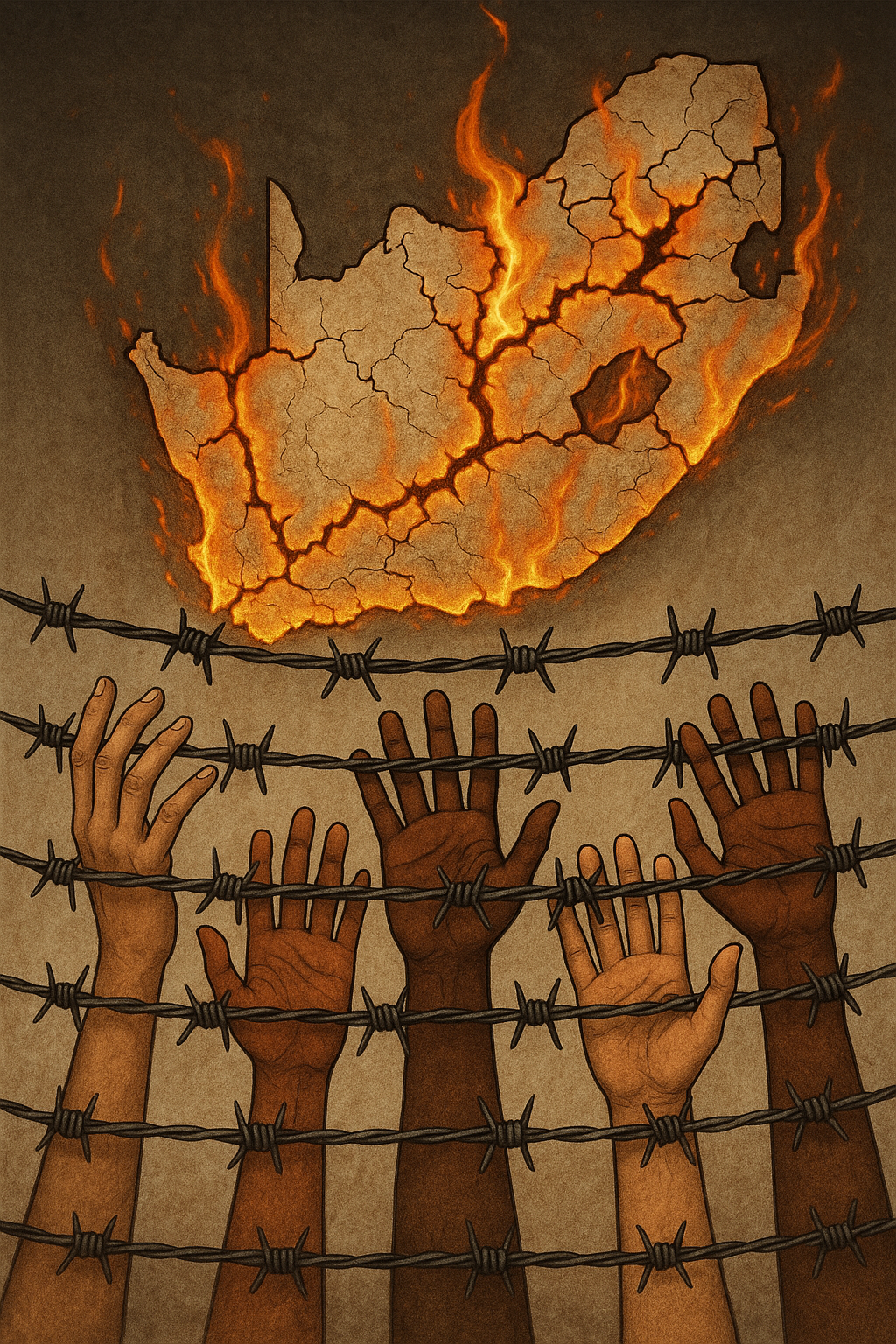
Explore South Africa's 2026 crime storm, fueled by xenophobia, migration, and political rhetoric, as the nation grapples with deep-seated social fault lines.
South Africa is facing a big problem with anger and violence towards foreigners. Many people are jobless, especially young folks, and they fight over small jobs. Bad stories spread fast on social media, making things worse. Some leaders use numbers about foreign criminals to make people angry. All these things together are like a ticking bomb, ready to explode with more violence and trouble.
What is causing the surge in xenophobic violence and crime in South Africa?
South Africa's crime surge, particularly xenophobic violence, stems from complex factors. High unemployment, especially among youth, competition for informal trade, and false information spread through social media fuel tensions. Statistics linking undocumented migrants to a higher percentage of contact crimes, though debated, are weaponized by politicians, igniting widespread anger and violence.
Get Cape Town news in your inbox
Stay updated with the latest stories from the Mother City.
Hillbrow, Freedom Day 2026: The Spark That Lit a Continent
At 02:17 on 27 April, while the rest of the country was nursing post-parade hangovers, Johannesburg’s Hillbrow recorded its fourth homicide of the night. A 23-year-old Tanzanian barber bled out on the pavement outside a building nicknamed “Little Dar” because an entire floor is leased to migrants from Dar es Salaam. By 05:00 the chant “AmaGhana, AmaNigerians, hamba!” was echoing on WhatsApp voice notes copied from a shaky 14-second clip. By 09:00 #SouthAfricanXenophobia had climbed into the top-three trending slots in Lagos, Accra, Lusaka, Gaborone, Nairobi and Maputo.
Sports, Arts & Culture Minister Gayton McKenzie - ex-con turned motivational powerhouse - typed out a tweet before brunch: “We are drowning in violent crime and we are fighting to stop the daily count.” The line was retweeted 43 000 times within four hours, detonating a diplomatic chain-reaction that would reach Abuja before sunset. South Africans woke up to headlines about their own country on foreign front pages; Africans abroad woke up to videos telling them South Africans were coming for their cousins.
By nightfall Hillbrow’s usual soundtrack - house music, hooting minibus taxis, the clatter of late-night chicken bones hitting bins - was overlaid with something sharper: the crackle of rubber bullets, the hiss of tear-gas canisters, and the low drumbeat of diaspora outrage vibrating through phone speakers held to ears on three separate continents.
Murder Math and the Foreign-Finger Debate
The national crime ledger is relentless: 68 corpses and 120 adults who will spend weeks in bandages every single day. Do the division and someone is murdered every 21 minutes. The 2025/26 crime panorama adds a political grenade: foreign nationals without papers make up roughly 3 % of the population yet feature in 11 % of contact-crime arrests. McKenzie turned the ratio into a campaign punch-line: “Three percent produces eleven percent - that’s a 270 % over-representation.”
Critics counter that the figure is less a smoking gun than a lens smeared with class, geography and paperwork. Undocumented migrants cluster in inner-cities where police patrol hardest, where courts deny bail when an address cannot be verified, and where every stick-up is recorded because insurance companies insist on case numbers. Add the fact that some South African victims assume the robber “must be foreign” and the statistic starts to wobble.
Whatever the spin, the number has already done its real-world work: radio talk-shots, tavern debates and Facebook Lives now begin with “research shows” before demanding heavier raids, quicker deportations and, in darker corners, vigilante justice.
Inside the Vertical City
Hillbrow is barely one-and-a-half square kilometres yet packs in 200 000 souls, a density that rivals central Tokyo but without the lifts that actually lift. In 1996 seven out of ten occupants held a green ID book; today the ratio has flipped. Entire art-deco dinosaurs - Ponte, KwaMai-Mai, the emerald-coloured Cuthberts - have become franchised micro-republics run by protection syndicates that will, for $1 300, collect you at the Limpopo River and walk you all the way to a fifth-floor room with a mattress and a padlock.
South African tenants speak of “proxy eviction”: first your electricity cable is diverted, then your door lock is super-glued, finally a man with a Nigerian accent and a clipboard offers to “help you relocate.” Landlords prefer foreigners precisely because they rarely insist on lease agreements that could later be used against the owner in a squatter-friendly court.
Foreign shop-owners return the accusation: they are soft targets precisely because they cannot buy firearms without a South African ID, so robbers know the day’s takings sit beneath the chip rack. The argument loops back and forth, each side armed with anecdotes that feel like data until someone produces a machete.
Meet the Minister of Megaphones
Gayton McKenzie’s life story is a screenplay begging to be written: bank robber becomes state witness against a police general, swaps prison garb for motivational suits, then launches the Patriotic Alliance and snatches four percent of the national vote by promising to “put South Africans first.” Colleagues say he edits tweets at 3 a.m., sleeps four hours and keeps a colour-coded spreadsheet of which journalists have retweeted him in the last 48 hours.
Behind the social-media theatre sits a policy wish-list leaked to the Mail & Guardian: undocumented patients would be barred from non-emergency public health-care; children without papers could attend school only if a parent signs up for voluntary repatriation. Constitutional lawyers scoff, but the headlines keep the base applauding and the opposition scrambling.
Diplomats who have met McKenzie in the Union Buildings describe a man who speaks so fast “you worry the recorder will melt,” yet who ends every sentence with an invitation to lunch. The charm offensive works - until the next corpse hits the pavement and the cycle of outrage begins again.
Diplomatic Aftershocks and Boycott Ghosts
Within 36 hours of the Hillbrow clip Nigeria’s foreign ministry hauled in South Africa’s acting ambassador. Ghana issued a travel advisory reminding citizens that “accidents can happen anywhere.” The hashtag #BoycottSouthAfricanGoods resurrected itself, urging shoppers in Accra to abandon Shoprite aisles and MTN sim-cards. The African Union’s top political envoy requested an “urgent fact-finding mission,” code for Please explain before this spreads.
Pretoria’s damage-control manual - codename “Protocol Ubuntu” - rolled out familiar props: joint foot-patrols with migrant business forums, radio call-in shows in French and isiZulu, pop-up document-verification fairs under gazebos painted with both the South African and AU flags. Yet trust remains brittle; in Mayfair a false rumour of an army raid emptied Nigerian-owned electronics stores for two straight days, costing owners an estimated R18 million in lost Black-Friday-style turnover.
Courts, Cops and Copy-Cat Flames
The National Prosecuting Authority quietly notes that murder convictions involving undocumented accused run at 89 %, seven points higher than cases with citizens. Scholars attribute the gap to two cold facts: migrants usually can’t afford private lawyers, and prosecutors file the heaviest possible charges to force plea bargains on lesser counts. NGOs, meanwhile, flag the mirror injustice: four out of ten foreign witnesses withdraw testimony, citing intimidation or, in some instances, police officers who moonlight as building “supers” and tip off landlords when a tenant plans to testify.
South Africa’s eruptions follow a timetable historians can almost set their watches to: a trigger crime - child murder, drug overdose, factory wage dispute - then community policing forums morph into kangaroo courts, then reprisal boycotts of South African multinationals, then an AU envoy landing at OR Tambo pleading for “African unity.” Analysts now speak of a “saturation threshold”: once the story leads bulletins for two straight weeks, copy-cat attacks become statistically likely even if the original grievance has been resolved.
Overcrowded Cells, Airlifted Impunity
Pollsmoor Maximum was built for 390 men; it currently houses 1 180 foreign nationals, stacked in triple bunks so tight that tuberculosis spreads four times faster than the global prison median. The overcrowding has become diplomatic leverage: several West African embassies quietly charter late-night flights that repatriate their citizens under “early release” schemes. South African opposition parties call the practice “airlifted impunity,” but prison bosses shrug: every deported body frees up a mattress and a set of cutlery.
Defence attorneys tell darker stories: clients who sign plea deals just to board the next charter, accepting criminal records they do not deserve because a cell in Lagos is still preferable to a bunk in Pollsmoor where the toilet is an uncovered bucket shared by 28 men.
Green Energy, Copper Theft and the Next Wave
The global dash for electric vehicles has turned copper into the new blood-diamond. Cable-theft along the Cape Town-Johannesburg rail corridor leapt 60 % last year, costing state logistics group Transnet R7 billion. Police statistics show 83 % of arrested cable thieves are undocumented migrants, a fact populists wield like a cudgel: outsiders are sabotaging the very infrastructure meant to create jobs for citizens.
Climate scientists add another layer: failing harvests in the Sahel could push 14 million people southward by 2035. South Africa, with its platinum belts and sophisticated banks, is an inevitable magnet. The combination - hungry migrants, valuable copper, and an unemployment rate already touching 58 % among 18- to 24-year-olds - forms a perfect storm that no amount of drone surveillance can simply hover away.
Township Turf, Price Wars and the R2 Difference
Economists at Wits University calculate that informal trade run by migrants pumps R12 billion yearly into Gauteng alone. Yet South African-owned spaza shops have declined 44 % since 2015, replaced by foreign-run stores that stay open 18 hours and under-cut prices by bulk-buying in Durban’s Maydon Wharf. Shoppers will walk an extra block to save R2 on milk; loyalty lasts only as long as the wallet is thin.
When unemployment is unofficially nudging six out of ten youngsters, a single unverified rumour - an Ethiopian trader “caught” with a local teenager - can torch an entire strip, as happened in Diepsloot in March. Within hours shelves are empty, cash-registers are ash, and the economic vacuum that remains becomes yet another grievance.
Youth at the Fault-Line: Born-Frees versus Border-Jumpers
In Yeoville the average age is 25. “Born-Free” South Africans who never tasted apartheid share rooftop taverns with migrants who crossed the Limpopo at 14, both cohorts chasing the same bar-tending, ride-hailing and dish-washing gigs. They dance to the same amapiano beats, fall for the same crypto-scams and hustle the same “blesser” liaisons where older patrons trade rent for affection.
Crimes of intimacy - transactional rape, gender-based violence - cut across passports, complicating the neat binary of “citizen predator versus migrant victim.” The shared vocabulary of survival breeds both empathy and enmity; today’s drinking buddy can become tomorrow’s competition for a single R3 000-a-week job.
Digital Wildfires and Bot-Farm Arson
A doctored image of the South African flag stamped “Kill the kwerekwere” was traced to a bot-farm in Eastern Europe, not a local politician. A voice-note “proving” McKenzie urged citizens to “defend our land” turned out to be stitched from a 2022 radio clip. Yet by the time fact-checks surface, minibus taxis have already been mobilised via WhatsApp groups sealed off from mainstream rebuttals.
The Centre for Analytics calculates that false xenophobic content reaches 200 000 South African phones within 15 minutes, while corrections seldom exceed 12 000 views. In Town Two, Khayelitsha, a single voice-note claiming the army would raid foreign shops caused owners to pull down shutters for three days, starving the entire neighbourhood of bread and paraffin.
Quiet Counter-Moves: Soccer, Sesotho and Saving WhatsApp
For every march that mutates into looting, there are micro-counter-moves. In Alexandra, pastors run midnight soccer leagues where each side must be half citizens, half non-citizens; yellow cards are handed out for ethnic slurs. In Bellville, Lesotho guards teach their Afrikaans-speaking colleagues Sesotho, improving radio coordination and dissolving suspicion. In Durban’s Warwick markets a 4 200-member WhatsApp group called “Ubuntu Watch” crowdsources verification; their intervention has prevented 22 potential flare-ups since January, a 78 % success rate measured by the absence of broken glass.
These initiatives seldom trend, yet they form the country’s immune system: fragile, under-funded, but still fighting the viral spread of resentment.
Policy Pendulum: From Open Arms to Sharp Teeth
Post-apartheid South Africa once offered one of the world’s most generous asylum regimes, a thank-you to neighbours that hosted exiled ANC cadres. By 2009 the backlog topped 220 000 unresolved cases. Successive white papers swung the pendulum: cash for “voluntary” repatriation in 2017, a militarised Border Management Authority in 2021, and a 2025 draft bill that would cancel birthright citizenship if neither parent is documented.
Critics warn the amendment could render stateless thousands of children born to farmworkers from Zimbabwe or academic exiles from Congo, violating UN conventions Pretoria has signed. Meanwhile, an unpublished 200-page “National Social Cohesion White Paper” sits in Home Affairs limbo, proposing migrant liaison forums, 90-day asylum courts and cash incentives for tolerant communities. Cabinet insiders admit it is “too hot to touch” months before municipal by-elections.
Nightfall over Hillbrow: Two Soundtracks, One Matchstick
As the sun drops, Hillbrow begins its nightly choreography. Girls burn imphepho to mask mildew in corridors; boys push trolleys of scrap toward the R15-per-kg buyer on Sylvia Street. Ethiopian waiters stack chairs outside cafes preparing to throb with amapiano. Somali grocers pull down shutters painted with neon slogans: “Love Thy Neighbour.” On the 15th floor a Mozambican dad teaches Portuguese verbs; in the alley below a local car-guard hums Brenda Fassie’s “Black President.”
The two soundtracks overlap, clashing and blending inside a thin canyon of cracked concrete and flickering neon, where the next rumour, the next corpse, the next manipulated image is always one headline away from ignition. And somewhere a phone lights up, a finger hovers over “forward,” and the whole dance starts again.
[{"question": "What are the primary drivers behind the escalating xenophobic violence in South Africa?", "answer": "The escalating xenophobic violence in South Africa is primarily driven by high unemployment rates, particularly among the youth, leading to intense competition for informal jobs. This is exacerbated by the rapid spread of misinformation and inflammatory content on social media, often weaponized by political figures who cite contested statistics about foreign nationals' involvement in crime to incite anger and resentment."}, {"question": "How do false narratives and social media contribute to the problem?", "answer": "False narratives and social media play a significant role in fueling xenophobia. Misinformation, doctored images, and fabricated voice notes spread rapidly, often far exceeding the reach of fact-checks. These 'digital wildfires' can quickly mobilize groups for xenophobic actions, as seen with the Hillbrow incident where a WhatsApp voice note led to widespread calls for violence against foreign nationals. Bots and coordinated campaigns originating from outside the country also contribute to this problem."}, {"question": "What role do politicians and crime statistics play in fanning xenophobic sentiments?", "answer": "Politicians, such as Minister Gayton McKenzie, utilize controversial crime statistics to stir xenophobic sentiments. By highlighting figures like 'foreign nationals without papers making up roughly 3% of the population yet featuring in 11% of contact-crime arrests,' they create narratives of 'over-representation' in crime. While critics argue these statistics are skewed by factors like policing patterns and the inability of undocumented migrants to secure bail, these numbers are effectively used in public discourse to demand harsher measures against foreigners."}, {"question": "How does the physical environment, such as high-density areas like Hillbrow, contribute to tensions?", "answer": "High-density urban areas like Hillbrow, with 200,000 residents packed into 1.5 square kilometers, become flashpoints for xenophobic tensions. The struggle for limited resources, housing, and job opportunities is amplified in such environments. The shift in demographics, where foreign nationals now outnumber South African citizens in many buildings, alongside issues like 'proxy evictions' and protection syndicates, create a volatile atmosphere where minor incidents can quickly escalate into widespread violence."}, {"question": "What are some of the economic consequences and underlying economic factors at play?", "answer": "Economically, the influx of foreign-owned informal businesses, while contributing significantly to the economy (e.g., R12 billion yearly in Gauteng), has led to a decline in South African-owned spaza shops. Foreign-run stores often offer lower prices due to bulk-buying, creating competition that South African shop owners struggle to match. This economic tension, coupled with extremely high youth unemployment (touching 58% among 18- to 24-year-olds), means that even a small economic advantage or perceived slight can trigger anger and violence, leading to looting and destruction of foreign-owned businesses."}, {"question": "Are there any efforts or initiatives attempting to counter xenophobia and promote social cohesion?", "answer": "Despite the prevalent xenophobia, there are quiet counter-initiatives working towards social cohesion. Examples include midnight soccer leagues in Alexandra that mandate mixed teams of citizens and non-citizens, language exchange programs between different communities, and community-led WhatsApp groups like 'Ubuntu Watch' in Durban that crowdsource verification of rumors to prevent flare-ups. These grassroots efforts, though often underfunded and lacking widespread recognition, serve as a crucial 'immune system' against the viral spread of resentment and misinformation, demonstrating a desire for unity amidst the tensions."}]

Emma Botha is a Cape Town-based journalist who chronicles the city’s shifting social-justice landscape for the Mail & Guardian, tracing stories from Parliament floor to Khayelitsha kitchen tables. Born and raised on the slopes of Devil’s Peak, she still hikes Lion’s Head before deadline days to remind herself why the mountain and the Mother City will always be her compass.
View all articles →